In this article
The surface temperature reads 85°F, and the shoreline docks—so productive in May—have gone completely silent. Most anglers resign themselves to swatting mosquitoes and catching four-inch “potato chips” or tiny bluegills in the shallows. But the true giants of the system haven’t vanished. They have simply moved.
I have spent decades tracking these fish through the dog days of summer, and the pattern is consistent. The “Bull Bluegill“—those trophy males exceeding 10 inches and a pound—do not tolerate the heat like the small ones do. To catch them, you have to stop fishing for bluegill like a kid with a cane pole. You need to start hunting them.
This guide moves beyond the passive panfish angling mentality. We are transitioning to a precise, data-driven method. You will learn how to use your electronics, choose the right tungsten jigs, and understand the biology needed to pull these slabs from the deep water responsibly.
Why Do Trophy Bluegill Abandon the Shallows in Summer?
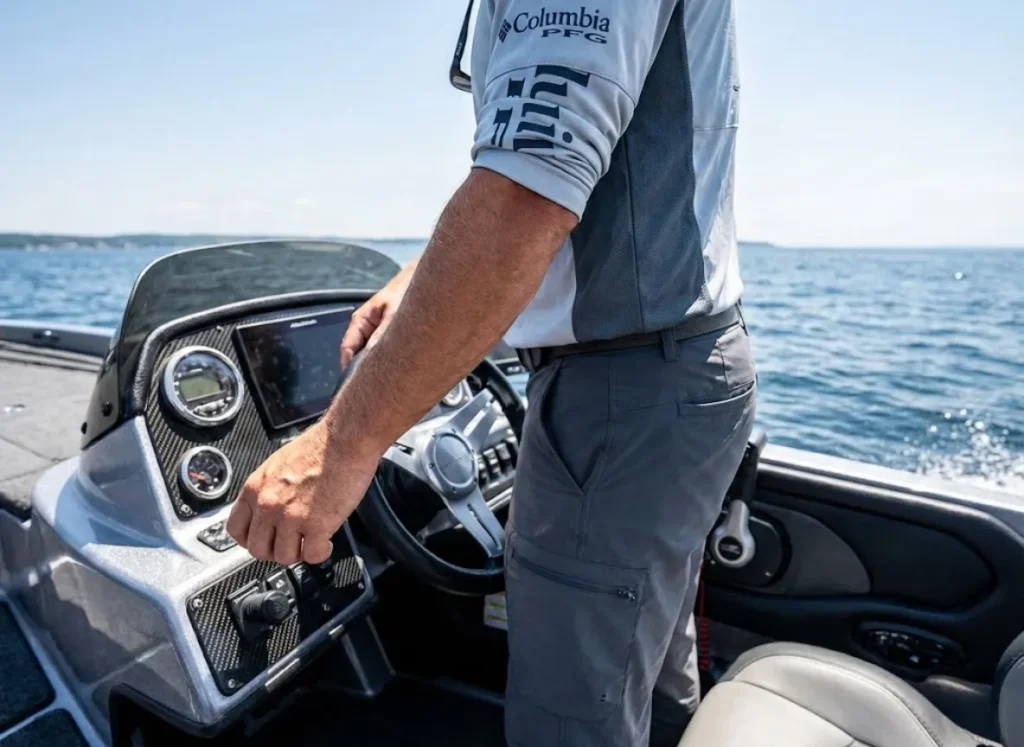
Big fish don’t leave the shallows by accident. It is a survival response to the heat. Large bluegill handle hot water much worse than the little ones, which forces them out into the main lake basin.
What is the “Summer Squeeze” and how does it dictate depth?
Think of the lake like a house in the summer without air conditioning. The attic is too hot, and the basement is musty and hard to breathe in. You want to be right in the middle. This is the “Summer Squeeze.”
The surface water (the “Ceiling”) gets too hot, often over 80°F. This stresses out big bluegill. On the flip side, the deepest water (the “Floor”) often runs out of oxygen as the summer goes on. The rotting weeds and mud at the bottom use up the air the fish need.
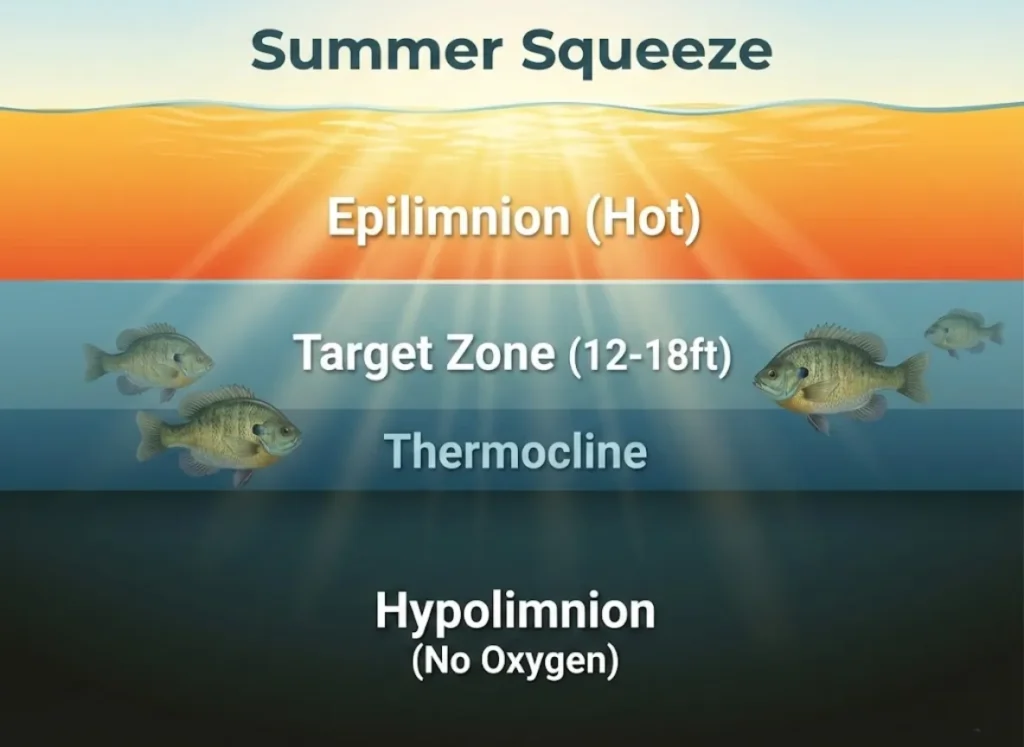
So, the trophy bluegill get squeezed into the middle. They hang out just above the “thermocline”—the layer where the water temperature drops quickly. Whether you are fishing Lake Okeechobee in the south or Leech Lake in the north, this usually happens in the summer depth 12-18ft range.
Biologically, bluegills need a specific amount of oxygen to thrive. Recent research on thermal habitat partitioning shows that while small fish can handle the hot shallows, actual bluegill adults—especially the giant Lepomis macrochirus—are forced to find cooler, oxygen-rich water. Once you find this specific water depth 12-15ft layer, you find the fish. You can often see this layer as a fuzzy “haze” on your sonar screen. For a closer look at how this layering works, it helps to understand thermoclines explained regarding fishing depth.
Why do big bluegill relate to transition zones and deep vegetation?
Once you know the right depth, you need to find the “furniture” in the room. Fish don’t just float in open space; they follow paths. Look for the deep water transition. This is simply where the bottom composition changes, like sand vs muck, or gravel meeting silt.
Deep weed edges are also key. Look for healthy weeds that stick out into 15 feet of water or more. Even better are “living structures,” specifically beds of zebra mussels or freshwater clams. Bull bluegills patrol these edges, using them as highways.
Pro-Tip: Look for the “Inside Turn.” If a deep weed line runs straight and then cuts sharply toward the bank before heading out again, that pocket (the inside turn) will often collect the largest school of fish in the area.
Why are they there? Food. In summer, they stop eating bugs on the surface and start eating worms, freshwater shrimp, and larvae that live in the soft bottom mud. Studies on thermal habitat partitioning in large lakes show that fish pick their depth based on where they can eat the most with the least effort.
You might also find Bluegill following Redear Sunfish (Shellcracker) on shell beds. The Redears crush the shells, and the Bluegill eat the leftovers. To find these spots without wasting gas, use a proven, data-backed method for reading your lake map before you even leave the dock.
How Can You Locate Bluegill Schools Using Electronics?
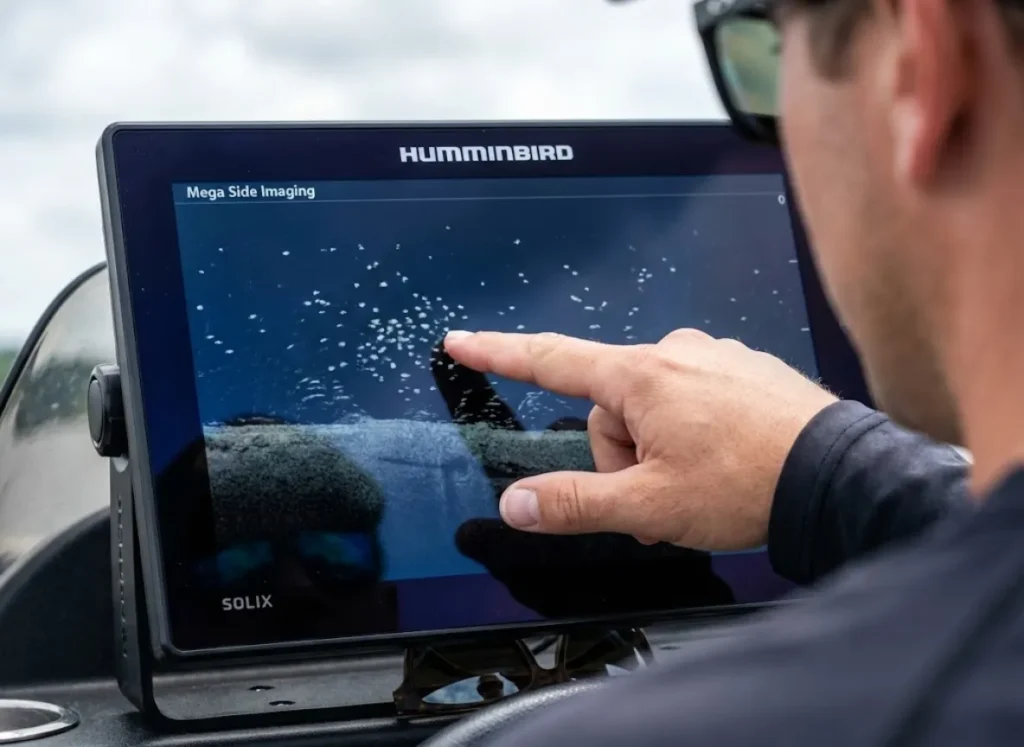
Finding these fish is like a treasure hunt with a metal detector. You can’t just cast blindly. You need to use your sonar for digital bluegill hunting, distinguishing the bite you want from other species.
How do you distinguish Bluegill from Crappie on Side Imaging?
Crappie and Bluegill group up differently. Crappie tend to “stack” vertically, looking like a tall tower on your screen. Deep schools of bluegill, however, spread out horizontally near the bottom.
On Side Imaging, a school of big panfish looks like “Popcorn.” They appear as scattered, individual white dots or “grapes on a vine” close to the structure. To see this clearly, you need the right settings. Use 455kHz to scan large areas, but switch to the higher Mega or 1.2MHz frequency to confirm what you are seeing on your sonar screenshots.
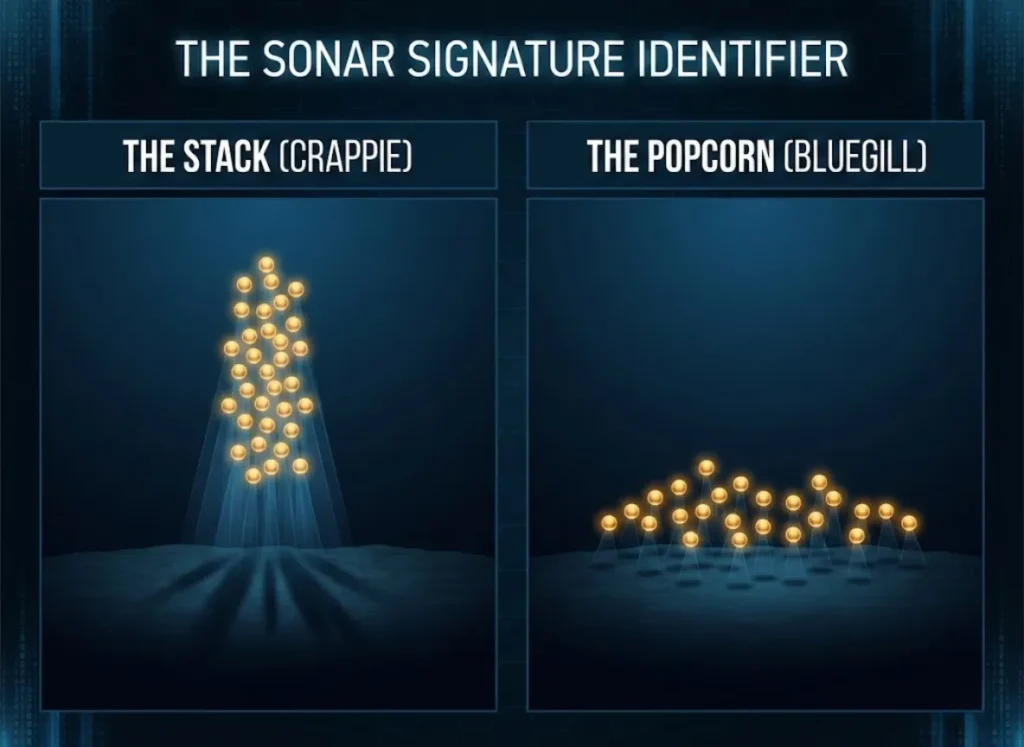
Once you see the “popcorn,” mark the spot with a waypoint. Then, circle back and drive over it to check their depth with your Down Imaging. Effective pond management for trophy populations relies on knowing where these fish hide, and you can use that same knowledge to catch them.
Advanced users look at the “Shadow.” A short shadow means the fish is belly-to-bottom. A long shadow means they are floating higher up. You might also see a “Honeycomb” pattern on the bottom, sometimes called elephant footprints, which are actually old spawning bed indicators that fish still hang around.
If you don’t see the “popcorn,” keep driving. Do not stop to fish until your screen confirms they are there. Success comes down to mastering your fish finder and trusting what it tells you.
What Specialized Gear is Necessary for Deep Water Precision?
Fishing in 20 feet of water is tricky. You are fighting water pressure and line drag. Standard bass fishing gear often makes it impossible to feel the bite. You need extreme finesse.
Why is Tungsten superior to Lead for deep presentations?
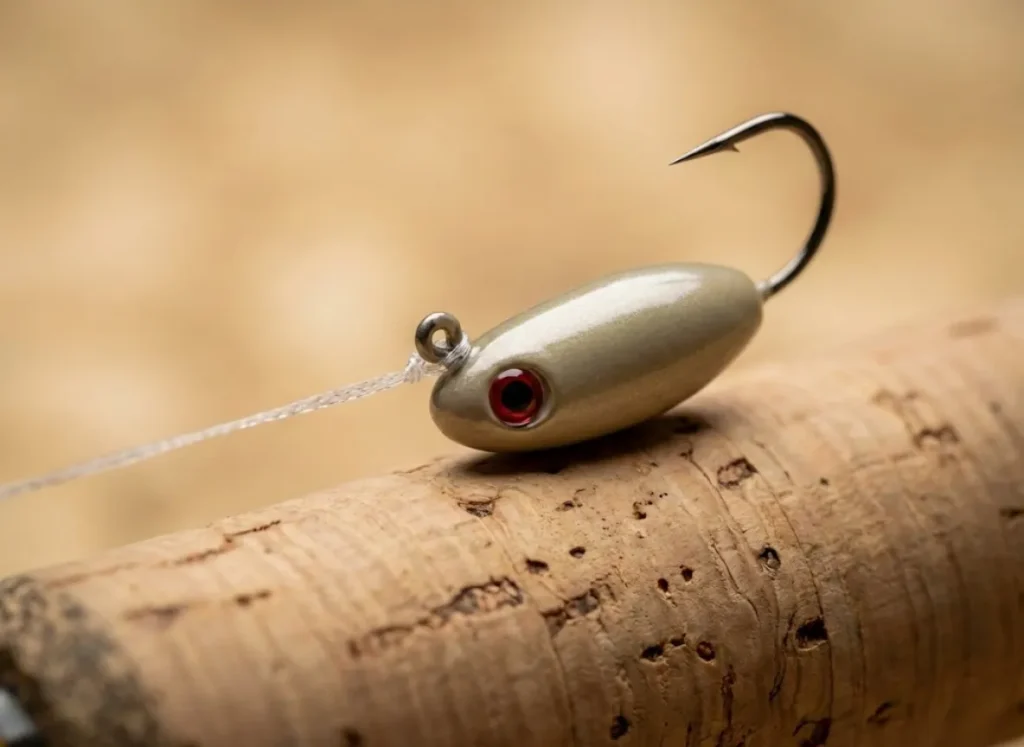
The material of your weight matters. Tungsten is much denser and heavier than lead. This means a tungsten weight is much smaller physically than a lead weight of the same heaviness. A tiny tungsten jig or 1/32 oz jigheads looks like a small bug, which is exactly what the fish want.
More importantly, the density of tungsten makes it sink faster. It cuts through the water to get to the fish quickly. It is also harder than lead. When it hits a rock or a shell, it makes a loud “tick” that you can see clearly on your sonar and feel in your hand.
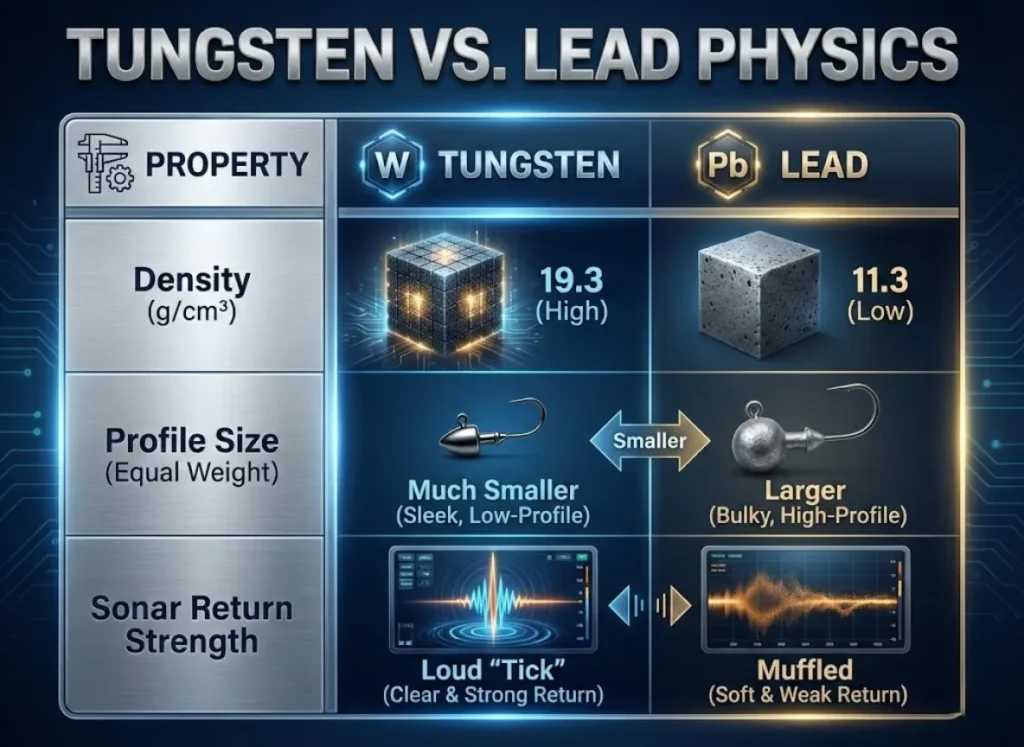
Gear sensitivity is the biggest advantage. Soft lead absorbs vibrations, muffling the feeling. Tungsten transmits everything. While fisheries investigation on bluegill strategies often focus on the fish, your ability to feel the bite is what matters on the water. Plus, using lead-free fishing tackle is better for the environment and keeps our lakes clean.
How does rod action and line choice affect the detection of “Lift Bites”?
Deep water bluegill rarely “thump” the bait like a bass. They inhale it from below and swim upward. This creates a “Lift Bite.” You don’t feel a pull; you feel the weight disappear.
To feel this, you need a specialized panfish rod—specifically a 7ft medium-light rod or an ultralight with a very fast tip. This rod only bends at the very top, giving you the power to set the hook instantly in deep water. You also need to balance this with a 1000 size spinning reel and 2-4lb test fluorocarbon leader attached to a braid main line. Braid has zero stretch. Old-school fishing line stretches like a rubber band, which hides the bite.
Pro-Tip: Watch your line, not just your rod tip. If the line goes slack or jumps suddenly, set the hook. That is a lift bite.
State agencies discuss bluegill management and fishing techniques, but they rarely talk about specific gear like the proper ultralight tackle. Line visibility matters too, so keep that fluorocarbon leader long (4-6 feet). Understanding the difference between rod power vs action helps explain why soft, flimsy rods will cause you to miss fish in deep water.
Which Presentations Trigger Strikes in the Abyss?
How do you execute the European Lift Method with a slip bobber?
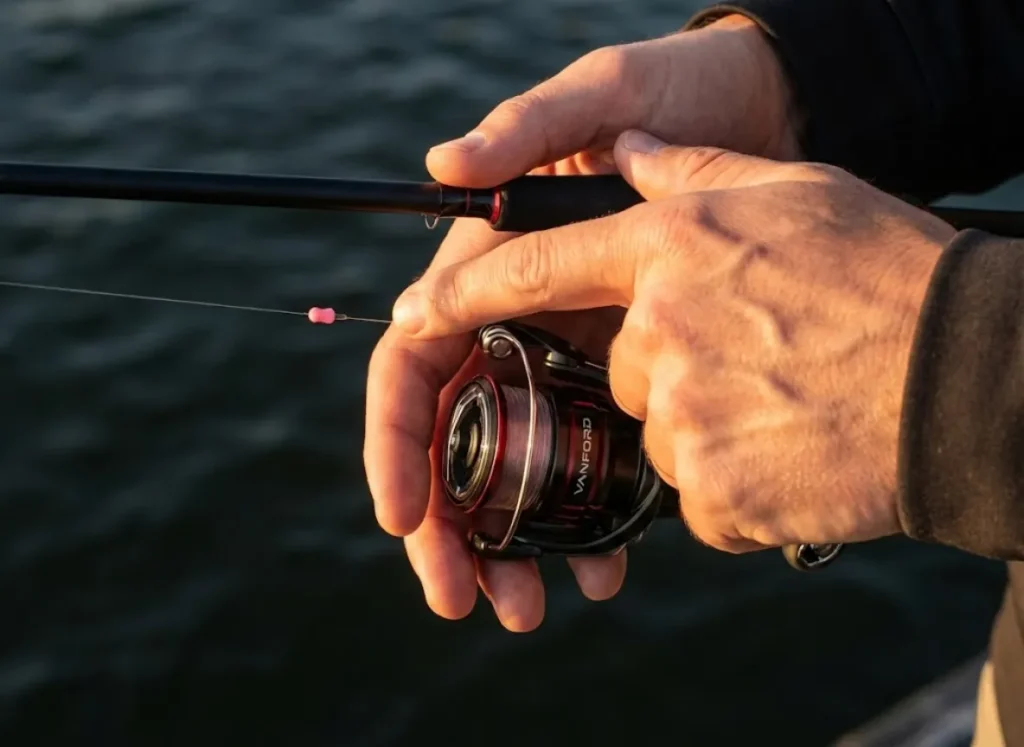
When fish are picky, the European antenna slip bobber method works wonders. This uses a specific float called a “Waggler.” It is a long, thin stem that is much more sensitive than a round plastic bobber. For longer casts, some anglers prefer a rocket bobber, but the principle is the same.
The trick is how you weight the slip bobber rig. You put your split shot weights right near the hook. This pulls the float down so only the very tip sticks out of the water. When a fish grabs the waxworms or mealworms and lifts them, the weight is removed, and the float actually rises up out of the water. This is the “lift.”
This method lets you hang a leech, red worms, or even crickets exactly where the cool water starts. You can twitch the rod gently to make the bait dance without pulling it away from the fish. Resources on quality sunfish initiative strategies emphasize smart harvesting, but you have to catch them first.
If you prefer tight-line fishing without a float, learning how to drop shot is a great alternative. Drop-shot rigs keep your nightcrawlers or red wasp larvae floating just above the mud. Use hook size #6-#10 (preferably long shank hooks for easy removal). This is perfect for fishing deep weed edges with a slow/vertical retrieve. You can even use small artificials like curly tail grubs or beetle spins to locate active fish before slowing down.
Why is Selective Harvest Essential for Trophy Management?
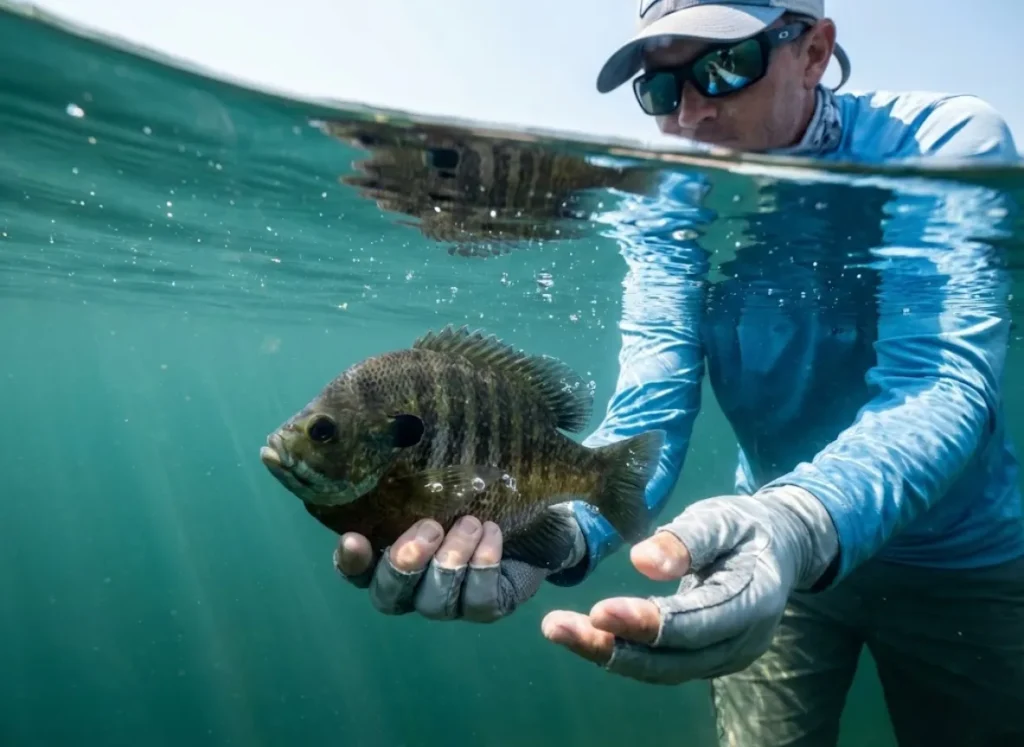
Catching these huge panfish is amazing, but we have to be careful about what we keep. The future of the fishing spot depends on your choices today.
What is the “Cuckolder Conundrum” and why must you release the Bulls?
Bluegill have a complicated family life. The “Parental Male” (or Guardian Dad) is the large fish that builds the nest and guards it. These fish delay growing up so they can get huge. These are the big gills we are chasing.
Then there is the “Cuckolder” (or Sneaker). These are small males that never grow big. They sneak into nests to fertilize eggs and run away. If you keep all the big Guardian Dads, the only fish left to breed are the small Sneakers. This passes on the “small gene.” The lake fills up with thousands of small bluegills that never get big. This is called “stunting.”
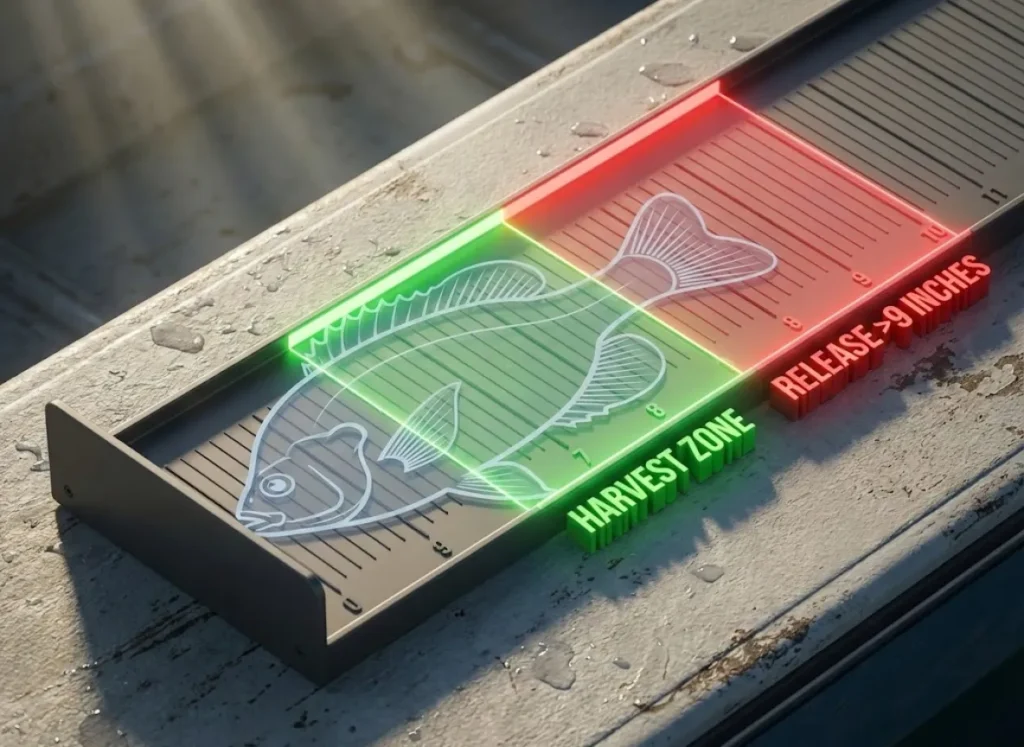
According to fisheries investigation on bluegill strategies, taking too many large males ruins the year-class strength and structure of the lake. We need to practice large male preservation through selective harvest. Release all males over 9 inches. Instead, keep the abundant 7-8 inch fish for your fish fry—they are excellent table fare. This actually helps the lake by reducing competition for food.
True genetic stewardship protocol means understanding the science of catch and release. Since these fish are coming from deep water, get them back in the water quickly so they survive.
Conclusion
The “Summer Squeeze” is not a problem; it is a helper. It forces the fish into predictable spots. By understanding the water layers, finding the “popcorn” on your screen, and using the right ultralight spinning outfit, you can catch fish when everyone else has given up.
But with this knowledge comes a job to do. Next time you catch a 10-inch bull from the depths of Lake Minnetonka or Toledo Bend Reservoir, admire him, take a picture, and let him go. Keep the medium-sized ones for dinner, release the beasts, and help keep the fishery strong for years to come.
FAQ – Frequently Asked Questions
Why do big bluegill disappear in the middle of summer?
They move to deeper water (15-25 feet) to get away from the heat. The surface is too hot, and the very bottom has no air, so they hang out in the middle where it is cool and comfortable.
What is the best rig for deep water bluegill?
The Drop Shot rig is great because it keeps the bait off the muddy bottom. A slip bobber with a tungsten jig is also excellent for a slow presentation that stays right in front of the fish’s face.
How can I tell if a bluegill is big on my fish finder?
Big bluegill schools look like scattered popcorn kernels or grapes on your screen. They don’t look like the tall, tight towers that crappie form.
Should I keep the biggest bluegill for a fish fry?
No. You should release bluegill over 9 inches to protect the lake’s population genetics. Keep the 7-8 inch fish for eating; there are more of them, and taking them out helps the remaining fish grow bigger.
Risk Disclaimer: Fishing, boating, and all related outdoor activities involve inherent risks that
can lead to injury. The information provided on Master Fishing Mag is for educational and informational purposes
only. While we strive for accuracy, the information, techniques, and advice on gear and safety are not a substitute
for your own best judgment, local knowledge, and adherence to official regulations. Fishing regulations, including
seasons, size limits, and species restrictions, change frequently and vary by location. Always consult the latest
official regulations from your local fish and wildlife agency before heading out. Proper handling of hooks, knives,
and other sharp equipment is essential for safety. Furthermore, be aware of local fish consumption advisories. By
using this website, you agree that you are solely responsible for your own safety and for complying with all
applicable laws. Any reliance you place on our content is strictly at your own risk. Master Fishing Mag and its
authors will not be held liable for any injury, damage, or loss sustained in connection with the use of the
information herein.
Affiliate Disclosure: We are a participant in the Amazon Services LLC Associates Program, an
affiliate advertising program designed to provide a means for us to earn advertising fees by advertising and linking
to Amazon.com. As an Amazon Associate, we earn from qualifying purchases. We also participate in other affiliate
programs and may receive a commission on products purchased through our links, at no extra cost to you. Additional
terms are found in the terms of service.