
In this article
You clamp on a spool of “20 lb test” so nothing can break you off, then a 3 lb schoolie near a dock takes you to the cleaners. The number on the spool didn’t lie to you, exactly. It just never meant what you thought it meant.
Ask anyone who’s spent real time at the boat ramp and the same truth comes up: the pound test number is a lab spec, not a fish-weight limit, and it isn’t even the strength you’re actually fishing. Here’s what pound test really measures, why your “10 lb” line is closer to 6 lb on the water, and exactly what to spool up to stop losing fish.
What Pound Test Actually Measures
The Straight-Pull Number
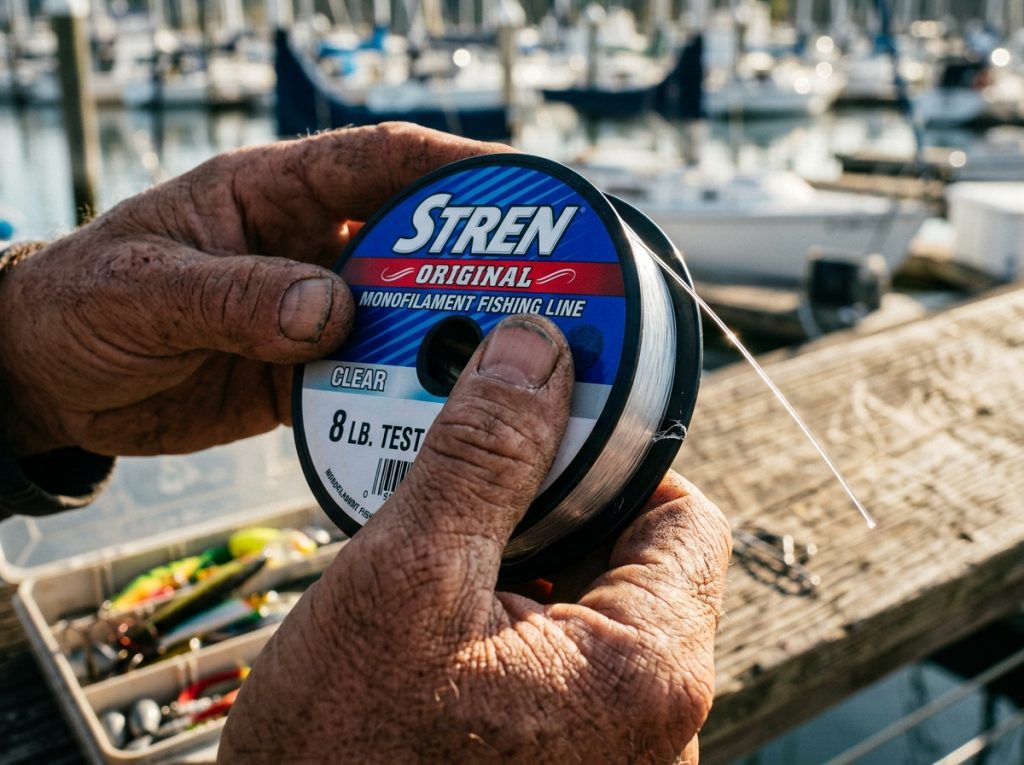
Pound test (you’ll also see it as lb test or line test) is one simple thing: the amount of steady force it takes to break the line in a smooth, straight pull, what engineers call tensile strength. A 20 lb line should part somewhere around 20 pounds of even pressure. That number is your fishing line strength on paper, and that’s the whole definition.
The trouble starts when beginners read that number as “the biggest fish this line can handle.” It isn’t. It’s a measurement of the line itself, taken on a machine, with nothing else attached.
Measured Dry, With No Knot
Here’s the part the package doesn’t advertise. That rating is measured on dry line, clamped at both ends, with no knot, no water, no rock, and no sudden jerk. It’s the line at its best possible moment, in conditions you will never fish in.
Your line, by contrast, spends its life wet, tied to something, and dragged past stuff that wants to cut it. The lab number describes the line on a test bench. Your fishing happens everywhere the bench isn’t.
Test vs Line Class
There’s a second number worth knowing about. Competition line is rated by “line class,” sometimes called test class, and IGFA line class is tested so the line actually breaks at or below its rating, which is the opposite of how most consumer line is marketed. If you ever chase records, the International Game Fish Association’s line-class rules, which test the breaking strength of the first few meters of line, spell out exactly how that works. For everyday fishing the takeaway is simpler: the printed number is a spec, not a promise about the fish on the end.
Why a 10 Lb Line Isn’t a 10 Lb Line
Wet Line Is Weaker Line
The second your monofilament hits the water, it starts giving back strength. Nylon mono absorbs water and softens, and depending on the brand it can shed a noticeable chunk of its breaking strength when soaked, so its wet breaking strength runs below the label, often in the 15 to 20 percent range or more. Braid and fluorocarbon mostly hold their rating wet, which is one real advantage they have over mono.
So your “10 lb” mono is already fishing lighter than the label the moment you make your first cast. Nobody warns a beginner about that.
The Knot Is Where It Breaks
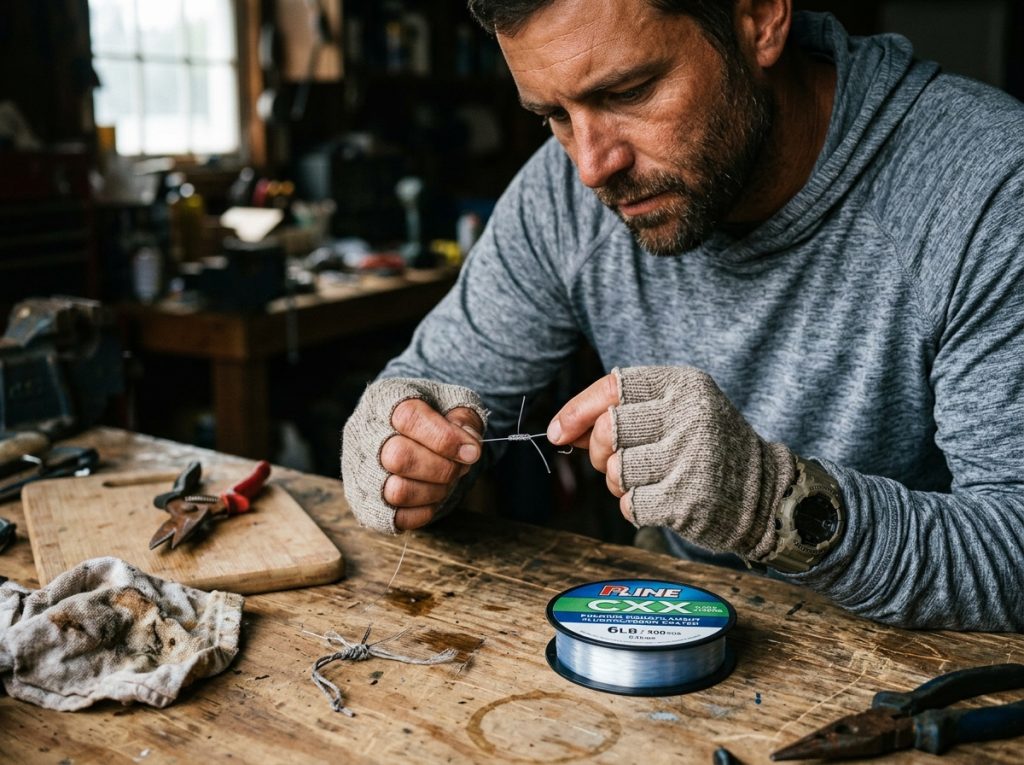
Now add the knot. Line almost never breaks in the middle of the spool. It breaks at the knot, which is the weakest point in the whole system.
Knot strength varies a lot: an average knot gives up another 10 to 15 percent, and a sloppy one can cost a quarter or more. The good news is that well-tied knots retain 90 percent or better, so this is the one loss you can mostly control. Where you tie your terminal tackle matters as much as what you tie, and the knot or leader connection is where your line actually fails, not the line itself.
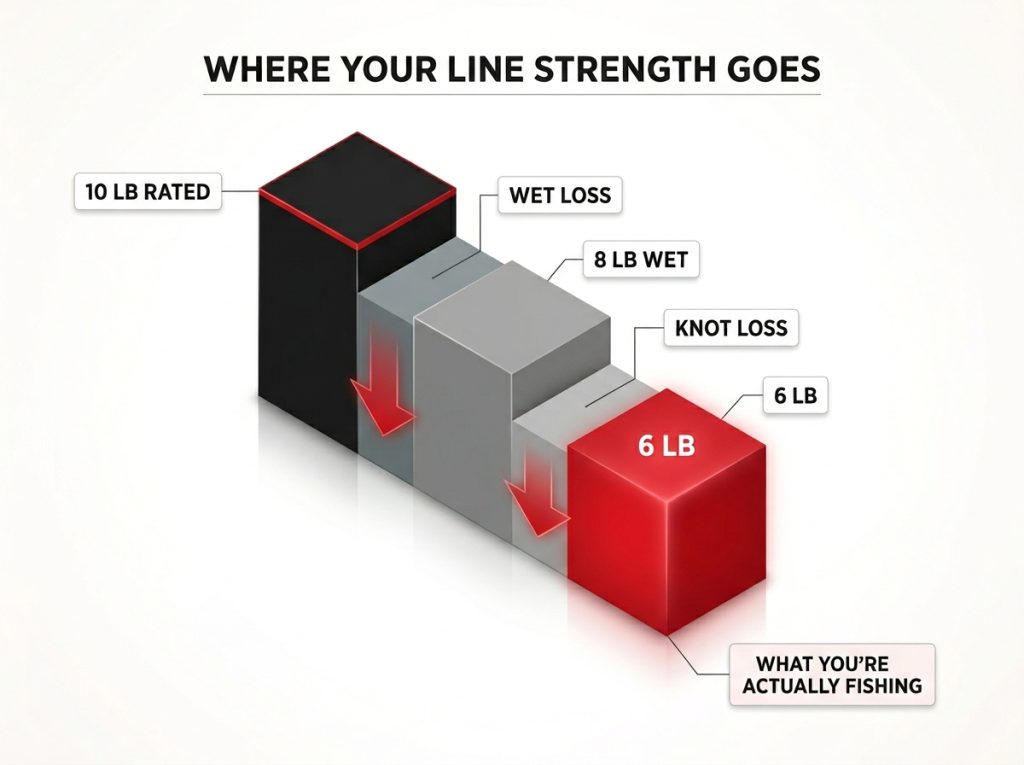
Stack Them and You’re Fishing 6 Lb
Here’s the math nobody adds up. Every guide mentions wet loss and knot loss, but they list them separately, like two pieces of trivia. They aren’t separate. They stack.
Take your “10 lb” mono. Lose roughly 20 percent wet and you’re at about 8 lb. Tie an average knot that costs another 22 percent and you’re fishing closer to 6 lb of real working strength.
The label says 10. The water says 6. That gap is why beginners get broken off and blame “cheap line,” when the real story was a wet line and an ordinary knot doing exactly what physics says they’ll do.
Re-tie often. The last few feet by your lure take all the abrasion, heat, and stress of the day, so the knot you tied at sunrise isn’t the knot you think it is by noon. Cut back a foot and tie fresh before you cast at the fish you actually care about.
Drag Does the Real Work
You Fish a Fraction of the Rating
This is the idea that fixes more beginner break-offs than any gear upgrade. You never fight a fish with your full line rating. Your reel’s drag system exists for exactly this.
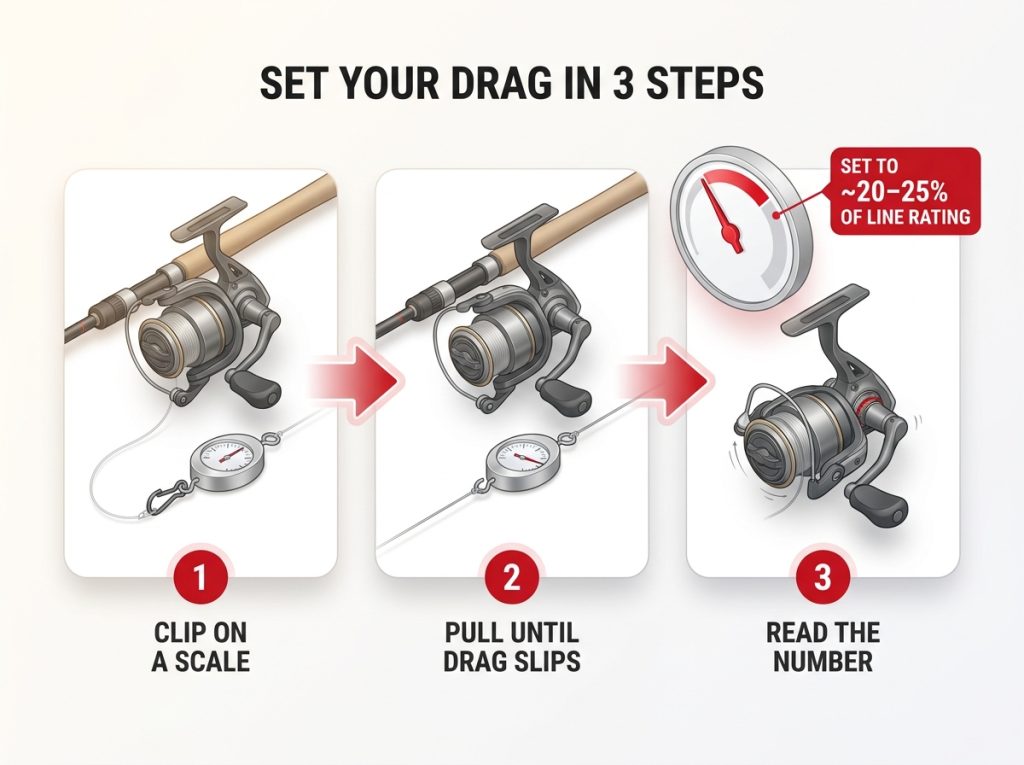
You set the drag so the reel gives up line under pressure, and a sane drag setting is usually around 20 to 25 percent of the line’s rating for lines up to 20 lb. The reel surrenders line, the rod bends and absorbs the surges, and the fish wears itself out long before anything reaches the breaking point.
Most beginners do the opposite. They crank the drag down tight “so the fish can’t take line,” then watch a good fish snap them off on its first run. If you want to understand the other half of this equation, reading your reel’s max drag and line-capacity numbers tells you what your setup can actually deliver.
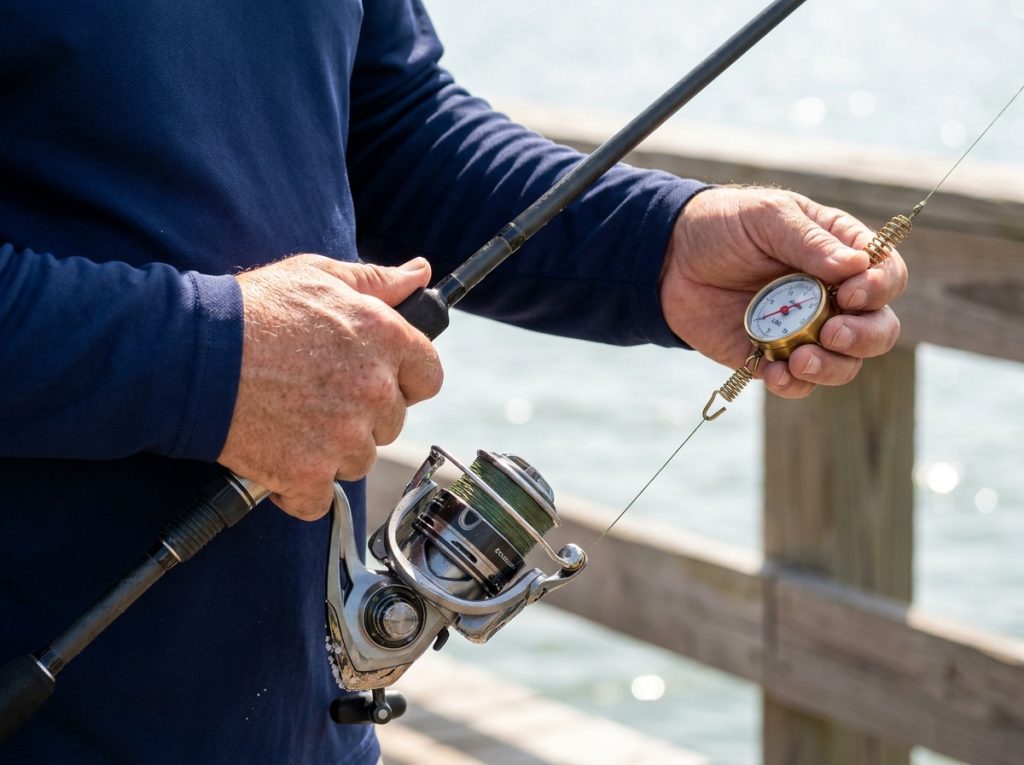
Set your drag at home with a cheap luggage or spring scale. Clip it to your line, pull until the drag just slips, and aim for about a fifth to a quarter of the line’s rating. Almost every beginner fishes with it cranked far too tight and never knows it.
Stretch Is a Shock Absorber
Line type changes how forgiving your setup feels. Mono has real line stretch, and that stretch acts like a shock absorber, cushioning the sudden jolt of a hookset or a headshake that would otherwise snap a stiffer line. That cushion is exactly why mono forgives a beginner’s mistakes.
Braid, by contrast, has almost no give and transmits every twitch straight through, which is great for sensitivity but unforgiving on a hard hook set. If you want the actual numbers, our breakdown of how much monofilament really stretches, which is a lot less than the old 25 percent claim, is worth a read, but for now just know mono bends where braid won’t.
Why Light Line Lands Heavy Fish
Put the two ideas together and the myth falls apart. Because drag and the rod do the fighting, a 10 lb line routinely lands fish many times heavier than 10 pounds. The line strength is a ceiling you try never to touch, not a weight limit on the fish. People land tarpon and tuna on line that wouldn’t dead-lift the fish off the deck, and they do it with patient drag and a good rod.
Braid vs Mono vs Fluoro (Same Number, Different Line)
Same Number, Different Diameter
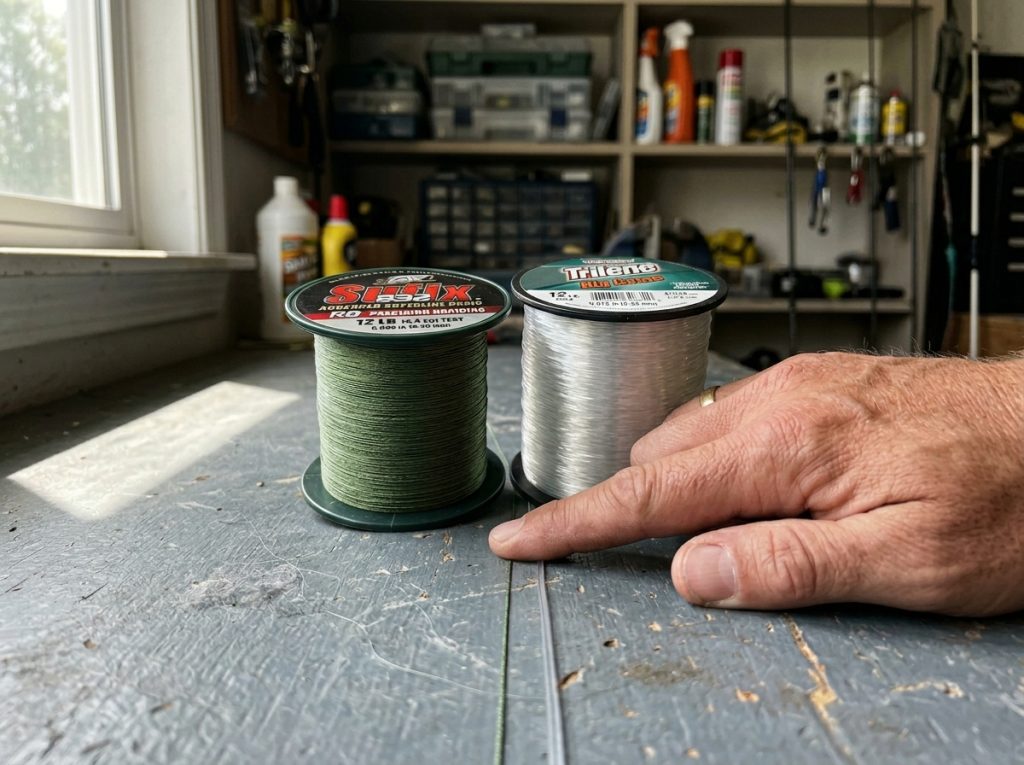
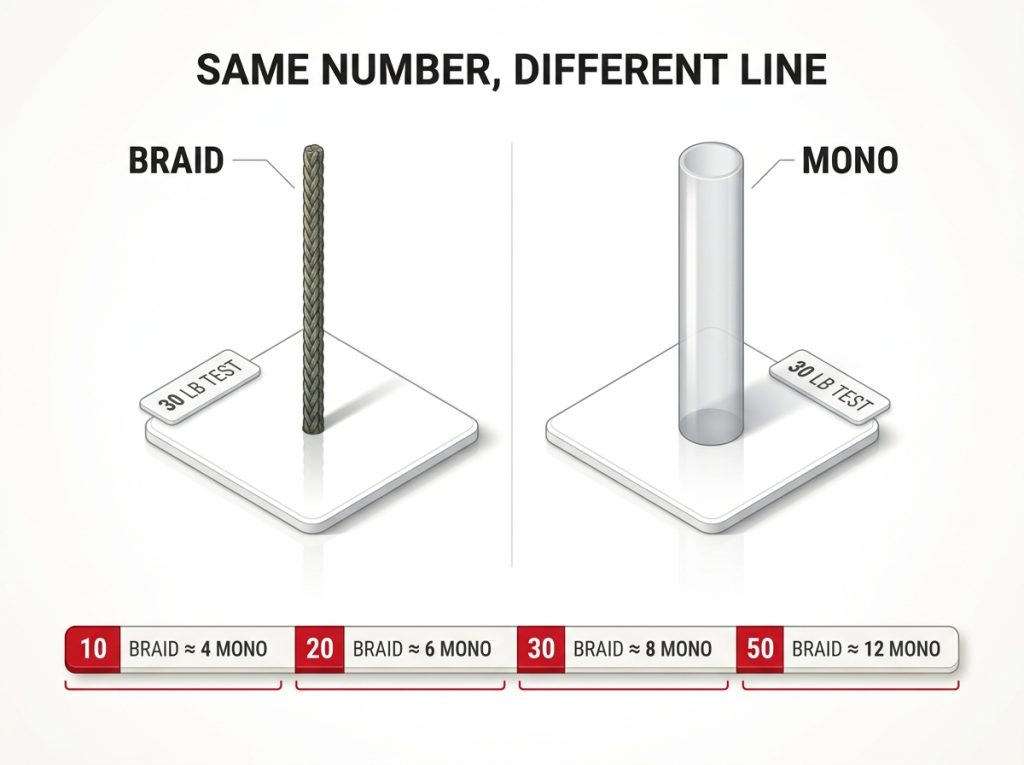
This is where matching numbers gets beginners in trouble. The same pound test is a completely different thickness depending on the line type. A 30 lb braid is about as thin as 8 lb mono.
Braid runs roughly two to three times thinner than mono at the same rating, so the standard diameter-to-pound-test conversions look like this: 10 braid is about 4 mono, 20 is about 6, 30 is about 8, 50 is about 12. That thin line diameter is why a popular braid like PowerPro Spectra packs so much rated strength onto a small spool.
The Diameter Trap (and the Fix)
Here’s the mistake that lives, in person, on a lot of new reels. A beginner switching to braid spools it by the number they used to run in mono. They fished 10 lb mono, so they buy 10 lb braid.
Now they’ve got line that’s absurdly thin for the reel, digging down into itself on the spool, throwing wind knots, and casting like a tangle waiting to happen. A single unnoticed wind knot in braid can cut your effective strength roughly in half.
The fix is to ignore the braid’s pound-test number when you spool and match by diameter instead, choosing the braid that equals the mono diameter your reel was built for. A common starting point is 20 to 30 lb braid on a reel rated for 8 to 10 lb mono. If you want a smoother, quieter option that resists wind knots, the eight-strand Sufix 832 Advanced Superline is a solid value pick alongside PowerPro.
Three Lines, Three Personalities
Strip away the marketing and each line type has a personality. Mono is stretchy, forgiving, floats, and costs the least, though it holds more line memory, which makes it the easy beginner choice. Fluorocarbon is low-visibility, sinks, resists abrasion, and holds its rating wet, so a spool like Seaguar InvizX shines as a clear-water main line or leader. Braid is thin, strong, and has zero stretch, but it’s visible in clear water and usually wants a fluorocarbon leader tied on.
For the full rundown, our side-by-side of braid, fluorocarbon, and monofilament goes deeper, and if you’ve decided braid is your path, here’s which braided lines are worth spooling.
What Pound Test for What Fish
A Real Starting Table
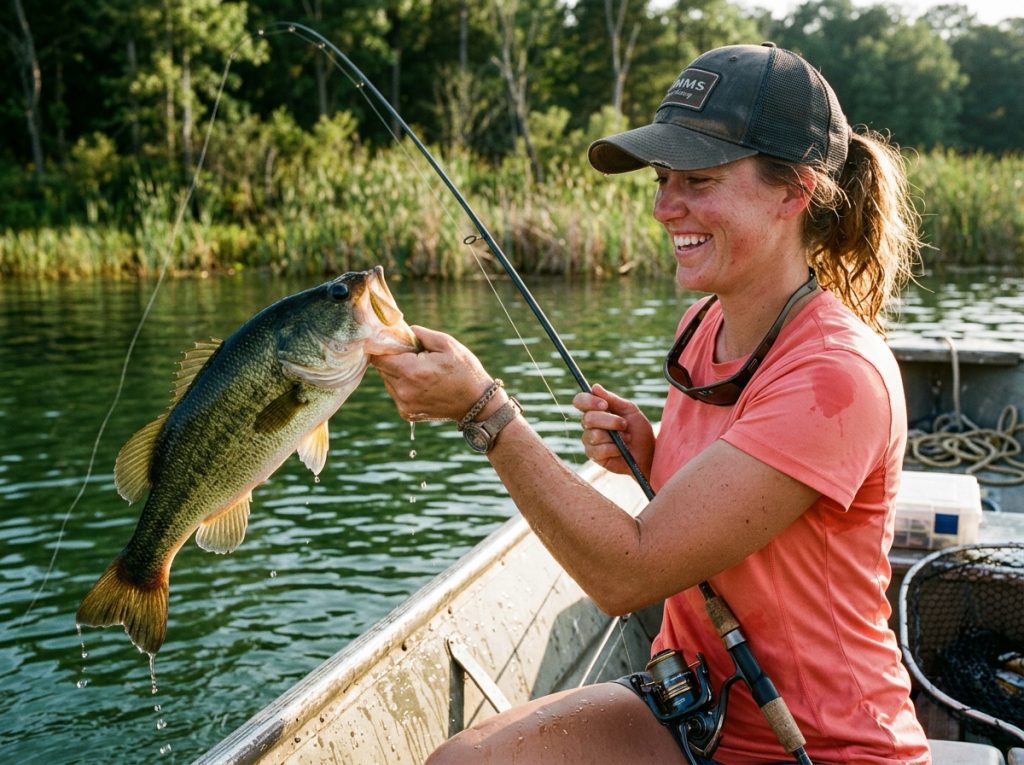
You searched for a chart, so here’s an honest one. These are starting points, not laws, and state fish-and-wildlife agencies recommend matching line weight to your target species and water for exactly this reason. Whether you’re chasing largemouth bass, smallmouth bass, rainbow trout, bluegill, and crappie in freshwater, or speckled trout, snook, and striped bass in saltwater, the same logic scales with the fish.
| Fish | Pound Test Range | Line & Notes |
|---|---|---|
| Panfish & Trout | 2–8 lb | Light mono for finesse and clear water |
| Bass & Walleye | 6–12 lb | 10 lb mono is the all-around sweet spot |
| Channel Catfish | 12–20 lb | Abrasion-resistant mono or braid |
| Redfish & Inshore | 16–25 lb | Braid main line with a fluoro leader |
| Stripers & Northern Pike | 20–30 lb | Heavier braid, leader for toothy fish |
The One-Spool Shortcut
Want the version you can act on today? One spool of 10 lb mono on a medium spinning rod is the beginner fishing line answer that covers panfish, trout, walleye, and bass, which is most of what a beginner targets in freshwater. You can fish a whole first season off that single setup and rarely feel undergunned. The chart matters when you start chasing one species hard, but it shouldn’t keep you off the water while you memorize it.
Match the Line to Your Reel, Too
The fish isn’t the only thing your line has to match. Your reel cares as much as the fish does.
Spinning reels run best with lighter line, roughly 4 to 12 lb, where they cast smoothly and tangle less. Baitcasting reels handle heavier line comfortably, often 10 to 50 lb. Your rod power and the reel’s line capacity matter too, since heavy line fills a small spool fast and a mismatch quietly costs you casting distance.
Going heavier “to be safe” backfires twice over: thick line is more visible to fish and it casts shorter, so you get fewer bites and less distance. Heavier is not automatically safer.
Lighter vs Heavier (the Real Trade-Offs)
Lighter Isn’t Riskier, It’s Often Smarter
New anglers treat line weight like a safety dial, where more is always better. It isn’t. Lighter line gets more bites, casts farther, and disappears better in clear water, which is the whole idea behind finesse fishing and sight-fishing to spooky fish.
Think of your line as a deliberate fuse, the part of the system designed to give before your rod snaps or your hook straightens out. Choosing lighter on purpose is often the smart play, not a gamble, and plenty of anglers catch more by fishing lighter line on purpose for more bites in clear water.
The line is supposed to be the fuse. If something in your setup has to give, you want it to be the cheap strand you can re-tie in 30 seconds, not your rod tip or a bent-open hook. That’s the whole argument for not over-spooling.
What Actually Breaks Your Line
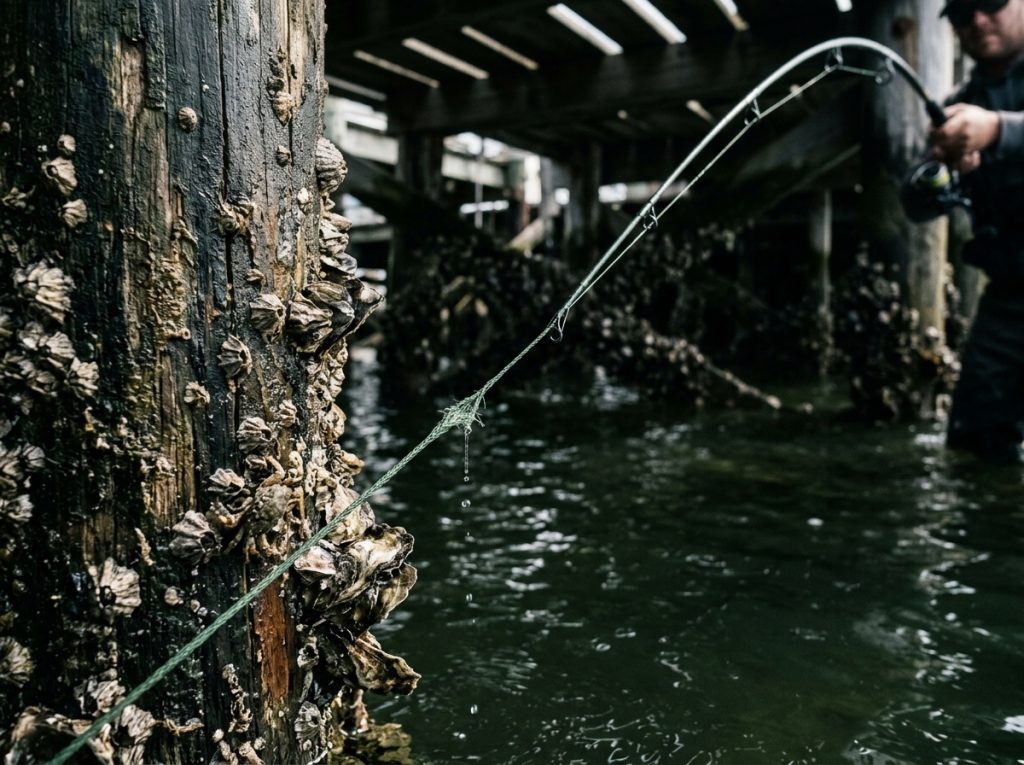
Remember, pound test only measures a smooth, straight pull. Real break-offs almost never come from a clean pull. They come from abrasion resistance failing against rocks, oysters, and rough gill plates, or from a shock load, the sudden surge or hard hookset that spikes way past the steady rating, which is why a line’s shock strength matters as much as its straight-pull number. That’s why a “20 lb” line snaps on a 5 lb fish next to a barnacle-crusted piling.
A fluoro leader like Berkley Vanish buys you abrasion resistance and low visibility right where the line takes the most punishment, without respooling the entire reel. One safety note worth tucking away: when line lets go under heavy load, lures and sinkers can come flying back at you, so never put your face in line with a fish you’re horsing out of a snag.
When to Reach for Heavier
Heavier line earns its place in specific spots. Fishing in cover, pitching into thick brush, working around oyster bars and dock pilings, or targeting genuinely big or toothy fish all justify stepping up for the abrasion margin and the backbone to move a fish out of trouble fast. The rule of thumb is simple: go up for cover and teeth, not for comfort.
What a Beginner Should Actually Spool Up
The Do-Everything Starter Spool
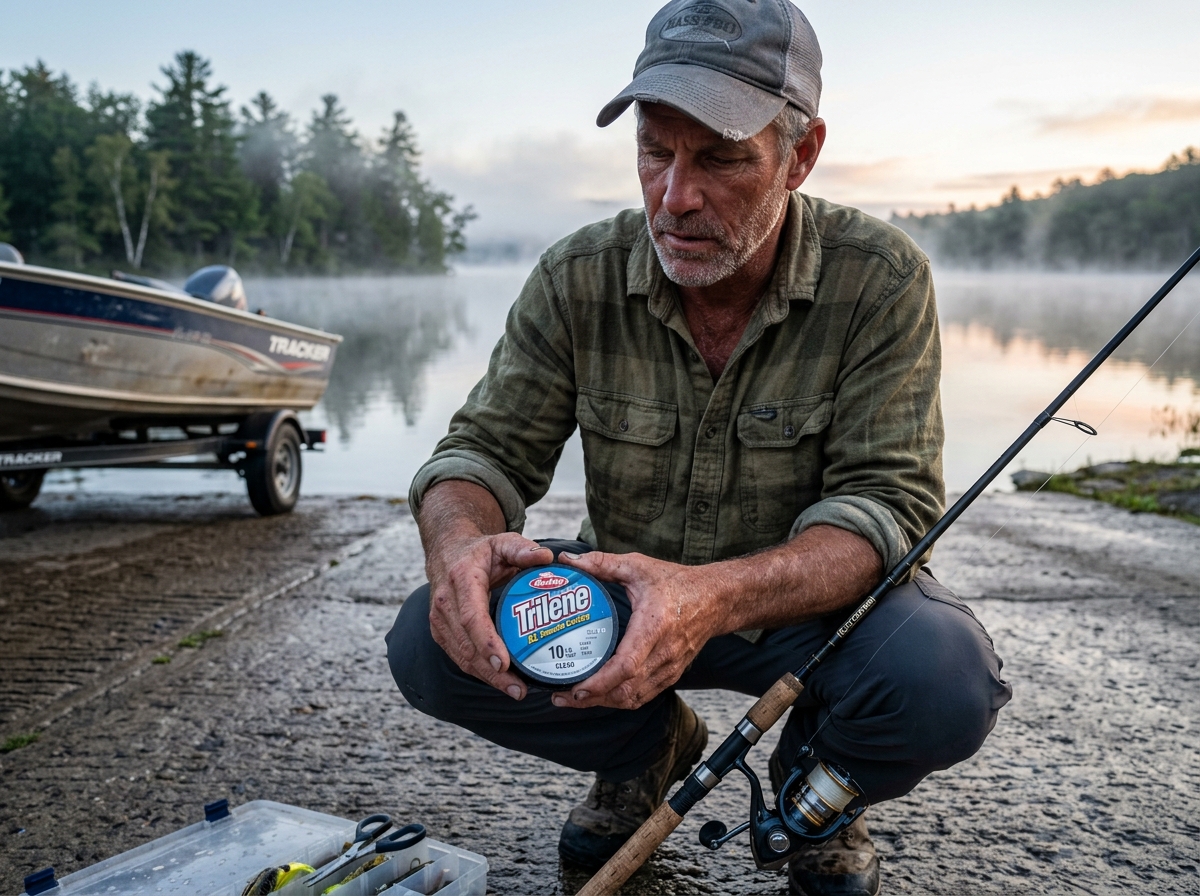
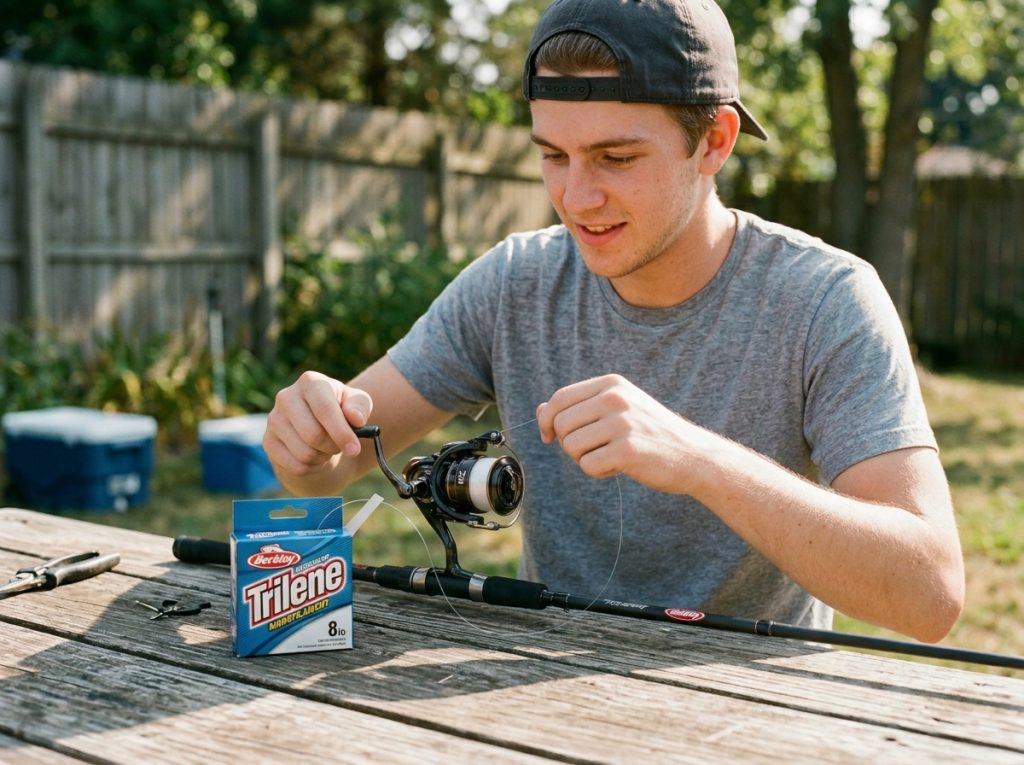
After all that math, the honest answer is refreshingly cheap. Spool one reel with a forgiving 10 lb mono and go fishing. A soft, stretchy, low-cost line like Berkley Trilene XL ties easy knots and forgives the hooksets and drag mistakes every beginner makes. The expensive spool on the endcap is not what’s losing you fish, and a properly set drag will do more for your landing rate than any premium label.
If you want the bigger picture on choosing line, start with our complete guide to choosing the right fishing line, and for the type question specifically, here’s the line type that forgives almost every beginner mistake.
One spool of 10 lb mono on a medium spinning rod is a legitimate do-everything freshwater answer for your first season. Put the money you saved on premium line toward more time on the water, which is the only thing that actually makes you better.
When to Add a Second Setup
You’ll know when you’ve outgrown the one-spool answer. Add a braided setup with a fluoro leader once you’re fishing heavy cover, deep water, or water so clear the fish spook off mono. That’s when braid’s thin diameter and zero stretch start paying off and a fluoro leader earns its keep. Until then, a second reel is a want, not a need, and there’s no rush.
Your Quick Setup Checklist
Before you cast, run through four things:
- Right pound test for your reel, not just the fish (4 to 12 lb on a spinning reel)
- Drag set to about 20 to 25 percent of the line’s rating, checked with a scale
- A fresh, properly seated knot
- A habit of re-tying after a few fish or any contact with structure
Conclusion
Pound test is a dry lab number, not your fish limit, and once the line is wet and knotted your real working strength is lower than the label. Drag and the rod do the actual fighting, which is why light line lands heavy fish all day long. Match the line to your reel and your water, set the drag right, and re-tie often, and you’ll beat anyone who’s just buying a bigger number.
Do one thing this week: spool up 10 lb mono, set your drag with a scale before you leave the house, and count how few fish you actually break off.
Frequently Asked Questions
01What does pound test mean on fishing line?
Pound test is the force needed to break the line in a steady straight pull, so a 20 lb line should break around 20 pounds of pressure. It’s a dry lab spec, not the size of fish you can land.
02What pound test line should a beginner use?
For most freshwater fishing, 10 lb monofilament on a medium spinning rod handles panfish, trout, walleye, and bass. Drop to 4 or 6 lb for finesse panfish, and go heavier only for big or toothy fish and heavy cover.
03Does a 10 lb test line mean it can only catch a 10 lb fish?
No. With the drag set to about 20 to 25 percent of the rating, the reel and rod do the fighting, so a 10 lb line lands fish many times heavier. Pound test is a breaking ceiling, not a fish-weight limit.
04What is the difference between braid and mono pound test?
Same number, very different line. A 30 lb braid is about as thin as 8 lb mono, so braid is far thinner per pound test. Match braid by diameter or your reel’s mono rating, not by the pound-test number.
05Is higher pound test line better?
Not usually. Heavier line is more visible, casts shorter, and gets fewer bites, so you only want it for abrasion in cover or genuinely big fish. For most situations, lighter line lands more fish.
Risk Disclaimer: Fishing, boating, and all related outdoor activities involve inherent risks that
can lead to injury. The information provided on Master Fishing Mag is for educational and informational purposes
only. While we strive for accuracy, the information, techniques, and advice on gear and safety are not a substitute
for your own best judgment, local knowledge, and adherence to official regulations. Fishing regulations, including
seasons, size limits, and species restrictions, change frequently and vary by location. Always consult the latest
official regulations from your local fish and wildlife agency before heading out. Proper handling of hooks, knives,
and other sharp equipment is essential for safety. Furthermore, be aware of local fish consumption advisories. By
using this website, you agree that you are solely responsible for your own safety and for complying with all
applicable laws. Any reliance you place on our content is strictly at your own risk. Master Fishing Mag and its
authors will not be held liable for any injury, damage, or loss sustained in connection with the use of the
information herein.
Affiliate Disclosure: We are a participant in the Amazon Services LLC Associates Program, an
affiliate advertising program designed to provide a means for us to earn advertising fees by advertising and linking
to Amazon.com. As an Amazon Associate, we earn from qualifying purchases. We also participate in other affiliate
programs and may receive a commission on products purchased through our links, at no extra cost to you. Additional
terms are found in the terms of service.