

In this article
The moment I handed a Pflueger President labeled “3500” to a client who’d just bought a Shimano Sedona “2500,” the look on his face said everything. They were the same reel. Same palm width, same spool diameter within a few millimeters, same physical presence in the hand. He’d paid for two different sizes and gotten one. The guide I was fishing with that spring didn’t even flinch. He’d stopped asking about reel numbers years ago. He asked about weight, drag power, and inches per turn. The number stenciled on the body had died for him a long time before.
This is where you are right now: the spinning reel size chart numbers from 1000 to 6000 look like a rational system. They are not. What follows is the breakdown of what those numbers actually measure, what they miss entirely, and how to build a rod-reel-line triad that holds up on the water instead of collapsing at the tackle shop counter.
⚡ Quick Answer: Spinning reel size numbers (1000–6000) are brand-specific and not standardized across the industry. A Shimano 3000 and a Penn 3000 are different tools in weight, frame size, and torque capacity. To pick the right reel, ignore the number and focus on three specs: physical weight in ounces (for rod-reel balance), inches per turn (for retrieve speed), and frame material (for environment durability). These three measurements hold consistent meaning. The number on the box does not.
The Language Nobody Agreed On — Why Reel Numbers Mean Different Things
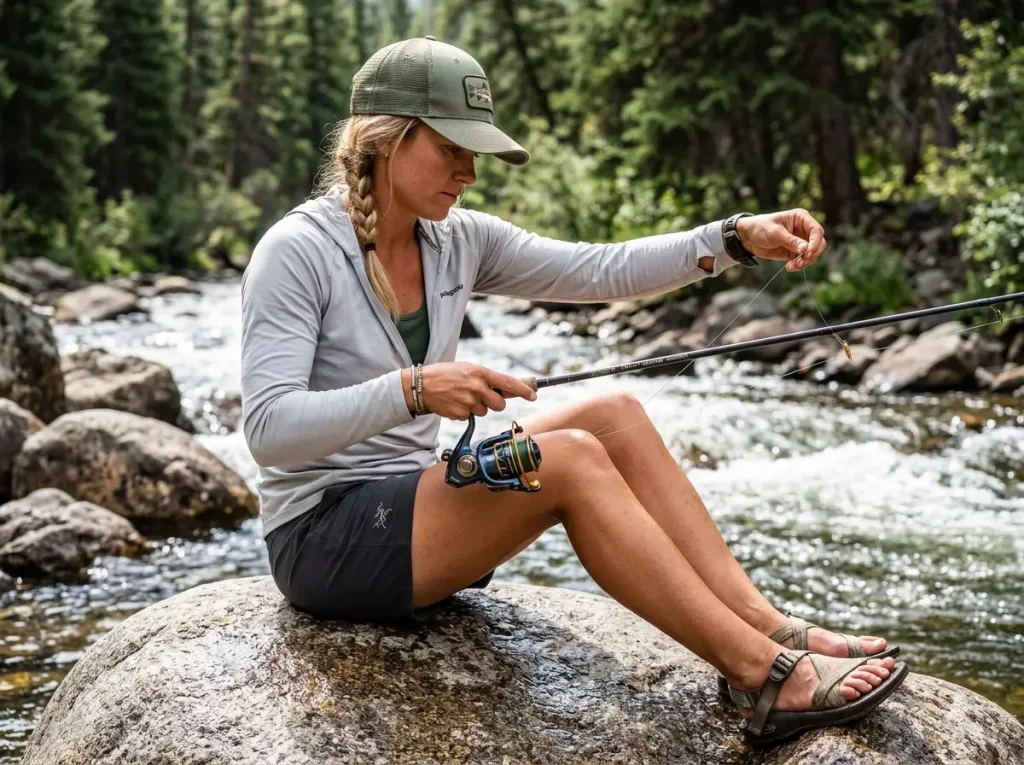
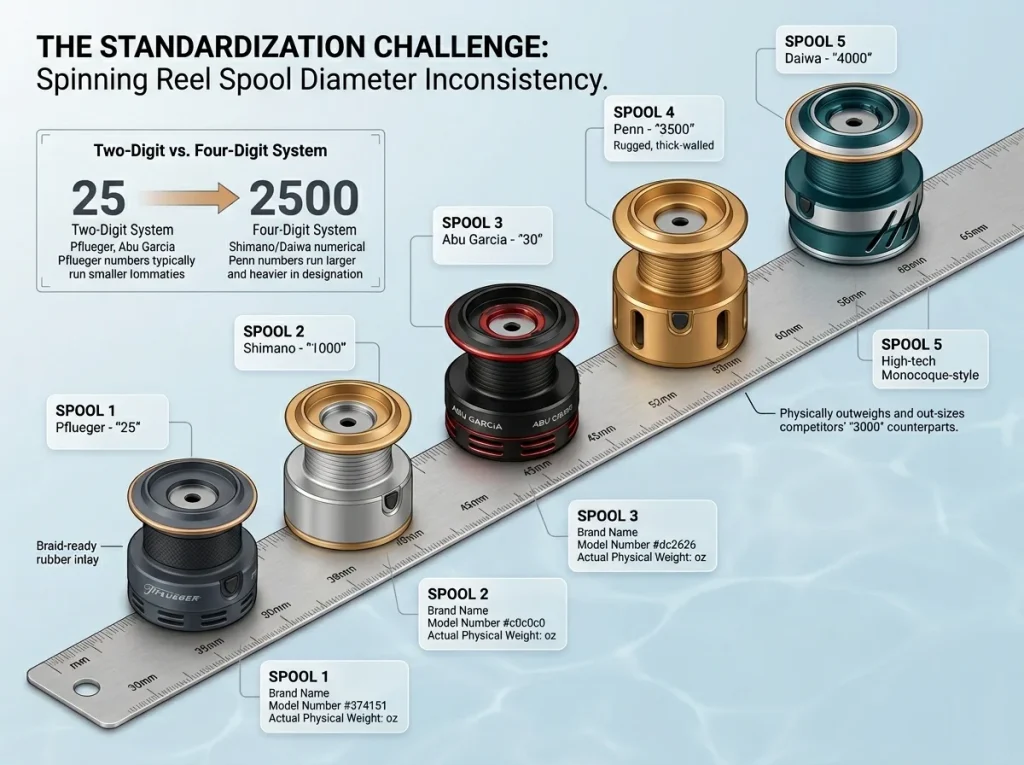
Two competing systems run the market and neither talks to the other. Shimano, Daiwa, and Penn use four-digit increments — 1000, 2500, 3000, 4000. Abu Garcia, Pflueger, and Lew’s use two-digit identifiers — 20, 25, 30, 40 — where a “30” roughly maps to “3000.” Roughly.
That surface translation is where the trouble starts. A “30” from Pflueger is not a “3000” from Shimano. Not physically. Pflueger reels run small: a Pflueger President 25 sits closer to a Shimano 1000 than a Shimano 2500. Anglers who order online without handling the reel first absorb this lesson once, hard. Penn runs heavy: a Spinfisher VII 2500 weighs 10.7 oz versus the Shimano Stradic 2500 at 7.9 oz. Same number, 2.8 oz difference. That’s not rounding error — on a 7-foot finesse rod, it shifts your balance point past the grip, loads your wrist with every cast, and bleeds sensitivity out of the setup.
The old Daiwa BG, pre-MQ, ran large in the other direction. A BG 3000 dwarfed equivalently numbered reels from Shimano or Penn. Anglers who matched a BG 3000 to a medium rod built for a “3000” ended up tip-heavy and confused. None of this is documented anywhere official because no industry body — not IGFA, not AFTMA, not any Japanese tackle standards organization — has ever standardized spinning reel size nomenclature. There is no spec to standardize against.
The only reliable cross-brand translation tool is a gram scale and a digital caliper on spool diameter. Not the number on the box. If you want to start reading a spinning reel’s spec sheet accurately, that’s where the actual data lives — in the spec column, not the model name.
Frame and Gear Engineering — What the Number Actually Reflects
The reel frame does one thing: hold the gear train in perfect alignment under load. When it flexes under torque, the drive gear’s tooth faces grind against a surface they weren’t designed to contact. That grinding sounds small. It isn’t. It’s the beginning of the wear pattern that turns a smooth reel into a rough one.
This is where frame material makes every difference. Carbon composites — Shimano’s CI4+, Daiwa’s Zaion, Penn’s graphite — save 25 to 30 percent weight over aluminum. For finesse casting where you’re throwing 200 times a day, that weight savings matters. But under heavy torque, a composite frame micro-flexes. Winch a 15 lb snapper off a wreck and you’re asking a carbon frame to hold alignment under a force it wasn’t built for. Aluminum — Shimano’s Hagane body, Daiwa’s Monocoque — holds rigid. Heat dissipates better. Gear alignment stays true. It’s heavier. That’s the trade, and it’s a fair one for the right application.
The Shimano Compact (“C”) model is a detail that confuses more buyers than almost anything else. A C3000 is a 2500-sized body mated to a 3000-sized spool. You gain line capacity without the weight of a true 3000. The catch: the internal gears are 2500-sized. Their torque ceiling is lower. On the flats chasing redfish on 8 to 12 lb fluorocarbon, a C3000 is mechanically optimal. Pulling largemouth out of timber on heavy braid? Get a standard 3000 or you’ll feel the gear train protest under load. That distinction has cost people fish they should have landed.
Daiwa’s Monocoque (MQ) architecture does something more interesting. By eliminating the side plate entirely, it frees up internal volume for a larger-diameter main gear inside the same frame envelope. The result is that a BG MQ 3000 produces the torque of a traditional 4000. That’s not a marketing claim — it comes from the gear mesh geometry having more surface area engaged at every rotation. You can read more about frame metallurgy and drag system engineering in the context of what actually separates reel construction tiers.
Pro tip: Hold the reel in your hand and turn the handle slowly under light thumb resistance. If you feel any coarseness in the first quarter-turn, the drive gear is either undersized for the load profile or already worn. Smoothness under light tension is the real quality test, not smoothness in the air.
The Drag System — Size, Surface Area, and Why Your Fish Breaks Off
Here’s the thing most anglers never think about until it costs them a fish: drag pressure is not static. It increases automatically as a fish runs.
The Insidious Drag Increase Phenomenon
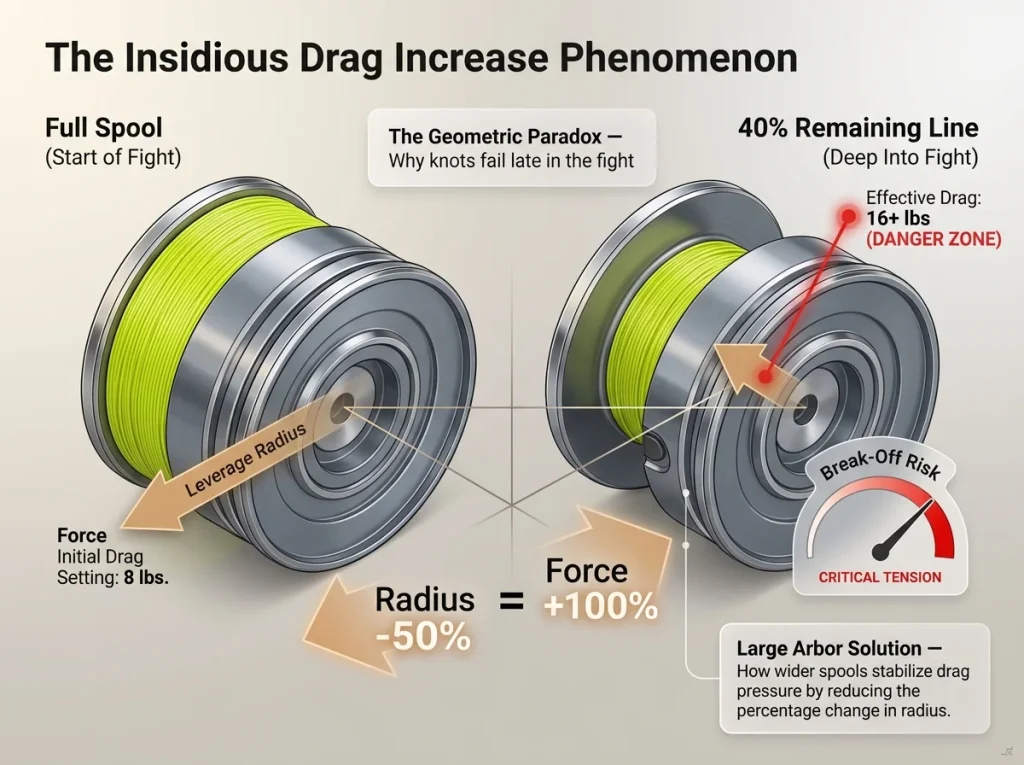
Your spool acts as a lever. As a fish removes mono or braid and the radius of remaining line decreases, effective drag pressure increases inversely. If line level drops to half its original diameter, the effective drag doubles — without you touching the drag knob. You set 8 lbs at the start of the fight. By the time the fish has taken 100 yards, you may be running 14 or 15 lbs. That’s where the tippet breaks. That’s where the knot fails. Not because you tied it wrong, but because you didn’t understand drag geometry.
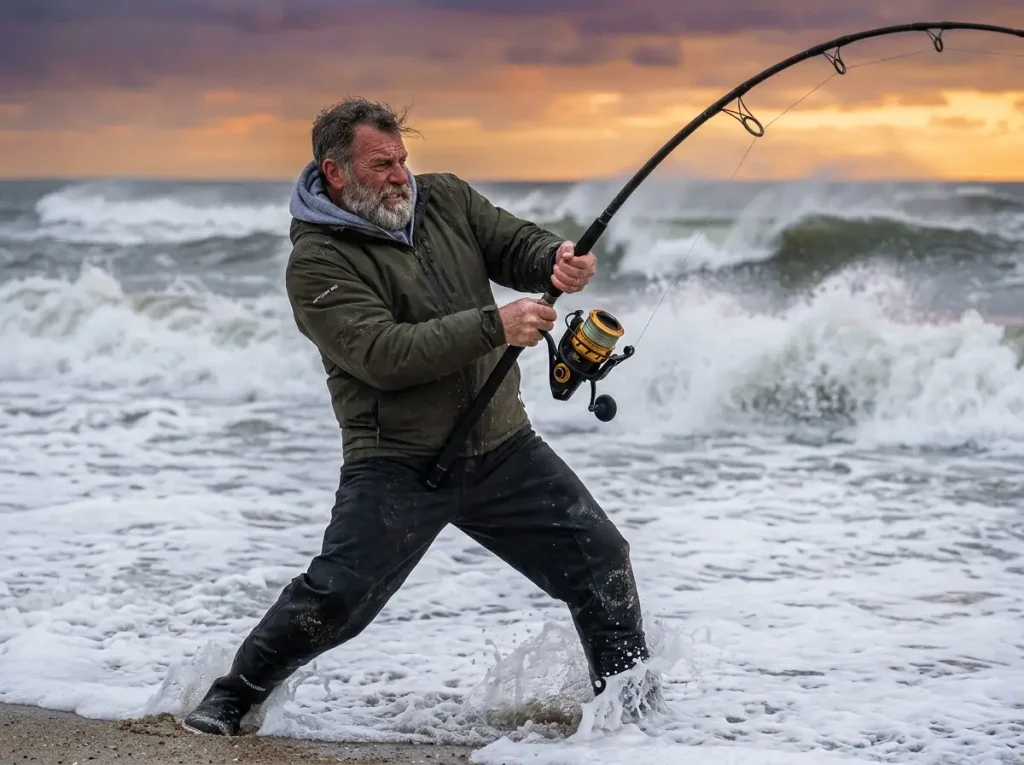
Large arbor and wide spool depth designs minimize this effect by reducing the percentage change in radius during a long run. A 5000-class reel on a surf rod isn’t about ego — in surf applications where drag stability over long runs is non-negotiable, the larger arbor is the mechanical reason you land the fish instead of losing it at the end of the fight.
Set your drag with the spool at 80 percent capacity, not full. The effective drag pressure at 40 percent remaining line is meaningfully higher than your initial setting. This is the kind of thing guides know that nobody writes on spec sheets.
Washer Materials and Size-Specific Performance
Felt washers have extremely low start-up inertia — ideal for 2 to 6 lb fluorocarbon in finesse applications, appropriate for 1000 to 2500 sizes. They wear fast and dissipate heat poorly. Push them on a long drag surface area run and they glaze.
Carbon fiber washers — HT-100, Cross Carbon — handle sustained heat without glazing. Standard on 4000-plus sizes targeting bonefish, tuna, or large redfish where long runs are expected. A 4000-class drag stack running at 12 lbs operates cooler than a 2500 drag stack at the same 12 lbs, because the 4000 distributes that force over a larger contact surface. Same braking force, lower face pressure, less heat. This is the actual mechanical reason bigger reels have better drag quality — not just higher maximum drag numbers.
Rotor Inertia and Retrieve Mechanics — What “Feel” Actually Measures
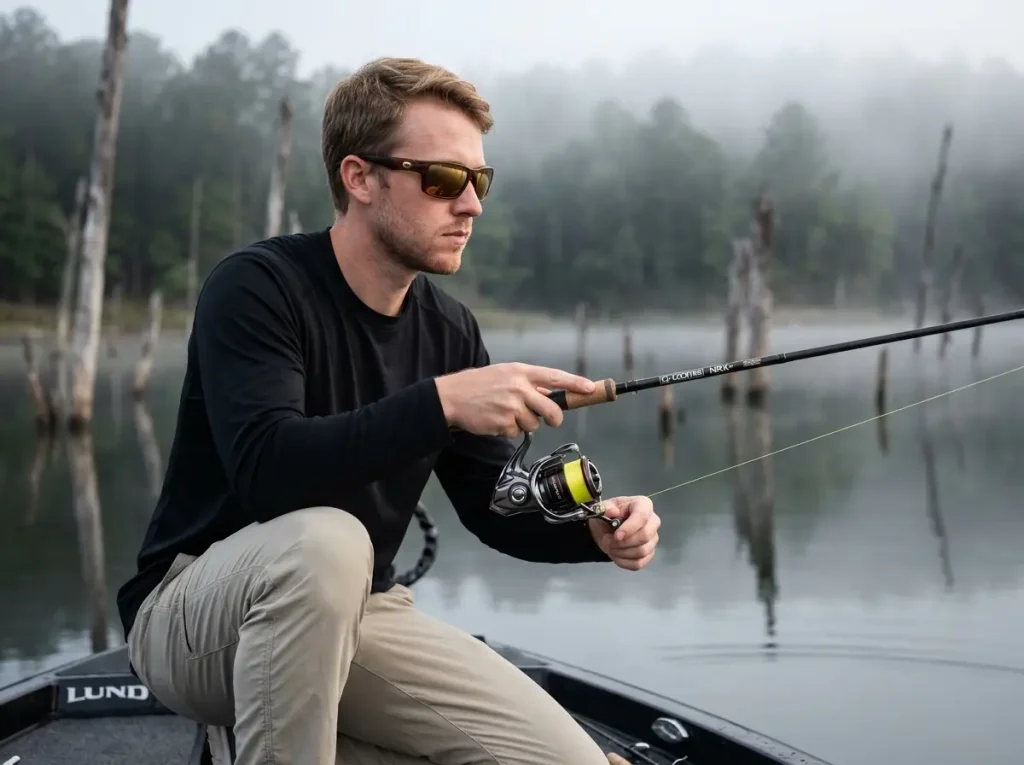
Two reels with the same gear ratio can feel completely different. One picks up every tick of a Ned rig dragging bottom. The other masks it. The difference is rotor inertia.
The Physics of Startup Inertia
A heavy rotor requires more force to start rotating and more force to stop. That startup inertia creates a lag between what the lure does and what your hand feels. On finesse presentations — drop shots, light shaky heads, anything subtle — the fish has already spit the bait before the angler detects resistance through a high-mass rotor. A 2500 with a low-inertia rotor outperforms a 3000 with a standard rotor for this kind of fishing. This is why moment of inertia matters more than most spec sheets acknowledge.
Shimano’s MagnumLite (MGL) rotor reduces rotational inertia by up to 48 percent by repositioning the bail arm mechanism to balance the rotor without adding peripheral mass. The practical result is bite detection on a half-ounce jig that a heavier rotor would swallow. Most of the time when an angler says a reel “doesn’t feel right” for finesse work, they’re describing rotor inertia without knowing it.
Pro tip: You cannot evaluate rotor inertia by wiggling the reel in a store. Mount it on a rod, tie on a lure, and drag the lure across carpet while watching the handle. The rotor on a low-inertia reel starts and stops responsively. A heavy rotor coasts and lags. That’s the test.
Gear Ratio vs. Inches Per Turn — The Metric Marketers Hide
Gear ratio without spool diameter is half an equation. A 6.2:1 ratio on a small spool can retrieve less line recovery per crank than a 5.6:1 on a large spool. The number that actually matters is IPT — inches per turn.
The calculation: IPT equals gear ratio multiplied by the spool circumference (pi times spool diameter). A Daiwa BG 2500 at 5.6:1 retrieves 33.2 inches per turn — potentially more than a “faster” reel with a smaller spool.
Power Gear (PG, below 5.0:1): Maximum torque for vertical jigging or winching bass out of structure. Extra High Gear (XG, above 6.0:1): Topwater, burning blades, tracking fast-moving species. A 7.1:1 gear ratio on a 2500 reel does not automatically mean “fast.” Verify the IPT before buying. Matching gear ratio to lure technique is what separates productive setups from frustrating ones.
The Rod-Reel Fulcrum — Fatigue Physics and the Balance Test
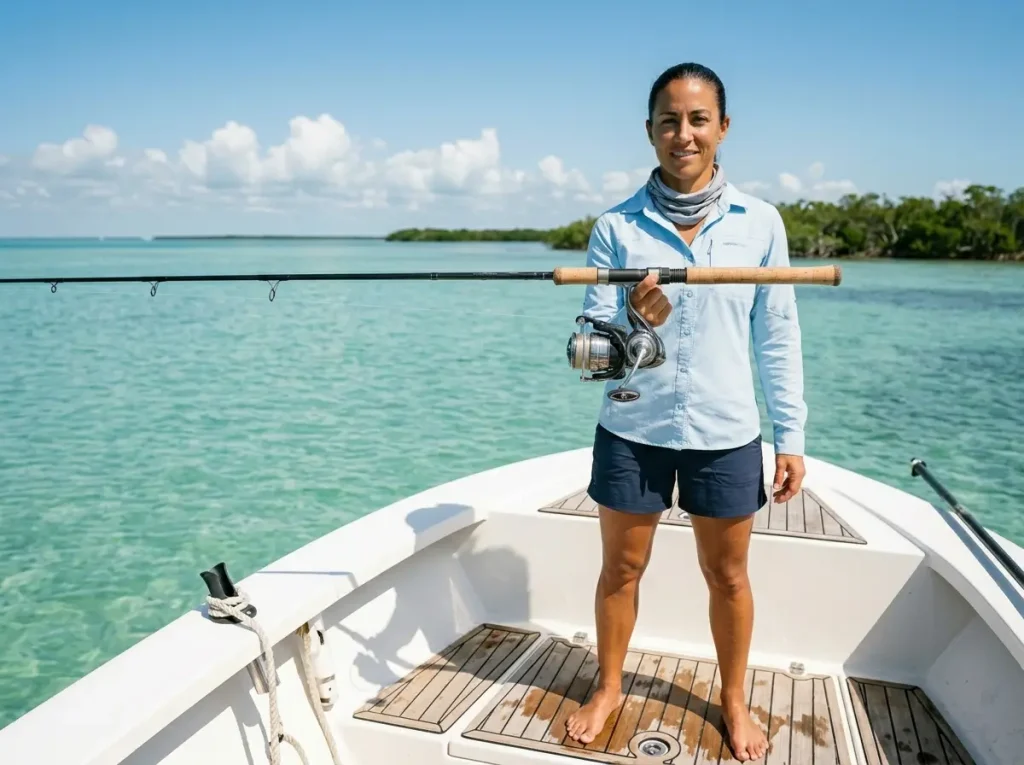
A fishing rod is a class-3 lever. Your grip hand is the fulcrum. The reel acts as the counterweight to the rod tip’s mass distribution. Get the balance wrong and you pay for it over 200 casts — not in one acute injury but in the accumulated wrist loading that turns a full day on the water into a grind.
The Physics of the Class-3 Lever
Reel too light: the tip goes heavy, and you apply constant upward wrist pressure to maintain tip angle. Reel too heavy: setup becomes butt-heavy, degrading casting accuracy and loading the forearm on every retrieve. Target balance: 7-foot medium rod needs a reel in the 8 to 10 oz range — typically 2500 to 3000 size, but verify by weight, not by number. An 8-foot-plus surf rod needs 5000-plus territory (15 to 20 oz) to counterweight the long lever of the blank.
The Weight Tax and the 200-Cast Threshold
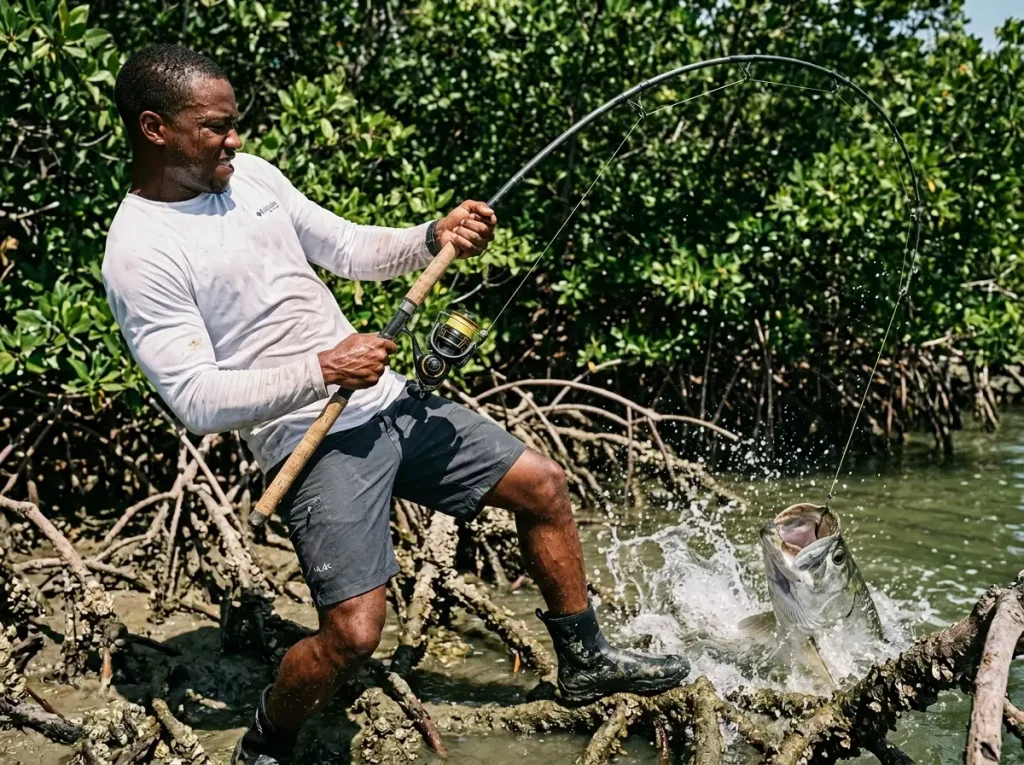
The Penn Spinfisher VII 2500 at 10.7 oz versus the Shimano Stradic 2500 at 7.9 oz: 2.8 oz difference. On a 7-foot finesse rod, that shifts the system’s center of gravity rearward. Over a full day of casting, that shift is not trivial. But here’s the honest counter: Penn’s IPX5 sealing and full metal body produce that weight because they’re built for multi-season saltwater duty. The Shimano will outperform on a freshwater river smallmouth setup. The Penn will outlast it by years fishing mangrove snook. This is the trade, not a flaw in either reel.
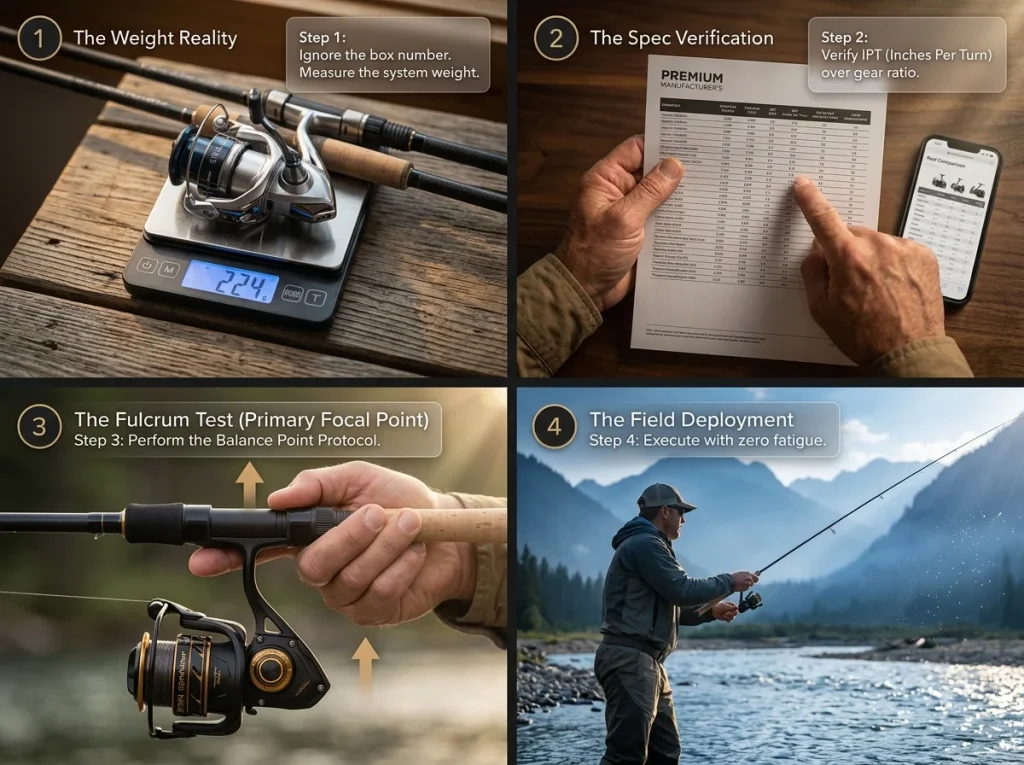
For finding your rod-reel balance point before extended sessions, the test is tactile and takes thirty seconds. Hold the rod in your natural fishing grip with the reel attached. Let go. If the tip drops, the reel is too light. If the butt drops, the reel is too heavy. That’s the protocol. Do this test in the store, not at the water.
Brand-by-Brand Anomalies — The Case Studies Every Buyer Must Know
Generic size charts don’t tell you which brand’s “3000” will unbalance your rod or strip gears on a heavy bass. These three case studies do.
The Shimano “C” Model Trap and Opportunity
A Shimano C3000 is a 2500-sized frame carrying a 3000-sized spool. The advantage: line capacity of a 3000 at the ergonomics and weight of a 2500. The disadvantage: the internal gears are 2500-sized. For flats redfish on 8 to 12 lb fluorocarbon, the C3000 is the mechanically correct choice — sufficient drag, sufficient capacity, better wrist fatigue profile over a full day on the poling skiff. For heavy timber bass fishing with the drag cranked to 15 lbs, the gear train’s torque ceiling will eventually show itself. Know which side of that ceiling your fishing lives on.
Shimano’s suffix system compounds the confusion: HG (High Gear), XG (Extra High), PG (Power Gear), FL (flat spool), MGL (MagnumLite rotor), S (shallow spool). A shallow spool is critical for braid anglers — put 150 yards of 20 lb braid on a standard spool and it’ll be half-empty, changing your drag pressure geometry the moment the fish runs.
Daiwa’s MQ Architecture — When “3000” Beats “4000”
The Daiwa BG MQ 3000 and 4000 share essentially the same physical frame — a fraction of an ounce separates them. The 2500 to 3000 transition is where the real jump happens: a full ounce lighter, significantly smaller frame, and a 4.4 lb drop in max drag (22 lbs vs. 26.4 lbs). If you’re fishing a medium-heavy rod and want more torque without a major weight penalty, moving from BG MQ 2500 to 3000 is one of the better value-per-ounce moves in current spinning reel engineering.
The older BG (non-MQ) is a different story. It runs large. A BG 3000 physically dwarfs equivalently numbered reels from other manufacturers — a critical distinction when you’re trying to balance a specific rod blank. Buy the old BG used if you want the deal, but size it against your rod on a scale first.
Penn’s “Weight Tax” — The Structural Argument for Heaviness
Penn Spinfisher VII 2500: 10.7 oz. Shimano Stradic 2500: 7.9 oz. Penn’s markup buys full metal body, IPX5 waterproofing, Live Liner drag, and heavier-gauge internal components built for years of saltwater corrosion.
The honest use case: if you’re fishing river smallmouth with 6 lb fluorocarbon on a 7-foot medium-light rod, the Penn’s weight will cost you sensitivity and load your wrist by hour four. If you’re fishing mangrove snook with 20 lb braid on a 7-foot medium-heavy, the Penn will outlast the Shimano by seasons. Understanding how reel weight and frame material affect ultralight combo performance matters most when you’re building a finesse setup around a specific rod and line class.
Pro tip: If you’re buying a Penn for saltwater use, rinse it after every trip, even if it “didn’t get wet.” Salt carries on air near the surf. The reel that outlasts its peers is the one that gets rinsed consistently.
The Optimization Framework — How to Select Without Looking at the Number
The Four-Step Analytical Selection Protocol
Step 1 — Ignore the number. Measure weight and IPT first. If the reel’s weight balances your primary rod and the IPT matches your dominant technique’s speed requirement, the number on the box is irrelevant. These two metrics hold consistent meaning across brands. The size designation does not.
Step 2 — Verify frame material against environment. Freshwater finesse: carbon composite (CI4+, Zaion) for weight reduction and fatigue factor reduction over high-cast-frequency days. Saltwater or heavy-torque applications: aluminum (Hagane, Monocoque) for structural rigidity. This is not a preference. It’s a durability decision.
Step 3 — Evaluate the “C” model trade. Shimano compact models give you line capacity with a gear-torque ceiling. Know your target species’ maximum drag requirement before choosing C over standard. Most freshwater situations tolerate the trade. Heavy inshore and offshore situations do not.
Step 4 — Calculate IPT, not gear ratio. Multiply the gear ratio by the spool circumference to get IPT. Match IPT to your lure’s optimal recovery rate, not to a marketing label about “speed.”
Conservation Integrity — Right-Sizing as an Ethical Mandate
A 1000-class reel targeting large pike or heavy bass is not just a tactical mistake. It’s an ethics question. Extended fight times trigger cortisol and catecholamine release in fish, depleting glycogen stores. The peer-reviewed research on catch-and-release metabolic stress published in PMC documents this clearly: prolonged fights increase post-release mortality risk, even when the fish swims away looking healthy. Right-sizing is conservation. Adequate drag means shorter fights, less metabolic cost, better survival rates. According to Connecticut DEEP’s catch-and-release guidelines, minimizing fight time is one of the most impactful things an angler can do for fish survival — more impactful than release technique alone.
The same logic applies to terminal tackle. Tungsten is denser than lead, meaning you get better casting distance sensitivity and a smaller profile for the same weight — and it’s non-toxic. Switching your terminal tackle to non-toxic alternatives isn’t just good for the birds that scavenge your break-offs. It’s good for the fishery you’re spending time on.
Conclusion
Three things to carry off this page:
The number means nothing across brands. Weight in ounces and inches per turn are the only metrics with consistent meaning. Build your selection system around those two and ignore the size designation entirely.
Frame material determines the reel’s operating environment. Carbon composite for finesse freshwater. Aluminum for saltwater and heavy torque. The C-body trade gives you line capacity with a gear-torque ceiling — know which side of that ceiling your target species lives on before you buy.
Drag physics are geometric, not linear. As a fish runs and removes line, your effective drag pressure increases automatically. Large arbor spools stabilize this. Right-sizing the reel to the species reduces fight time and gives the fish a real chance at recovery.
Next time you’re at a tackle shop, bring a gram scale and this protocol. Weigh the reel against your rod. Ask for the IPT spec. Run the balance test in the aisle. Ignore the number stenciled on the body. The box is marketing. The scale doesn’t lie.
FAQ
What is a 3000 size reel good for?
A 3000-size reel covers bass, walleye, light inshore redfish, and snook on 8 to 15 lb line with 10 to 18 lbs of max drag in most configurations. However, 3000 varies by brand — Shimano’s C3000 uses a 2500-sized frame, while a Penn 3500 physically approaches a Shimano 4000 in weight and frame size. Always verify physical weight and drag spec, not just the size designation.
Is a 2500 or 3000 reel better for bass?
For open-water bass on fluorocarbon, a 2500 balances well on 6’10 to 7’2 medium rods and provides adequate drag. For heavy cover — flipping into timber, punching mats, fishing heavy braid — step up to a standard (non-C) 3000 to access the larger gear stack’s torque. The C3000 is a compromise: you get the line capacity but not the gear strength to winch a big fish out of laydowns.
What size reel for a 7ft medium rod?
A 7-foot medium rod balances best with a reel in the 8 to 10 oz range, which typically means 2500 to 3000-size. Run the balance test: hold the rod in your natural fishing grip with the reel attached and let go. Tip drops? Reel is too light. Butt drops? Reel is too heavy. Anything above 11 oz on a medium rod starts affecting wrist fatigue and sensitivity noticeably over a full session.
Is a Shimano 3000 the same as a Penn 3000?
No — not internally, not in weight, and not in physical frame size. A Shimano Stradic 3000 weighs approximately 8.3 oz. A Penn Spinfisher VII 3500 weighs approximately 12.1 oz with a full metal body and IPX5 sealing. Penn’s weight buys saltwater durability. Shimano’s lighter build buys fulcrum points and sensitivity on finesse rods. They are different tools with the same number on them.
Why do some Shimano reels have a C in front of the number?
Shimano’s C prefix denotes a Compact model: a smaller body size mated to a larger spool. A C3000 uses a 2500-sized frame but holds the line capacity of a 3000-sized spool. This saves weight and improves ergonomics on lightweight rods, but the internal gears are 2500-sized — meaning the torque ceiling is lower than a standard 3000. For anglers chasing larger fish in heavy structure, choose a standard (non-C) 3000 to retain full gear-train strength.
Risk Disclaimer: Fishing, boating, and all related outdoor activities involve inherent risks that
can lead to injury. The information provided on Master Fishing Mag is for educational and informational purposes
only. While we strive for accuracy, the information, techniques, and advice on gear and safety are not a substitute
for your own best judgment, local knowledge, and adherence to official regulations. Fishing regulations, including
seasons, size limits, and species restrictions, change frequently and vary by location. Always consult the latest
official regulations from your local fish and wildlife agency before heading out. Proper handling of hooks, knives,
and other sharp equipment is essential for safety. Furthermore, be aware of local fish consumption advisories. By
using this website, you agree that you are solely responsible for your own safety and for complying with all
applicable laws. Any reliance you place on our content is strictly at your own risk. Master Fishing Mag and its
authors will not be held liable for any injury, damage, or loss sustained in connection with the use of the
information herein.
Affiliate Disclosure: We are a participant in the Amazon Services LLC Associates Program, an
affiliate advertising program designed to provide a means for us to earn advertising fees by advertising and linking
to Amazon.com. As an Amazon Associate, we earn from qualifying purchases. We also participate in other affiliate
programs and may receive a commission on products purchased through our links, at no extra cost to you. Additional
terms are found in the terms of service.