
In this article
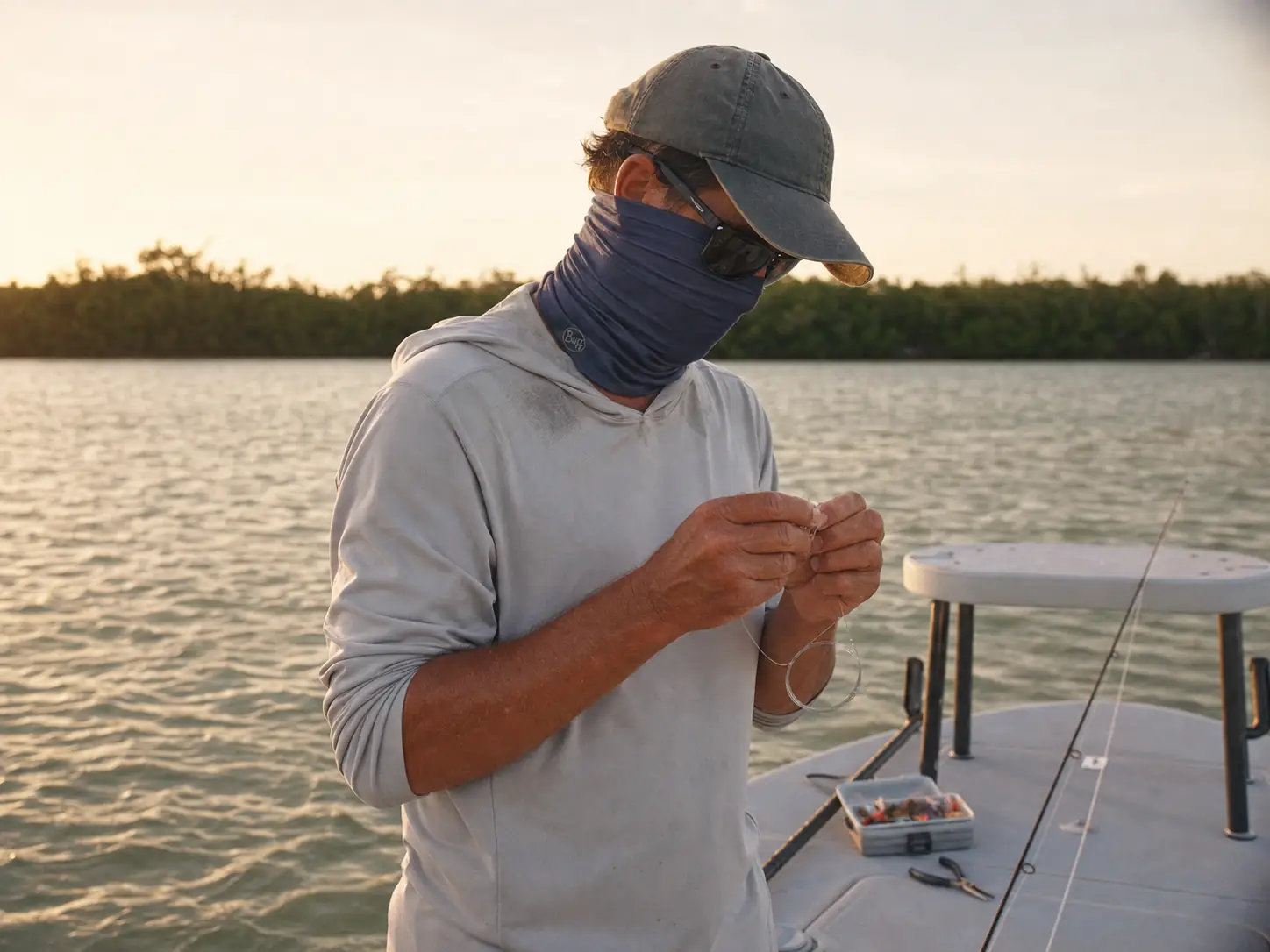
The fish is on, the drag is screaming, and you’re using your rod hand to drag a fishing neck gaiter back over your nose. Anyone who has spent a full season in a sun mask knows that moment, and the same complaints repeat across BassResource and Microskiff threads year after year: it slips, it fogs your glasses, and by August the cheap one feels like a dishrag. None of that appears on a single spec sheet. This comparison puts eight gaiters against the three things that actually decide it on the water, real UPF, a fit that holds, and fabric that survives a season, plus the four field problems every other roundup skips.
Why Sun Protection on the Water Is a Different Problem
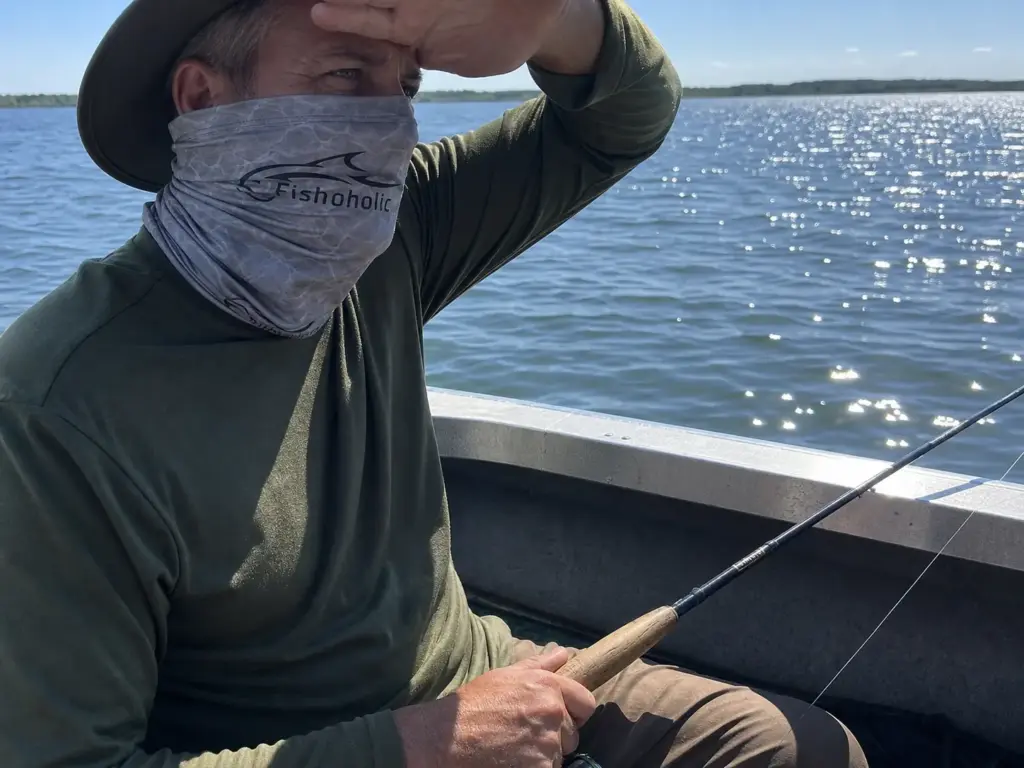
Everyone knows to wear a hat. What nobody tells you at the boat ramp is that a hat only solves the sun coming from above, and on the water half the problem arrives from below. The angler who fishes the flats twice a year and comes home with a burn line under his chin already knows this without knowing why.
Fresh water bounces roughly 5 to 10% of incoming UV radiation back up at you. Ocean and open lakes push that to 10 to 25% depending on sun angle and surface chop, which means you take the dose from overhead and from the surface at the same time. Understanding how UV actually behaves around water changes what you shop for, because it explains why the exposed zones are not the ones you’d guess.
Then there’s duration. Offshore and flats anglers routinely log 8 to 12 hour exposure windows, well past what sunscreen alone was designed to manage. Past the first few hours, physical coverage stops being a preference and starts being the only thing still working. Melanoma accounts for an estimated 8,200 US deaths a year, and the EPA’s UV Alert guidance on overexposure as the most preventable cause of skin cancer frames it plainly enough that it doesn’t need dressing up.
The neck, the ears, and the lower face are precisely the zones a hat brim misses and sunscreen sweats off first. That gap is the entire reason this product category exists. Anglers call it a sun mask about as often as they call it a gaiter or a buff, and buff itself has gone genericized the way Kleenex did, so don’t be thrown by the vocabulary drift on forums.
Here’s the tell that a hat alone isn’t cutting it: the burn shows up under the jaw and on the backs of the ears before it ever shows on your forehead. That’s the reflected dose, and no brim geometry stops it. Before a trip, NOAA’s reminder to check the UV Index before a day on the water takes about ten seconds and tells you how hard the day is going to hit. A gaiter is one component of the full sun protection setup for a day on the water, not a standalone fix.
What UPF 50+ Actually Means (And Why the Number Matters Less Than You Think)
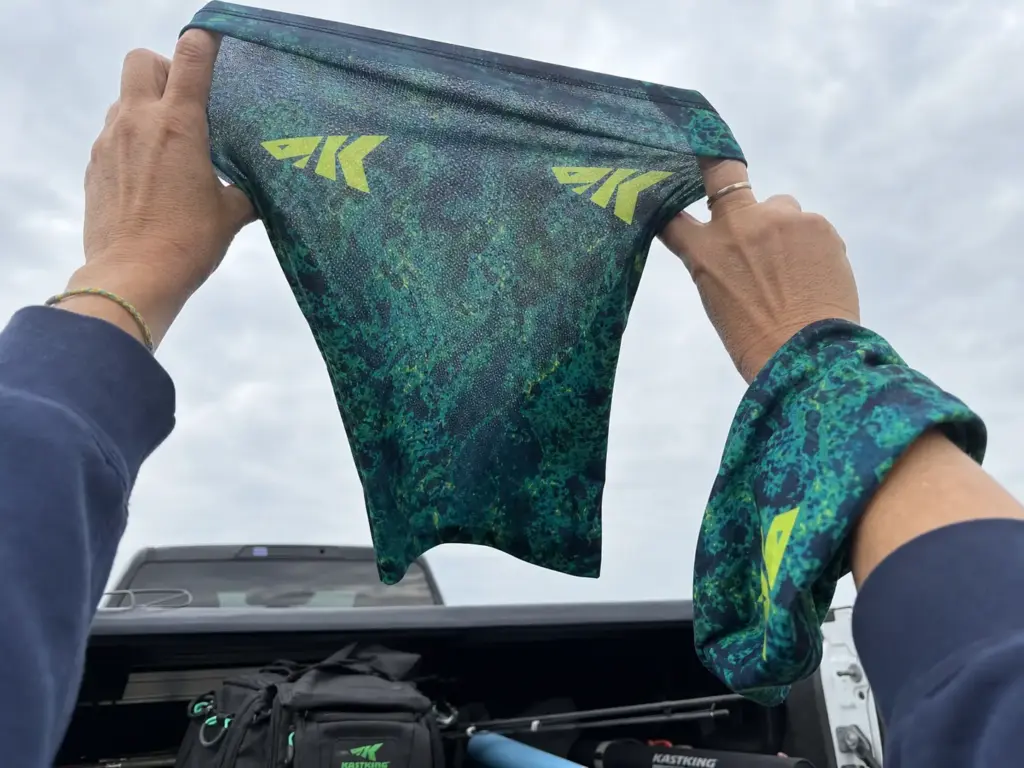
Every gaiter on Amazon says UPF 50+. If the number were the whole story, they’d all be equally good and this article wouldn’t need to exist. So here’s what the rating actually buys you, and where it quietly stops mattering.
UPF 50 means roughly 98% of ultraviolet radiation is blocked, counting both UVA and UVB, since about one fiftieth passes through the fabric. UPF 30 blocks around 97%. Run that out and the jump from 30 to 50 changes your real exposure by about one percentage point. Over a ten-hour day that percentage point is worth having, but it is nowhere near the gap the marketing implies. If you want the physics behind a UPF rating, the mechanism is more interesting than the number.
What actually decides your protection is coverage and fit. A UPF 30 gaiter that seals over your ears and stays put all day beats a UPF 50+ gaiter that rides down every twenty minutes, because a gaiter sitting around your throat protects your throat and nothing else. The same logic governs UPF sun shirts that hold their rating through a season of washes: the garment as you actually wear it matters more than the spec on the tag.
That distinction matters because UPF measures the fabric, not the garment as worn. Lab conditions are flat, relaxed, and new. Your face is none of those things. Nearly every listing in this category is sold as OSFA, one size fits all, which is exactly why fit varies wildly between brands claiming identical ratings. Construction adds another variable the tag never mentions: a seamless tube sits flatter against the cheekbone than one with a stitched side seam, and polyester and nylon blends drape differently even at the same stated rating.
There’s a field test that beats reading the tag. Hold the gaiter up against a bright sky and look at how much light comes through the weave. What you see there tells you more about how it will perform stretched over your cheekbones than any number printed on the label.
Why Cheap “UPF 50” Gaiters Fail in the Real World
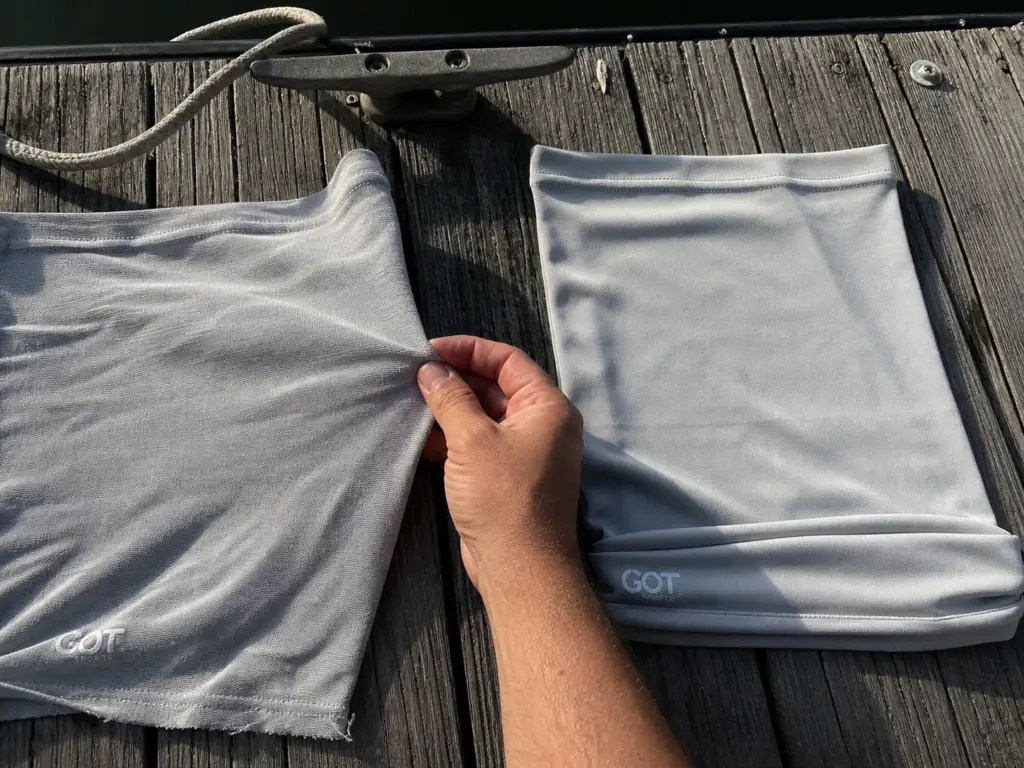
The three-pack for eight bucks isn’t a scam exactly. It’s that nobody explains the rating on that tag describes fabric lying flat on a lab bench, not fabric stretched over your face in August after four months of sun. Those are two different materials wearing the same label.
Certified vs. Printed on the Tag
There is a real standard behind the good numbers. The Skin Cancer Foundation’s Seal of Recommendation requires third-party lab testing under AATCC TM183-2020 or AS/NZS 4399, with results reviewed by board-certified dermatologists before the seal is granted. You can read the Skin Cancer Foundation’s Seal of Recommendation criteria for sun-protective fabric and see exactly what a brand has to clear.
A self-reported UPF 50 clears nothing. No enforceable standard sits behind it, which means the number can be a lab result or it can be the brand’s own estimate, and the listing looks identical either way. When you’re scanning a product page, look for the Skin Cancer Foundation seal or a cited AATCC or AS-NZS test reference. Neither one present doesn’t prove the gaiter fails. It means the number is unverified, and the most common mistake in this category is taking a printed UPF 50 on a cheap multi-pack at face value with no lab reference anywhere on the page.
Stretch Kills the Rating
This is the part that gets almost no coverage. A fabric testing UPF 60 flat can drop to UPF 25 to 30 once it’s stretched 20%. Even ordinary movement at around 10% stretch pulls a UPF 50+ rating down to roughly UPF 40. The knit opens, the gaps between fibers widen, and more UV walks straight through.
The practical consequence is uncomfortable. Buying a gaiter one size too small, or yanking it tight across your face to seal out wind, quietly cuts your actual protection while the tag keeps insisting on 50. It’s a recognizable pattern in forum threads: someone wears a thin multi-pack gaiter pulled tight for extra coverage on a hot afternoon and finds their skin more burned through the fabric than it would have been under a looser name-brand one. Tighter is not safer here. Tighter is thinner.
When to Retire a Gaiter
Washing on its own doesn’t meaningfully move the rating. Cumulative wear does. Once fabric is heavily faded, thinned, stretched out, or fraying at the edges, treat the original rating as expired, because the structure that produced it is gone.
The working rule: a gaiter that has been through a full season and looks faded and thin is a replacement signal, not a still-fine-one. Hand-washing and air-drying slows the decline, but the honest framing is that a gaiter is consumable gear, not a lifetime purchase. Worth knowing that the same wash-and-wear degradation hits UPF shirts on the same timeline.
The seams tell you before the fabric does. When the stitching at the tube seam starts to pucker and the edge begins to curl, that gaiter has one more season in it at the outside.
The 8 Fishing Neck Gaiters, Compared
Eight gaiters, each earning its slot for a different reason. This is not eight versions of the same product ranked one through eight. It’s eight answers to eight different fishing situations, with one that wins outright if you only ever buy a single gaiter.
Two things before the table. The clear winner is the best single buy, not the best in every category, and two of these picks (Simms and Fish Monkey) are the ones that actually address the fogging and slippage problems covered further down. And the anti-sell: if you already own a gaiter that fits and hasn’t faded, none of these are an upgrade worth paying for. Wear the one you have.
| Gaiter | Best For | Key Spec |
|---|---|---|
| Buff CoolNet UV+ | Overall | UPF 50+, Skin Cancer Foundation recommended |
| Simms BugStopper SunGaiter | Saltwater and bugs | UPF 50 SolarFlex, Insect Shield built in |
| KastKing Agies | Everyday freshwater | UPF 50+, quick-dry breathable knit |
| KastKing Sol Armis | Budget | UPF 50+ poly-spandex, 4-way stretch |
| GOT Sports Fishing Gaiter | Camo crossover | UPF 50+, camo and solid patterns |
| Fishoholic Face Mask Gaiter | Value | UPF 50+, 13 ways to wear |
| Fish Monkey Face Guard | Fogging and flats | UPF 50+, flared-bottom cut |
| Turtle Fur Totally Tubular | Cold weather | UPF 50+, soft brushed knit |
A gaiter is one piece of a coverage system, and sun gloves finish the same coverage job on your hands once your face is handled. One pattern worth naming before the picks: experienced anglers on Bass Fishing Forums consistently steer newcomers toward a shaped or contoured cut over a flat tube buff, almost always after that newcomer has been through one hot season with the cheap version. That’s why shaped construction carries real weight in these rankings.
Buff CoolNet UV+ Multifunctional Headwear (Best Overall)
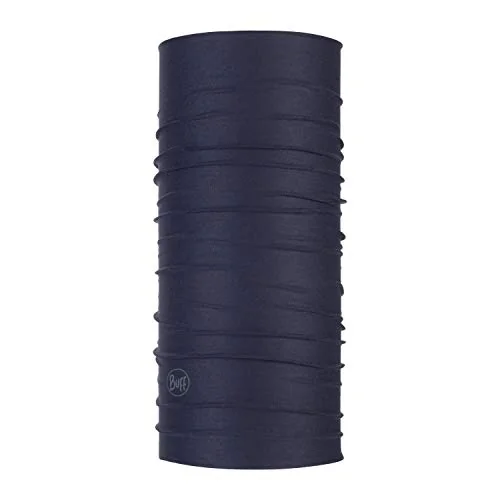
The Buff CoolNet UV+ wins because it is the only pick in this lineup whose UPF number has a paper trail behind it. Everything in the previous section about certified versus printed ratings points directly here. The fabric is dense enough that the weave test against a bright sky comes back reassuring, and the recycled microfiber holds its stretch recovery through a hard season better than the thin poly-spandex knits further down this list.
The honest limitation is the cut. It’s a straight tube, so it doesn’t have the anti-slip shaping that the Simms and Fish Monkey picks do. If mid-fight slippage is your specific complaint, one of those two solves it more directly.
Simms BugStopper SunGaiter, Cinder (Best for Saltwater and Bug-Heavy Trips)
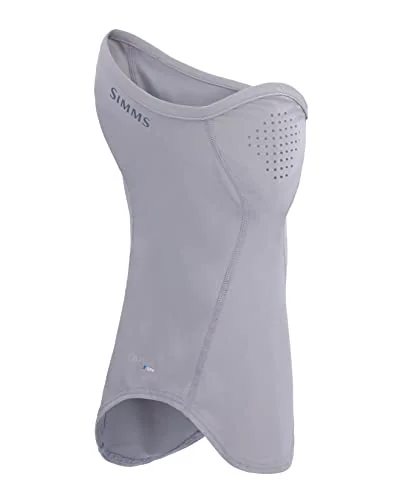
Marsh, backcountry, and early-summer flats are where the Simms BugStopper SunGaiter separates itself. The Insect Shield treatment is a real function with no budget equivalent, and on water where no-see-ums own the first two hours of daylight, that alone justifies the tier jump. The taller cut is also the most deliberate answer to slippage in this entire lineup.
KastKing Agies Neck Gaiter UPF 50+ (Best for Everyday Freshwater Use)
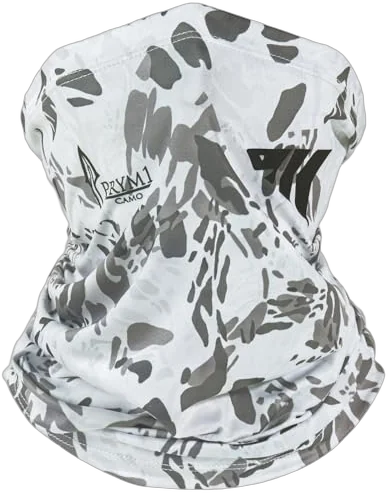
If your season is bass, walleye, and trout out of a boat or off a bank, the KastKing Agies covers it without paying for features you’ll never use. No insect treatment, no salt-specific construction, just a solid quick-dry knit that holds its shape through a summer of ordinary use.
KastKing Sol Armis Neck Gaiter UPF 50+ (Best Budget Pick)
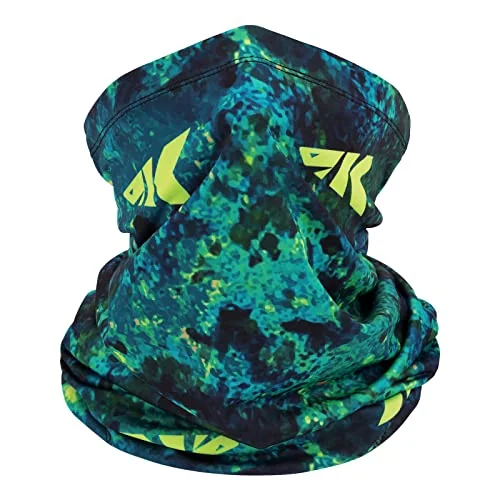
The KastKing Sol Armis is the pick for the reader who fishes a handful of times a summer and wants coverage without a project. Stock on this listing runs thin, so if it’s showing as available it’s worth acting rather than bookmarking. Treat it as a one-season item and replace it when the color starts going.
GOT Sports UPF 50+ Fishing Neck Gaiter (Best Camo and Hunting Crossover)
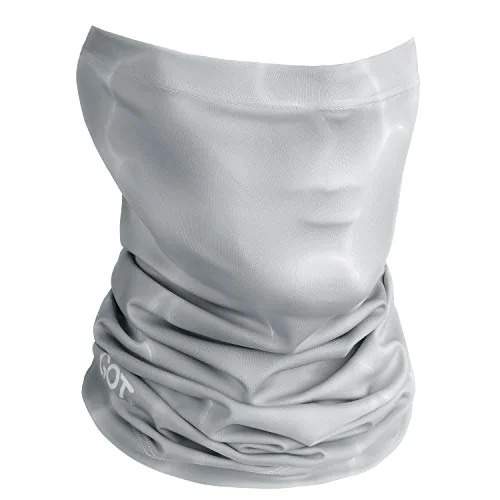
Waterfowl season and summer bass out of the same bag is a common enough pattern that the GOT Sports gaiter earns a slot on that basis alone. The UPF rating is self-reported, so apply the certification caveat, but the coverage cut is more generous than most budget tubes.
Fishoholic Fishing Face Mask Neck Gaiter (Best Value)
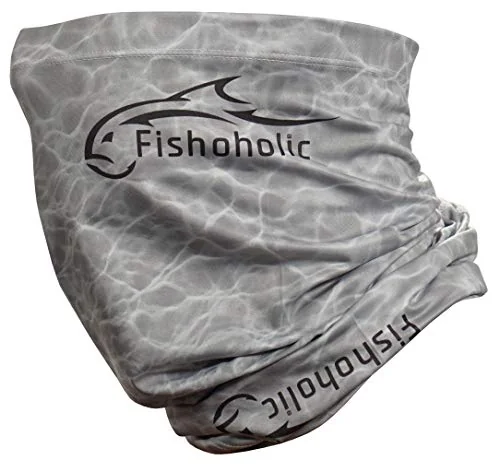
If the goal is spending the least while still wearing something every trip, the Fishoholic face mask gaiter is the honest answer. The same caveats apply as with any flat tube, but a gaiter you actually wear beats a premium one that never leaves the truck.
Buy two of whatever you pick, in a solid color. One lives in the boat bag permanently and one stays in the truck, because the gaiter you left at home protects nothing. Solid colors also make it obvious when the fabric has faded past its useful life, which a busy camo pattern will hide for another full season.
Fish Monkey Performance Face Guard, Neon Green (Best for Fogging and Saltwater Flats)
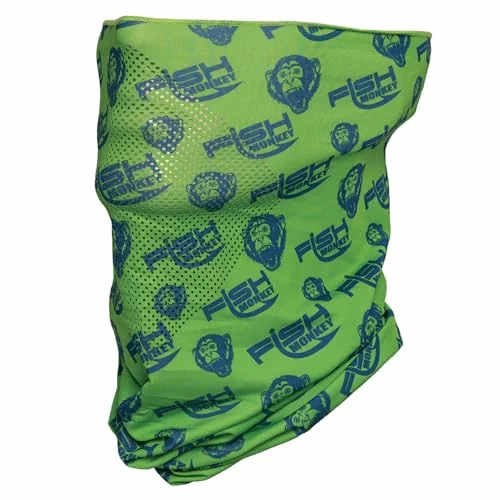
If fogged lenses are the reason you stop wearing a sun mask by ten in the morning, the Fish Monkey Performance Face Guard is the most direct hardware answer available. The flared bottom is also the geometry that shows up repeatedly in forum discussions about gaiters that stay put. Stock runs thin here as well.
Turtle Fur Original Totally Tubular Neck Gaiter UPF 50+ (Best for Cold Weather and Shoulder Season)
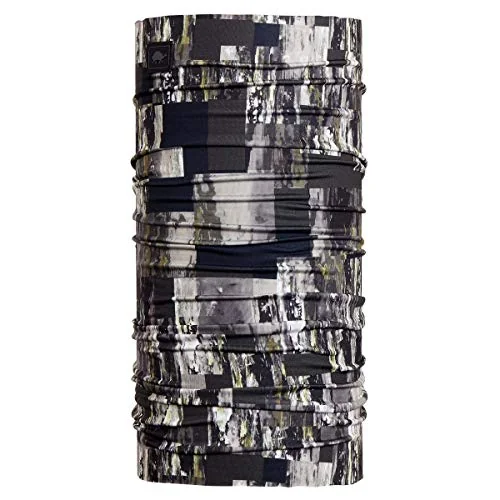
Spring UV is deceptive. Cold air convinces people they don’t need coverage while the index climbs anyway, which makes the Turtle Fur Totally Tubular a genuinely separate purchase rather than a tier upgrade. Stock is limited on this listing. It pairs naturally with a hat, and what to look for in a fishing hat applies just as much in shoulder season as in July.
The Fogging Problem Nobody Solves Correctly
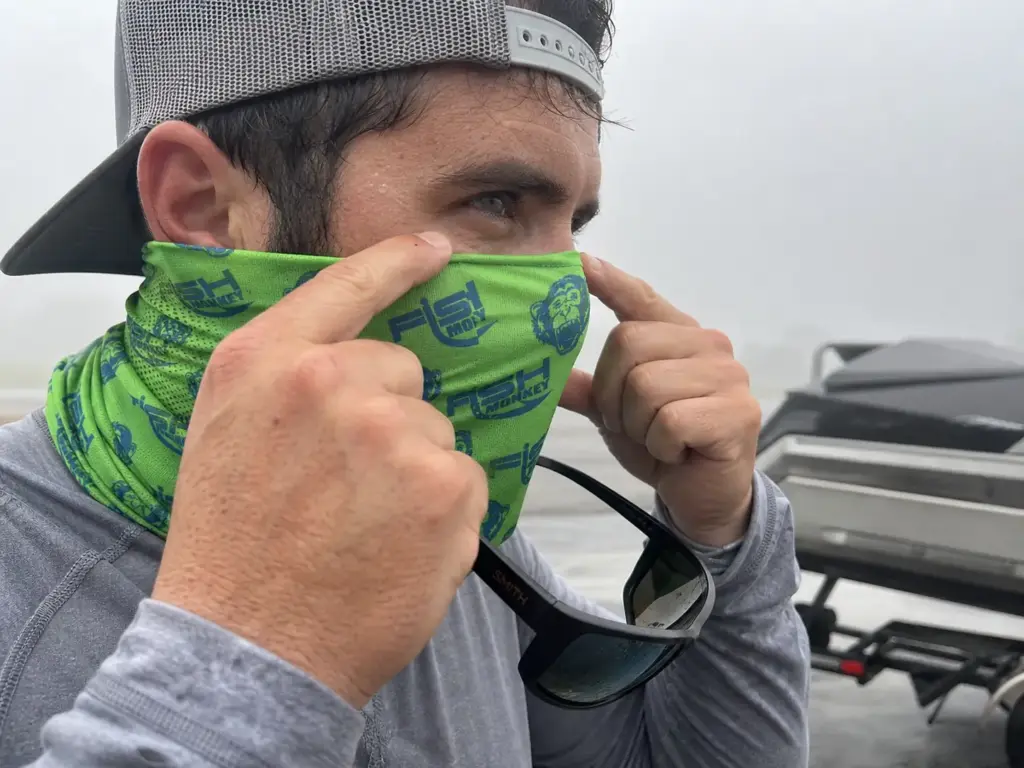
Every roundup says to buy the one with laser-cut breathing holes. Then you buy it, your glasses still fog on the first humid morning, and you spend the day yanking the gaiter down to your chin, which means you’re wearing no sun protection at all. The holes aren’t the fix. The order you put your gear on is.
Why It Actually Fogs
The mechanism is simple once you see it. Warm, moist exhaled breath escapes upward through the gap at the top of the gaiter and condenses on the cooler surface of your sunglass lens. That’s the whole event. Every fogged lens on the water traces back to breath finding an upward path.
The gap at the nose bridge is the entire cause. Breathing holes lower down vent some volume, but they don’t change the direction the escaping air travels, which is why two gaiters with identical perforation patterns fog completely differently. The variable that matters is the cut at the nose, not the number of holes in the cheek panel.
The Fit-Sequence Fix
Here’s the correction, and it costs nothing. Pull the gaiter up and seat it over the nose bridge first, then set your sunglasses on top so the frame presses the fabric snug against your nose. That single change redirects breath downward and out instead of straight up into the lenses. It’s worth pairing with the polarized sunglasses this fit sequence is built around, since frame shape determines how well the fabric seals.
Doing it in reverse, glasses first and gaiter pulled up after, leaves an open channel aimed directly at your lenses. Anglers on BassResource describe fogging as the number one reason people abandon sun masks by midday, and the reverse sequence is why. A shaped or contoured nose-bridge fit is the secondary lever, since Fish Monkey’s flared design and Simms’ taller cut both hold the seal better than a flat rectangular tube. Microskiff regulars specifically flag mesh-front and open-knit panels as the difference between a gaiter you wear all day and one you keep pulling down to breathe.
You can check the seal before you leave the ramp. Exhale hard through your nose and feel where the air goes. If it travels up past your cheekbones, your glasses are going to fog, and no amount of laser-cut perforation will change that. Once the fit problem is solved, lens choice for the water you fish becomes the next thing worth getting right.
Gaiter Slippage During Casting and Hooksets
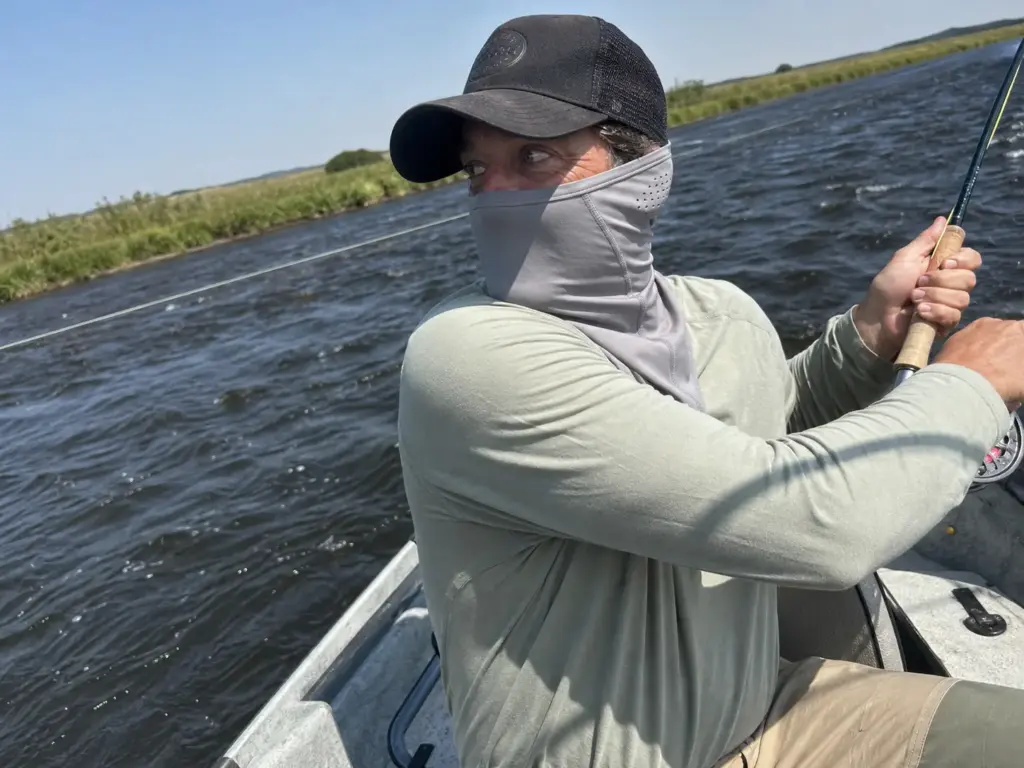
This one never makes a spec sheet. The fish eats, you set the hook, and somewhere in that motion the gaiter slides down under your chin. Now you’ve got a fish on and a decision to make: fix your face or fight the fish. Everyone picks the fish, and the gaiter stays down for the rest of the afternoon.
Flat rectangular tube buffs, the cheapest construction in the category, are the design most likely to ride down and need readjusting mid-fight. There’s nothing holding them but friction against your ears and cheeks, and a hard rotational movement breaks that grip immediately. Forum shorthand for the failure is ride up or slips, and both terms show up constantly in threads where nobody is talking about UPF at all.
Shaped cuts hold position measurably better. Simms uses a taller body that pulls over a cap plus a longer cape at the neckline built specifically to reduce ride-up, and forum commentary consistently credits flared-bottom construction in general with gripping the head through the motion, which is the same geometry Fish Monkey builds into its flared bottom. The mechanism is anchoring: instead of relying on face friction alone, the fabric is held at the crown by the cap and at the shoulders by the cape, so the middle can’t migrate.
If you already own a flat tube and don’t want to replace it, there is a workaround. Pull it up over your ears and tuck the top edge under your hat brim rather than letting it rest on the ears alone. The hat becomes the anchor and the gaiter borrows its stability, which is a rough approximation of what the shaped cuts do by design. This is a good illustration of how the pieces of a sun setup work together rather than each item solving its own problem in isolation.
The honest limitation: no cut eliminates slippage completely on a hard hookset. Shaped construction reduces the frequency, it doesn’t abolish it. And it’s never the cast that moves it. It’s the head-turn to track the fish after the hookset, because that lateral motion is what breaks the seal on a flat tube.
Saltwater Kills Gaiters Faster (And the 30-Second Fix)
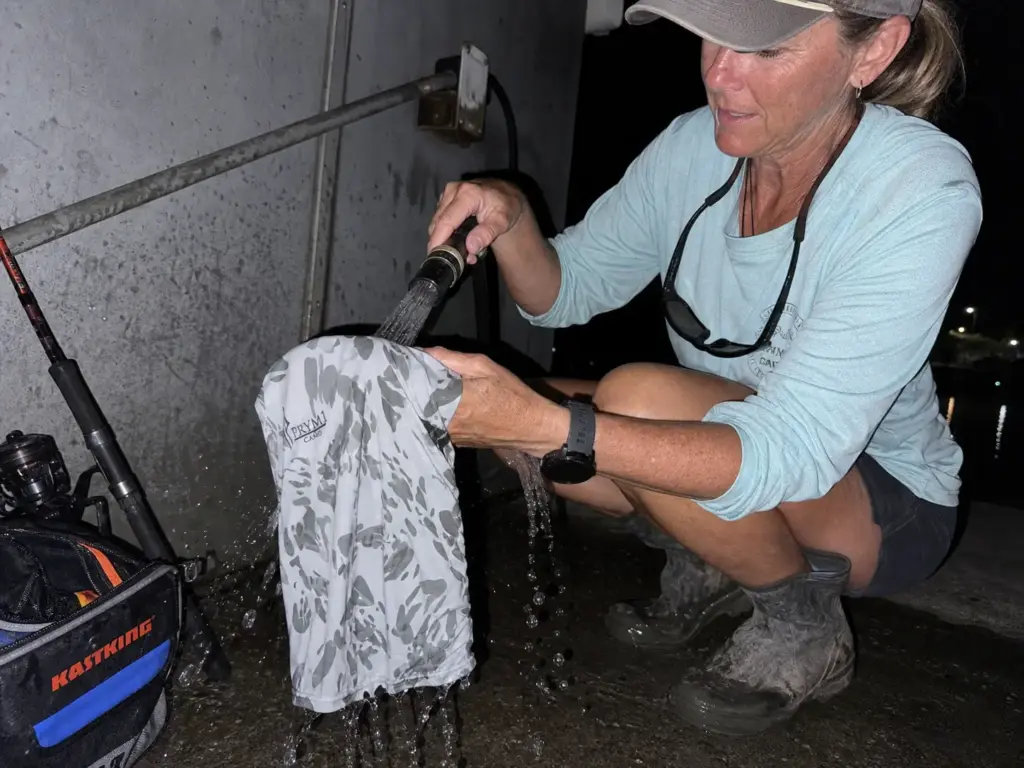
Two anglers buy the same gaiter in April. One fishes lakes, one fishes the flats. By September the freshwater one still stretches back into shape and the saltwater one feels like a piece of cardboard with a hole in it. Same product, same season, completely different outcome, and the difference is thirty seconds under a hose.
Salt crystals left to dry inside untreated fabric mechanically abrade polyester fibers and accelerate breakdown of the elastane stretch component. This is a mechanical failure rather than a cosmetic one. Every time you stretch a salt-loaded gaiter over your face, hard crystals grind against the fibers holding it together.
The symptom to watch for is stiffness and loss of stretch recovery, not fading. A gaiter that no longer springs back after being pulled has structurally failed regardless of how good the color still looks. That’s the opposite of what most people check for, which is why so many salt-fished gaiters get kept a season too long.
A freshwater rinse after every saltwater session measurably reduces salt-crust abrasion. Gaiters used repeatedly in salt without rinsing go stiff and lose elastic recovery within a single season, and never rinsing after a saltwater trip is the single most-skipped habit in this entire category. The fix takes thirty seconds under a hose at the ramp or in a hotel sink. Surf sessions in particular load fabric with salt and sand at the same time, which makes the habit non-negotiable there.
Rinse the gaiter while it is still damp from the trip, not after it dries in the truck. Wet salt rinses out in seconds; dried salt has already crystallized into the weave and takes a real soak to remove. Wring it, hang it over the rod holder on the drive home, and it will be dry before you unload.
The same rinse logic applies to every synthetic layer you fish in, and moisture-wicking socks fail the same way for the same reason. Practically, this feeds straight back into the buying decision: a budget gaiter used in salt should be treated as a one-season item, and a premium one still needs the rinse to earn its extra seasons.
You can hear it before you can see it. A salt-loaded gaiter makes a faint crackling sound when you unfold it, and that sound is crystallized salt sitting in the weave, abrading fibers every time you stretch it.
Budget vs Premium: What You Actually Give Up
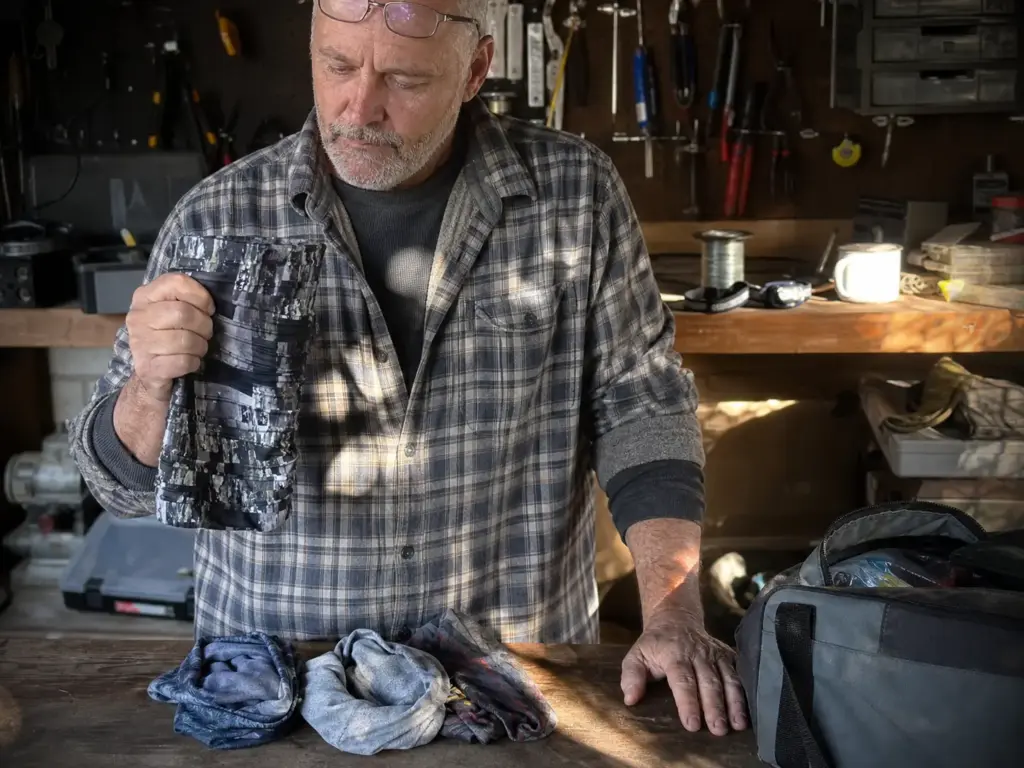
Here’s the conversation you’d get at the boat ramp if you asked whether the expensive one is worth it. Not yes, buy the best, and not they’re all the same. The real answer is that you give up four specific things going cheap, and depending on how you fish, two of them might not matter to you at all.
What the Premium Picks Actually Buy You
Four things, concretely. First, third-party UPF certification with a paper trail, which in this lineup means Buff’s Skin Cancer Foundation recommendation rather than a self-reported number. Second, shaped construction against slippage: Simms’ longer cape and taller cut, Fish Monkey’s flared bottom.
Third, genuine add-on function where it exists. The Insect Shield treatment on the Simms BugStopper is a real, tested feature rather than marketing padding, and it has no budget equivalent anywhere in the category. Fourth, denser fabric that holds its stretch recovery longer under salt and sun, which is the same tier gap that shows up when comparing waterproof breathable fabrics in rain gear.
What You Actually Lose Going Cheap
You lose the certification paper trail. The UPF number on a budget gaiter is probably accurate and definitely unverified, and you have no way to tell which. You lose anti-slip shaping, because budget picks are almost always flat tubes, which is precisely the geometry that fails during a hookset. And you lose fabric density, since thinner material degrades faster under stretch and salt, so plan on replacing it more often.
Here’s what you do not lose: the core UPF 50+ sun-blocking function on day one. A budget gaiter worn correctly outperforms a premium one sitting in the truck, and that is the whole point. Nobody has ever been sunburned by the gaiter they were actually wearing.
Which Tier Fits How You Fish
One thing that simplifies the decision: every pick here is unisex neckwear, so the tier choice is genuinely about how you fish rather than about finding the right cut. If you fish freshwater a few times a summer, the budget tier is the honest answer and you replace it each season. If you fish saltwater, flats, or offshore regularly, the premium tier earns its keep on fabric durability and shaped fit alone, before you count any of the extras.
Bug-heavy water, meaning marsh, backcountry, or early summer, is the one case where a premium feature has no cheap substitute: the Insect Shield treatment. And cold weather is a separate purchase entirely rather than a tier decision, which is where layering for cold-water days becomes the relevant question instead.
Experienced anglers on Bass Fishing Forums consistently steer beginners toward a shaped cut over a flat tube, and almost always after that beginner has finished one hot season with the cheap version. The pattern is telling: people buy cheap first and upgrade for fit, not for UPF.
The tell that someone fishes a lot is that their gaiter is a solid color and slightly faded. The eight-pack of camo patterns still sitting in the bag means the first one never got worn.
Size up rather than down when a listing offers a choice, and skip the OSFA option if a real size exists. A gaiter one size too small gets stretched thinner across your face every hour you wear it, which quietly drops the real UPF while the tag still claims 50. Loose and correctly positioned beats tight and technically rated.
The Verdict
Three things worth carrying out of this.
The UPF number is table stakes. Fit and coverage decide whether you actually get the protection, and a gaiter riding down around your throat delivers nothing no matter what the tag says.
The two problems that make people quit wearing gaiters, fogged glasses and mid-fight slippage, are both solvable. One takes a fit sequence and costs nothing. The other takes a shaped cut and costs a tier upgrade.
If you fish salt, rinse it. Thirty seconds is the difference between one season and three.
On your next trip, put the gaiter on before the sunglasses and see whether the fogging stops. It costs nothing, takes no gear, and it’s the single change most anglers never think to try.
Frequently Asked Questions
01Do neck gaiters protect from sun?
Yes. A UPF 50+ neck gaiter blocks roughly 98% of UV across the neck, ears and lower face, the zones a hat brim misses and sunscreen sweats off first. That protection only holds if the gaiter stays in position and the fabric is not stretched tight or worn out, since both cut the real rating below what the tag claims.
02How do you wear a buff for sun protection?
Pull it over the nose bridge first, then put your sunglasses on over the fabric so the frame presses it snug against your nose. That order stops exhaled breath from traveling up into the lenses, and tucking the top edge under your hat brim keeps the gaiter from riding down during casts and hooksets.
03Are buff neck gaiters good?
The Buff CoolNet UV+ is the strongest mainstream pick because it carries an actual Skin Cancer Foundation recommendation rather than a self-printed UPF number. Whether it suits you depends on your water, since saltwater and bug-heavy trips are better served by a shaped, treated gaiter and cold-weather fishing needs a different fabric entirely.
04What is the best UV shirt for fishing?
A hooded UPF 50+ sun shirt covers the torso, arms and, with the hood up, most of the head, making it the highest-coverage single garment for a day on the water. It pairs with a gaiter rather than replacing one, since the hood alone leaves the lower face and front of the neck exposed.
05What UPF rating is best for a fishing neck gaiter?
UPF 50+ is the practical standard and what nearly every fishing gaiter claims. The more useful question is whether that rating is third-party verified and whether the gaiter fits without stretching, because stretched UPF 50+ fabric can perform closer to UPF 25 to 40 in real use.
Risk Disclaimer: Fishing, boating, and all related outdoor activities involve inherent risks that
can lead to injury. The information provided on Master Fishing Mag is for educational and informational purposes
only. While we strive for accuracy, the information, techniques, and advice on gear and safety are not a substitute
for your own best judgment, local knowledge, and adherence to official regulations. Fishing regulations, including
seasons, size limits, and species restrictions, change frequently and vary by location. Always consult the latest
official regulations from your local fish and wildlife agency before heading out. Proper handling of hooks, knives,
and other sharp equipment is essential for safety. Furthermore, be aware of local fish consumption advisories. By
using this website, you agree that you are solely responsible for your own safety and for complying with all
applicable laws. Any reliance you place on our content is strictly at your own risk. Master Fishing Mag and its
authors will not be held liable for any injury, damage, or loss sustained in connection with the use of the
information herein.
Affiliate Disclosure: We are a participant in the Amazon Services LLC Associates Program, an
affiliate advertising program designed to provide a means for us to earn advertising fees by advertising and linking
to Amazon.com. As an Amazon Associate, we earn from qualifying purchases. We also participate in other affiliate
programs and may receive a commission on products purchased through our links, at no extra cost to you. Additional
terms are found in the terms of service.