
In this article
I watched a buddy pull a stringer of crappie out of the lake last summer and every fish was belly-up and soft. He’d threaded them through the gills, left them in full sun for three hours in 85-degree water, and wondered why the meat tasted like mud. The stringer itself wasn’t the problem — how he used it was. A fish stringer is one of the simplest tools you’ll ever carry, but the gap between “fish on a rope” and “fish worth eating” comes down to a few details that most people skip. Here’s how to actually use one without ruining your catch.
Quick Answer: Here’s how to use a fish stringer properly:
- Thread the stringer needle or clip through the fish’s lower jaw membrane — never through the gills
- Keep the stringer fully submerged in shaded, cool water
- Anchor the stringer to a fixed point — dock cleat, tree root, or sand spike — never to yourself
- Check your fish every 30 minutes and remove any that stop swimming upright
- Switch to a cooler with ice when water temperature exceeds 75°F
Types of Fish Stringers and When to Use Each
Rope Stringers
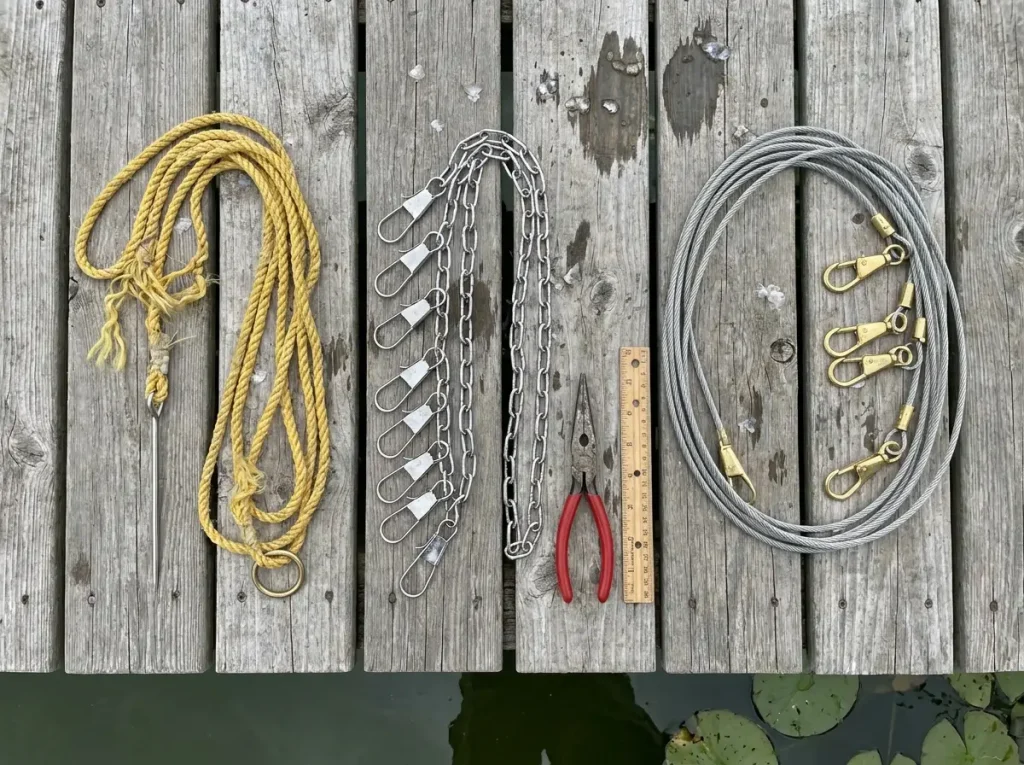
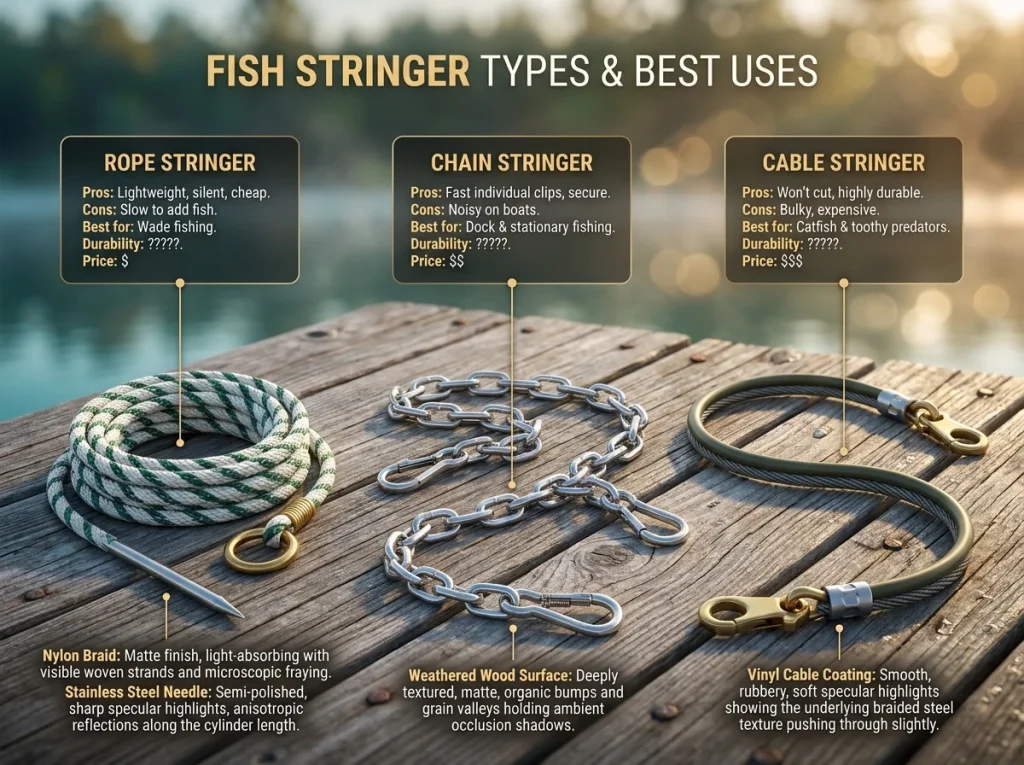
A rope stringer is the most basic option — a length of braided nylon cord with a sharpened metal needle at one end and a ring at the other. You thread the needle through the fish’s jaw, slide the fish down the rope, and loop the needle back through the ring to lock it. They cost two to five dollars, weigh almost nothing, and fit in any pocket.
Rope stringers work best for wade fishing and bank fishing where you’re moving along the shore. They’re quiet in the water and don’t clank against rocks or spook fish in your spot. The tradeoff is speed — adding or removing a single fish requires threading the needle back through the ring each time, which gets tedious when you’re catching panfish fast.
Chain and Clip Stringers
A chain stringer has individual snap clips spaced along a metal chain, each one locking independently onto a fish. Adding a fish takes three seconds — open the snap, clip it through the jaw, done. These are faster than rope stringers when you’re putting multiple fish on in quick succession, and each fish gets its own attachment point so they don’t bunch up and suffocate each other.
The downside is noise. Metal chain scraping against a dock or boat hull spooks fish in shallow water. Chain stringers also strip slime coat faster than rope, which matters if you’re debating whether to release a borderline keeper.
Cable Stringers
Vinyl-coated steel cable stringers split the difference — durable enough to handle toothy fish like catfish or pike, quiet enough not to broadcast your position. They typically have locking brass or stainless clips rather than simple snaps. These cost more (eight to fifteen dollars) but outlast rope stringers by several seasons.
Pro tip: If you fish for catfish or anything with rough jaw plates, skip the rope stringer. Those jaw plates saw through nylon in an hour of thrashing. A cable or chain stringer saves you the embarrassment of watching your catch swim away still wearing a rope bracelet.
How to Thread a Fish on a Stringer the Right Way
The Lower Jaw Method (Do This)
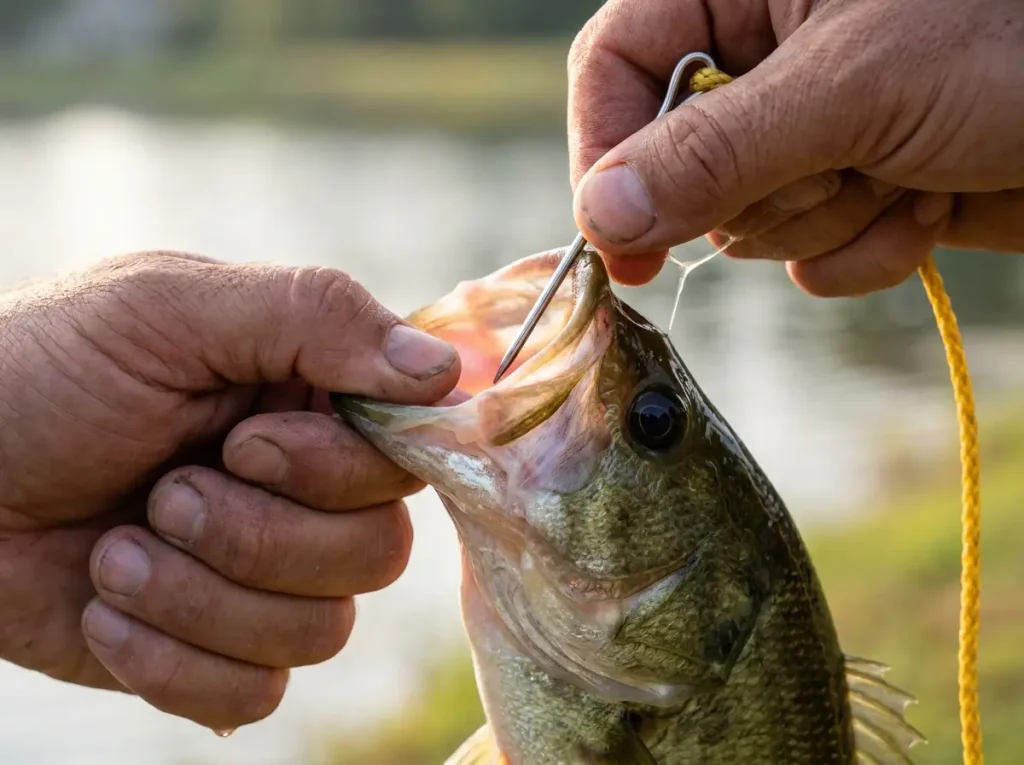
Hold the fish firmly by the lower lip. Locate the thin membrane between the two lower jawbones — it’s the soft, flexible tissue at the very bottom of the mouth. Push the stringer needle upward through this membrane from below, so the point comes out inside the mouth. Slide the fish down the rope or clip the snap through.
This method keeps the gills completely clear. The fish can pump water through its gills, breathe normally, and stay alive for hours if the water conditions are right. A fish that’s breathing is a fish that stays fresh.
Why Gill Threading Ruins Fish (Don’t Do This)
Threading a stringer through the gills is faster and feels more secure. It’s also the single fastest way to end up with spoiled fish. The gills are the fish’s lungs — when you run a rope or clip through them, you tear the delicate gill filaments and the fish suffocates within minutes. A suffocated fish starts decomposing immediately, especially in warm water.
You’ll see this method shown in old fishing photos and even in some current guides. It works if you’re heading straight to the cleaning table. But if you plan to keep fishing for another hour or two with your catch in the water, gill threading defeats the entire purpose of using a stringer.
Species-Specific Considerations
Not every fish jaw is built the same. Panfish — bluegill, crappie, perch — have thin, fragile jaw membranes. Use a gentle touch with the needle and don’t force it through bone. If you miss the membrane and hit the jaw bone, reposition rather than pushing harder.
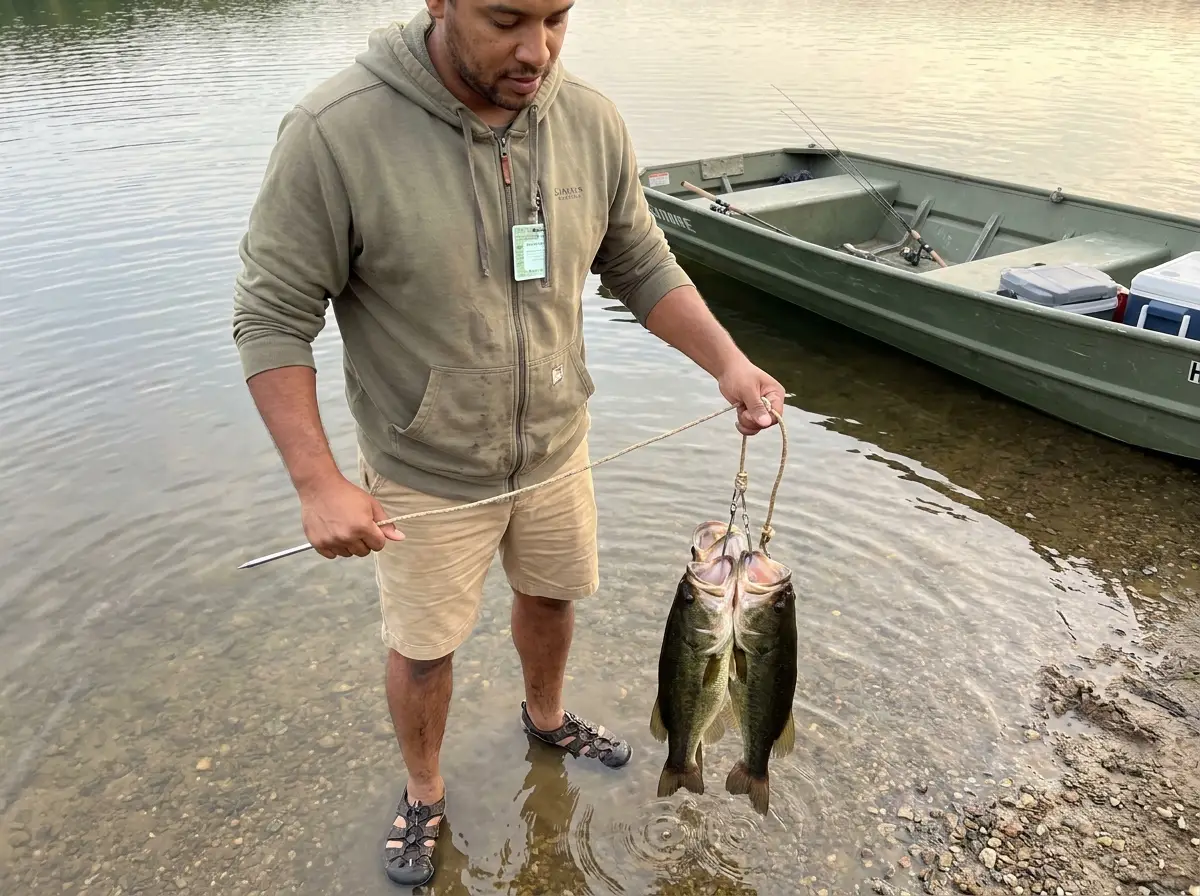
Bass have thicker, tougher jaw membranes and a pronounced lower lip that gives you a solid grip while you work the needle through. They’re the easiest fish to string properly.
Catfish present a different problem. Their jaw anatomy is tougher, but they also have pectoral spine barbs that can puncture your hand if you grip carelessly while threading. Hold catfish behind the pectoral spines with your palm against the belly, then thread the jaw.
Pro tip: Wet your hands before handling any fish you’re about to stringer. Dry hands strip the slime coat, which protects the fish from bacteria. Even if you’re planning to harvest the fish in two hours, that slime coat keeps the flesh cleaner and better-tasting until you reach the fillet table.
Where to Anchor Your Stringer
Shore Fishing
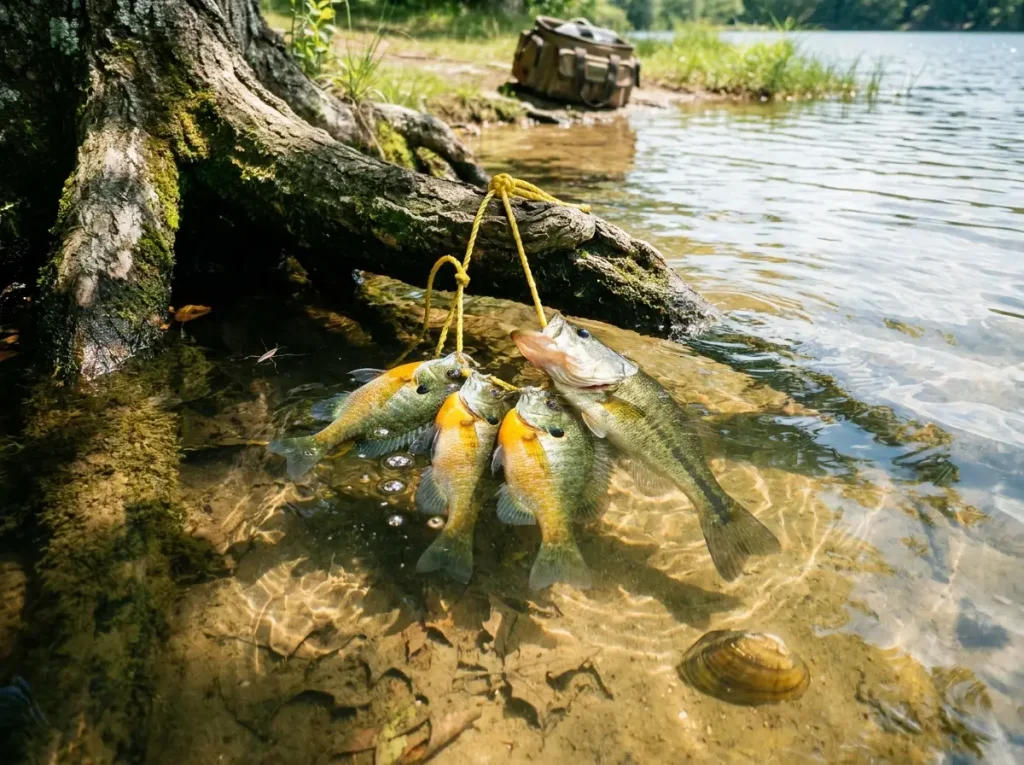
Tie or stake the stringer to something that isn’t going anywhere — a tree root, a driven stake, a large rock, or a dock cleat. The anchor point should be at the waterline or just above it, with enough rope length that the fish stay fully submerged even if the water level drops slightly during your session.
Avoid tying a stringer to a flimsy branch or a tackle bag handle. A 3-pound bass thrashing on a stringer generates more pull than you’d expect, and watching your tackle bag get dragged into the lake is a lesson you only need once.
Boat and Kayak Fishing
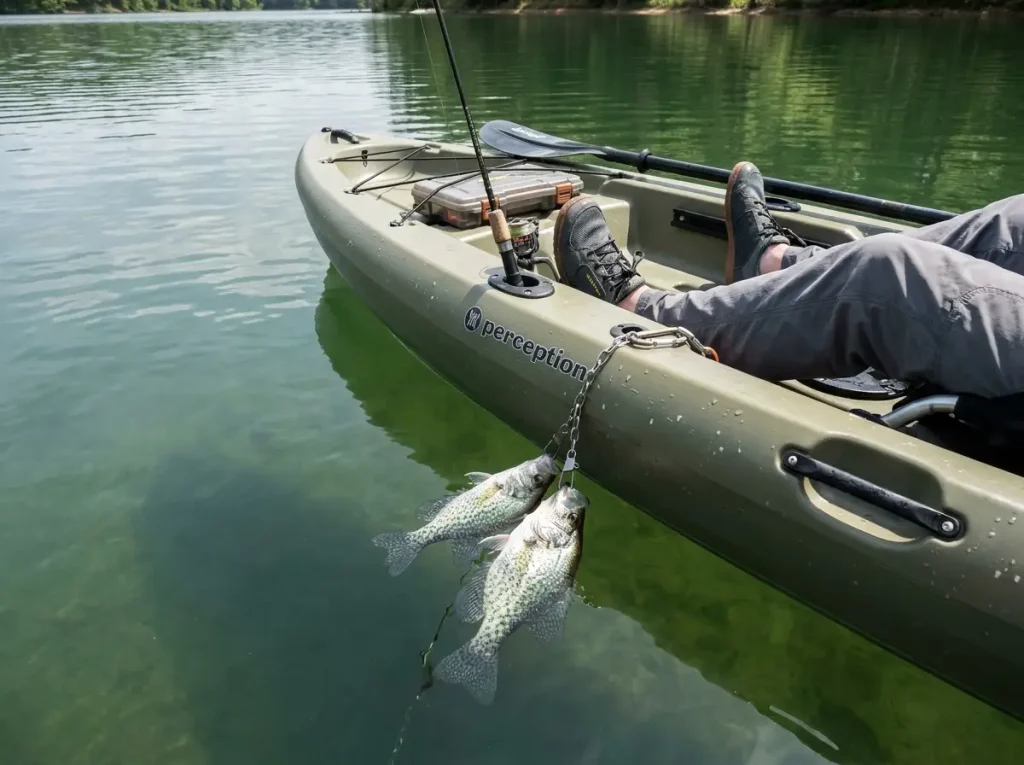
On a boat, clip the stringer to a stern cleat and let the fish trail behind the hull. The cleats are designed to hold force, and the stern position keeps the stringer clear of the prop if you need to reposition. On a kayak, use a rear flush-mount cleat or a scupper hole with a carabiner backup. The backup matters — kayaks shift and roll enough that a single attachment point can work loose over a few hours.
Never, under any circumstances, attach a fish stringer to yourself — not to your wading belt, not to your belt loop, not to your PFD. A thrashing fish attracts predators. In gator country or shark territory, that stringer on your waist makes you the target. Even in predator-free water, a tangled stringer can pull you off balance in current or restrict your movement if you need to move fast.
Wade Fishing Solutions
Wade fishing creates the trickiest stringer situation. You’re moving, the fish are moving, and dragging a stringer through vegetation tangles everything. The best approach: find a fixed point near your current fishing spot — a partially submerged log, a tree root, a rock — and anchor the stringer there. Walk back to add fish as you catch them, or work a stretch of bank and retrieve the stringer when you move on.
Some wade anglers use a mesh creel or clip-on fish basket instead of a stringer in moving water. These keep fish contained and breathing without the tangle risk.
Keeping Fish Alive and Fresh on the Stringer
Water Temperature Is Everything
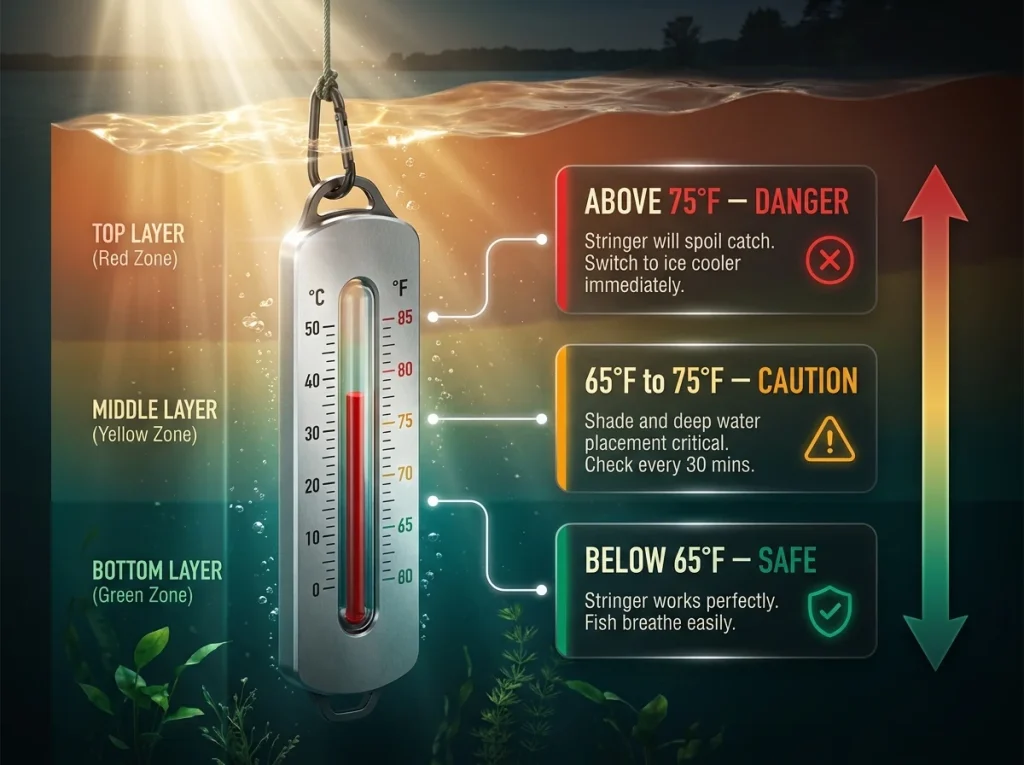
This is the detail that separates a stringer full of firm, clean-tasting fillets from a stringer full of mush. Water temperature above 75°F accelerates spoilage dramatically. Fish on a stringer in 80-degree shallows can start deteriorating in under an hour — even if they’re still technically alive.
The fix: sink the stringer deep. If you’re fishing from a dock or boat, lower the stringer to at least 5 feet below the surface where the water is cooler. If you’re bank fishing on a hot day, find the shadiest spot available and position the stringer there, even if it means walking 20 yards from your fishing spot to anchor it under an overhanging tree.
Shade, Airflow, and Spacing
Keep the stringer in shade whenever possible. Direct sunlight heats shallow water fast and stresses fish that are already working hard to breathe in warm conditions. A shaded pocket near submerged roots or under a dock stays several degrees cooler than open water at the same depth.
Space your fish out on the stringer. Fish bunched together can’t circulate water through their gills efficiently. On a rope stringer, slide fish down the rope so there’s at least 6 inches between each one. On a chain stringer, use every other clip rather than loading them consecutively.
The 30-Minute Check
Walk back to your stringer every 30 minutes and check on your catch. Look for fish that have rolled belly-up, stopped pumping their gills, or gone stiff. Remove those immediately and either put them on ice in a cooler or clean them on the spot if you have a fillet setup available. One spoiled fish on a stringer fouls the water around the others.
Pro tip: Bring a small digital water thermometer on hot-weather trips. If the water reads above 75°F at the depth your stringer sits, skip the stringer entirely and go straight to a cooler with ice. No stringer technique in the world beats cold storage when ambient water temperature works against you.
When a Stringer Isn’t the Right Call
Hot Weather and Warm Water
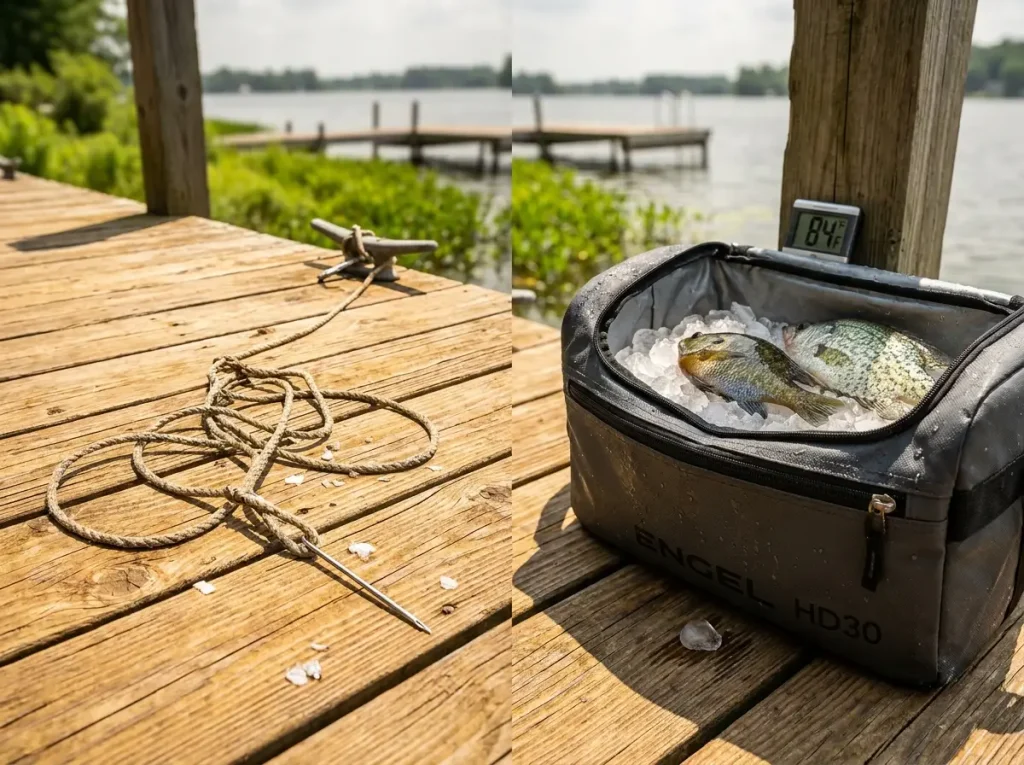
When surface water temperatures climb past 75°F in midsummer, stringers become a liability. The fish can’t get enough oxygen from warm water to survive long, and bacteria multiply rapidly on flesh that’s sitting at ambient temperature. This is when a cooler bag with ice or a functioning livewell earns its spot in your gear rotation.
An insulated fish bag with a layer of crushed ice keeps your catch at safe temperatures for hours regardless of air or water temperature. The investment — twenty to forty dollars for a decent bag — pays for itself the first time you don’t have to throw away fish that went bad on a rope.
Predator-Heavy Waters
In Florida, Louisiana, the Gulf Coast, and anywhere alligators live, a stringer full of thrashing fish is a dinner bell. Alligators will approach a stringer without hesitation, and they don’t care that you’re standing ten feet away. The same applies to bull sharks in coastal estuaries and snapping turtles in northern lakes — any predator that follows distress signals will find a stringer before it finds you.
If you fish waters with large predators, a cooler or livewell removes the problem entirely. Your catch stays cold, stays hidden, and doesn’t attract anything with teeth to your fishing spot.
Catch-and-Release Situations
If you’re debating whether to keep a fish, don’t stringer it while you decide. Even a perfectly jaw-threaded fish accumulates stress and slime damage over time on a stringer. If there’s any chance you’ll release it, handle it quickly and let it go — then catch a keeper you’re sure about.
Pro tip: Carry a stringer AND a small cooler bag on every trip. Use the stringer when water is cool and you’re actively adding fish. Transition to the cooler the moment conditions change — water warms up, a gator shows interest, or you’ve hit your limit and it’s time to head home.
Conclusion
A fish stringer does exactly one thing — keep your catch alive in the water until you’re ready to clean them. Thread through the lower jaw, never the gills. Anchor to something solid, never to yourself. Keep the stringer deep, shaded, and checked every half hour. And know when to ditch the stringer for a cooler — because no technique saves a fish sitting in 80-degree water. Get those four details right and your fillets will taste like they came out of the water five minutes ago. Get them wrong and you’re hauling home expensive compost.
Q1 How long can fish stay alive on a stringer?
In cool water below 65°F with proper jaw threading, fish can survive 4 to 8 hours on a stringer. In warm water above 75°F, expect 1 to 2 hours at most before stress and low oxygen take over. Check every 30 minutes and move any belly-up fish to a cooler with ice immediately.
Q2 Should you put a fish stringer through the gills or the mouth?
Always through the lower jaw membrane, never through the gills. Gill threading tears the filaments the fish uses to breathe, and it suffocates within minutes. Jaw threading keeps the gills clear so the fish breathes normally and stays alive much longer on the stringer.
Q3 What is the best type of fish stringer?
Rope stringers are best for wade fishing and mobility. Chain clip stringers are fastest for adding multiple fish from a boat or dock. Cable stringers with locking clips are best for toothy species like catfish. Most anglers get by with a basic rope stringer for under five dollars.
Q4 Can you use a fish stringer in saltwater?
Yes, but rinse the stringer with fresh water after every trip to prevent corrosion. Use stainless steel or brass hardware — chrome-plated clips rust through after a few saltwater sessions. In saltwater, also watch for sharks and other predators attracted to stressed fish on the line.
Q5 How do you keep fish from passing on a stringer?
Thread through the jaw (not gills), keep the stringer submerged in the coolest water available, space fish apart so gills can circulate water, and move the stringer to shade. In hot weather above 75°F, switch to an ice cooler instead — warm water makes even properly strung fish deteriorate quickly.
Risk Disclaimer: Fishing, boating, and all related outdoor activities involve inherent risks that
can lead to injury. The information provided on Master Fishing Mag is for educational and informational purposes
only. While we strive for accuracy, the information, techniques, and advice on gear and safety are not a substitute
for your own best judgment, local knowledge, and adherence to official regulations. Fishing regulations, including
seasons, size limits, and species restrictions, change frequently and vary by location. Always consult the latest
official regulations from your local fish and wildlife agency before heading out. Proper handling of hooks, knives,
and other sharp equipment is essential for safety. Furthermore, be aware of local fish consumption advisories. By
using this website, you agree that you are solely responsible for your own safety and for complying with all
applicable laws. Any reliance you place on our content is strictly at your own risk. Master Fishing Mag and its
authors will not be held liable for any injury, damage, or loss sustained in connection with the use of the
information herein.
Affiliate Disclosure: We are a participant in the Amazon Services LLC Associates Program, an
affiliate advertising program designed to provide a means for us to earn advertising fees by advertising and linking
to Amazon.com. As an Amazon Associate, we earn from qualifying purchases. We also participate in other affiliate
programs and may receive a commission on products purchased through our links, at no extra cost to you. Additional
terms are found in the terms of service.