In this article
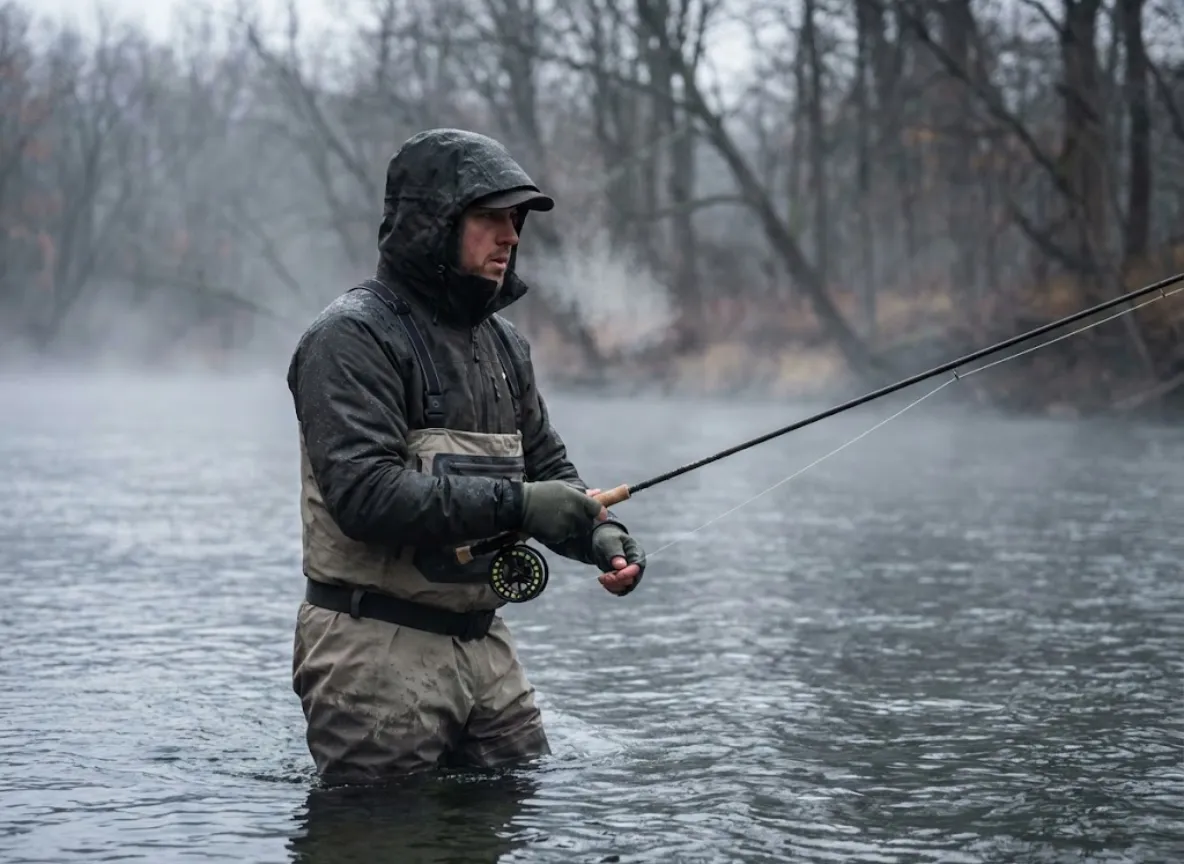
The water of the Great Lakes region tributaries does not forgive the unprepared. When the slate-bottomed rivers of Ohio rise or the heavy flows of the Manistee River churn with the first push of Chinook Salmon, the difference between a “hero shot” and a day of frustration is not luck—it is physics.
Success in freshwater sport fishing requires a shift in mindset. You are no longer hunting a resident trout holding in a predictable lie; you are attempting to intercept a biological surge of biomass driven by powerful, decipherable instincts. This is migratory salmonid angling at its most primal.
After decades of wading these flows, from the tannic stain of the Bois Brule River to the shale ledges of Pennsylvania, I have learned that consistency comes from analysis, not hope. This guide serves as your field-ready tactical manual. We will decode the thermal triggers that launch migration cycles, map the critical river systems across the lakes, and refine the technical drifts necessary to connect with the strongest freshwater fish in North America.
The Science of Interception: Why Do Fish Run?
Anadromous fish do not enter rivers randomly. Their movement is a calculated response to environmental stimuli. Understanding these biological triggers allows you to predict runs before your tires ever touch the gravel of the access road.
How does water temperature dictate the migration window?
Water temperature is the master switch for fish migration cycles. Research, including extensive state water board studies on salmonid thermal tolerances, identifies a “Thermal Blockade” at approximately 68°F (20°C). When tributary temperatures exceed this threshold, migration stalls, and fish hold in the deeper, cooler nearshore waters to avoid physiological stress.
The “Green Zone” opens when water temperatures drop between 58°F and 45°F. This is the optimal window where metabolic activity is high, and fish—especially Steelhead and Coho Salmon—are aggressive enough to chase swung flies or spoons.
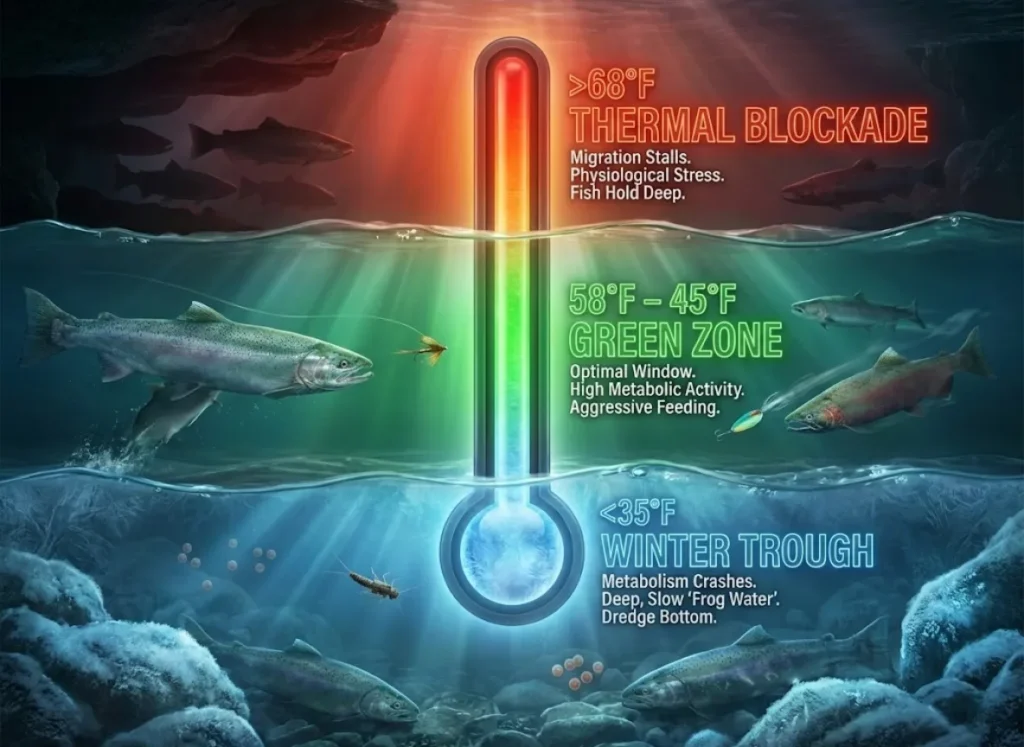
However, as winter sets in, we hit the “Winter Trough” (<35°F). Here, fish metabolism crashes. You must abandon aggressive presentations in favor of the slow, specialized tactics for winter trout fishing, targeting deep, slow pools known as “frog water.” While hard-water fishing (ice fishing) dominates the bays and harbors, open river anglers must dredge the bottom with stonefly nymphs or eggs moving at the exact speed of the current.
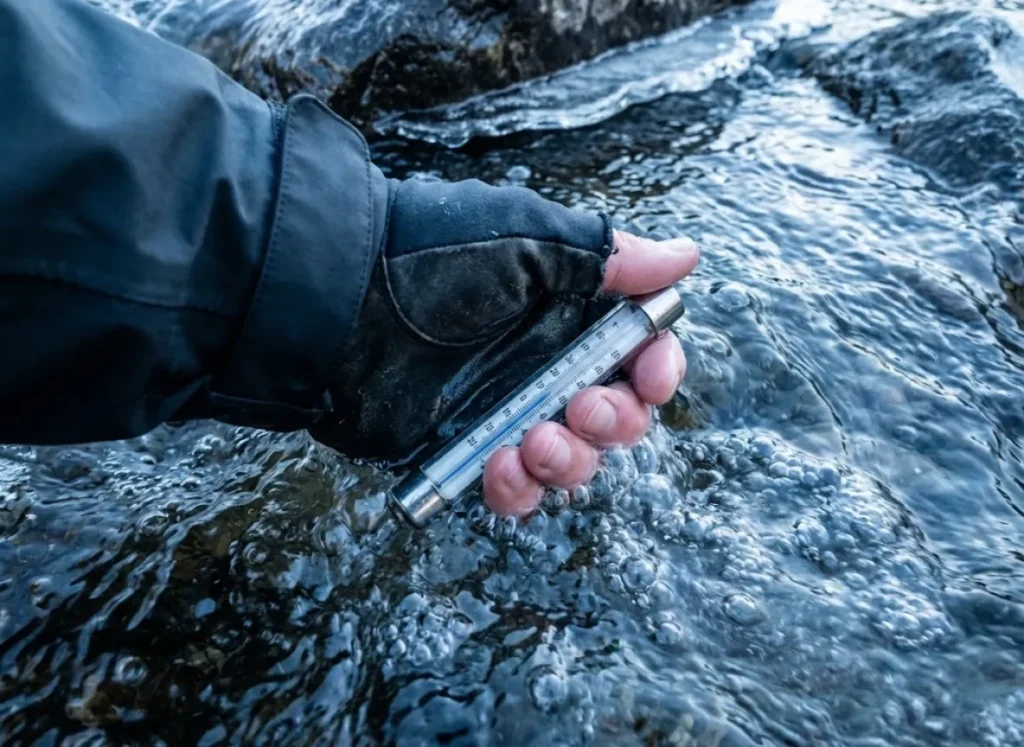
Pro-Tip: Carry a rugged stream thermometer. If the water reads 70°F, go home. If it reads 55°F, swing flies. If it reads 33°F, you must dredge the bottom with eggs or nymphs moving at the exact speed of the current.
How do you read the hydrograph for maximum success?
The hydrograph—a chart showing water flow rates (measured in CFS) over time—is your most valuable planning tool. You can access this via USGS water data or local stream gauges. The “Rising Limb” occurs immediately after rain or snowmelt. This freshet creates a nutrient plume in the lake that signals fish to enter. While this triggers the run, research on flow effects on migration timing suggests that fishing the rising limb is often futile; the fish are moving rapidly and the water is typically too fast and muddy.
The prime window is the “Falling Limb.” This usually occurs 2 to 4 days post-rain, as the river creates the “Steelhead Green” color—a mix of clarity and stain. Fish settle into holding lies like buckets and shelves, becoming far more willing to eat.
In high water on the drop, turbidity acts as cover. Migratory fish will traverse shallow runs and riffles they would normally avoid. Conversely, as the water clears, you must downsize your presentation. Understanding these strategies for fishing rivers after rain helps you choose between a large, black/purple intruder fly or white streamers in high water, versus a small natural nymph during the drop.
The Geographical Matrix: Where Should You Go?
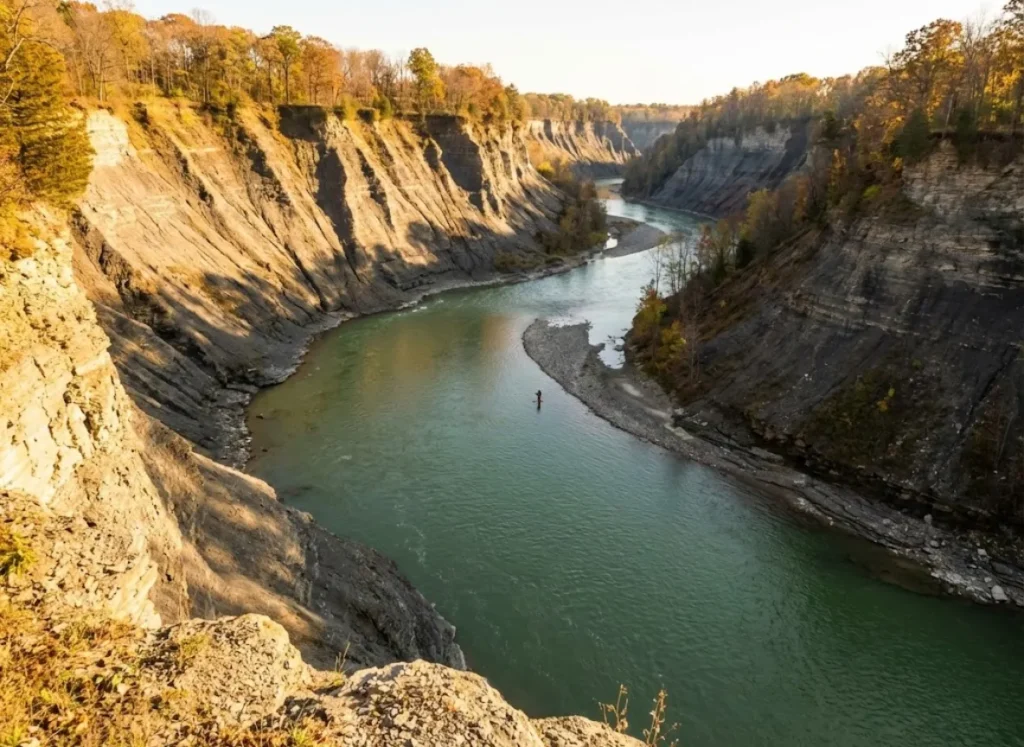
The Great Lakes system is vast, and geology dictates hydrology. A tactic that works on a sandy Michigan tailwater will fail on the slate ledges of Ohio. You must match your destination to your skill set and gear.
Which Lake Ontario tributaries offer the best runs?
Lake Ontario is known for massive fish but also massive pressure. The Salmon River NY is the heavyweight champion here. It is a reliable tailwater with flows often between 750 and 1200 CFS. However, the slate bottom is incredibly slippery (Wading Difficulty: 4/5), and you will be sharing the water.
For those looking to escape the crowds, smaller tributaries like Sandy Creek, Sterling Valley Creek, and Orchard Creek offer intense action in tighter quarters. The Genesee River offers a unique “Lower Gorge” urban fishery in Rochester, accessible via the steep Seth Green Drive. Alternatively, Eighteenmile Creek provides a more intimate setting for world-class Brown Trout on a smaller spate stream.
Regardless of the river, consulting NYSDEC Great Lakes fishing locations is essential for access points. While the Salmon River often demands assertive fishing with heavy leaders to manage “combat fishing” crowds, the smaller creeks require finesse. This biological variation emphasizes the biology behind rainbow trout and steelhead, where lake nutrients grow the fish, but stream conditions dictate their behavior.
Great Lakes Tributaries Guide
Comprehensive analysis of river systems, wading conditions, and tactical insights for Salmon & Steelhead.
Overview & Phenology
Overview: Dam-controlled tailwater with massive stockings.
Runs: Chinook (mid-Sept to Oct), Steelhead (Nov-Apr), Atlantic Salmon (Summer/Fall).
Wading: Difficult (4/5)
Polished, slime-coated slate/boulders. Cleats are mandatory. Wading is dangerous at flows >1500 CFS.
Tactical Insight
Downsize: Fish condition quickly. Use small egg patterns (6mm) and light tippet (6lb) to out-fish heavy gear.
Overview & Phenology
Overview: Industrial/urban terminal fishery below Lower Falls.
Runs: Strong runs of Chinook (Sept/Oct) and Steelhead (Oct-Apr).
Wading: Moderate (3/5)
Manageable bottom, but steep banks and urban debris. Watch for hydro release sirens.
Tactical Insight
Early Morning: Fish the “Seth Green Hole” staging pool with spoons (Little Cleos) or spinners at dawn.
Overview & Phenology
Overview: Intimate stream; famous for huge Brown Trout.
Runs: Brown Trout (Oct-Dec), Chinook, and Steelhead.
Wading: Easy (2/5)
Gravel and shale bottom. Accessible for those with limited mobility.
Tactical Insight
Finesse: Clear water requires downsizing to size 14-16 nymphs and single eggs for wary Browns.
Overview & Phenology
Overview: Wild, scenic river with clay banks causing long turbidity.
Runs: Seasonal runs (Fall/Winter/Spring).
Wading: Moderate (3/5)
Slick shale ledges; remote Zoar Valley terrain requires caution.
Tactical Insight
Swing It: Width/gradient ideal for Spey rods/streamers. Stained water allows heavier tippet (10-12lb).
Overview & Phenology
Overview: Flagship of “Steelhead Alley”; shale spate stream that clears quickly.
Runs: Standard Steelhead runs.
Wading: Very Easy (1/5)
Flat shale bedrock (“bowling alley”). Slippery but few tripping hazards.
Tactical Insight
The Shale Slot: Fish pack into longitudinal fissures in the shale floor; drift nymphs/eggs into these cracks.
Overview & Phenology
Overview: “Wild and Scenic”; larger/deeper than PA streams; stays muddy longer.
Runs: Winter stronghold (stays ice-free longer).
Wading: Moderate (3/5)
Deep runs, large volume, and winter ice jams.
Tactical Insight
Go Big: Use large, flashy flies (Streamers, Woolly Buggers) in the perpetually stained water.
Overview & Phenology
Overview: Scenic gorge with steeper gradient; “Plan B” when the Catt is blown out.
Runs: Seasonal runs.
Wading: Moderate (3/5)
Hiking into the gorge requires fitness.
Tactical Insight
High-Stick: Pocket water in the gorge is ideal for high-stick nymphing techniques.
Overview & Phenology
Overview: Massive tailwater (Tippy Dam); high volume.
Runs: Huge runs of Kings, Coho, and Steelhead.
Wading: Hard (4/5)
Heavy, deep current. Wading limited to shelves; boat access is advantageous.
Tactical Insight
Heavy Gear: Beads/skein under floats dominate. Requires 10-11ft rods to manage big water.
Overview & Phenology
Overview: Undammed, “Blue Ribbon” stream; wild fish only (no stocking).
Runs: Wild Steelhead and Salmon.
Wading: Easy (2/5)
Sandy bottom is easy, but deep holes and log jams pose risks.
Tactical Insight
Timber: In the “Flies Only” section, swinging streamers through the woody debris is the classic tactic.
Overview & Phenology
Overview: Massive tailwater (Croton Dam); clear, cold, stable flows.
Runs: Seasonal runs.
Wading: Moderate (3/5)
Extensive gravel bars separated by treacherous deep channels.
Tactical Insight
Indicator Nymphing: Depth and speed make it the Midwest’s best indicator river. Long drifts with beads/stones.
Overview & Phenology
Overview: Urban fishery; site of Steelhead Facility (egg collection).
Runs: Check facility “Open House” events for peak timing.
Wading: Easy (1/5)
Urban park setting with defined banks.
Tactical Insight
Crowds: A numbers game. Don’t expect solitude, but expect high fish density.
Overview & Phenology
Overview: Historic “River of Presidents”; spring-fed, tannin-stained.
Runs: Resident Brook/Brown Trout and migratory Steelhead.
Wading: Moderate (3/5)
Slick rocks and dark water make judging depth difficult.
Tactical Insight
Daytime Only: Fishing prohibited from 30 mins after sunset to 30 mins before sunrise.
Overview & Phenology
Overview: Primary MN steelhead river; 100% wild population (no stocking).
Runs: Wild Steelhead runs.
Wading: Hard (4/5)
Rugged terrain, steep banks, and fast, cold water.
Tactical Insight
Conservation: Catch & Release ONLY for unclipped (wild) steelhead.
What makes “Steelhead Alley” on Lake Erie unique?
“Steelhead Alley” spans Pennsylvania, Ohio, and Western New York, characterized by shallow rivers cutting through shale and slate. Elk Creek PA is the flagship. It is shallow and easy to wade (Wading Difficulty: 1/5), but it clears rapidly, meaning you have a short window of opportunity.
Contrast this with Cattaraugus Creek (NY), a large, wild river. Its clay banks cause it to stay turbid for long periods, famously known as “Cattaraugus Green.” Further west, the Grand River OH and Chautauqua Creek offer distinct challenges, with the Grand being a larger system prone to distinct muddy water events. Before heading out, always review the official Cattaraugus Creek steelhead map to identify boundaries, specifically regarding the Seneca Nation territory which may require separate permits.
The defining feature here is the “Shale Slot.” Fish hold in longitudinal cracks in the bedrock floor, often invisible from the surface. Because these rivers cross state lines, you must be diligent about checking state fishing regulations as limits and gear restrictions change the moment you cross a border.
How do the massive rivers of Lake Michigan differ?
The western side of the state offers volume. The Manistee and Muskegon River are massive tailwaters regulated by dams. They often require heavy wading or a boat to fish effectively. The currents are deep and powerful, demanding specialized techniques for fishing in current like heavy “chuck and duck” nymphing or deep indicator set ups drifting trout beads and glo bugs.
The Pere Marquette River stands apart as a free-flowing, undammed river with a famous “Flies Only” section. It relies on groundwater, keeping it stable when other systems blow out. To the west, the Root River WI provides a quintessential urban fishery for Chinook and Steelhead entering from the Wisconsin basin.
The “Lumberjack” factor is real here. These rivers are filled with woody debris and log jams. You need heavy fluorocarbon tippet (10lb+) to extract fish from cover. Always verify current rules, such as Michigan DNR fisheries order 202.25, to ensure you are compliant with gear restrictions in specific zones.
What challenges define the Lake Superior frontier?
This is the wildest frontier. The tributaries here—and adjacent Lake Huron rivers—are rugged, tannic, and cold. The Bois Brule River (WI), known as the “River of Presidents,” features dark, tea-stained water and notoriously slippery rocks. The runs here occur later in the spring due to the frigid thermal mass of Lake Superior.
The Knife River MN is a flashy, high-gradient freestone river where all fish are wild trout—no stocking occurs. This creates a strong “Catch and Release” culture. You may also encounter native Brook Trout (coasters) or occasional Lake Trout venturing into the mouth upstream. Conservation is essential, and you must check resources like the Wisconsin DNR Brule River fishing guide for specific rules, such as night fishing bans designed to protect spawning season fish.
Safety is a legitimate concern here. The combination of cold water, remoteness, and difficult terrain makes investing in the best fly fishing waders mandatory, not just for comfort, but for survival.
The Arsenal: What Gear Survives the Great Lakes?
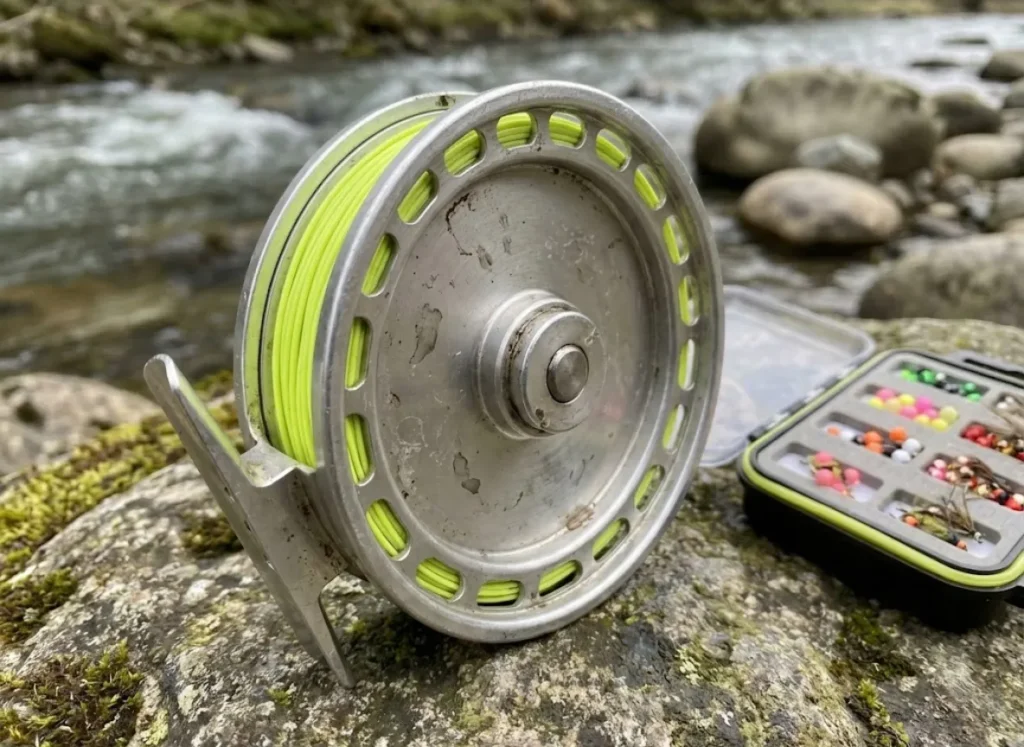
Generic trout gear will fail here. The environment demands tools built for leverage, line control, and invisibility.
What is the optimal rod and reel hierarchy?
Length is your ally. Centerpin rods (11′-13′) are standard for drift fishing because they allow you to keep the line off the water, eliminating drag and achieving the perfect drift with floats. Switch rods (10’6″ – 11’6″) and Spey rods are the versatile “30-06” of the Great Lakes, allowing for overhead nymphing or Spey casting in tight quarters.
For reel selection, a Centerpin offers zero-inertia free-spooling for drifts, while fly reels require sealed drag systems to stop a hot King Salmon. MN DNR steelhead gear recommendations confirm that standard 9-foot rods often lack the shock absorption needed for light tippet on big fish.
Balance is critical. A tip-heavy rod causes fatigue after a thousand drifts. Understanding the parts of a fishing rod helps you select a setup where the reel balances the blank perfectly, allowing for effortless “high-sticking” all day.
How critical is terminal tackle selection?
Invasive mussels have filtered the Great Lakes waters to near-distilled clarity. Invasive mussel impact on water clarity means fish can see everything. Fluorocarbon tippet is mandatory due to its refractive index, which makes it nearly invisible underwater.
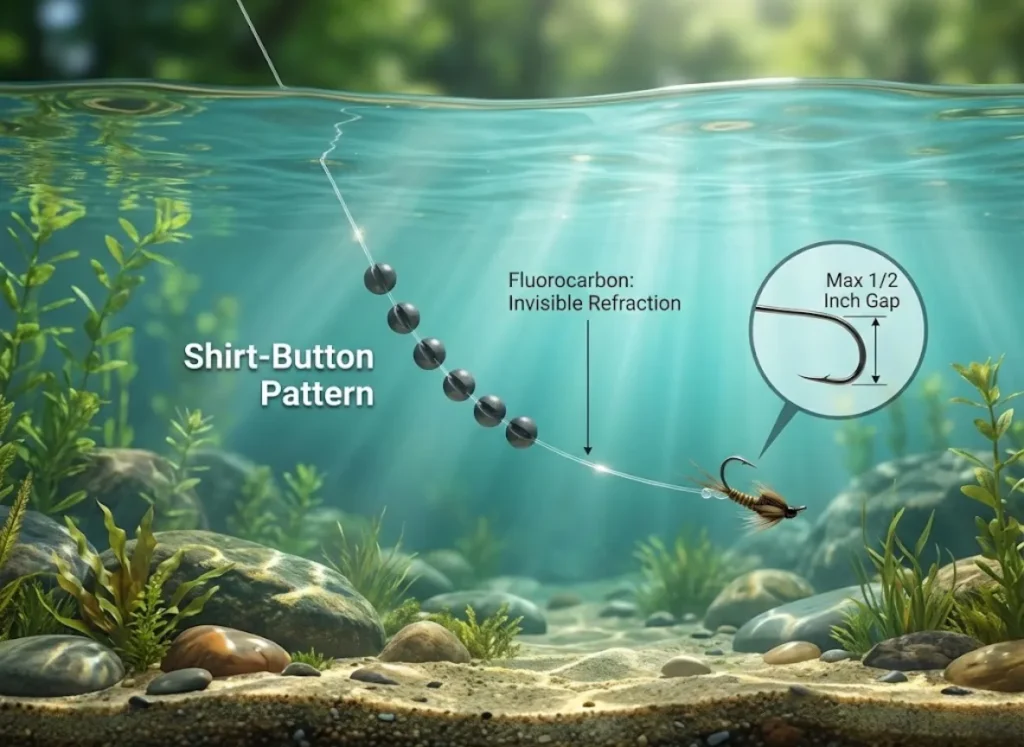
When rigging, use a “Shirt-Button” split shot pattern (weights evenly spaced) for a natural taper in the current. Be mindful of “Hook Gap” regulations—often restricted to 1/2 inch or less to prevent snagging. For flies, stock your box with estaz eggs, egg sucking leeches, and stonefly nymphs. If you are spin fishing, spinners, spoons, and plugs (like Hot n’ Tots) are staples for triggering aggressive strikes.
Many anglers debate line choices, but when comparing braid vs fluorocarbon vs monofilament, fluorocarbon wins for the leader length every time in these clear waters.
Ethics and Regulations: How Do We Sustain the Fishery?
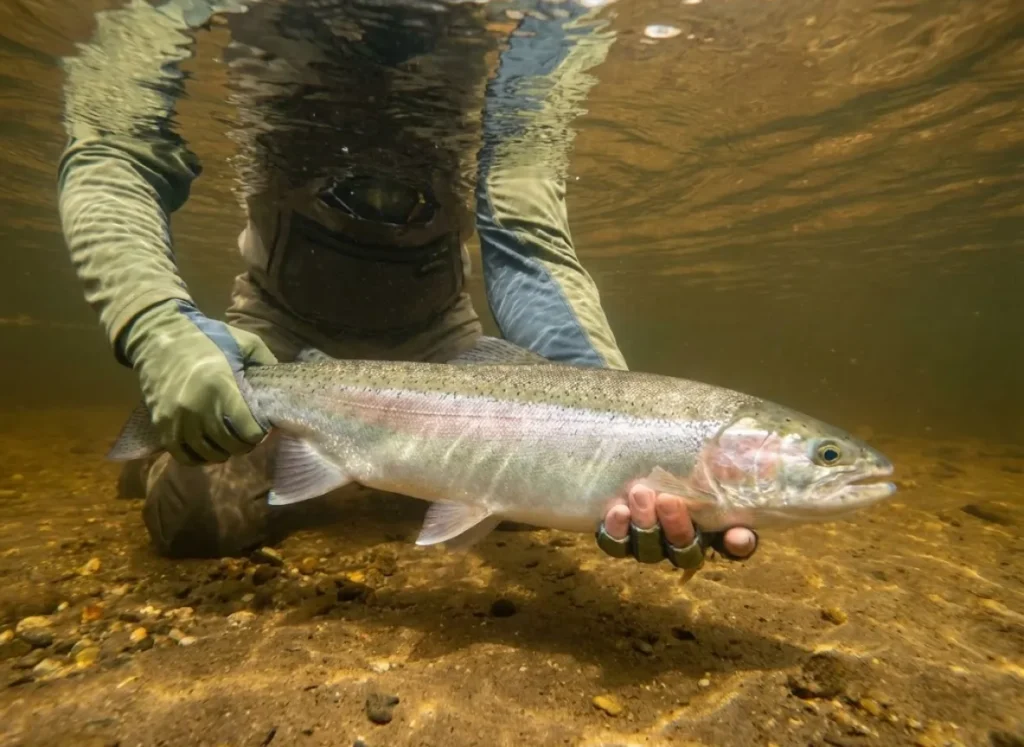
The sustainability of these fisheries depends on angler behavior. We are the stewards of the river.
What are the critical regulatory nuances to know?
Great Lakes regulations are complex webs designed to limit snagging. In New York, for example, the hook gap rule (maximum 1/2 inch from point to shank) is strictly enforced. Michigan has recently implemented restrictions on treble hooks in specific ports during November. In some areas, fishing is prohibited from the bridge closest to mouth to protect staging fish.
Biosecurity is equally vital. The New Zealand Mud Snail is a tiny, invasive threat that can destroy ecosystems. The New Zealand mudsnails prevention protocol—Clean, Drain, Dry—is not optional. You must inspect your boots and gear before moving between watersheds.
Further steps include respecting “Flies Only” zones and adhering to sunset to sunrise fishing bans (night fishing bans) in PA and WI. Broadly, preventing the spread of aquatic invasive species ensures that the river bottom remains a habitat for insects and fish, not a carpet of invasive monocultures.
Pro-Tip: Use a “breakaway” system on your leader. Use a tippet ring and lighter line for your fly than your main leader. If you snag bottom, you lose only the fly, not the entire rig—keeping lead out of the river and saving you money.
Conclusion
Mastering Great Lakes tributary fishing is a journey of precision. We have learned that temperature is the master switch, blocking migration above 68°F and accelerating it as the water cools to the green zone. We’ve seen how geography dictates tactics, requiring mobility in the shale of Ohio and heavy artillery in the timber of Michigan.
We know that the “drop” is king, and that success favors those who watch the hydrograph. Finally, we understand that ethics ensure future runs. Adhering to hook gap limits and biosecurity protocols is the rent we pay for the privilege of fishing these waters.
Do not just read the reports—monitor the gauges. When the water drops and the temperature hits 55°F, grab your fishing license, trout stamp, and gear. Share your own report from the run in the comments below.
Frequently Asked Questions
When is the best time to fish specifically for Steelhead in the Great Lakes?
The primary run occurs from late October through April. The action peaks in November (Fall Run) and March (Spring Run). However, timing varies by region, with Lake Superior streams peaking later in the spring due to colder water temperatures.
What is the legal hook gap limit for tributaries in New York?
In New York’s Great Lakes tributaries, the distance between the hook point and the shank cannot exceed 1/2 inch. This regulation is strictly enforced to minimize snagging and foul-hooking.
Do I need a special license to fish these rivers?
Yes, most states require a base fishing license plus a specialized Trout or Salmon stamp or permit. Additionally, fishing on tribal lands (like the Seneca Nation section of Cattaraugus Creek) requires a separate tribal license.
What does blown out mean in tributary fishing?
Blown out refers to river conditions where high water volume and extreme turbidity (muddiness) make fishing ineffective or dangerous. Anglers should wait for the falling limb of the hydrograph when levels recede and clarity improves.
Risk Disclaimer: Fishing, boating, and all related outdoor activities involve inherent risks that
can lead to injury. The information provided on Master Fishing Mag is for educational and informational purposes
only. While we strive for accuracy, the information, techniques, and advice on gear and safety are not a substitute
for your own best judgment, local knowledge, and adherence to official regulations. Fishing regulations, including
seasons, size limits, and species restrictions, change frequently and vary by location. Always consult the latest
official regulations from your local fish and wildlife agency before heading out. Proper handling of hooks, knives,
and other sharp equipment is essential for safety. Furthermore, be aware of local fish consumption advisories. By
using this website, you agree that you are solely responsible for your own safety and for complying with all
applicable laws. Any reliance you place on our content is strictly at your own risk. Master Fishing Mag and its
authors will not be held liable for any injury, damage, or loss sustained in connection with the use of the
information herein.
Affiliate Disclosure: We are a participant in the Amazon Services LLC Associates Program, an
affiliate advertising program designed to provide a means for us to earn advertising fees by advertising and linking
to Amazon.com. As an Amazon Associate, we earn from qualifying purchases. We also participate in other affiliate
programs and may receive a commission on products purchased through our links, at no extra cost to you. Additional
terms are found in the terms of service.