
In this article
You take the medium-heavy combo you bash bass with all summer, drive it down to the coast, and hook your first redfish off a pier. You drive home grinning. A week later you pick that reel up and it sounds like there is gravel rolling around inside it. Ask any inshore regular and they will tell you the same thing: the rod almost never gives out, the reel does, and that one fact is the most useful thing to understand about saltwater vs freshwater gear. Here is what actually changes between the two, category by category, whether you can run the bass gear you already own in the salt, and the honest answer to whether you really need a second setup.
Here is the whole comparison at a glance, then we will dig into each row.
| Component | Freshwater Gear | Saltwater Gear | Why It Matters |
|---|---|---|---|
| Reel | Light graphite, open design | Metal body, sealed drag and bearings | The reel is the part salt seizes first |
| Rod | Aluminum oxide guides | Stainless or titanium guides, tougher seat | Only the metal parts corrode, not the blank |
| Line | Mono or light braid | Braid mainline, 10 to 20 lb inshore | Braid shrugs off abrasion around structure |
| Leader | Often skipped | Heavier fluorocarbon, 20 to 30 lb | Oyster and pilings shred straight line |
| Terminal tackle | Plain hooks and swivels | Coated or stainless | One rusty hook ruins a whole tray |
| Maintenance | Optional rinse | Same-day freshwater rinse, every trip | Rinsing decides whether gear lasts |
What Actually Changes Between Saltwater and Freshwater Gear
It All Comes Down to Corrosion
Strip away the marketing and the whole difference fits in one sentence: the metal in your bass reel was never picked to survive salt, it was picked to be light. Saltwater gear is built from corrosion-resistant materials like anodized aluminum, stainless steel, and sometimes titanium, while freshwater gear leans on lighter graphite and composite that has no salt protection at all. Salt water is chemically hostile to ordinary gear metal, and the abrasive sand and shell you fish around only speed things up.
If you are still putting together your first fishing setup, this is the foundation everything else rolls up to, and the complete beginner’s guide to your first fishing setup walks through the whole rig before you ever start splitting hairs between fresh and salt.
What “Saltwater Grade” Really Buys You
When a box says saltwater grade, it mostly means the maker sealed the parts brine ruins and used metals that do not rust as fast. It is not a different category of fishing, just a different set of small choices aimed at one enemy: sodium chloride.
Here is the part the tackle aisle skips: the gear that lasts is not the most expensive, it is the gear that gets rinsed. Better materials buy you time. The rinse habit is what actually keeps a reel turning season after season, and we will get to exactly how that is done at the end. For now, the useful move is to go component by component so you can see where the money and the real risk actually sit.
Why Saltwater Wrecks the Reel, Not the Rod
Sealed vs Open Reels
Most freshwater reels are open by design and rely on water draining back out. Saltwater reels add gaskets and seals to keep brine out of the gearbox, the bearings, and the drag stack. Those seals are the actual upgrade you pay for. An open freshwater reel lets salt water reach the gears and drag washers directly, which is where the trouble starts.
Where the Damage Actually Happens
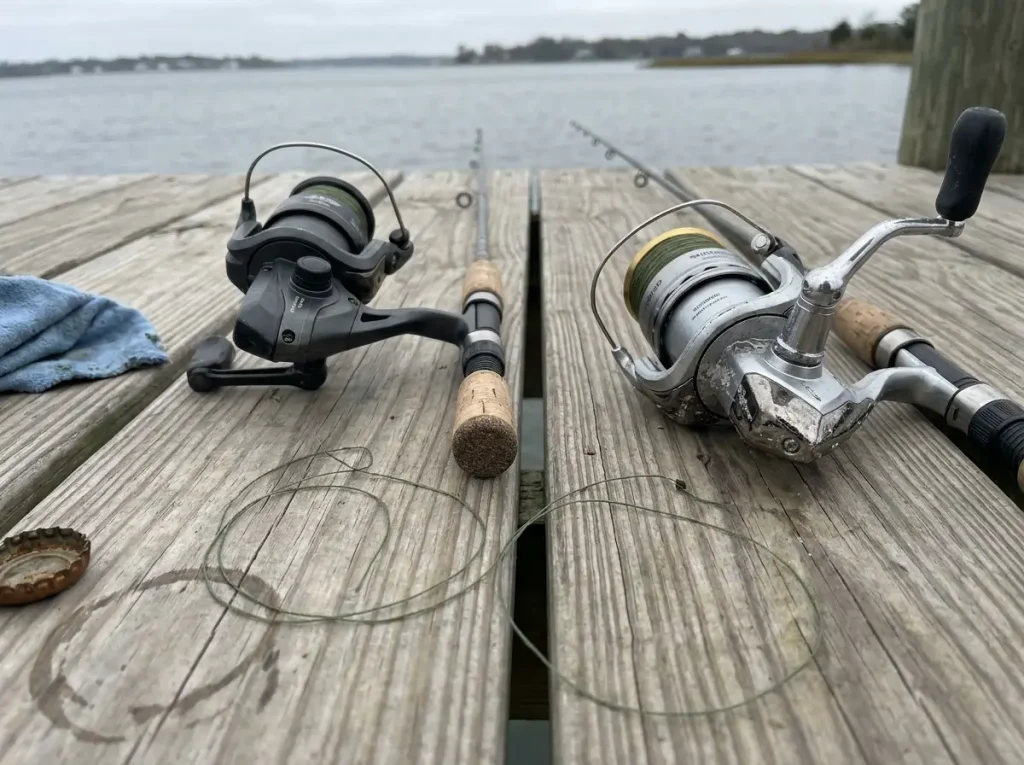
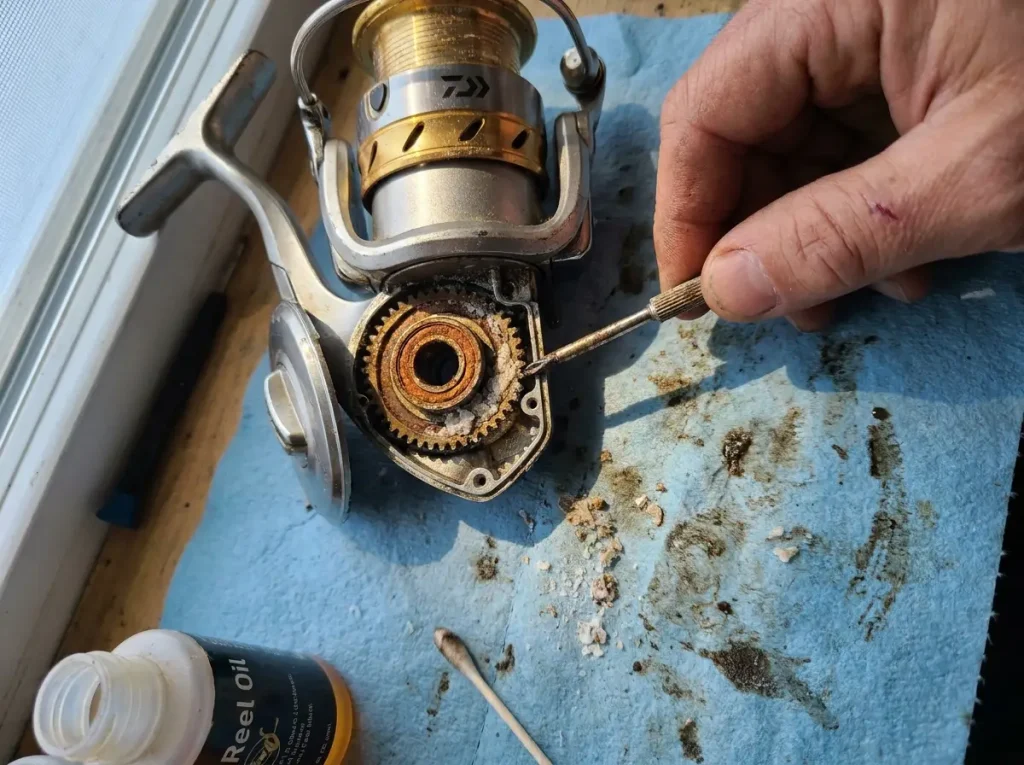
Everyone says saltwater gear corrodes and stops there. Here is what is really going on inside an unsealed reel. Salt water reaches the bearings and they rust and roughen. It soaks the drag washers and they crystallize and grab instead of slipping smoothly.
Corrosion can start almost immediately, and a reel left unrinsed can grind and seize within weeks, sometimes a handful of trips. That gravel sound from the intro is salt that dried into crystals inside the gear train.
The Rod Barely Notices
The rod blank, whether graphite or fiberglass, is largely immune to salt. What corrodes on a rod is only the metal hardware: the guide frames and the reel seat. That is the entire reason the smart first upgrade is the reel, not a whole new outfit. The rod you already own is probably the least of your worries, which is good news for your wallet and bad news for anyone trying to sell you a matched pair.
Reel Differences That Actually Matter
The Three Features Worth Paying For
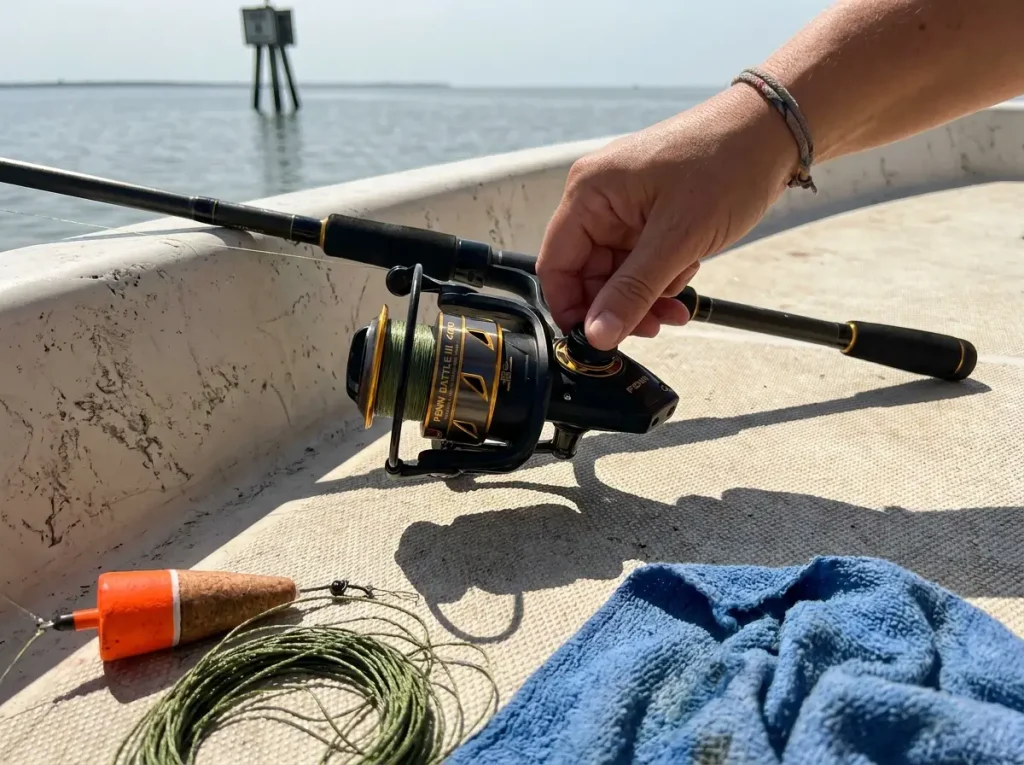
If you upgrade one thing before your first salt trip, make it the reel. Three features matter and the rest is nice-to-have: a sealed drag system, shielded or sealed bearings, and a metal or corrosion-treated body. Saltwater reels also run stronger drags and stiffer frames because salt fish pull harder than most freshwater species, so the extra beef is not only about rust. The big names like PENN, Shimano, and Daiwa all build sealed reels at this size, so you are choosing on budget and feel, not brand.
This is also where the spinning-versus-baitcaster question comes up, and if you are still choosing between a spinning reel and a baitcaster, spinning is the easier path into inshore fishing for most beginners.
Sizing a Reel for Inshore
For inshore beginners, a 3500 to 4000 spinning reel is the do-everything size. It balances a 7-foot rod, has the line capacity to hold plenty of braid, and gives you the drag pressure to turn a solid redfish without being a winch. Go bigger only when you actually start chasing bigger fish.
Starter Reels That Get It Right
The benchmark first saltwater reel is the PENN Battle III Spinning Reel 4000. A full metal body and a sealed HT-100 carbon drag are exactly the fix for the problem we just described, which is the reel being the part that gives out. It is a mid-range price that punches well above it.
If money is tight, the PENN Pursuit IV Spinning Reel 4000 gets you the same sealed HT-100 drag and a corrosion-resistant body at the lowest sane saltwater price. The sealed drag is the non-negotiable, and this reel hits it for less.
You do not need a four-figure reel for a first inshore trip. You need a sealed drag and a rinse habit. A regular angler who rinses a budget sealed-drag reel after every trip will outlast someone who babies an expensive one and skips the hose.
Rod Differences and Why Yours Probably Survives
Only the Metal Parts Corrode
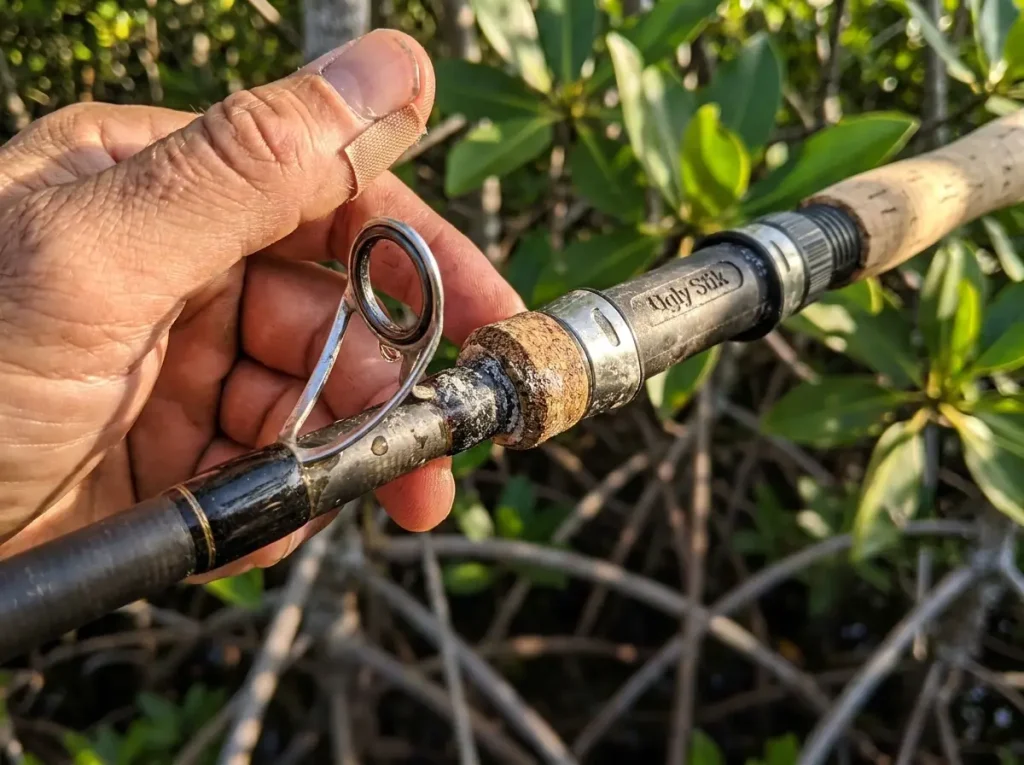
Good news for your budget: the rod is the part you are least likely to need to replace. The blank does not rust. What corrodes are the rod guides and the reel seat hardware, and saltwater rods answer that with stainless steel, titanium, or carbon-fiber guides instead of the common freshwater aluminum oxide. If you do not know which part is which, the breakdown of the guides and reel seat in a rod’s anatomy sorts it out fast.
Power, Action, and the Bass-Rod Overlap
Inshore wants a medium-heavy rod with enough backbone for snook and reds. That is the same power class as a medium-heavy bass rod, not a different planet. A beginner stepping from bass to inshore is making a far smaller jump than the tackle ads imply.
Glass vs Graphite for Beginners
The trade-off in plain terms: a fiberglass rod is tougher and more forgiving, which is great when you are still learning. A graphite rod is more sensitive but less tolerant of abuse. The Ugly Stik Bigwater Spinning Rod 7′ Medium-Heavy leans on the forgiving side, with a near-indestructible blank and corrosion-tolerant stainless guides.
It is the living example of your rod barely needing an upgrade. Rinse those guides and the reel seat with the reel, and the rod will outlast everything else in the boat.
Line and Leader Differences for Saltwater
Braid Is the Inshore Standard
Line is where the freshwater-to-salt jump is smallest, because you are probably already on braid. Braided line is the inshore mainline standard at roughly 10 to 20 pounds, with a thin diameter, long casting distance, and the abrasion-resistant edge that matters around oyster bars and dock pilings. The PowerPro Spectra Braided Line in 30 lb is the workhorse most inshore anglers reach for, and it holds up where straight monofilament would fray.
Why You Add a Fluoro Leader
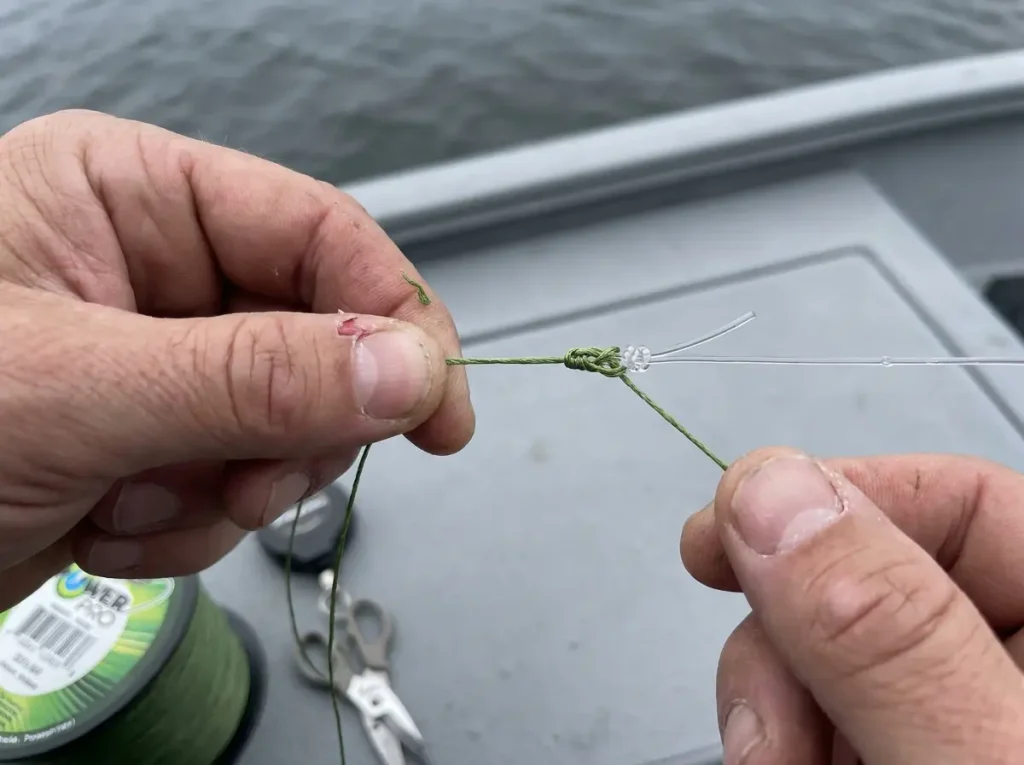
The new habit for the salt is the leader. Inshore, you tie a heavier fluorocarbon leader, usually 20 to 30 pounds, between your braid and your hook. Freshwater anglers often tie straight to the lure and never think about it. Inshore you do not skip it, because oyster, pilings, and toothy bycatch will shred straight braid in one fight.
The Seaguar Red Label Fluorocarbon is a cheap, proven leader spool that does the job without ceremony. If you are still deciding between braid, mono, and fluoro, the short version inshore is braid on the spool, fluoro on the business end.
Run a couple of feet of leader, not a couple of inches. Inshore fish drag your line across structure, and a short leader puts your braid right back where it frays the moment a redfish makes a run for a piling.
Terminal Tackle and the Rusty Hook That Wrecks Your Box
Coated and Stainless Hardware
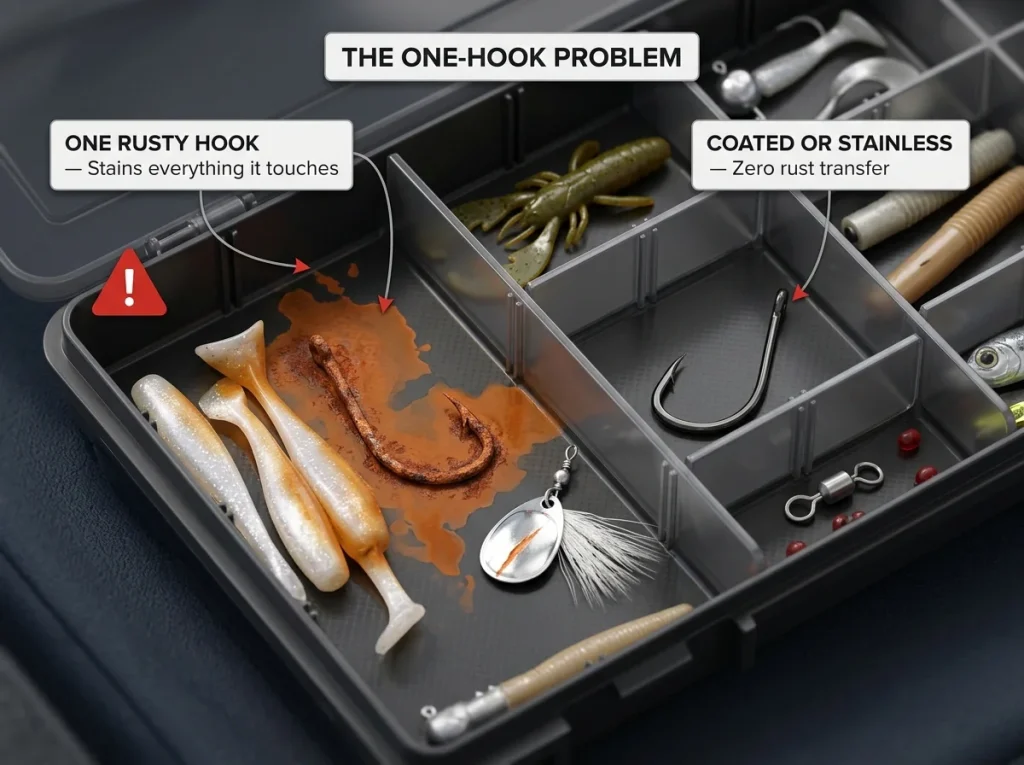
This is the part beginners ignore and then regret. Saltwater terminal tackle, the hooks, swivels, snaps, and sinkers, is coated or stainless specifically to resist rust. Coated or stainless hooks survive the salt; ordinary freshwater hooks do not, and they will not last long.
The One Rusty Hook Problem
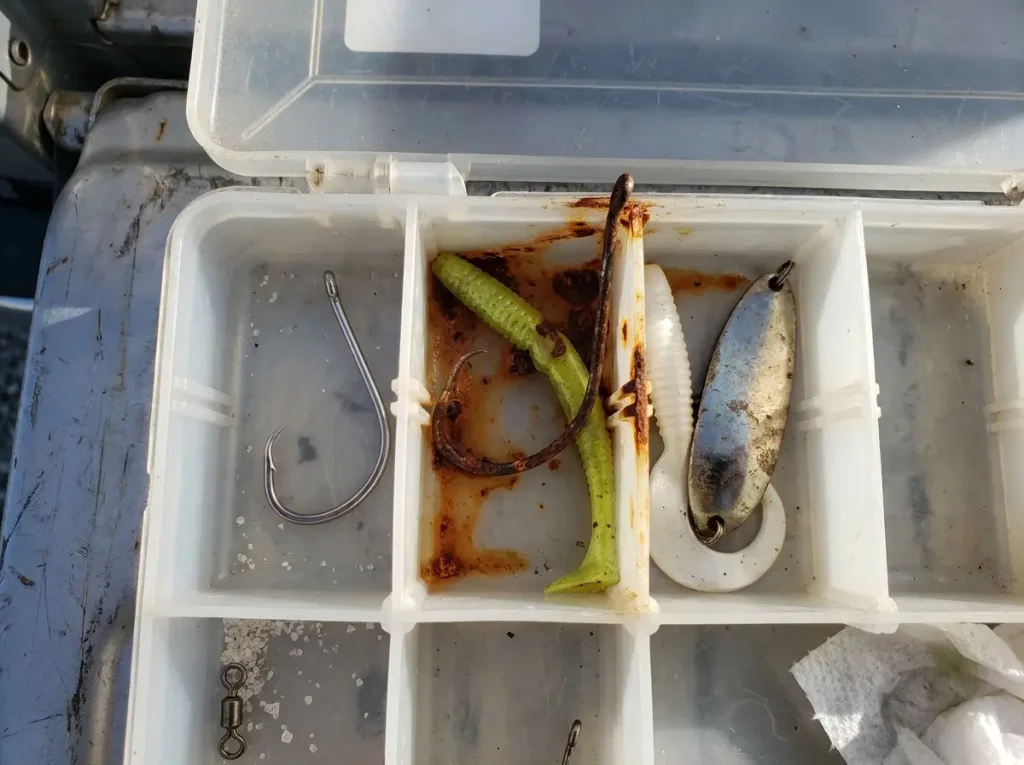
Here is the sneaky one nobody flags. Open your tray a month after a salt trip and one forgotten freshwater hook has rusted and stained orange across every lure in the box. A rusting hook does not go quietly. The rust spreads to everything it touches in the tray, and a single careless hook can take a dozen lures with it.
Heavier for Bigger Fish
Salt setups also tend to run beefier swivels, snaps, and weights, partly for rust and partly for bigger fish and stronger current. It is not all corrosion. Inshore hardware simply has more to hold against.
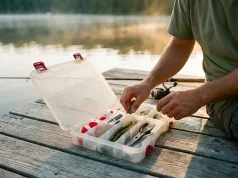
Keep a dedicated salt tackle box and never let it mix with your bass box. Toss cheap rusted hooks instead of saving them. The two dollars you save on a rusty hook is not worth the lures it will stain on its way out.
Inshore vs Offshore and Why Your Saltwater Is Closer to Bass Gear
What “Inshore” Actually Means
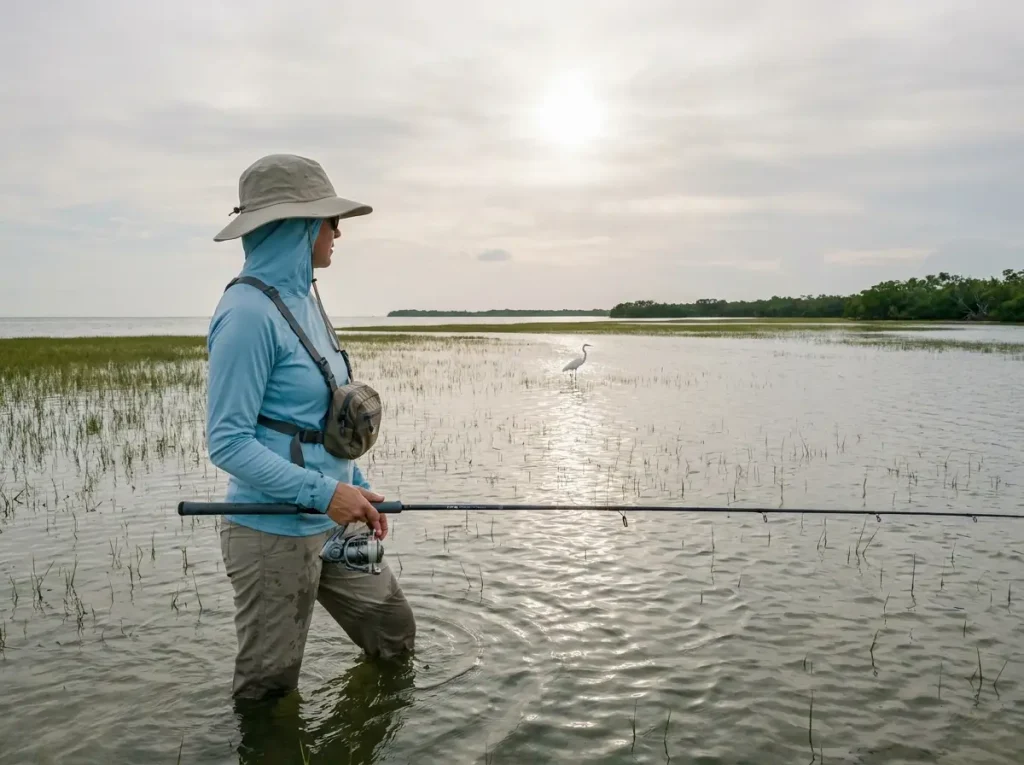
When a beginner says saltwater, they almost always mean inshore: the flats, bays, piers, and surf, chasing redfish, speckled trout, snook, flounder, and the occasional tarpon. That is light-to-medium-heavy gear. Offshore tuna tackle is a different sport with heavy and extra-heavy rods, and it is not where your first salt trips will happen.
Where the Gear Lines Up with Bass Tackle
Inshore targets are fished on the same light-to-medium-heavy gear you already use for largemouth bass. So the relevant comparison for a beginner is not bass rod versus marlin rod, it is bass medium-heavy versus inshore medium-heavy, and those two are close relatives. Once you have the right inshore rig, the next step is learning to fish it, like rigging a popping cork for redfish and trout or going after flounder along the bottom.
Don’t Buy the Tuna Boat Setup Yet
The reframe is the antidote to brand fear-marketing. Saltwater grade gets sold like you are about to battle a 200-pound fish offshore, when you are really casting for a 24-inch redfish on a grass flat. Match the gear to inshore reality, not to a magazine cover. Buy heavy when you actually book the offshore trip, and not a day sooner.
Do You Really Need Two Setups? (Where to Spend First)
The Honest Crossover Verdict
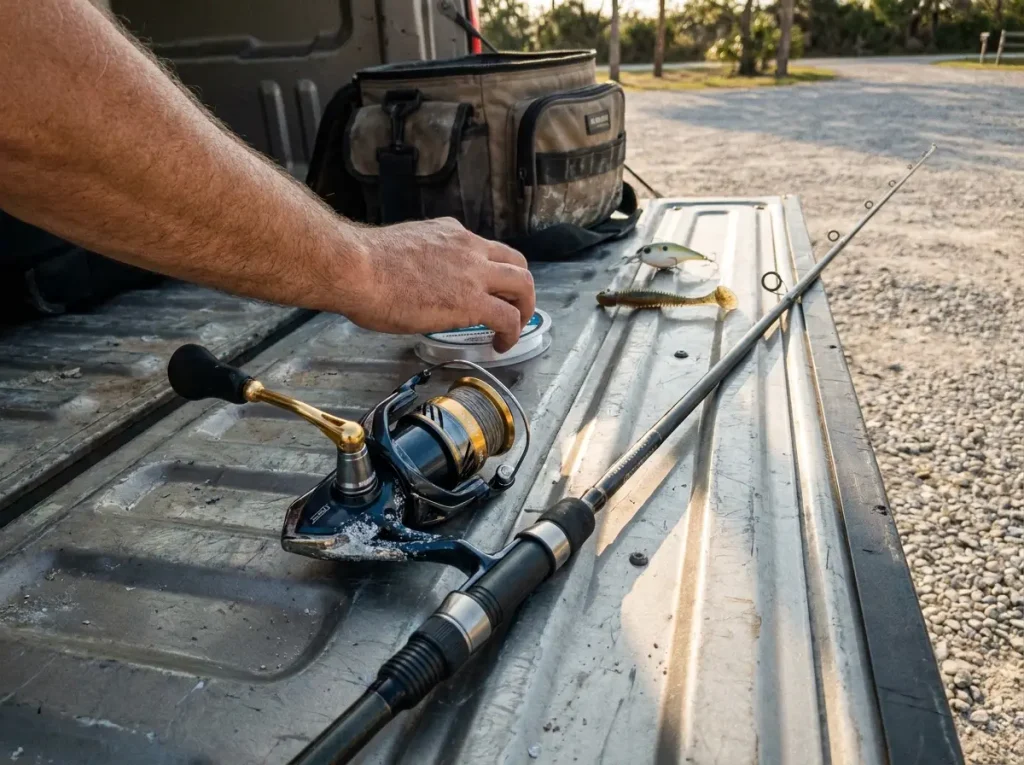
Here is the answer no tackle brand wants to give you. For a first inshore trip, a quality medium-heavy freshwater combo with braid will do the job, as long as you rinse it hard the same day, every time. Skip the rinse and you can ruin an unsealed reel in a single season.
The reverse is easy too: a saltwater reel works fine in freshwater, just heavier and pricier than you need, with no downside beyond that. You can absolutely throw a sealed inshore reel on the lake and lose nothing but a little weight savings.
This is the same anti-overbuy logic behind how much gear a beginner actually needs, which is almost always less than the shop suggests.
Spend on the Reel First
If you are going to upgrade one thing, upgrade the reel, because the sealed drag and the gears are what salt destroys while the blank shrugs it off. The spend order is simple: reel first, then the fluoro leader habit, then coated terminal tackle. The rod can wait. That priority is also the backbone of stretching a tight gear budget without leaving yourself short where it counts.
The One-Reel-for-Both Option
If you genuinely want a single reel that is happy in fresh and salt, the SHIMANO NASCI Inshore Spinning Reel is built for exactly that crossover. CoreProtect water resistance rates it for freshwater and inshore salt, so it is the literal one-reel-for-both answer rather than a second arsenal. The honest cost logic: if you fish salt once or twice a year, a meticulously rinsed quality freshwater reel survives; if you fish it regularly, a sealed saltwater reel pays for itself.
The Washdown and How to Rinse Saltwater Gear the Right Way
Low Pressure, Never a Blast
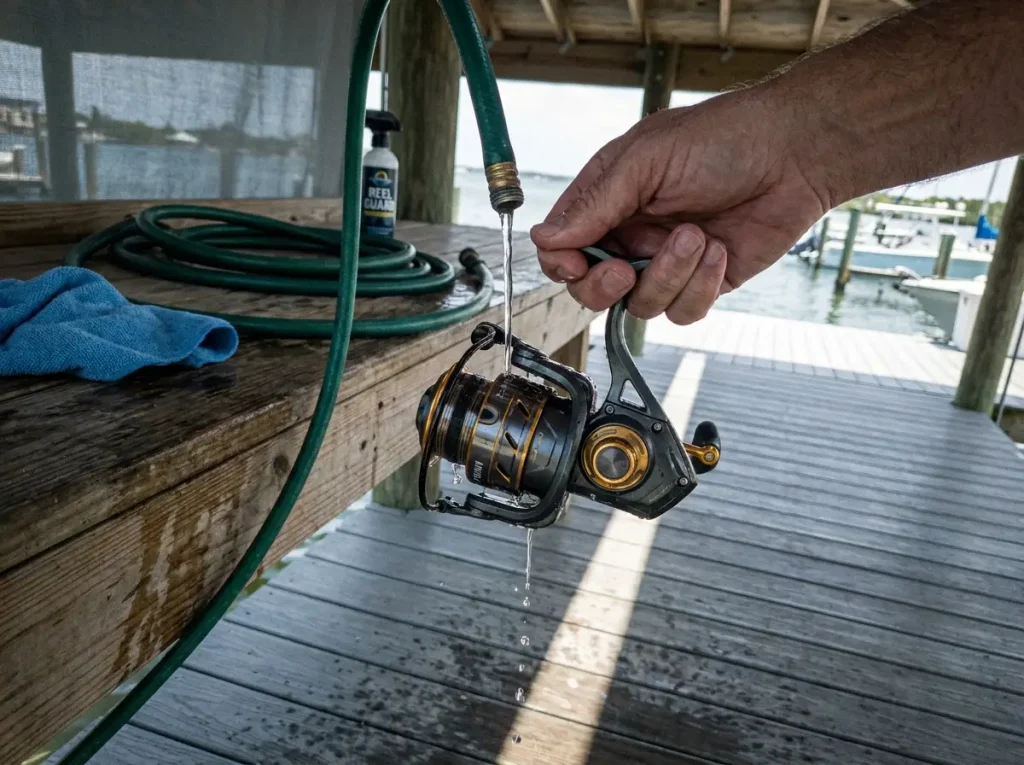
This is the 60 seconds that matter more than any spec on the box, and most people either skip it or do it wrong. Do not blast the reel with a hose jet or a compressor. High pressure forces salt deeper into the internals, which is the exact opposite of what you want, and it is the number-one reel killer.
Use a low, soft stream of fresh water and never submerge the reel. State wildlife agencies give the same advice in their own gear maintenance guidance, which is to rinse gently and skip the high-pressure water.
The Order That Matters
The order is the whole point. Do not loosen the drag before rinsing, because that exposes the drag stack to the spray. Rinse gently first, dry the reel, and then back the drag off so the washers do not stay compressed and warp in storage.
Warm, lightly soapy fresh water dissolves salt better than a cold splash. Watching it once makes the timing obvious, and this short walk-through covers the technique on a real reel.
Between Trips
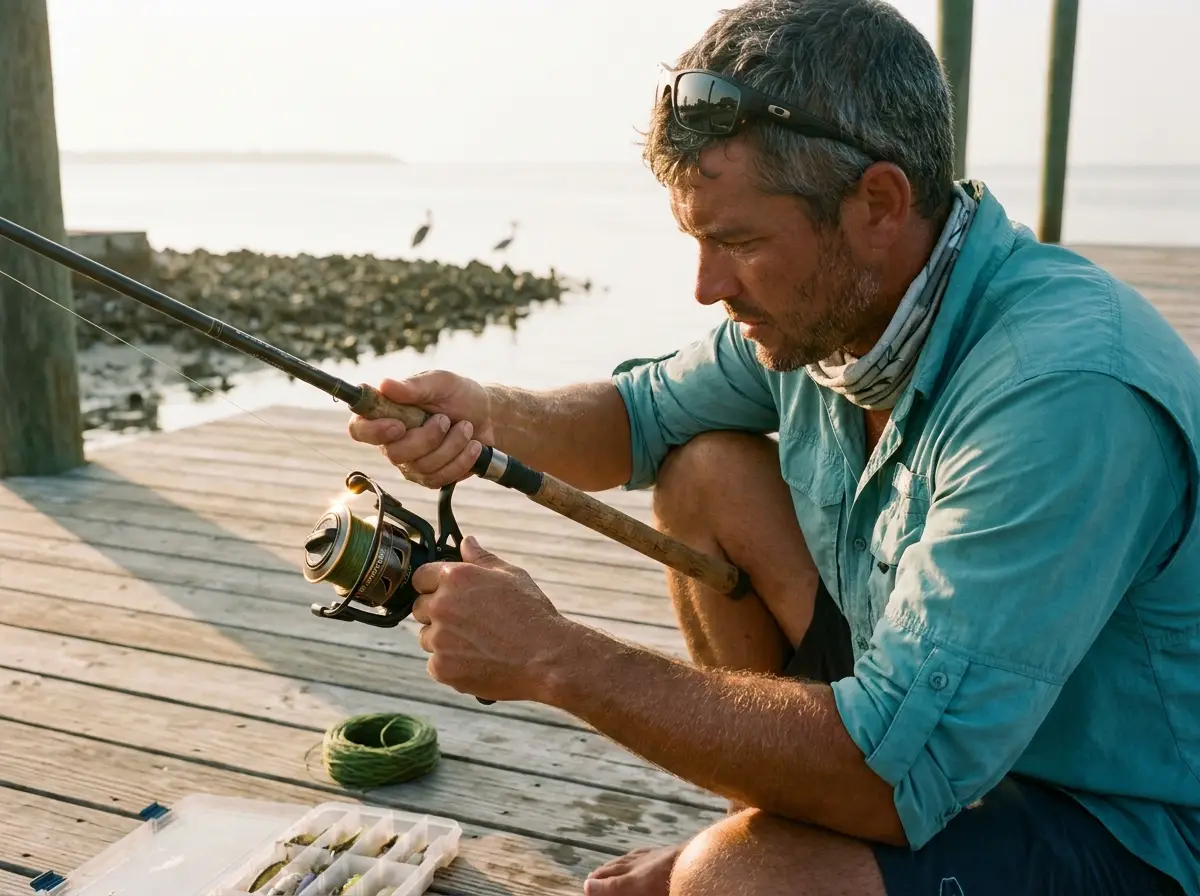
Once the reel is dry, wipe the exterior with a protectant like Reel Magic or a light film of WD-40 for lubrication that slows corrosion and salt spray damage until the next trip. Rinse the rod too, especially the guides and reel seat, and store everything dry with the drag backed off. That lake-combo angler whose reel ground like gravel? A 60-second rinse the day he got home would have saved it.
Do the washdown before you do anything else when you get home. The longer salt sits and dries on the gear, the harder it is to flush out. Some Florida inshore anglers soak badly crusted metal parts in white vinegar to soften baked-on salt, but the easy win is just rinsing before the salt ever sets.
Conclusion
Three things stick. The reel is the part that gives out, so upgrade it first and let the rod ride, because the blank barely cares about salt. Your saltwater is almost certainly light inshore, a close cousin of the bass gear you already own, so you do not need a second arsenal to start. And the washdown, done right with low pressure, a full dry, and then a loosened drag, beats any spec printed on the box.
Before your first salt trip, sort one thing: a sealed-drag reel and a same-day rinse habit. Take the gear you already own, catch the redfish first, and buy the second setup when the salt actually earns it.
Frequently Asked Questions
01Can you use a freshwater rod and reel in saltwater?
Yes, for short-term light inshore use, as long as you rinse it with fresh water the same day, every time. Skip the rinse and salt will seize the reel within a season. The rod blank itself is largely fine.
02Can saltwater reels be used in freshwater?
Absolutely, with no downside beyond weight and cost. A sealed saltwater reel is simply overkill in freshwater. It is heavier and pricier than you need, but it will not hurt anything on the lake.
03How long will a freshwater reel last in saltwater?
It depends entirely on rinsing. Rinse it hard the same day and a quality freshwater reel can handle occasional salt trips for years. Neglect it and an unsealed reel can grind and seize in a single season.
04Do you need a special rod for saltwater fishing?
Not as urgently as a special reel. The rod blank shrugs off salt, and only the guides and reel seat corrode, which most decent rods already build to resist. A 7-foot medium-heavy rod handles inshore fine.
05What size reel is best for a beginner saltwater setup?
A 3500 to 4000 spinning reel is the do-everything inshore size for redfish, trout, snook, and flounder. Pair it with 10 to 20 lb braid and a 20 to 30 lb fluorocarbon leader for a balanced starter rig.
Risk Disclaimer: Fishing, boating, and all related outdoor activities involve inherent risks that
can lead to injury. The information provided on Master Fishing Mag is for educational and informational purposes
only. While we strive for accuracy, the information, techniques, and advice on gear and safety are not a substitute
for your own best judgment, local knowledge, and adherence to official regulations. Fishing regulations, including
seasons, size limits, and species restrictions, change frequently and vary by location. Always consult the latest
official regulations from your local fish and wildlife agency before heading out. Proper handling of hooks, knives,
and other sharp equipment is essential for safety. Furthermore, be aware of local fish consumption advisories. By
using this website, you agree that you are solely responsible for your own safety and for complying with all
applicable laws. Any reliance you place on our content is strictly at your own risk. Master Fishing Mag and its
authors will not be held liable for any injury, damage, or loss sustained in connection with the use of the
information herein.
Affiliate Disclosure: We are a participant in the Amazon Services LLC Associates Program, an
affiliate advertising program designed to provide a means for us to earn advertising fees by advertising and linking
to Amazon.com. As an Amazon Associate, we earn from qualifying purchases. We also participate in other affiliate
programs and may receive a commission on products purchased through our links, at no extra cost to you. Additional
terms are found in the terms of service.