
In this article
The flounder hit like a freight train at 3:47 PM—exactly when every other angler had packed up and headed home. Capt. Charlie Nappi wasn’t fishing the running tide like everyone said you should. He was drifting dead water at the Frisbee Grounds off Montauk, waiting for this precise twenty-minute window when the current meter dropped to zero. That fish weighed 22 pounds, 7 ounces. A world record that would stand for decades—caught at slack tide, when “serious” anglers thought nothing was biting.
After thirty years of reading tidal currents across the Atlantic coast, I’ve learned that most anglers fish where they think predators should be, not where physics guarantees they’ll be. The fish aren’t random. They’re biological calculators, constantly solving an energy equation: intake must exceed expenditure. Your job is to intercept that calculation.
Here’s how to read tidal flow like the predators do—and position yourself where the math works in your favor.
⚡ Quick Answer: Fish position themselves where current delivers prey to them while minimizing their swimming effort. Use tidal coefficients (20-120 scale) to predict current intensity, target the “shoulders” of the tide (hours 2-3 and 5-6) for optimal feeding windows, and don’t ignore slack water—trophy benthic fish like flounder often feed only when the current stops.
The Physics of Tidal Flow: Understanding Your Hunting Ground
Most anglers think in terms of “high tide” and “low tide.” That’s like a pilot thinking in terms of “day” and “night.” Technically true, but missing everything that matters for the job at hand.
The real question isn’t when the tide peaks—it’s how fast the water is moving at any given moment. That speed determines where predatory fish hold, when they feed, and whether your presentation looks like food or garbage drifting in the wrong direction.
The Tidal Coefficient: Your Daily Flow Intensity Metric
The tidal coefficient is a number from 20 to 120 that tells you exactly how intense the current will be on any given day. Lower numbers mean weak, sluggish flow. Higher numbers mean water ripping through channels fast enough to push you off your anchor.
Dead Neap conditions (coefficients 20-45) occur when the sun and moon pull at right angles to each other. Currents are weak, sediment stays on the bottom, and water clarity runs high. Fish scatter or suspend rather than stacking in predictable ambush points. This is your finesse window—light jigs, slow presentations, deep vertical drops in spots that would be unfishable in harder current.
Average conditions (46-85) create the distinct current seams that stack predators. You’ll see the line where fast water meets slow—that boundary is the feeding trough. Medium coefficients are your bread-and-butter days for drift fishing and working structure edges.
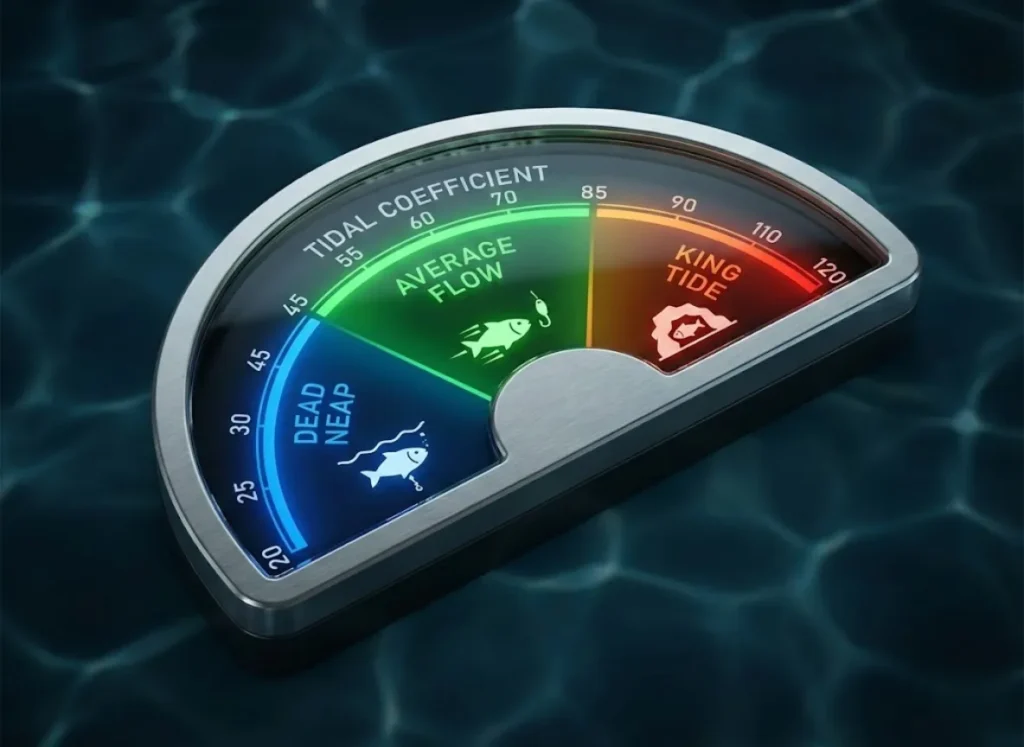
Spring tides and King tides (86-120) occur during new and full moons, especially near the equinoxes. Water volume moves fast enough to rip bait from your hands and pin debris against pilings. Fish hunker tight to structure during these events, riding Kármán vortex streets behind bridge pilings and boulders.
Pro tip: Start logging the tidal coefficient alongside your catches. After a season, you’ll likely discover your local water produces best in a specific “sweet spot” range—often somewhere around 60-80 for inshore species. Most fishing watches with harmonic analysis can calculate this for you.
The Rule of Twelfths: Predicting the Flow Surge
The tide doesn’t rise or fall at a constant rate. It accelerates, peaks, then slows again following a predictable curve.
The Rule of Twelfths breaks the six-hour tidal cycle into segments: Hours 1 and 6 each move only 1/12 of the total water volume. Hours 2 and 5 each move 2/12. Hours 3 and 4 each move 3/12—meaning half of all the water moves during those middle two hours alone.
For species like striped bass and tarpon that rely on current to funnel bait, those middle hours represent peak opportunity. The water velocity maxes out and bait gets swept helplessly into ambush positions. But for wading anglers, this same period carries the highest risk of entrapment. If you’re working a flat during hour 3 of an incoming tide on a spring coefficient, you can find yourself knee-deep in water that wasn’t there fifteen minutes ago. Consider a wading belt as your last defense against this math.
The Rule of Thirds: Current Velocity Through the Cycle
While the Rule of Twelfths describes water height, the Rule of Thirds describes horizontal velocity—how fast the current actually moves.
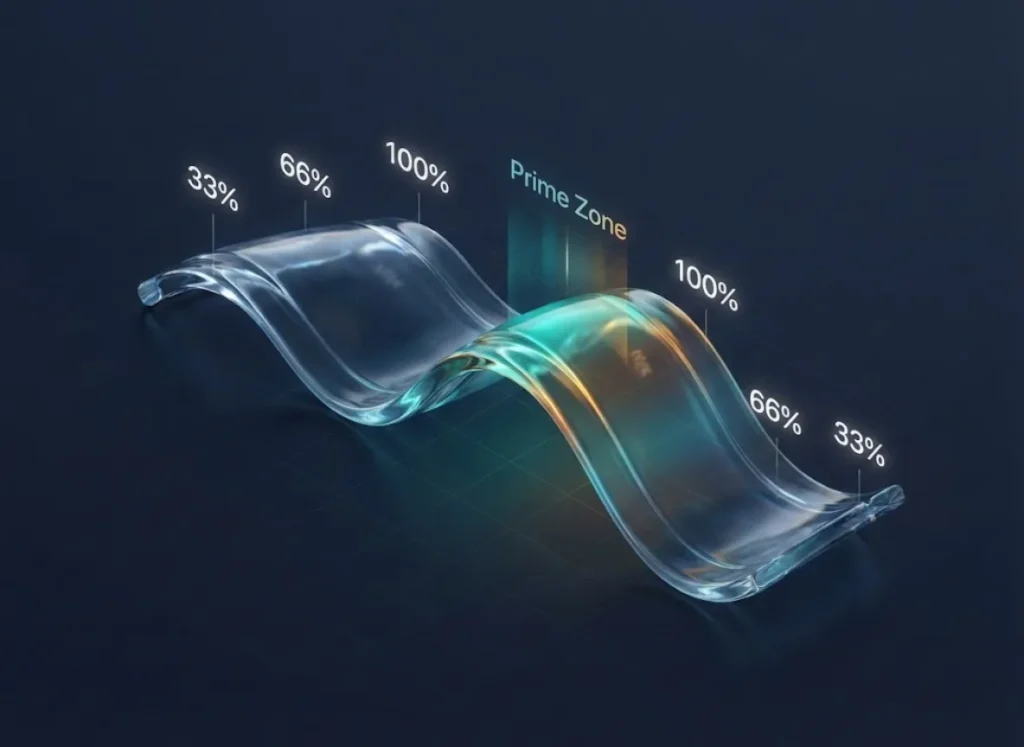
Hour 1 runs at about 33% of maximum speed. Hour 2 hits 66%. Hours 3 and 4 blast at 100%. Then velocity drops: Hour 5 back to 66%, Hour 6 down to 33%. This creates the first/last 2-hour productivity windows that experienced anglers target.
The “shoulders” of the tide—hours 2 and 5—often deliver the best balance of flow and fishability. Current moves fast enough to activate lateral lines and stack bait, but not so hard that you’re fighting physics with every cast.
Stand vs. Slack: The Timing Mistake That Costs Fish
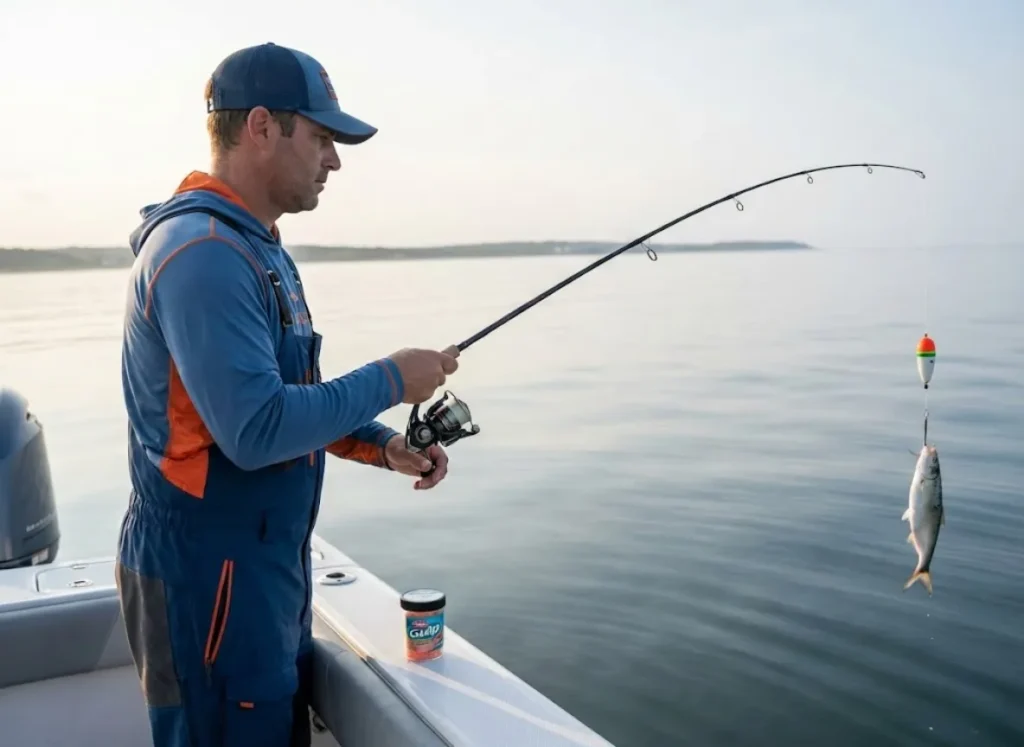
Here’s where most anglers blow it: they think “high tide” and “slack water” mean the same thing. They don’t.
Stand is the vertical moment when water reaches its highest or lowest point. Slack is the horizontal moment when current velocity drops to zero. In some systems, these happen close together. In others—especially long tidal rivers and back bays—they can be separated by hours.
Hydraulic Lag and Secondary Port Calculations
Your tide app probably shows data for a reference station: a major inlet or harbor entrance. But friction and channel geometry slow the tide as it pushes inland. This tidal lag means a spot ten miles up-river might not hit “high tide” until two hours after the main inlet.
Fish respond to the flow, not the depth. If you show up at the time your app says “High Tide,” you might be hours early for the actual slack water window. Use tide apps with harmonic prediction models that calculate subordinate station times, not just reference points.
Why the Biggest Fish Feed at “Dead” Water
Capt. Charlie Nappi didn’t catch his world record flounder by fishing the running tide. He caught it at slack.
His logbooks showed that roughly 90% of his “doormat” class fish—those over ten pounds—came during the slack tide window at Montauk’s Frisbee Grounds. The physics make sense: in ripping current that can exceed three or four knots, a 22-pound summer flounder expends massive energy just staying pinned to the bottom. Lifting off to strike prey subjects that flat body to lift forces that could sweep it downstream.
At slack water, drag drops to near zero. The fish can lift, maneuver, and strike large prey without fighting physics. Nappi used large baits—live snapper bluefish—that would be unmanageable in a fast drift. He presented them precisely when the energy equation favored the biggest predators in the system. The correlation between slack water trophy flounder and his catch data was overwhelming.
Pro tip: During the 20-30 minute slack window, drop your largest baits for bottom dwellers. Trophy flounder, black drum, and grouper often feed exclusively during this period because it’s the only time they can hunt without exhausting themselves.
Fish Bioenergetics: The Metabolic Equation Predators Solve Every Second
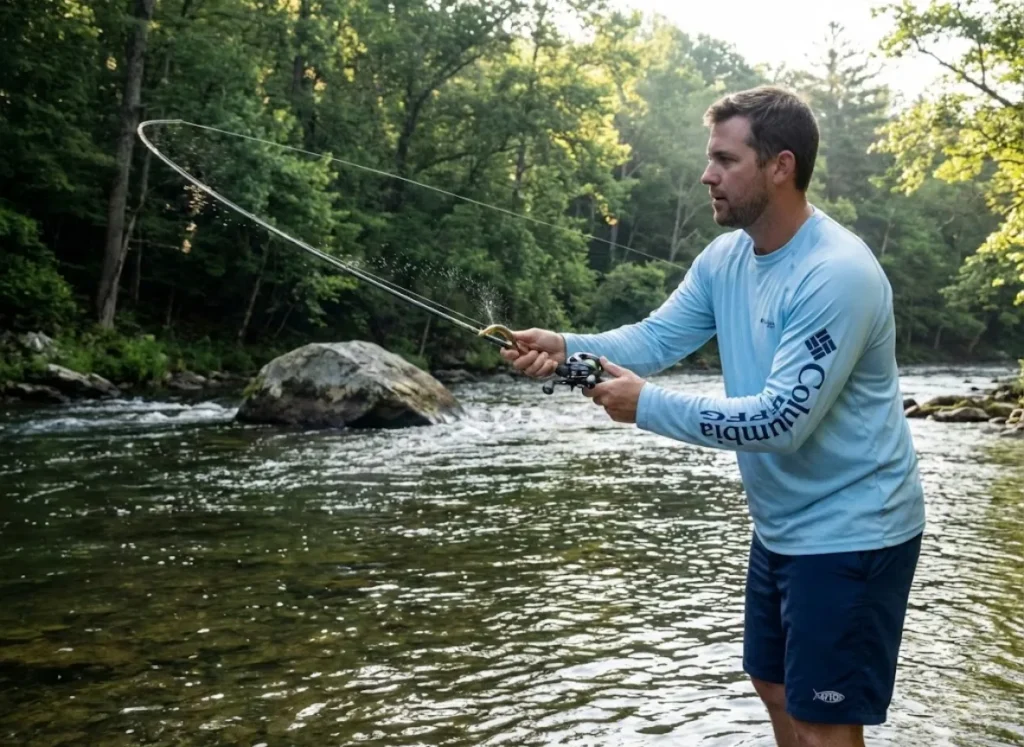
Every predator is constantly doing math. Energy in (feeding) must exceed energy out (swimming, holding position, digesting). In high-current environments, that equation gets tight fast. Understanding predator energy conservation is the key to predicting position.
Cost of Transport and Focal Velocity Selection
Swimming costs calories, and the cost increases dramatically as speed goes up. A fish holding position in a three-knot current burns energy like it’s sprinting. The same fish two feet away in a half-knot eddy is essentially resting while watching dinner drift past.
This is why predators obsess over shear zones—the boundary between fast and slow water. They sit in the slow lane (low cost) while monitoring the fast lane (high prey delivery). When something edible sweeps past, they dart out, grab it, and return to their energy-saving hold. Understanding this behavior is essential for reading current seams.
The Kármán Gait: How Fish Surf Structure Turbulence
When water movement flows past a bridge piling, boulder, or dock post, it doesn’t just split and rejoin. It creates alternating vortices—a pattern called a Kármán vortex street—that spiral downstream like tiny tornadoes.
Fish don’t fight this turbulence. They ride it.
Rainbow trout synchronize their body movements with these vortices, essentially “surfing” the turbulence to hold position or even move forward. When they’re doing it right, their swimming muscles go nearly inactive—up to 79% reduction in oxygen consumption compared to swimming in smooth current. The Kármán vortex swimming research confirms this isn’t folk wisdom—it’s measured physiology.
What does this mean for your presentation? The “slack” water behind structure isn’t dead—it’s organized turbulence. If you rip a lure through that zone aggressively, it looks wrong. Let it drift, pause, and cycle with the rotation. Match the rhythm of the turbulence, not the rhythm you’d use in still water.
Schooling as Hydrodynamic Shielding
Baitfish don’t school just to confuse predators. They school to save energy.
Like cyclists in a peloton, fish draft off their neighbors and dampen chaotic water for the group. Schooling energy conservation research shows this can reduce total energy expenditure by 38-53% at high speeds compared to solo swimmers. This efficiency lets schools traverse high-velocity inlets that would exhaust individuals.
When you find bait pushed to the edges of a current line, look for predators working the seam. They know exactly where that energy-exhausted buffet line ends.
Species-Specific Positioning: Where Each Predator Holds in Flow
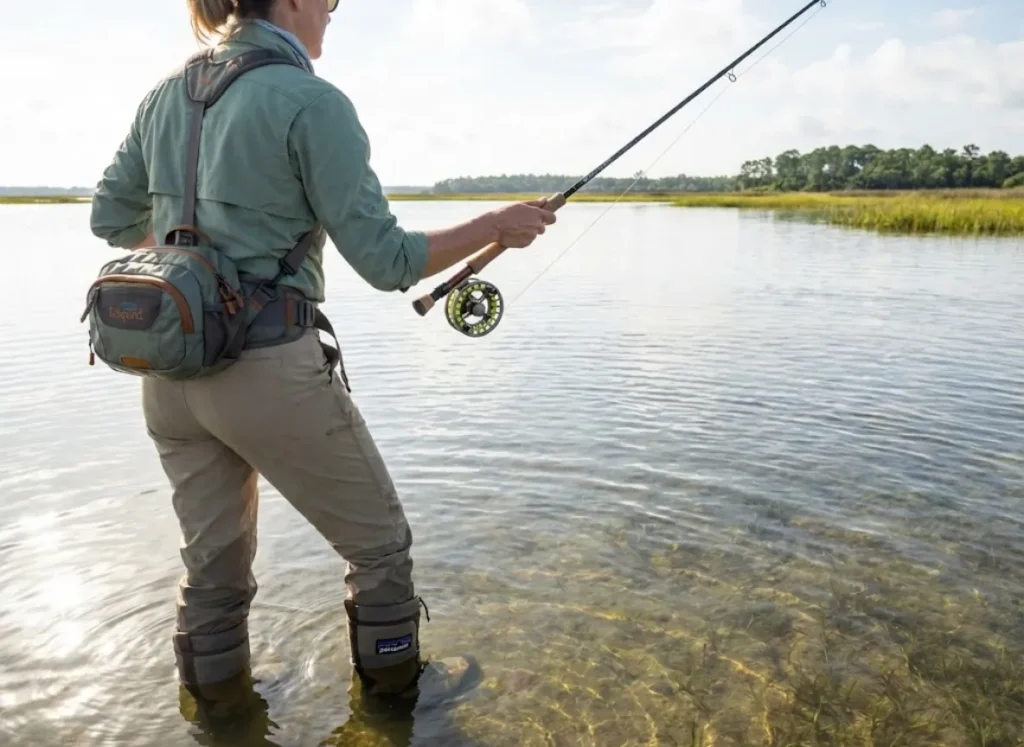
Different bodies handle current differently. A flat-bodied flounder and a torpedo-shaped striped bass solve the same energy equation with opposite answers.
Flounder: The Slack Tide Specialist
That flattened shape is perfect for hugging the boundary layer—the friction zone right against the bottom where velocity drops to near zero. But lift off the substrate and that same body becomes a sail catching current from every direction.
In running tide, you’ll catch flounder. Small ones. The big doormat flounder wait for slack when they can actually move without fighting physics. Target the 20-minute slack window with large baits and focus on low-tide divot fishing—depressions that hold water after the tide drains. If you’re pulling larger flounder from deep structure, review proper barotrauma prevention for bottom species before releasing.
Snook: Shadow Lines and Bridge Hydraulics
Snook exploit both light and current. They hold in shadow lines where darkness conceals them while light backlights prey. But their positioning is also hydrodynamic.
Bridge pilings accelerate current through the gaps and create organized lee zones behind them. Snook hold in the pressure pockets directly in front of pilings—facing current—or in the turbulent wake behind. They wait for bait swept into the kill zone at these ambush points.
Feeding often peaks at the start of the outgoing tide, when baitfish flush from mangroves into main channels. Cast up-current and let your lure sweep naturally past the shadow line. Retrieving against the flow looks wrong and forces the fish to chase—a high-cost behavior they’ll often refuse.
Striped Bass: Boulder Field Energy Landscapes
Stripers are powerful swimmers, but they’re obsessively efficient. In boulder fields, they map the “energy landscape” of the bottom structure.
The upstream face of a boulder creates a cushion where current slows. Active bass hold here, intercepting prey swept over the top. The downstream wake offers recovery zones. Stripers patrol the rips—surface turbulence over reefs and shoals—holding deep in the smooth water depths beneath the chaos, rising only to strike.
Experienced captains “stem the tide,” matching boat speed to current speed so lures stay in the strike zone relative to structure. Learning how striper behavior in freshwater impoundments mirrors these tidal patterns can help you apply these principles across environments.
Redfish: The Marsh Pump Mechanism
Redfish live by the tidal height, not just the flow.
Incoming tide pushes them deep into grass flats—skinny water measured in inches. They tail for fiddler crabs and shrimp in places inaccessible at lower water. This is prime territory for sight fishing. Outgoing tide reverses the pump: reds stage at creek mouths waiting to intercept biomass flushing out of the marsh.
Coefficient matters here. Spring tides grant access to deep-marsh flats that stay dry during neap tides. If you’re looking for tailing reds during a low-coefficient day, you’ll need to adjust—they can’t reach those back flats. Work the Gulf Coast redfish patterns around main-channel ambush points instead.
Internal Waves: The Hidden Variable for Pelagic Success
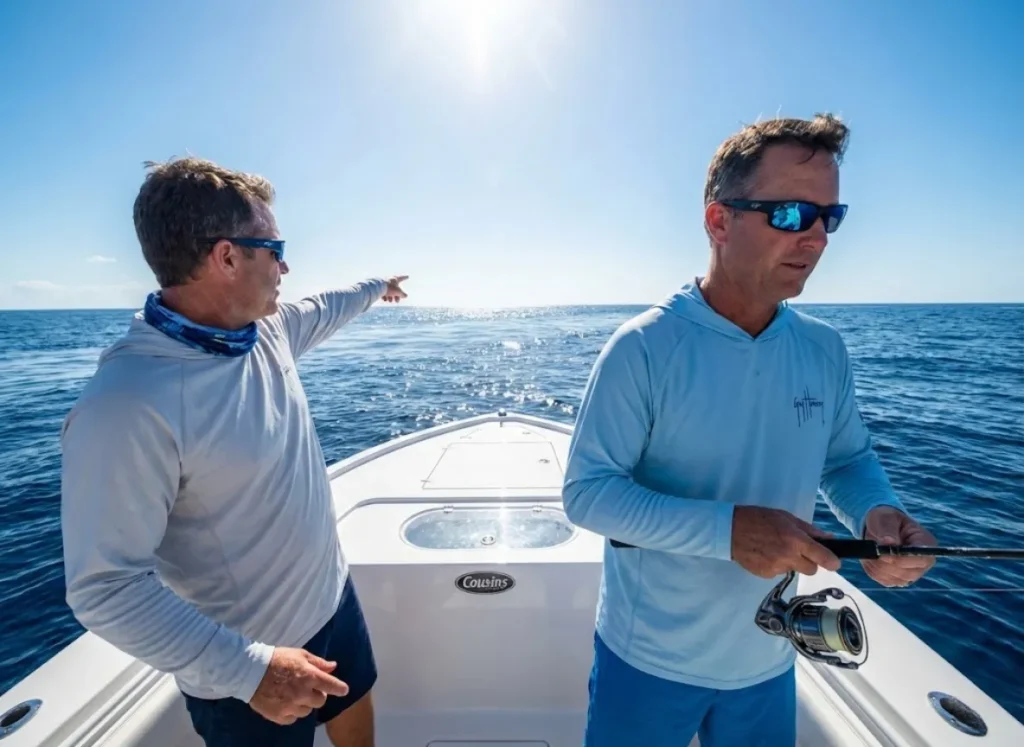
Offshore, there’s an invisible driver most anglers never see: internal waves propagating along the thermocline.
How Internal Waves Form and Propagate
When strong tidal stream energy flows over steep bottom structure—shelf breaks, seamounts, underwater ridges—it displaces layered water masses. The result is deep waves that propagate shoreward along the density interface between warm surface water and cold deep water. Unlike surface waves, these can be tens of meters tall with periods measured in minutes or hours.
The biological impact is profound. Internal wave biology research confirms these waves concentrate plankton at convergence zones, triggering food chain reactions that stack baitfish and then pelagics.
Reading Surface Slicks: Finding the Plankton Pump
You can’t see internal waves directly, but you can see their signatures: glassy slicks 10-100 meters wide where buoyant material collects at convergence zones.
These slicks look like bands of calm water in otherwise rippled sea. They often hold debris, foam, or slight discoloration. What you can’t see: larval fish densities orders of magnitude higher than surrounding water, attracting baitfish, attracting tuna, mahi-mahi, and bonito from the pelagic zone.
When offshore, look for “nervous water” or inexplicable calm strips. If your sonar shows an oscillating line at depth—a wavy thermocline—you’re looking at active internal wave propagation. Target the slicks for prey availability. Understanding Baja thermal fronts and upwelling helps you apply these concepts in specific destinations. You can also use advanced CHIRP interpretation techniques to visualize these subsurface features.
Pro tip: Spend ten minutes observing surface texture before committing to a drift. Pattern the slick intervals and target the convergence zones where prey density peaks.
Tactical Gear Adaptation: Physics-Based Equipment Choices
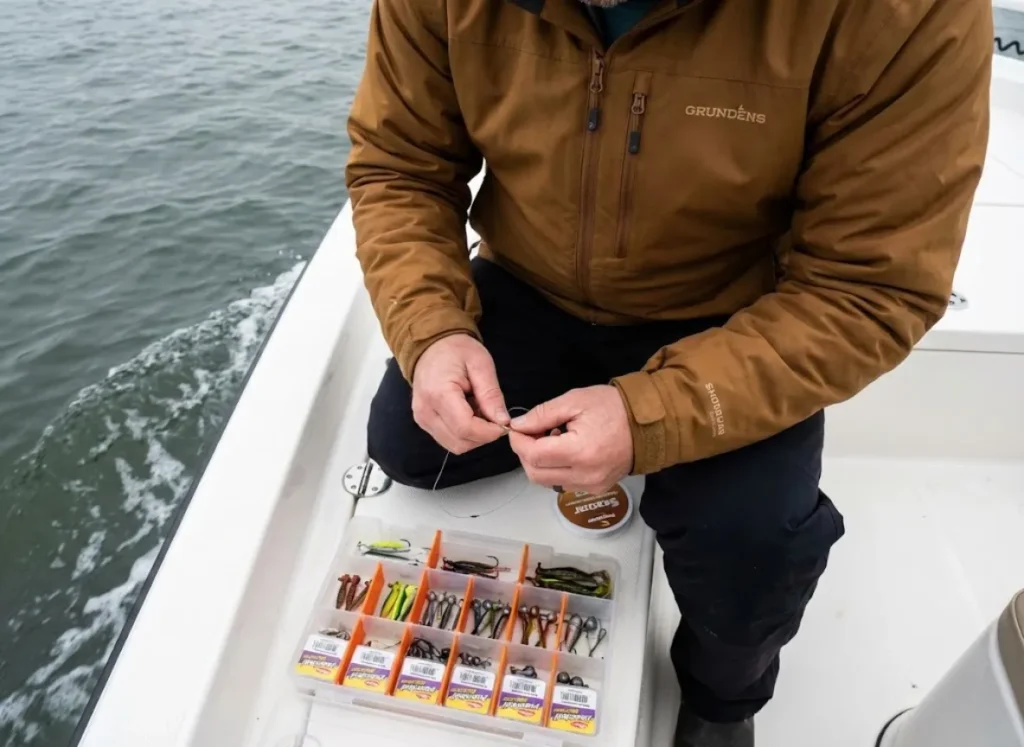
Knowing where fish hold doesn’t help if your gear fights the current instead of working with it.
The Fluorocarbon Myth: When Mono Outperforms
Conventional wisdom says fluorocarbon is tougher than monofilament. Controlled fluorocarbon vs mono abrasion testing tells a different story.
Fluoro is harder and stiffer—but also more brittle. Dragged across oyster bars or barnacles, it can fracture and fail. Quality monofilament absorbs damage while maintaining integrity under duress.
Density matters too. Fluorocarbon sinks; monofilament suspends. In strong currents, a heavy fluoro leader can drag a light lure to the bottom where it snags. Mono drifts higher, giving you a more natural presentation over shallow structure. Use fluorocarbon for its optical properties—not as a magic shield. Check the complete line material decision matrix for detailed comparisons.
Jig Weight Formulas for Current Correction
The baseline: one gram of jig weight per foot of depth in still water.
In light current (under half a knot), stick with baseline. At moderate current (half to one knot), add 25% more weight. Heavy current (one to two knots) needs 50% more. Ripping drift conditions demand 75-100% increases. A quarter-ounce jig works in calm 6-foot water, but you’ll need a half-ounce jig or heavier when current picks up.
But line diameter changes everything. Thinner braid catches less water, letting you use lighter jigs in the same flow for more natural drift presentation. If you’re losing bottom contact constantly, consider thinner line before reaching for a heavier jig. The tungsten vs lead weight selection guide covers density impacts on sink rate.
Conclusion
The water isn’t random. Predators are solving an energy equation every second, positioning themselves where intake exceeds output. Your job is to intercept that math.
Three principles govern everything: Tidal coefficients predict current intensity far better than “high tide” or “low tide” ever could—start logging them. The biggest ambush predators often feed at slack tide, not during the run—Charlie Nappi’s flounder proved that decades ago. And fish don’t fight organized turbulence—they exploit Kármán vortex streets and shear zones to hunt without burning energy.
Next time you’re on the water, spend the first twenty minutes observing. Watch debris move past structure. Notice where the seam forms. Calculate when velocity will peak. Then position yourself where physics guarantees the predatory fish will be—and let the equation work in your favor.
FAQ
What tide is best for catching predatory fish?
There’s no universal best tidal phase—it depends on species and size. Incoming tides deliver prey and oxygen to ambush points, making them productive for active feeders like snook and redfish. Outgoing tides concentrate bait in channels. However, for trophy benthic species like large flounder, slack water is often the prime window because fish can strike without burning energy.
How do I use tidal coefficient for fishing trip planning?
The tidal coefficient (20-120 scale) predicts current intensity. Low coefficients (20-45) mean weak flow favoring finesse techniques. Medium (46-85) creates distinct current seams for drift fishing. High (86-120) generates extreme velocity where fish pin tight to structure. Log coefficients alongside your catches to identify the sweet spot for your specific waters.
Is slack tide worth fishing or should I wait for moving water?
Slack tide is dramatically underrated. While general activity may drop, trophy-class bottom fish often feed exclusively during slack because they can strike prey at minimal energy cost. Capt. Charlie Nappi’s world record summer flounder and roughly 90% of his doormat-class fish came during slack water.
What is the Rule of Twelfths and how does it apply to fishing?
The Rule of Twelfths predicts water movement: Hours 1 and 6 move 1/12 each, Hours 2 and 5 move 2/12 each, Hours 3 and 4 move 3/12 each. This means 50% of water moves in the middle two hours when current velocity peaks. For current-dependent feeders like stripers and tarpon, hours 2-4 represent peak opportunity.
How do internal waves affect fishing?
Internal waves propagate along density layers and create surface slicks—glassy calm bands in otherwise choppy water. These convergence zones concentrate plankton and larvae, attracting baitfish and then pelagics like tuna and mahi-mahi. Look for unexplained calm water strips offshore—these are internal wave signatures that often hold concentrated fish.
Risk Disclaimer: Fishing, boating, and all related outdoor activities involve inherent risks that
can lead to injury. The information provided on Master Fishing Mag is for educational and informational purposes
only. While we strive for accuracy, the information, techniques, and advice on gear and safety are not a substitute
for your own best judgment, local knowledge, and adherence to official regulations. Fishing regulations, including
seasons, size limits, and species restrictions, change frequently and vary by location. Always consult the latest
official regulations from your local fish and wildlife agency before heading out. Proper handling of hooks, knives,
and other sharp equipment is essential for safety. Furthermore, be aware of local fish consumption advisories. By
using this website, you agree that you are solely responsible for your own safety and for complying with all
applicable laws. Any reliance you place on our content is strictly at your own risk. Master Fishing Mag and its
authors will not be held liable for any injury, damage, or loss sustained in connection with the use of the
information herein.
Affiliate Disclosure: We are a participant in the Amazon Services LLC Associates Program, an
affiliate advertising program designed to provide a means for us to earn advertising fees by advertising and linking
to Amazon.com. As an Amazon Associate, we earn from qualifying purchases. We also participate in other affiliate
programs and may receive a commission on products purchased through our links, at no extra cost to you. Additional
terms are found in the terms of service.