
In this article
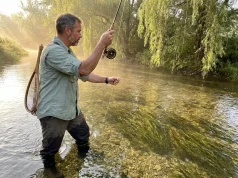
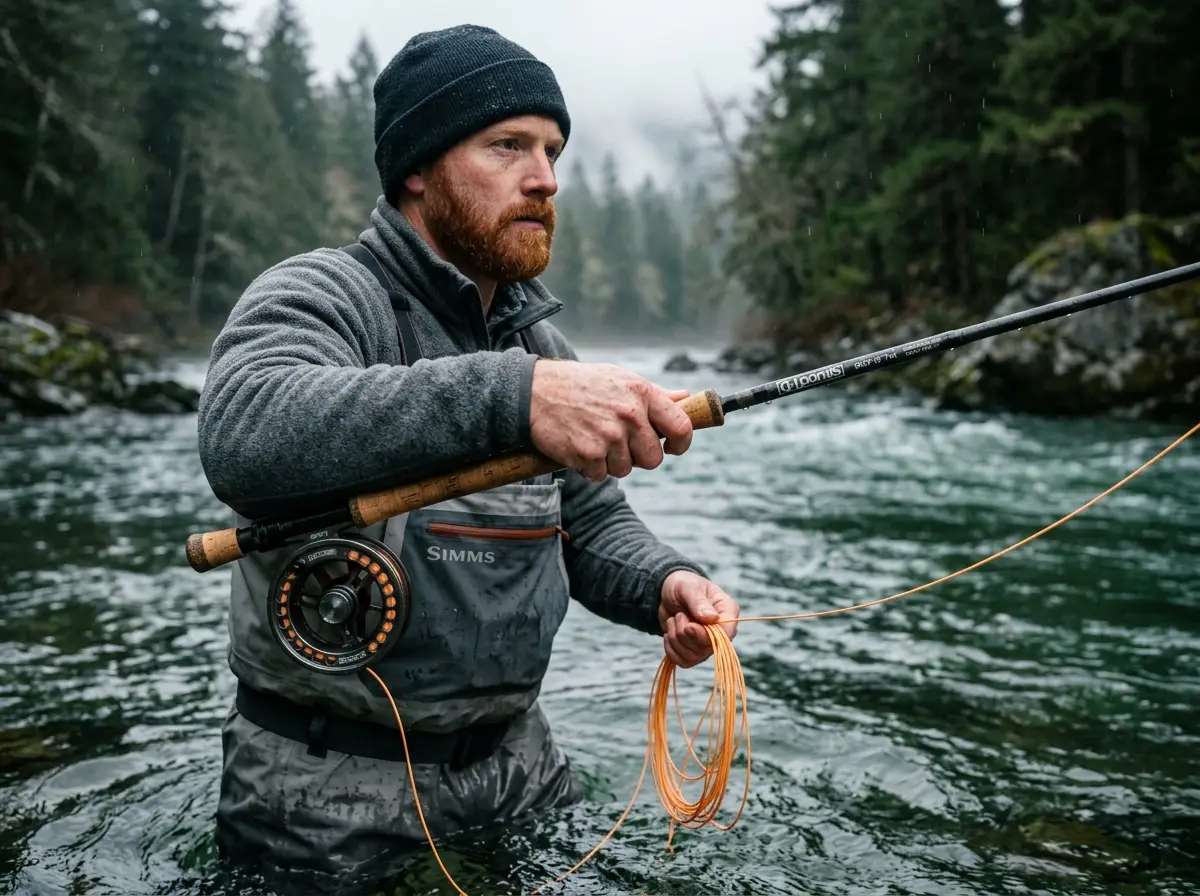
The freezing rain of the Olympic Peninsula stings your face, and the emerald water of the Hoh is pushing a volatile 2,500 CFS against your waders. You mend your mainline upstream, allowing the setup to drop into the deep boundary layer, and suddenly the drifting weight stops dead—not a snag, but thirty pounds of wild, migratory muscle. To consistently find the best Washington steelhead fishing, anglers must graduate from folklore and guesswork into the hard science of fluid mechanics, riverbed roughness, and biological thermal limits.
⚡ Quick Answer: Finding success on Washington steelhead rivers requires understanding how discharge (CFS) interacts with riverbed structure to create low-velocity seams where fish hold. As water levels rise, high-velocity currents force steelhead toward the slower, shallower inside edges near the banks. Matching your presentation to the specific thermal thresholds of the fish—knowing when to run deep and slow versus aggressive and fast—dictates your entire strategy. Read the gauge, compute the flow, and neutralize the drag.
The Core Equation: Finding the Best Steelhead Rivers in Washington State Through CFS Analysis
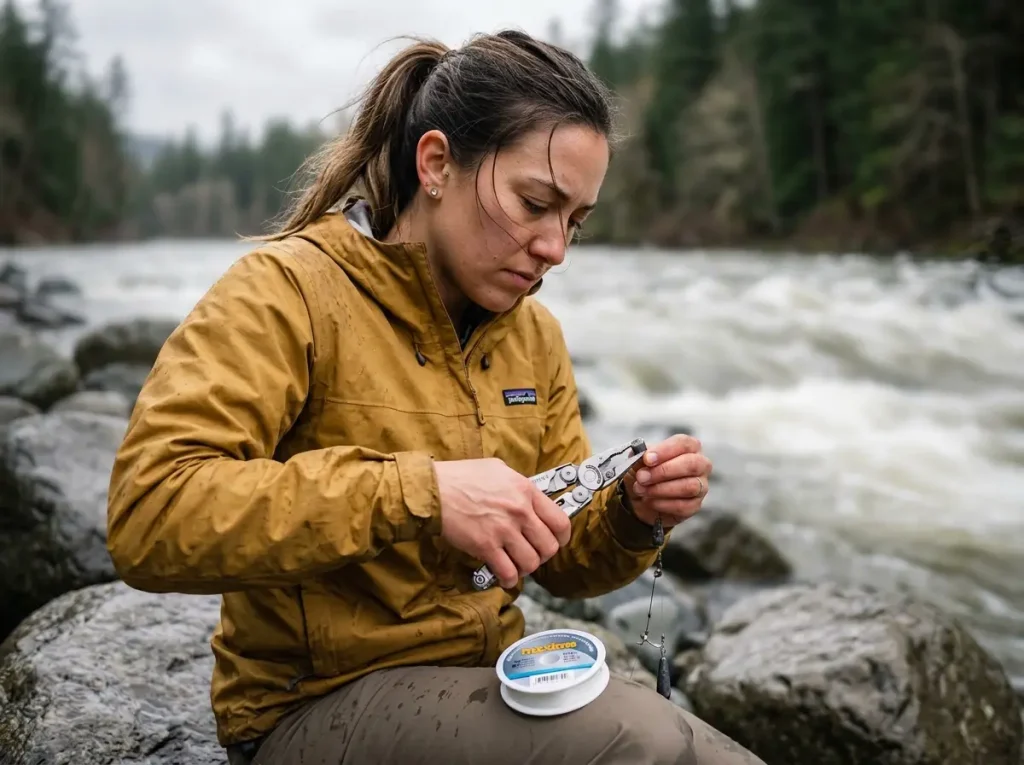
There is a rhythm to reading water, but underneath that rhythm is basic physics. A steelhead river operates as a fluid energy-budget equation where discharge, typically pulled precisely from the USGS gauge, dictates everything.
Velocity vs. Roughness: The Mathematical Reality of “Holding Water”
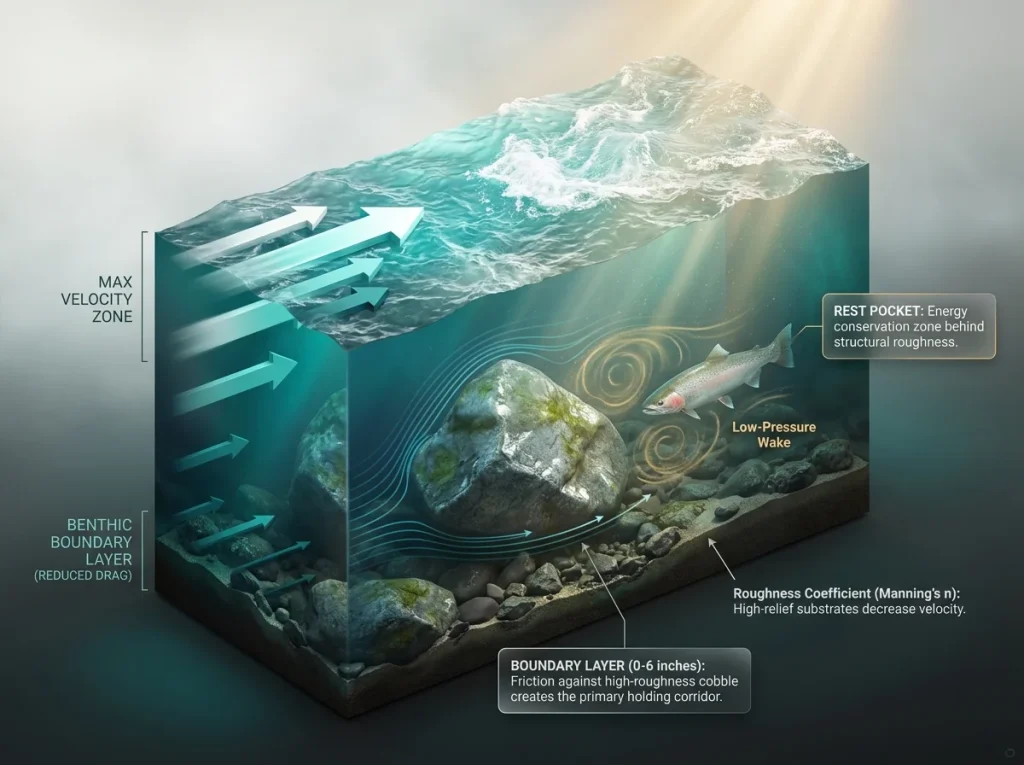
You hear guys debate holding water over coffee at the boat launch, but finding it consistently requires understanding open-channel hydraulics. Fish do not pick a resting spot because it looks appealing. They seek out structural irregularities where the resistance to flow creates turbulence, eddies, and drag wakes that allow them to hold station without burning calories.
When you wade into a typical Northwest river, you are physically hunting for those roughness coefficients. The submerged boulders and large cobbles interrupt the flow, giving the fish a low-pressure pocket to rest behind. If you spend time identifying the Kármán vortice and merger seams caused by these structures, you stop guessing.
Stage Fluctuation: Why Rising Water Moves Fish to the Banks
Here is where the textbook knowledge hits the gravel. Most anglers assume that a good holding slot remains productive regardless of the water level. The reality is that the relative roughness of a riverbed drops rapidly as the discharge and river stage increase.
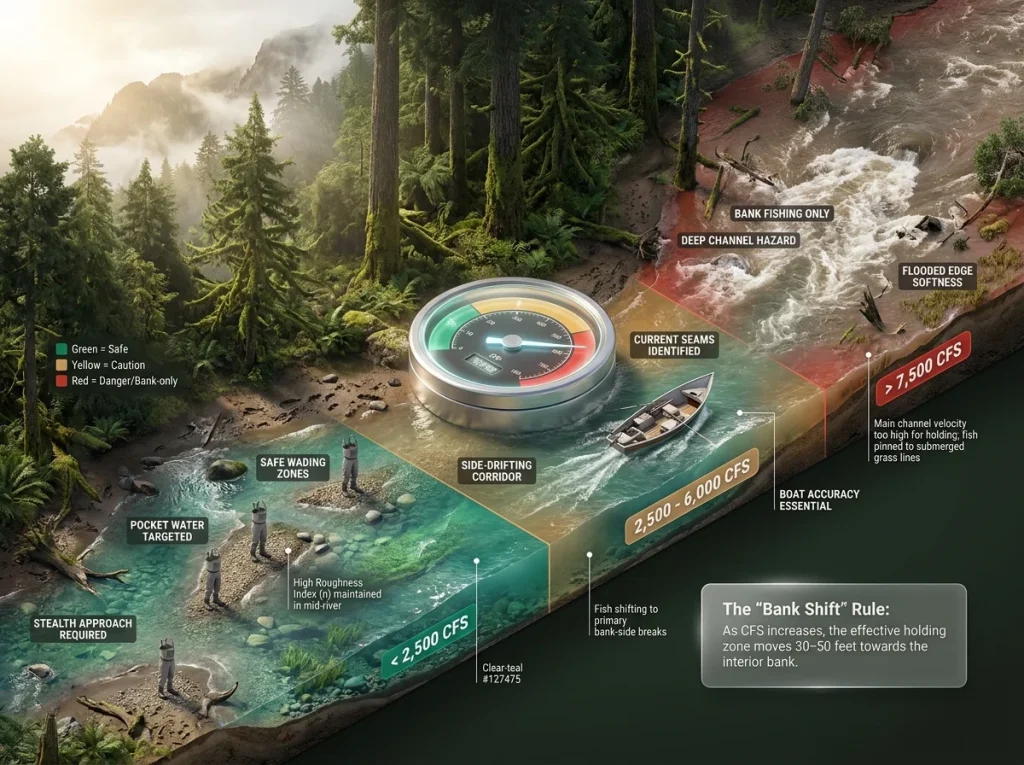
Steelhead adapt to this immediately. They slide entirely out of the deep mid-river thalwegs to hunker down in the slower, shallower inside seams near the bank where roughness is still maintained. I’ve seen too many anglers stubbornly cast into the middle of a classic run during a high-water spike, getting absolutely nothing.
Pro tip: When the water gauge jumps two feet overnight, do not even bother stepping deep into the river. Walk softly on the bank. The fish you want is likely sitting in three feet of water just off the submerged grass.
Understanding how fish slide toward the bank during high water is the first step, but you also have to adjust your presentation based on how cold that rising water feels to the fish.
Thermal Constraints and Bio-Energetics: When to Fish Which System
Water temperature limits dictate everything a cold-blooded organism does. Winter steelhead do not behave differently from their summer counterparts because of an attitude shift; they behave differently because the freezing water severely throttles their biology.
The Q10 Factor: Lethargic Winters and Aggressive Summers
A steelhead’s internal temperature mirrors the river precisely. We measure their standard metabolic rate to predict how they will interact with our setups. For a steelhead, cold-blooded temperature limits metabolic demand mathematically doubles for every 18°F (10°C) increase, strictly controlling their ectothermic behavioral thresholds.
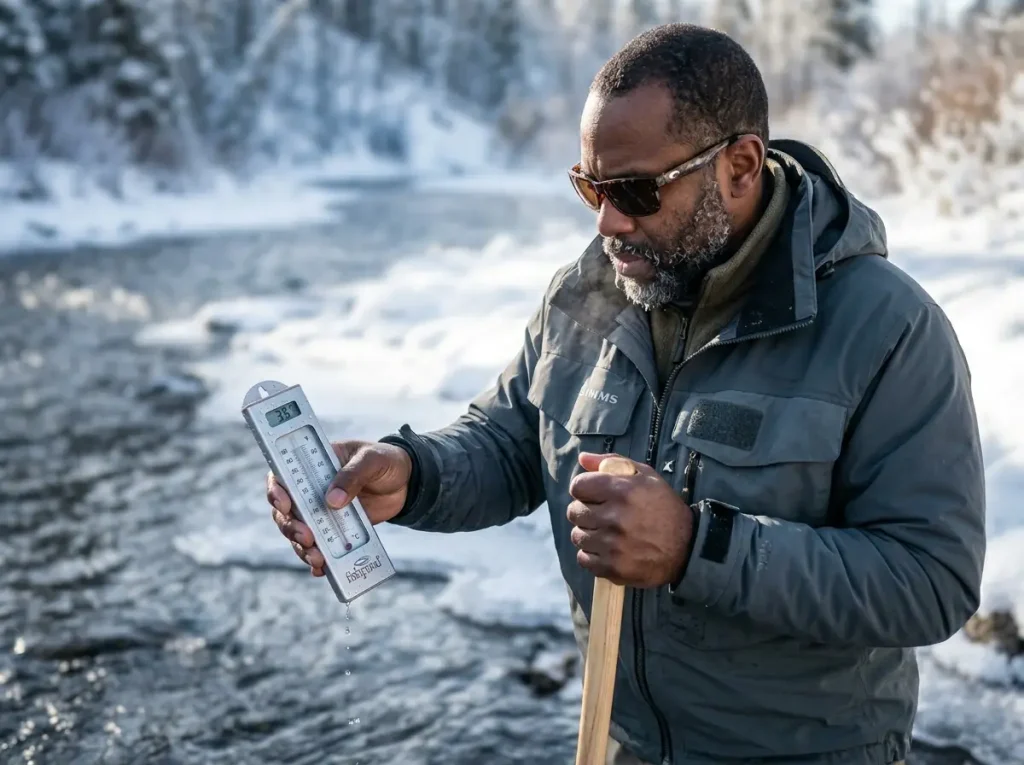
Below 38°F, you are dealing with a lethargic winter roamer. They will not chase hardware or outrun a fast current. Your presentation must be slow, heavy, and bumping the gravel directly in front of them.
I’ve watched guys aggressively strip bright streamers through 37-degree water. A winter fish at that temperature simply will not spend the expensive calories to chase a meal thirty inches away. You have to literally tap them on the nose and keep the offering squarely in their tiny strike zone.
Thermal Refugia: The Summer Steelhead Survival Strategy
When river temperatures climb dangerously toward 68°F (20°C), summer steelhead face severe cardiovascular stress. The heat forces them to abandon their migration entirely and stack endlessly in the cool thermal refugia of specific tributaries. They are not holding there to feed; they are strictly holding there to survive the heat wave.
During the hottest months, target the oxygen-rich, cold-water confluences where these heavily stressed fish find relief. But practice serious restraint when you lock onto them. The overall cost of fighting a fish in 68-degree water heavily impacts steelhead survival.
Pro tip: Carry a true digital thermometer on a lanyard zipper, not a cheap plastic gauge. If the water reads 68°F or higher, pack up your rods and go home. Catch-and-release is a fiction if the fish dies from lactic acidosis ten minutes after swimming away.
The Cowlitz River System: Dam-Regulated Predictability
If you want sheer numbers and daily consistency, the Cowlitz River in southwest Washington operates as the absolute workhorse. It hosts massive returns and provides reliable, fishable water when the untamed coastal streams are completely blown out.
Mayfield Dam Discharge Matrix: Wading vs. Boat Tactics
The Cowlitz is heavily anchored by an immense three-dam complex. This dam-regulated predictability offers a major tactical advantage, but you must respect the Mayfield Dam discharge matrix. Between 1,800 and 3,000 CFS, you have excellent wading safety levels.
Dam-regulated rivers offer stability, but they are a double-edged sword. A sudden 2,000 CFS bump from the dam mid-morning will instantly wipe out established holding patterns. You can accurately predict fish movements during rapid discharge fluctuations if you understand that the fish will immediately push out of the heavy central current to seek softer edges.
Deciphering the Winter and Summer Run Timings
The Cowlitz produces genuine year-round opportunities for dedicated anglers. The late winter steelhead push builds heavily through December, hitting an absolute numerical climax in March and April. These are thick, heavy fish that demand strict, slow presentations hovering right off the bottom.
By early June, the aggressive Skamania strain summer fish arrive. Because the water is warmer and the fish obviously possess higher metabolic overhead, you can speed up your retrieve significantly. The fish hit aggressively, fight relentlessly through the warm water, and respond extremely well to faster-moving hardware.
The “Inside Seam” Shift at High Water Levels
When the dam aggressively releases over 7,500 CFS, the entire system turns mean. The access difficulty goes through the roof, shutting down many traditional access points, and the main channel becomes a terrifying silty washing machine. The fish, however, do not magically leave the river; they shift explicitly tight to the banks.
The Olympic Peninsula: Glacial Flour and Rainforest Hydrology
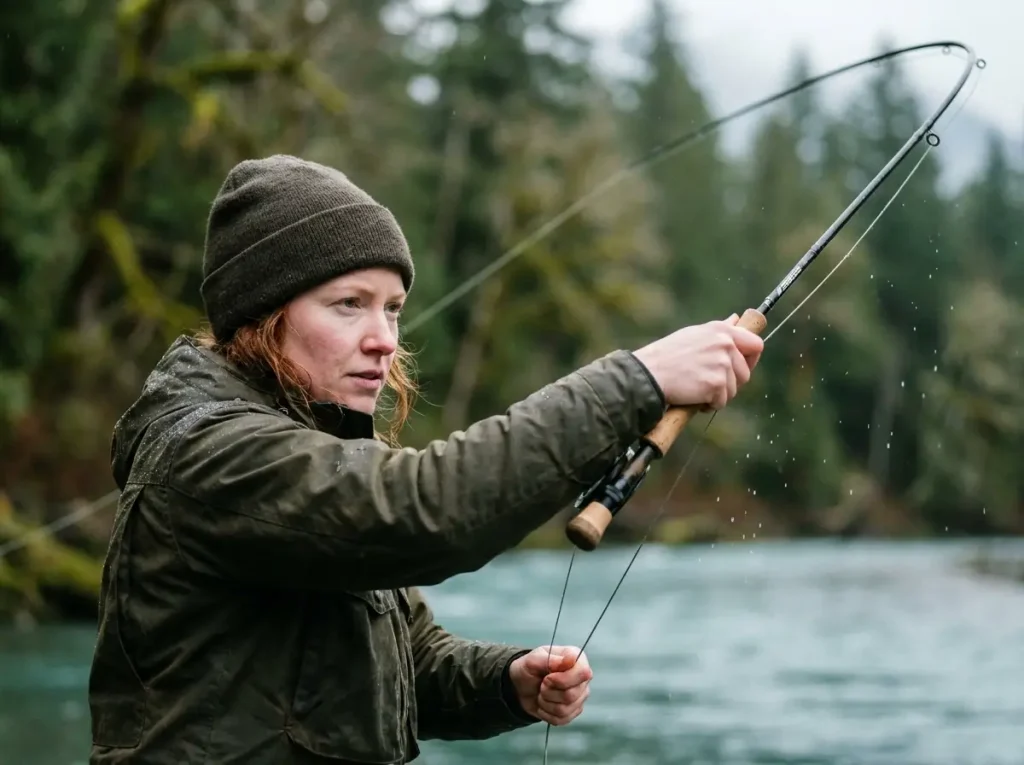
The rivers of the Olympic Peninsula represent the rawest, wildest angling environment remaining in the Lower 48. They are powerfully untamed, violently weather-dependent, and heavily reliant on incredibly volatile rainfall patterns.
The Hoh River: The Science of Glacial Silt Visibility
The Hoh River provides the quintessential wilderness rainforest experience. Because it continuously drains massive high-altitude glaciers, it always carries “glacial flour”—microscopic rock silt permanently suspended within the water column. This specific hydrology dictates your visual tactics entirely.
The absolute tactical sweet spot for the Hoh lies steadily between 1,500 and 2,500 CFS. This specific volume creates the legendary “emerald green” water that offers just enough visual contrast for Spey swinging without spooking the hyper-wary fish. Knowing exactly how suspended particulates alter lure contrast and visibility saves you hours of exhausting, pointless casting.
In glacial OP rivers running slightly off-color around 3,000 CFS, put away your delicate, natural olive presentations. You need massive black and purple profiles that push heavy water physically to grab attention. Giving the fish a hard, high-contrast lateral-line silhouette is your only viable shot when the water clarity drops under two feet.
Sol Duc and Bogachiel: The Freestone Clearance Advantage
While the Hoh runs milky for weeks post-storm, the Bogachiel River and Sol Duc are primarily tumbling freestone streams that dump silt and clear astonishingly rapidly.
The Sol Duc is specifically characterized by extreme, boulder-strewn pocket water requiring surgical accuracy. The hardcore locals rigidly use the “boards” metric at the boat launches to properly gauge the river levels. Eight to twelve boards is the perfect operational window to navigate the heavy structure, translating roughly to 2,100 to 3,000 CFS on the meters.
These steep high-gradient coastal streams require quick, violent, reactionary fishing. You are carefully picking apart small, isolated pockets of soft water hiding behind structure rather than bombing 90-foot casts blindly across massive, uniform gravel bars.
Trophy Winter Bucks: Late-Season Metabolic Drives
The Bogachiel maintains an earned, almost mythical reputation for harboring massive wild male steelhead deep into the month of March. These highly prized late-season bucks are brutally aggressive, incredibly territorial, and fueled exclusively by the biological, hormonal necessity to successfully spawn. They hold firmly in the primary tail-outs and will violently intercept a swung fly or a meticulously placed precision jig.
The Skagit and Klickitat: Vast Alluvials and High-Gradient Canyons
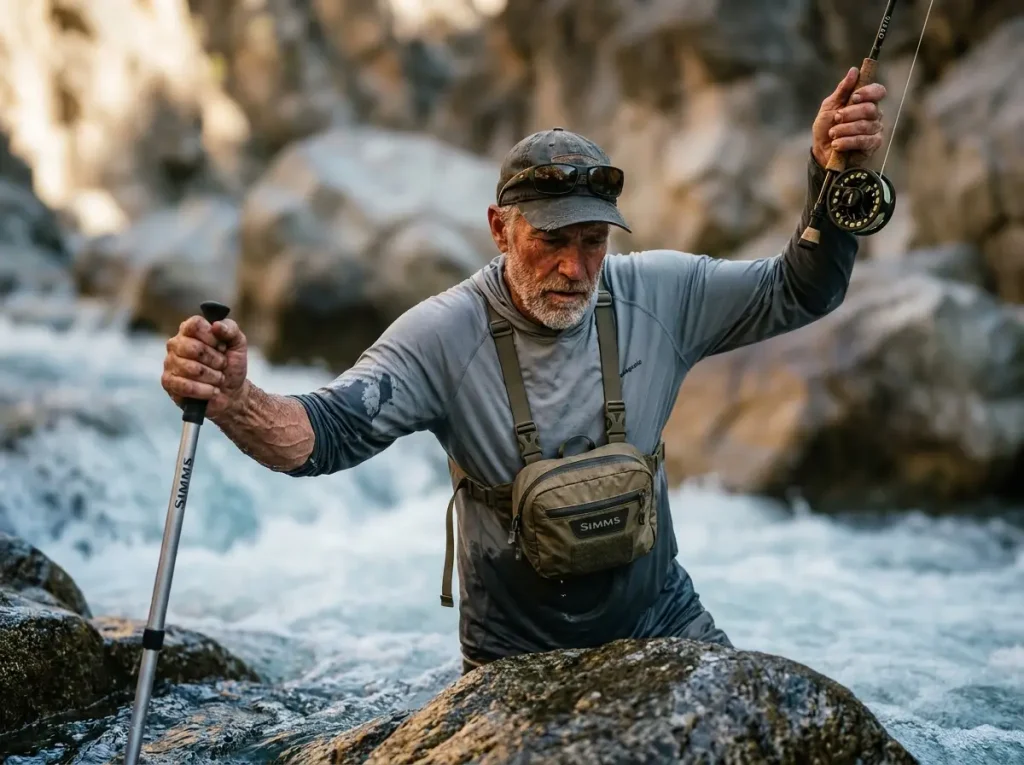
If you truly want to grasp the extreme opposite ends of the geographic spectrum, simply compare the massive lateral sweep of the northern rivers to the violent vertical canyon drops of the Columbia tributaries.
The Skagit River: Instream Flow and Weighted Usable Area (WUA)
The Skagit River operates as an immense natural alluvial floodplain forcefully draining down into Puget Sound. It is serious big water that explicitly demands heavy sink tips, incredibly long two-handed casts, and significant mental patience. The hard science here relies heavily on Instream Flow Incremental Methodology to accurately determine exactly where the heavy biomass currently holds.
Specific telemetry studies show that the maximum holding habitat hits squarely at exactly 12,000 CFS. If you meticulously review the Weighted Usable Area (WUA) calculations, you quickly learn that juvenile rearing habitat peaks dramatically around 26,000 CFS. The adult spawners, however, desperately need the structural friction specifically found strictly at 12,000.
Pro tip: On expansive alluvial rivers like the Skagit, do not ever try to hero-cast completely to the opposite distant bank. The fish you want are often holding directly targeting the inside seam on the steep drop-off no more than thirty feet from your own boots. Start your progression very short, swing close, and only then lengthen your cast out.
The Klickitat River: Alluvial Fans and Early Fall Surges
Switch your mental gears entirely to the Klickitat River, which plummets an astounding 5,000 vertical feet directly through a sheer, jagged canyon before finally meeting the massive Columbia. This violent, chaotic gradient creates relentless heavy water conditions constantly. The terrified fish do not have sweeping peaceful gravel islands to rest on whatsoever.
When you are painstakingly picking apart the Klickitat’s extreme gradients, explicitly focus just immediately downstream of where tributary debris physically pinches the main channel tight. It creates a critical “relaxed” hydraulic bucket that practically operates as the mathematically perfect resting spot for a tired fish completely exhausted from fighting the heavy, unrelenting elevation gain.
Overlapping Salmon Runs: Tactical Considerations in Shared Water
The Klickitat undeniably presents a highly unique angling dynamic in the months of September and October. The incredibly cool, pure glacial outflow strongly draws in migrating summer steelhead desperately seeking immediate relief from the sweltering temperatures of the Columbia, placing them right alongside massive, aggressive fall Chinook. When you are intercepting the overlapping Pacific Northwest salmon run, your specific tackle must be physically robust enough to immediately stop a thirty-pound king salmon charging downstream, while miraculously remaining sensitive enough to immediately detect a subtle, quiet steelhead take.
The Physics of the Presentation: Side-Drifting and Subsurface Drag
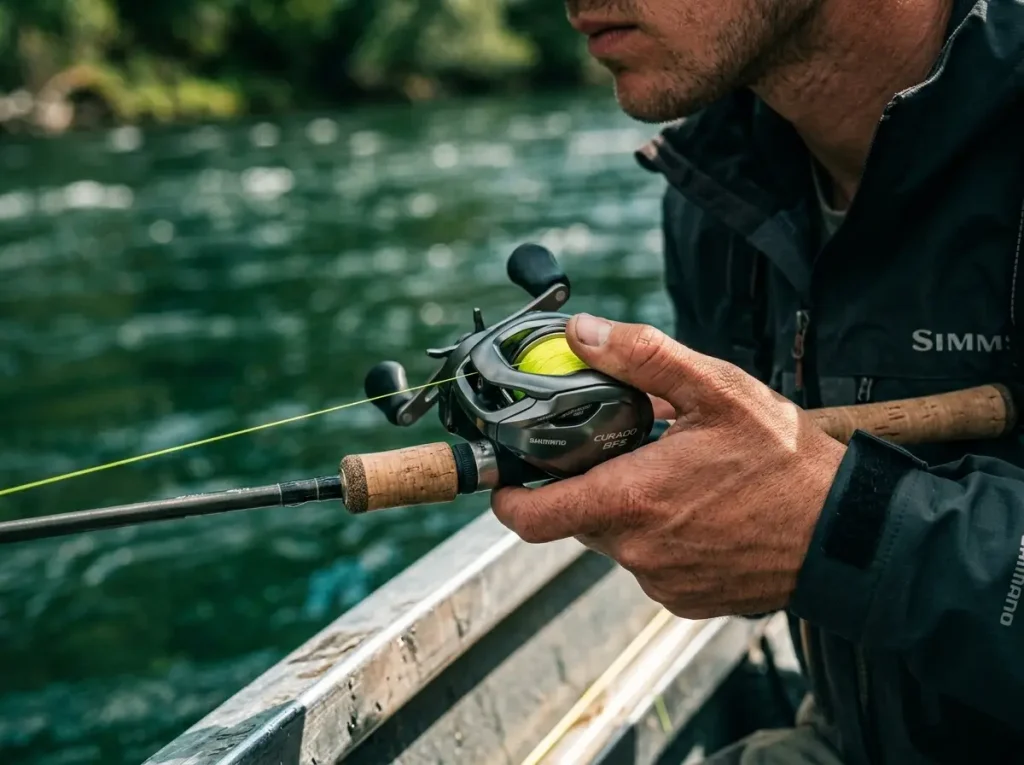
All the academic hydraulic knowledge in the world means absolutely nothing if your terminal presentation is constantly dragging unnaturally through the strike zone.
Hydrodynamic Vectors: Achieving the “Perfect Drift”
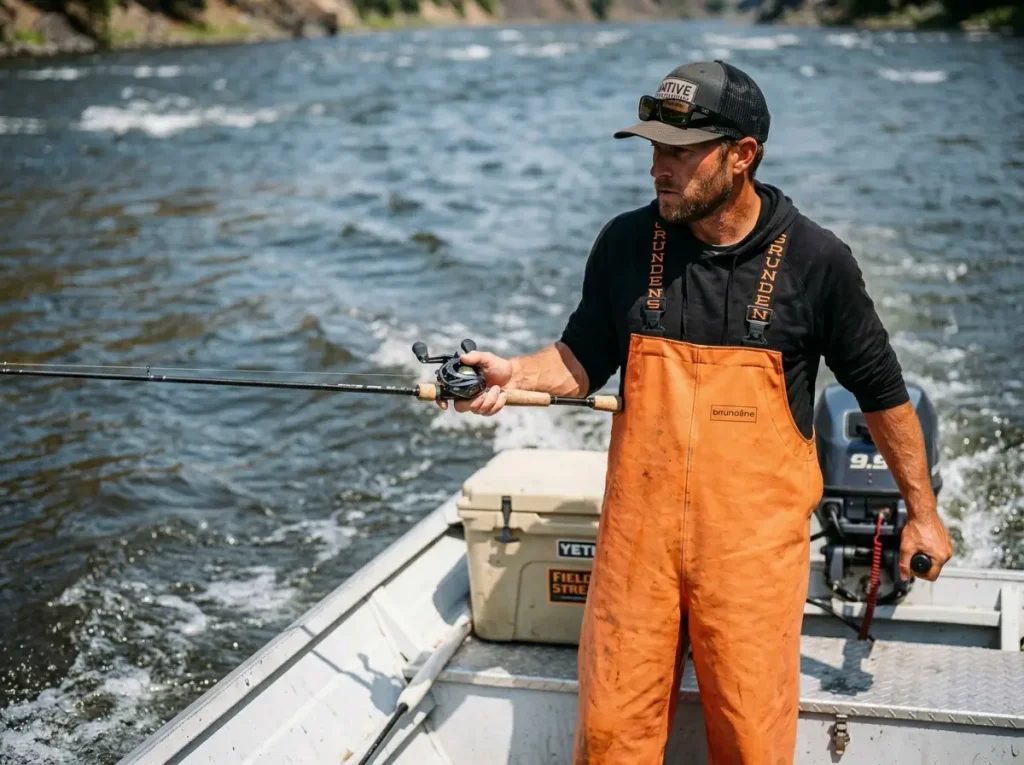
The strict, unforgiving mechanics of a perfect side-drift require the experienced oarsman to aggressively drag the boat slightly faster than the visible surface current surrounding them. Executing this specific action correctly keeps the terminal rig securely pinned deep in the low-velocity benthic boundary layer, exactly precisely where the steelhead is holding out of the main flow.
If your heavy mainline constantly angles sharply downstream during a complex side-drifting sequence, the boat is drifting way too slow and the rushing current is physically ripping your bait entirely upwards out of the active strike zone. Think of your physical line angle exactly as the presentation’s raw visual speedometer. You must read the monofilament angle, never the stationary shoreline.
Rheotaxis and Sensory Mechanics: How Steelhead Detect Your Bait
Steelhead constantly orient themselves face-first directly into the heavy flow through an instinctual biological process literally called rheotaxis. They do not bite what they happen to visually spot drifting past. They rely extremely heavily on their finely-tuned lateral lines to instantly detect microscopic pressure waves caused by drifting bait.
The specific hydrodynamics of a side-drift flawlessly mimic the completely natural displacement of an unattached egg cluster tumbling harmlessly along the rough bottom. The fish actually feels the distinct offering long before it actually sees it approaching. If your hastily tied setup is dragging awkwardly or repeatedly bouncing erratically because of excessive, clunky sinker weight, the resulting violent pressure wave feels entirely unnatural to the highly sensitive fish.
Optimal Gear Selection: Matching Modulus to River Power
Your chosen rod acts precisely as the ultimate mechanical shock absorber in your system. When perfectly executing these highly technical deep drifts, stiff, fast-action carbon broomsticks will guarantee you lose big fish. A skeptical steelhead taking a naturally drifted realistic bait will instinctively violently spit it the absolute microsecond it feels any unnatural mechanical resistance.
Using specifically dedicated flexible 9-10 ft rods purposefully constructed with slow or medium-light action perfectly allows the fish to turn physically with the bait safely in its mouth before ever feeling the harsh warning tension of the mainline. The forgiving rod blank smoothly absorbs the initial explosive strike load perfectly. , successfully incorporating high-quality ten to twenty-pound test fluorocarbon leaders flawlessly handles the exact refractive index stealth required. It does this without sacrificing the sheer brutal abrasion resistance desperately needed to survive constant, grinding contact with sharp volcanic rock.
Conclusion
A great steelhead river is absolutely never a permanently static target. Its productive holding water inevitably shifts dramatically, dynamically with every single minor fluctuation in the measured CFS, driven entirely by the specific roughness index of the submerged broken riverbed structure. Applying this rigid mathematical and mechanical understanding of fluid flow and internal biology instantly permanently transforms exactly how you approach the water.
You absolutely must adapt your tactics directly to the strict poikilothermic nature of these wild, powerful fish. You definitively need distinct tactical shifts whether the raging water is hovering dangerously near actual freezing or pushing rapidly toward critical, potentially lethal thermal stress limits. Maximizing your daily success on the technical drift always requires completely neutralizing the raw drag vectors to accurately keep your sharp gear squarely safely inside the fish’s highly sensitive lateral-line sensory window.
FAQ
Where is the best place to catch steelhead in Washington?
The best river depends entirely on the current CFS levels and the specific distinct season you are actively fishing. The incredibly stable dam-regulated Cowlitz confidently offers excellent year-round consistency, successfully buffering visiting anglers against harsh, unpredictable coastal storms. However, the free-flowing, wild Hoh and Skagit proudly provide premier unparalleled structural dynamics strictly for wild winter runs solely when water levels completely align perfectly. The Methow and upper Columbia tributaries reliably shine very brightly exclusively for summer fish, basically forcing you to intelligently choose the exact geographical location based squarely on the daily hydrograph rather than outdated, subjective historical reputation.
What month is best for steelhead fishing in Washington state?
Late March straight through April directly offers the heaviest, most powerful push of large pristine wild winter steelhead steadily entering the rugged coastal systems. Conversely, September and early October predictably trigger intense, aggressive summer-run activity heavily on the Columbia or tributaries, like the scenic Klickitat, just directly before the hazardous cold winter shock firmly sets in. Technical anglers closely meticulously track the published escapement numbers and the daily thermal maps to carefully decide whether to bravely endure the relentless, freezing winter rains directly on the coast or to hike the steep, demanding canyon rivers in the beautiful early fall.
How does CFS affect steelhead positioning in a river?
Rising CFS numbers definitively drown existing prominent riverbed structures, rapidly profoundly decreasing hydraulic roughness and forcefully pushing fish completely out of traditional, comfortable mid-river slots. During these aggressive, massive high-water surges, steelhead quickly, instinctively migrate laterally directly to the shallower, significantly softer inside seams perfectly near the flooded banks. They explicitly do this strictly to escape massive, potentially fatal metabolic exhaustion from needlessly fighting the incredibly accelerated violent main current. If the reading gauge spikes suddenly overnight, you must absolutely stop casting blindly deep and start thoroughly methodically fishing the soft water strictly within ten feet of the grassy bank.
What is the best technique for high-volume Washington rivers?
Highly coordinated boat-based side-drifting perfectly functionally neutralizes destructive sub-surface current drag over wide, heavy, and extremely complicated runs. By skillfully, precisely utilizing the sturdy oars or a small kicker motor to accurately pace the drift boat slightly, imperceptibly faster than the visible surface speed, the bait securely organically remains suspended deep right down in the critical slower boundary layer. This precise demanding action places the sensitive gear exactly specifically where the fish physically hold safely along the bottom, efficiently allowing you to expertly cover miles of river without ever carelessly pulling the bait out of the critical strike zone.
Risk Disclaimer: Fishing, boating, and all related outdoor activities involve inherent risks that
can lead to injury. The information provided on Master Fishing Mag is for educational and informational purposes
only. While we strive for accuracy, the information, techniques, and advice on gear and safety are not a substitute
for your own best judgment, local knowledge, and adherence to official regulations. Fishing regulations, including
seasons, size limits, and species restrictions, change frequently and vary by location. Always consult the latest
official regulations from your local fish and wildlife agency before heading out. Proper handling of hooks, knives,
and other sharp equipment is essential for safety. Furthermore, be aware of local fish consumption advisories. By
using this website, you agree that you are solely responsible for your own safety and for complying with all
applicable laws. Any reliance you place on our content is strictly at your own risk. Master Fishing Mag and its
authors will not be held liable for any injury, damage, or loss sustained in connection with the use of the
information herein.
Affiliate Disclosure: We are a participant in the Amazon Services LLC Associates Program, an
affiliate advertising program designed to provide a means for us to earn advertising fees by advertising and linking
to Amazon.com. As an Amazon Associate, we earn from qualifying purchases. We also participate in other affiliate
programs and may receive a commission on products purchased through our links, at no extra cost to you. Additional
terms are found in the terms of service.