
In this article
You’re standing in the aisle holding two rods that feel identical in your hands, and the only thing separating them is a word printed on the blank: Alconite on one, SiC on the other, and a price gap big enough to make you hesitate. One rod builder settled that question the honest way, building two otherwise identical rods, one set with Alconite rings and one with SiC, then fishing them side by side for three days. He came away unable to tell them apart except for a barely perceptible difference in weight. Guide material does matter, just not in the place the marketing points, and there’s a hardness number and a price ladder that show exactly where the line sits. Below: what the ring materials actually are, what the frame metals actually do, the two things that genuinely wear a rod guide out, how to check your own rod guide material in thirty seconds, and where the upgrade money is worth spending.
Here’s how the common ring materials stack up before we get into what any of it means on the water.
| Ring Material | Hardness (Vickers) | Cost Tier | Best For |
|---|---|---|---|
| Aluminum Oxide | ~1,200–1,400 HV standard, 1,850 HV for Fuji’s UL grade | Budget | Mono and light braid, most freshwater rods |
| Alconite | ~1,300–1,500 HV | Mid | The all-round pick, freshwater through offshore |
| Silicon Carbide (SiC) | Over 2,000 HV | Premium | Heavy braid, aggressive jigging, hard-running fish |
| Zirconia | Not rated on the same published scale; valued for toughness over raw hardness | Mid | Thin-ring builds that take knocks |
| Torzite | Top of the ceramic ladder, thinner and lighter ring section | Top | Tournament builds where every gram is argued over |
| Ringless (nitinol) | No ceramic ring at all; line runs on shaped alloy | Specialty | Weight savings and crush recovery on custom builds |
Rod Guide Ring and Insert Materials Compared
Every spec sheet prints a ring material like it’s a grade on a report card. It isn’t. It’s a hardness number, and hardness only buys you something under one specific kind of abuse.
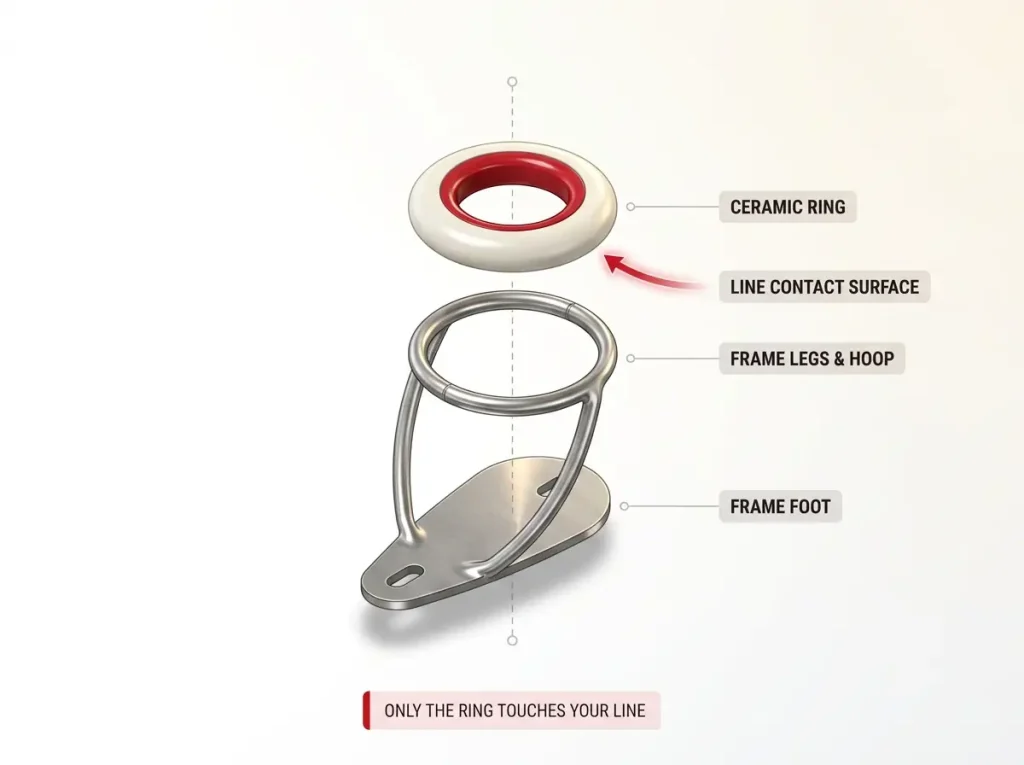
Start by separating the two parts almost nobody separates. The guide frame is the metal legs and hoop that get wrapped and epoxied to the blank. The guide ring, also called the guide insert or ceramic insert, is the donut seated inside that hoop, and it’s the only part your line ever touches. Half the arguments at the boat ramp are about one while the spec sheet is describing the other. If you want the wider view of how the rest of a rod’s parts fit together, the guides are one component in a system where the rod blank, handle and reel seat all pull in the same direction.
Aluminum Oxide — The Default, and Why It’s Two Different Materials
Aluminum oxide is the workhorse insert on most production rods under mid-price, and it’s the single most misleading line on any spec sheet, because those two words cover materials that behave differently. Fuji’s proprietary UL-grade sintered aluminum oxide reaches 1,850 HV against 1,600 HV for the standard version. A budget listing and a mid-tier Fuji listing can print the same phrase and hand you a different ring.
Hardness here is measured, not marketed. Ceramics get rated under the ASTM C1327 standard for testing the hardness of advanced ceramics, which is why these numbers can be compared at all instead of argued about.
Alconite — The Sweet Spot Most Anglers Never Need to Leave
Alconite tests around 1,300 to 1,500 HV, sits lighter than older aluminum oxide formulations, and shrugs off line wear from anything short of heavy braid abuse. It’s the ring that quietly ends the conversation for the majority of anglers, and it turns up on rods far above the budget tier.
Silicon Carbide (SiC) — Hardest, Heaviest Price Tag
Silicon carbide, almost always written SiC, tests over 2,000 HV. That’s a real gap, not a rounding error, and it’s the reason SiC resists line grooving longer than anything else in common use. Harder also means better heat dissipation under sustained friction, which matters in exactly one scenario covered further down.
Zirconia, Torzite and the Exotics
Zirconia trades a little raw hardness for toughness, so it takes an impact better than it takes a thousand casts of braid. Torzite sits at the top of the ladder with a thinner ring section and less weight for the same inside diameter. Past those, Nanolite, Nanolight, Duralite, Hardloy and NanoPlasma are brand-specific formulations that mostly re-cut the same hardness-versus-weight tradeoff under different names.
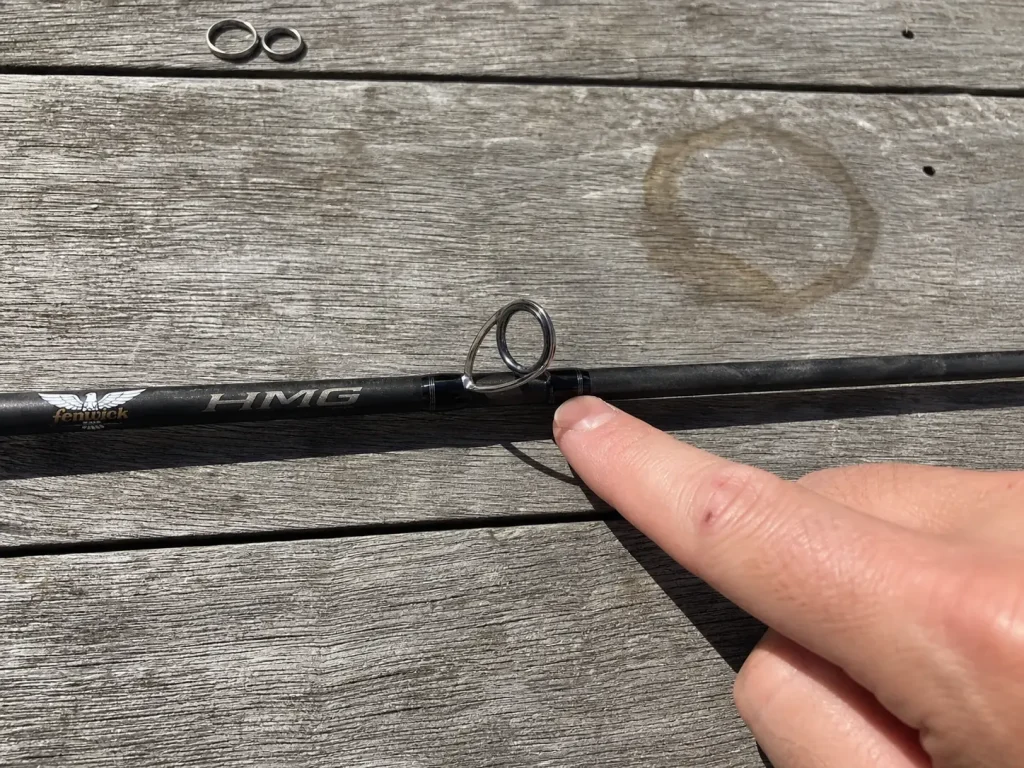
You can see the mid-ladder in a real rod rather than a chart: the Fenwick HMG Spinning Rod runs thin Zirconia inserts on titanium frames, which is a genuinely premium guide layout on a rod most anglers would call mid-range.
Hardness is the spec everyone reads and the one that matters least if you fish mono. Read it last. Read the frame metal and how you actually fish first, then come back to the ring.
Rod Guide Frame Materials Compared
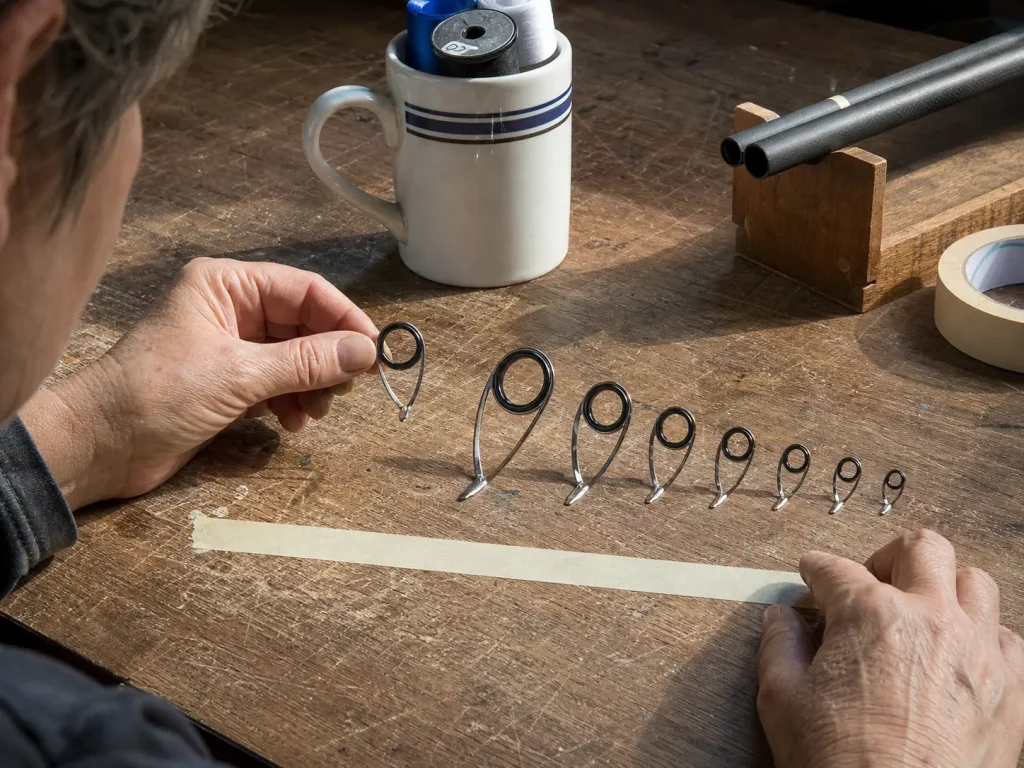
The frame is where weight and corrosion live. A ceramic ring can’t rust. A frame can, and it’s the part that bends when your rod gets stepped on in the boat or crushed in a rod locker.
Stainless Steel — The Default With a Hidden Grade
Almost every production rod uses stainless frames, and the word “stainless” on a blank tells you close to nothing. Stainless steel 304 and stainless steel 316 are both stainless, and in salt they behave nothing alike. That difference gets its own section below, because it decides whether a rod survives three seasons of inshore spray. Frame builds vary too: single foot guides save weight on the upper blank, double foot guides and double-swaged frames take more abuse down at the stripper guide where the load is highest.
Titanium — Light, Springy, Rust-Proof
Titanium frames weigh less than steel, flex under a sideways hit and return to shape instead of taking a permanent set, and don’t corrode. That combination is what the premium frame money actually buys, and it’s worth more in salt than any ring upgrade.
Carbon Fiber Frames — Lightest and Most Fragile
Carbon frame guides, like Daiwa’s AGS, are the lightest and stiffest option on the market and the most brittle under a sideways impact. It’s the same carbon-fiber stiffness story that plays out in the blank itself: stiffness and weight savings come bundled with a lower tolerance for being treated badly. Frame weight also compounds. It isn’t one guide, it’s the whole guide train, and the effect concentrates toward the tip.
The mistake worth naming here is assuming anything stamped stainless is salt-safe. It isn’t, and the failure shows up as rust pitting a couple of seasons in, usually right where the wrap meets the frame foot.
Ringless Guides and the Category Nobody Explains
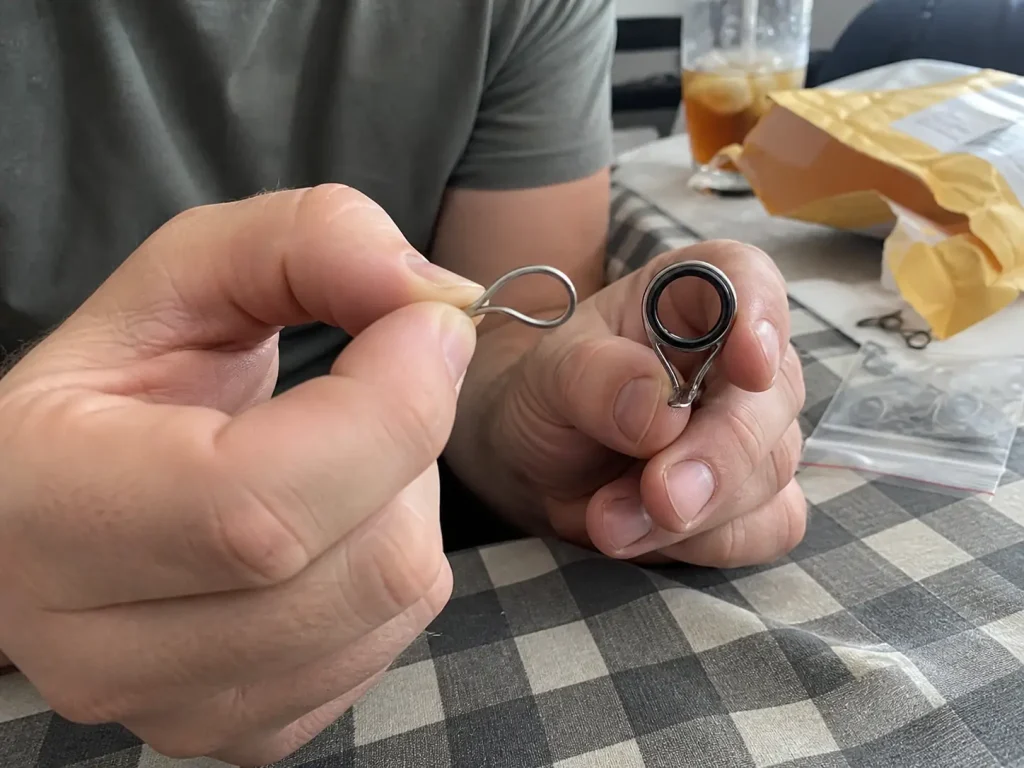
Every guide material article treats the question as which ceramic. There’s an entire category whose answer is none of them.
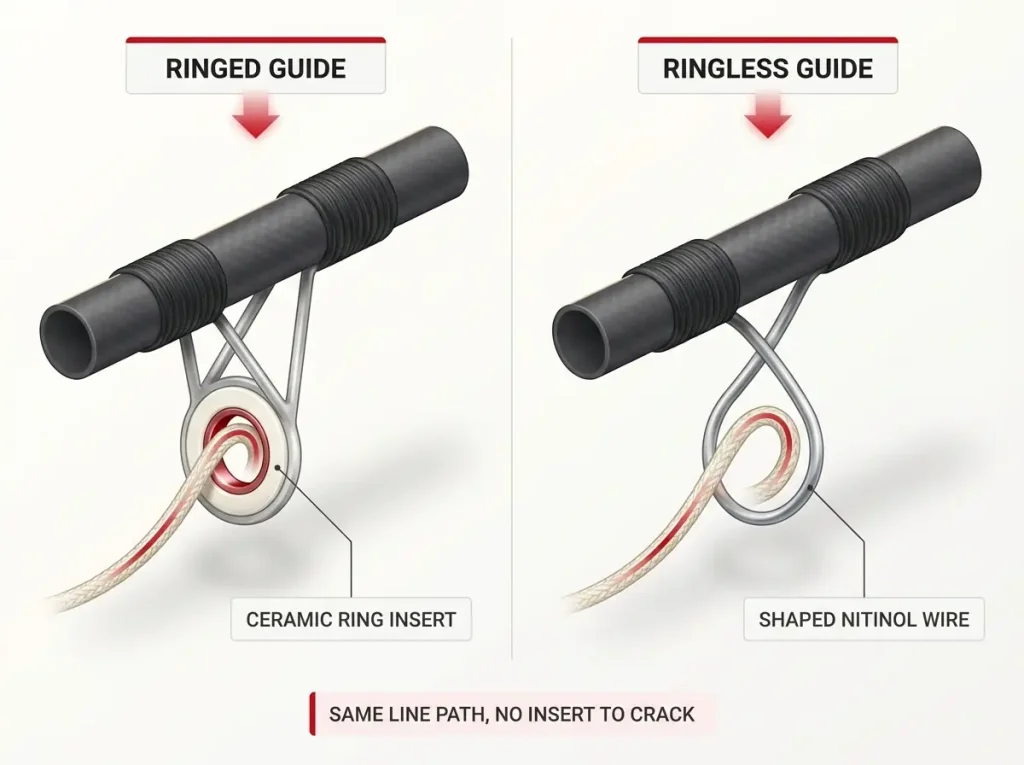
A ringless guide has no insert. The line runs directly on a shaped nickel-titanium wire frame, and there’s nothing seated in the hoop to crack because there’s nothing seated in there at all. REC’s Recoil guides are the reference product, and they weigh roughly 50% less than a conventional ringed set of the same sizes. That number matters less as a number than as a location: the saving comes off the upper blank and the tip, which is where guide weight does the most damage to how a rod feels.
How Shape-Memory Nitinol Actually Works
Nitinol is a shape-memory alloy. Bend it, crush it, step on it, and it returns to its original shape rather than staying bent, which is a property documented in the shape-memory alloy research documented by ASM International rather than a marketing claim. It also needs no plating, because it doesn’t corrode in any environment. A ceramic ring in the same situation cracks once and stays cracked.
What You Give Up Running Line on Metal
Line runs on shaped metal instead of polished ceramic, so the smoothness argument runs the other direction. Anglers coming off polished SiC notice it. Whether it costs you distance in the real world is genuinely debated, and anyone telling you the answer is obvious hasn’t fished both.
Why You Won’t Find These on a Store Rod
Here’s the part nobody says out loud: ringless guides are sold almost exclusively as loose rod-building components, not on finished production rods. There is no shopping link to hand you. This is talk-to-your-local-builder territory, and if you’re going the custom-build route anyway, specifying a ringless set costs you nothing extra in labor. The category name is a bigger barrier than the price. Search ringless guides, not nitinol, and the results appear.
Why Braid Grooves a Cheap Insert (and Why You Might Not Care)
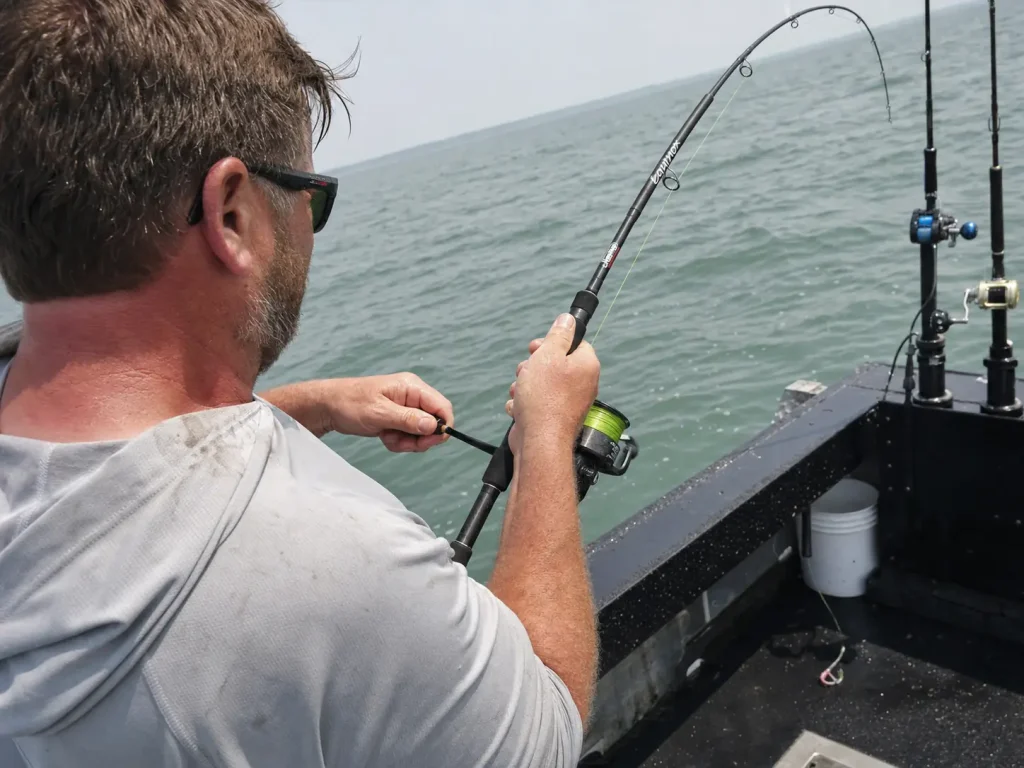
Here’s where anglers get it backwards. They imagine one dramatic moment that ruins a guide, a rock, a drop, a big fish. That’s not what happens. It’s the same invisible sanding action on every single cast, which is exactly why a rod that was fine last season suddenly starts fraying line at one exact spot.
The Mechanism, One Cast at a Time
Every cast and every retrieve drags line across the same few millimeters of a ring’s inside circumference. Do that thousands of times over a rod’s life and you get microscopic abrasive wear, a channel cut into the ceramic where the line always sits. Braided line does it faster than anything else because it’s a bundle of fibers rather than one smooth strand, so it works like a very fine file that never misses the same spot. Mono line and fluorocarbon line are gentler by a wide margin, which is why which line you’re running in the first place changes the whole calculation before you ever compare ring materials.
The wear is invisible at normal scale. That’s the part that gets people. You cannot see the groove that’s about to cost you a fish, and by the time your line frays, the insert has been quietly cutting for several trips.
What the Side-by-Side Test Actually Showed
Now the honest part. That builder who ran two identical rods, Alconite against SiC, over three days of bass fishing reported an almost imperceptible difference in weight and no casting difference he could detect. Not a small difference he could measure with effort. One he couldn’t find.
So the flat verdict: on mono or light braid, a mid-grade ring does the same work on the water as a premium one. Paying triple for the guide set buys peace of mind under heavy abrasive braid, not more fish. That’s not an argument against SiC. It’s an argument against buying SiC for fishing you don’t do.
When the Harder Ring Genuinely Earns It
The flip is real and it’s specific. Heavy braid, high retrieve counts, aggressive jigging, big hard-running fish that peel line under load. That’s sustained high-tension abrasion, the exact wear mode a harder ring exists for. A purpose-built jigging rod like the Jigging World Equinox Spinning Rod pairs a custom SiC guide train with heavy braid on purpose, and that pairing is the case where the upgrade pays rent.
Saltwater Corrosion and What “Stainless” Hides
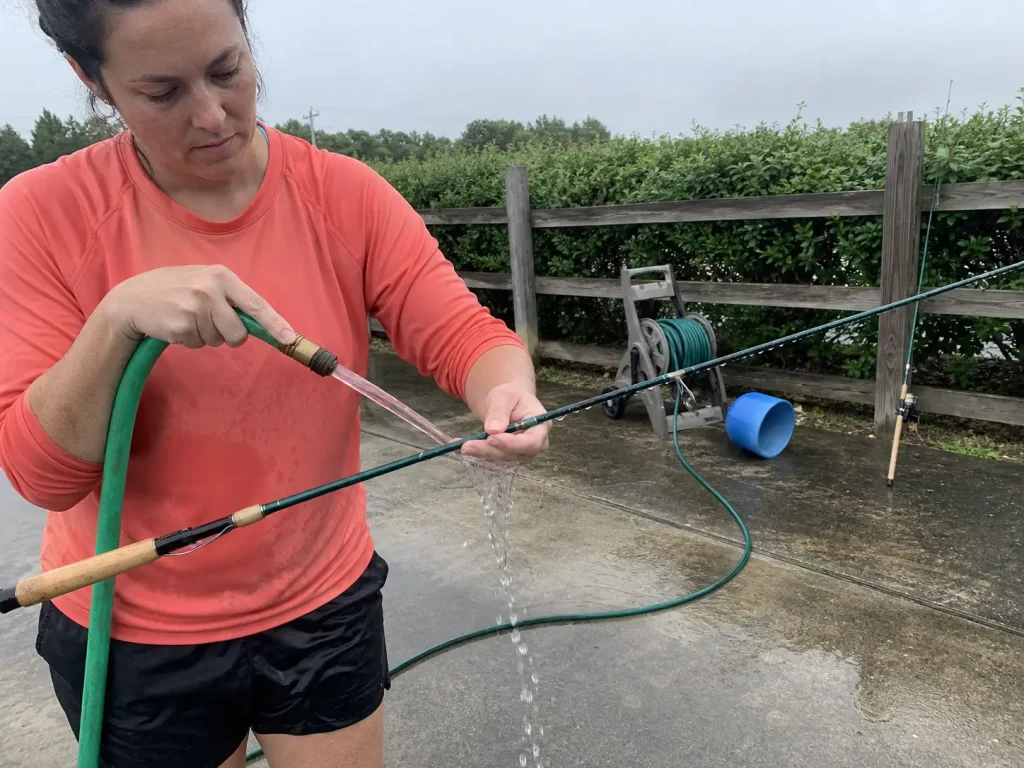
Two rods, same word on the spec sheet, and one of them is pitted and weeping rust before the other has finished breaking in.
304 vs 316 in Real Salt Exposure
Grade 316 adds roughly 2% molybdenum to the plain 18/8 chromium-nickel mix that Grade 304 uses, and that molybdenum is the entire story. It’s what stops pitting and crevice corrosion resistance from failing under salt exposure. In practical terms, 304 hardware can show rust pitting within about 36 months near saltwater. 316 survives decades in the same air. Batson’s Forecast frames and similar 316 builds are the reason a mid-priced inshore fishing rod can outlast a pricier freshwater one at the coast.
That’s the whole reason a rod like the St. Croix Mojo Inshore Spinning Rod 7 ft holds up on the flats while running slim aluminum oxide rings rather than premium ceramic. Its durability lives in the frame grade and the rinse habit, not in the insert.
Why Even 316 Still Needs the Rinse
Better alloy, not immunity. Saltwater corrosion is an electrochemical process, which is the framing used by a marine corrosion protection program run by Washington Sea Grant for commercial fishermen and recreational boaters, and processes get interrupted by maintenance rather than by metallurgy alone. It’s the same galvanic chemistry that rusts out treble hooks sitting in a closed box after a trip.
The common miss: rinsing the reel, rinsing the blank, skipping the guides. Salt sits in the wrap where the frame foot meets the blank and works underneath the epoxy finish from there, and hook keepers corrode on exactly the same timeline for exactly the same reason.
Rinse the guide wraps specifically, not just the blank. Run low-pressure fresh water over every frame foot, then stand the rod tip-down so the water leaves instead of pooling in the wraps. Thirty seconds at the hose, and it’s the single highest-return habit for a salt rod.
Where Titanium Skips the Question Entirely
Titanium and nitinol frames sidestep the grade argument completely, because neither corrodes. On a rod that lives in surf spray or flats wind, that’s a real part of what the premium tag buys, and it’s a far better use of upgrade money than moving one rung up the ceramic ladder.
Guide Weight, Rod Balance, and Casting Distance
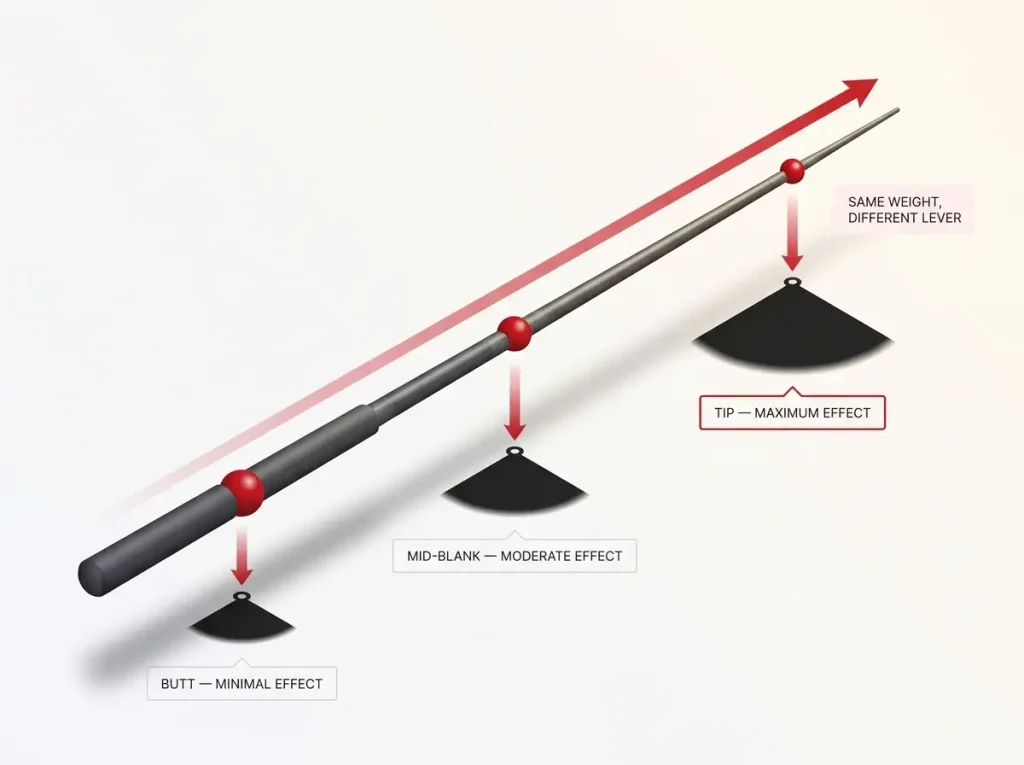
Everyone talks about grams like they’re interchangeable. They aren’t. An ounce at the butt is nothing. The same weight out at the tip changes the entire rod.
Why Tip Weight Counts More Than Total Weight
Weight’s effect is positional. Out near the tip-top, a few grams of guide train act on a long lever, and that’s what turns into tip-heaviness and all-day casting fatigue. The 50% weight saving from ringless guides matters for that reason and not because the percentage is impressive in isolation. It comes off the end of the lever.
What You Can Actually Feel (and What You Can’t)
Rod sensitivity does improve with a lighter guide train, but the blank’s own modulus dominates the result. Guides are the smaller variable, and guide spacing does more for casting distance than the ring material inside them ever will. Between two ceramic tiers, you will not feel the weight gap. Builders running Alconite against SiC side by side called it almost imperceptible. Between ringed and ringless, you might.
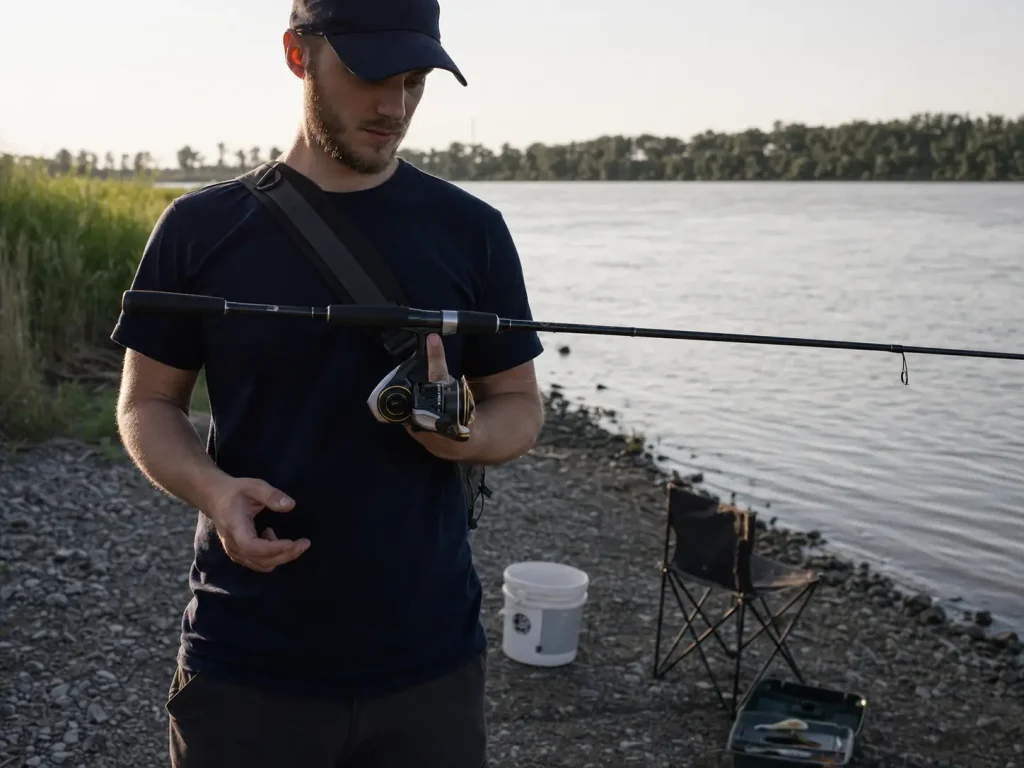
If a rod feels tip-heavy, the fix is almost never in the guide spec. It’s at the reel and the butt end. Start with the finger test at the right landmark for your reel type before you spend anything, because rod balance problems that feel like weight problems usually aren’t.
Heat Buildup on a Long, Hard Run
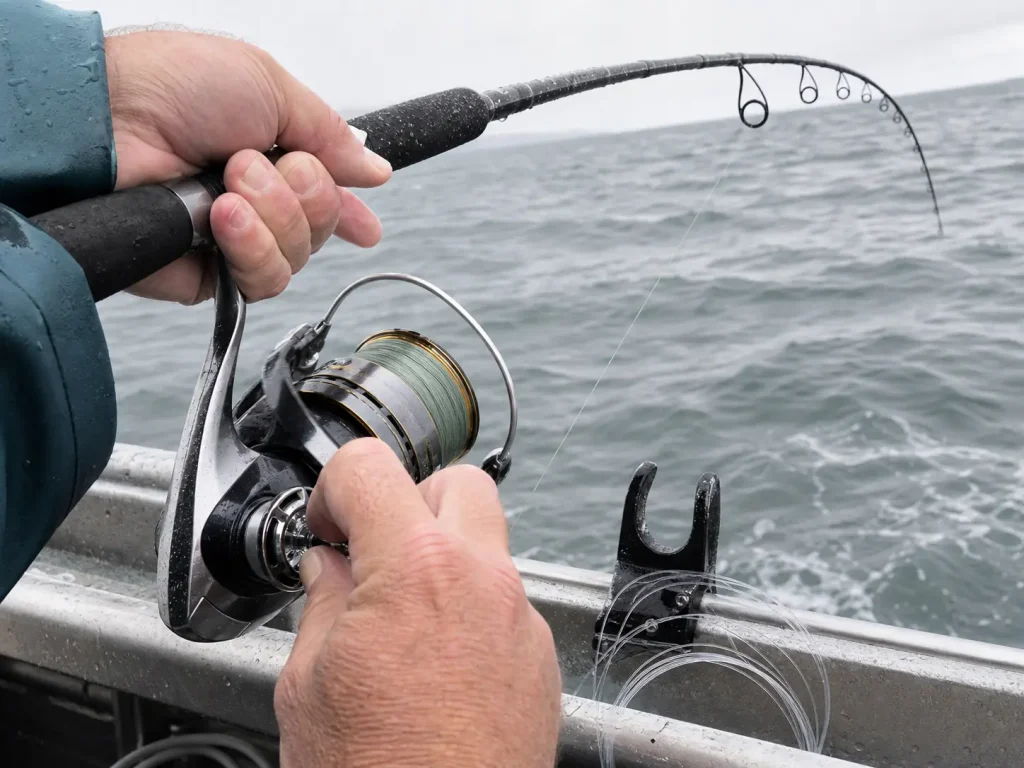
Nobody thinks about temperature when they’re picking a rod. Then a fish takes 200 yards in one run and every part of the system that touches line is warmer than it was when the fight started.
The heat starts in the reel. Drag washers slide against each other like clutch plates under load, and that friction produces real heat, enough that it measurably increases drag heat and drag tension as metal parts expand. That’s why the standard advice on a long run is to back the drag off as the fight goes on rather than trusting the setting you started with.
That same friction heat doesn’t stay in the reel. It travels up the line and builds in the guides the line runs hardest through, and it’s a legitimate reason glue-set guide feet can loosen mid-fight on a big saltwater fish.
This is also the one scenario where thermal conductivity stops being a spec-sheet word. Better heat dissipation is a genuine functional difference between ceramic grades, and it cashes out here and almost nowhere else. On an offshore fishing rod chasing hard-running species, that’s a real reason to buy the harder ring. On a bass rod, it’s irrelevant, and any shop telling you otherwise is selling.
Smoking hot drag is the phrase you’ll hear for it. The practical move is backing the drag off gradually as the first run empties the spool, right at the moment when the leader is thinnest and the heat is highest.
How to Check Your Own Guides Before a Trip
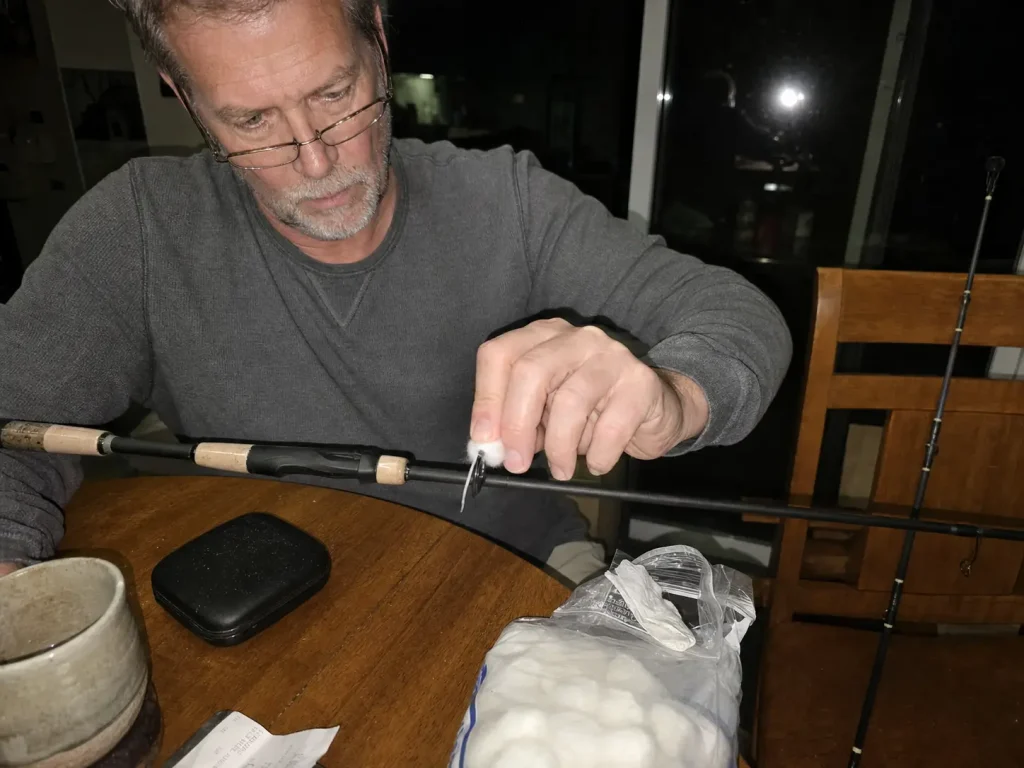
You don’t need to know what your rings are made of to know whether they’re still doing their job. The check costs nothing and takes half a minute at the kitchen table.
The Cotton Ball Test
Run a cotton ball around the inside circumference of each guide ring, all the way around, including the tip-top. If it snags or leaves visible fibers behind, there’s a guide crack or a groove in there that your eye will not find. That’s the cotton ball test, and it catches the exact defect that shows up on the water as line fraying at one spot.
Do every guide, not the ones that look worn. The running guide that gets the least attention is often the one carrying the wear, because line angle concentrates on it during a long cast.
The Light and Visual Check
Tilt each guide against a light source and look across the inner face of the ring for a hairline crack catching the light as a thin bright line. It’s the same escalating inspection sequence that catches a cracked blank: cheap check first, closer look second, decision third.
What to Do When You Find a Bad One
A single failed ring is a replaceable part, not the end of the rod. Say that part out loud, because a lot of anglers quietly retire a perfectly good rod over one chewed guide. Any competent shop rewraps a guide for pocket change, and rewrapping a single guide is a beginner-level job if you’d rather learn rod wrapping yourself on a rod you already own. It’s the first job most people take on when they get curious about custom rod building.
The stakes are worth stating flatly. A grooved insert is a line-failure risk, and line fails under load, which means it fails on the hookset or partway through a run. Not while you’re standing there checking it.
Matching Guide Material to How and Where You Fish
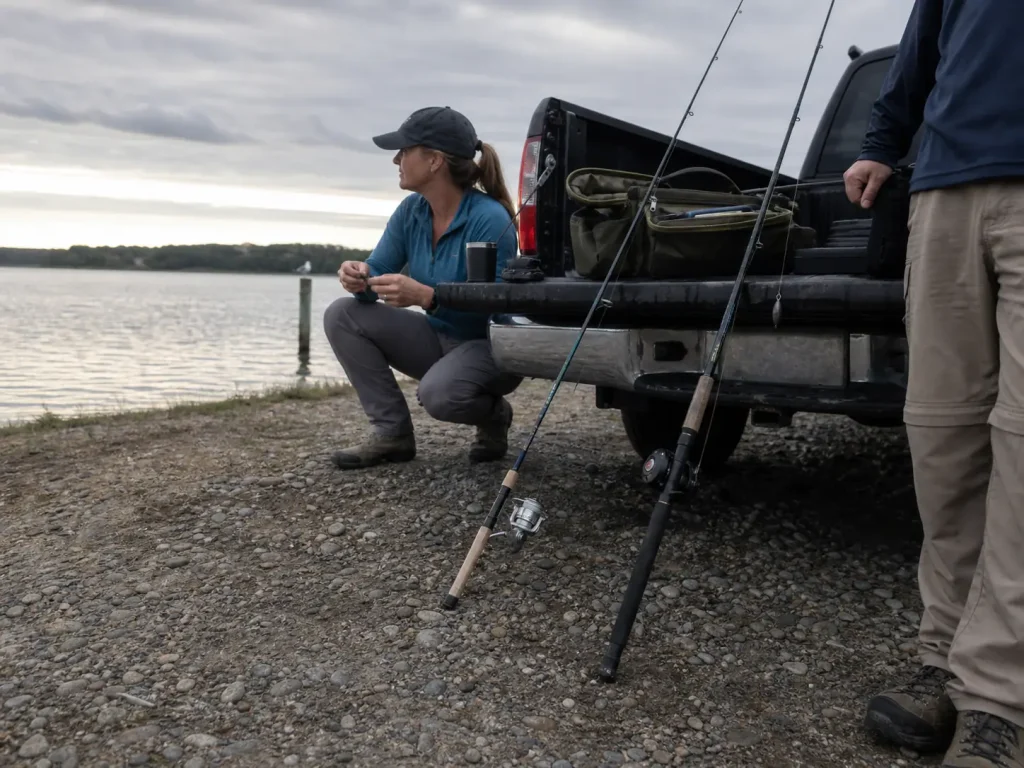
Guides use one thing, everyone else buys another. The answer isn’t a material, it’s a match between a material and the specific abuse your water hands it.
Freshwater Spinning and Casting
Freshwater spinning and baitcasting on mono or light braid: aluminum oxide or Alconite is genuinely enough. That’s most anglers, most of the time, on both spinning rod and casting rod setups. Fly rod builds care more about frame weight than ring hardness, since a fly line never sits in one spot the way braid does. Ice fishing guides are their own case, where cold-weather brittleness and ice buildup in small rings matter more than abrasion ever will.
Inshore and Offshore Salt
Frame grade beats ring grade here, every time. Corrosion retires more guides in salt than abrasion does, and 316 stainless or titanium is the spec worth paying for. It follows the same pattern as the part of a saltwater setup that fails first, which is almost always the cheapest metal in the system rather than the most expensive component.
Heavy Braid, Jigging, and Surf
Heavy braid and aggressive jigging is the SiC case, full stop. Surf is the harshest combined version of everything above: distance casting, constant salt spray, and sand in the wraps. Surf rods carry the harshest version of this problem, which is why they tend to run larger reduction guide layouts and K-series guides, the swept guides that shed braid tangle on the cast rather than catching it.
Budget vs Premium and What’s Actually Worth Paying For
Most anglers don’t overpay because premium guides are a scam. They overpay because they buy a guide spec for a kind of fishing they don’t do.
What a Guide Set Actually Costs
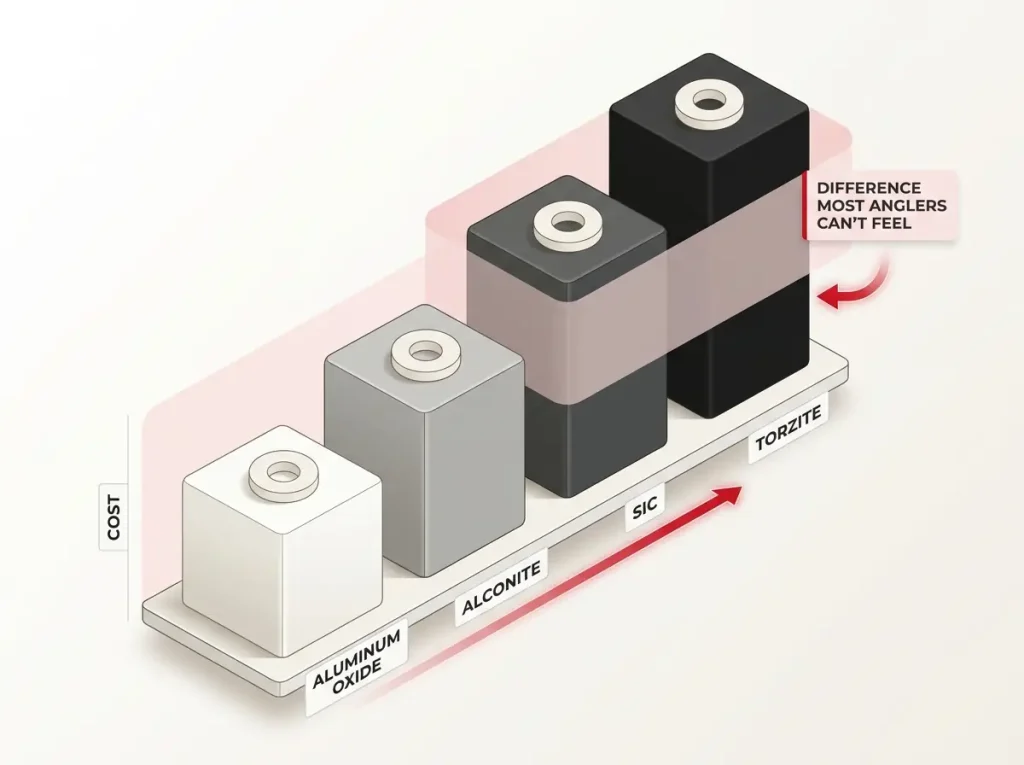
Here are the real numbers, because everyone dances around them. A full guide set for a typical casting rod runs roughly $30 for Alconite, around $60 for SiC, and around $100 for Torzite. That’s per set, not per guide, so the price per guide difference is small and the difference across a whole rod is not. On a finished rod carrying six to nine guides, moving up to the top of that ladder can add $150 or more to the sticker.
Where the Upgrade Money Is Well Spent
A 316 or titanium frame if the rod lives anywhere near salt. A harder ring if you genuinely fish heavy braid hard, jig aggressively, or chase fish that make long runs. A rewrapped replacement guide instead of a replacement rod. Those three purchases return something you can point at.
The premium guides argument also isn’t a budget-versus-quality split the way it gets sold. The Shimano Terez Saltwater Spinning Rod 6 ft 9 inch Medium Heavy is a genuine bluewater rod and it ships with Fuji KW Alconite guides. Alconite isn’t the ring a manufacturer settles for on a budget rod when the money runs out. It’s what one of them specifies on a rod built to fight tuna.
Where It Just Buys You a Better Spec Sheet
Chasing the top of the ceramic ladder on a freshwater mono setup buys you a number, not a fish. So does paying up for a guide spec because it’s the one line on the blank you understand. And remember that aluminum oxide alone tells you nothing about grade, since the same two words cover 1,600 HV and 1,850 HV rings. The rest of the label deserves the same scrutiny, because guides are one of several specs printed to sound more decisive than they are.
The Short Version
Guide material is two specs, not one. The ring decides how long the rod resists abrasion; the frame decides whether the rod survives salt.
For mono or light braid, mid-grade ceramic is genuinely enough. The premium ladder pays off under heavy braid, hard-running fish, and salt exposure, and it pays off almost nowhere else.
The guides you already own matter more than the ones you’re shopping for. A cotton ball tells you exactly where they stand.
Before your next trip, run the cotton ball test on every rod in the rack. It costs nothing, takes a few minutes, and it’ll tell you more about your gear than any spec sheet on the wall.
Frequently Asked Questions
01Do braided lines wear out rod guides faster?
Yes. Braid is a multi-fiber abrasive and it grooves ceramic inserts noticeably faster than mono or fluorocarbon does. The wear comes from thousands of casts crossing the same few millimeters of ring, not from any single hard fight.
02What is the difference between Alconite and Silicon Carbide guides?
Hardness and price. SiC tests over 2,000 HV against roughly 1,300 to 1,500 HV for Alconite, and a full SiC guide set costs about double an Alconite one. On mono or light braid, builders comparing the two side by side found no difference they could feel.
03Are titanium guides worth it over stainless steel?
In saltwater, often yes. Titanium does not pit the way 304 stainless does, and it springs back from impacts that would leave a steel frame bent. In freshwater, the upgrade rarely earns its price.
04How do I know if a rod guide is cracked?
Run a cotton ball around the inside of the ring. Snagged fibers mean a crack or groove your eye cannot see. Back it up by tilting the guide against a light and looking for a thin bright line across the inner face.
05Can you replace just one rod guide?
Yes. A single failed guide is a rewrap job, not a reason to replace the rod. Any rod shop handles it cheaply, and it is one of the first jobs most custom builders learn.
Risk Disclaimer: Fishing, boating, and all related outdoor activities involve inherent risks that
can lead to injury. The information provided on Master Fishing Mag is for educational and informational purposes
only. While we strive for accuracy, the information, techniques, and advice on gear and safety are not a substitute
for your own best judgment, local knowledge, and adherence to official regulations. Fishing regulations, including
seasons, size limits, and species restrictions, change frequently and vary by location. Always consult the latest
official regulations from your local fish and wildlife agency before heading out. Proper handling of hooks, knives,
and other sharp equipment is essential for safety. Furthermore, be aware of local fish consumption advisories. By
using this website, you agree that you are solely responsible for your own safety and for complying with all
applicable laws. Any reliance you place on our content is strictly at your own risk. Master Fishing Mag and its
authors will not be held liable for any injury, damage, or loss sustained in connection with the use of the
information herein.
Affiliate Disclosure: We are a participant in the Amazon Services LLC Associates Program, an
affiliate advertising program designed to provide a means for us to earn advertising fees by advertising and linking
to Amazon.com. As an Amazon Associate, we earn from qualifying purchases. We also participate in other affiliate
programs and may receive a commission on products purchased through our links, at no extra cost to you. Additional
terms are found in the terms of service.