
In this article
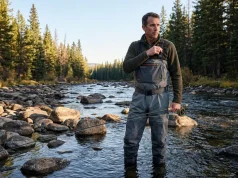
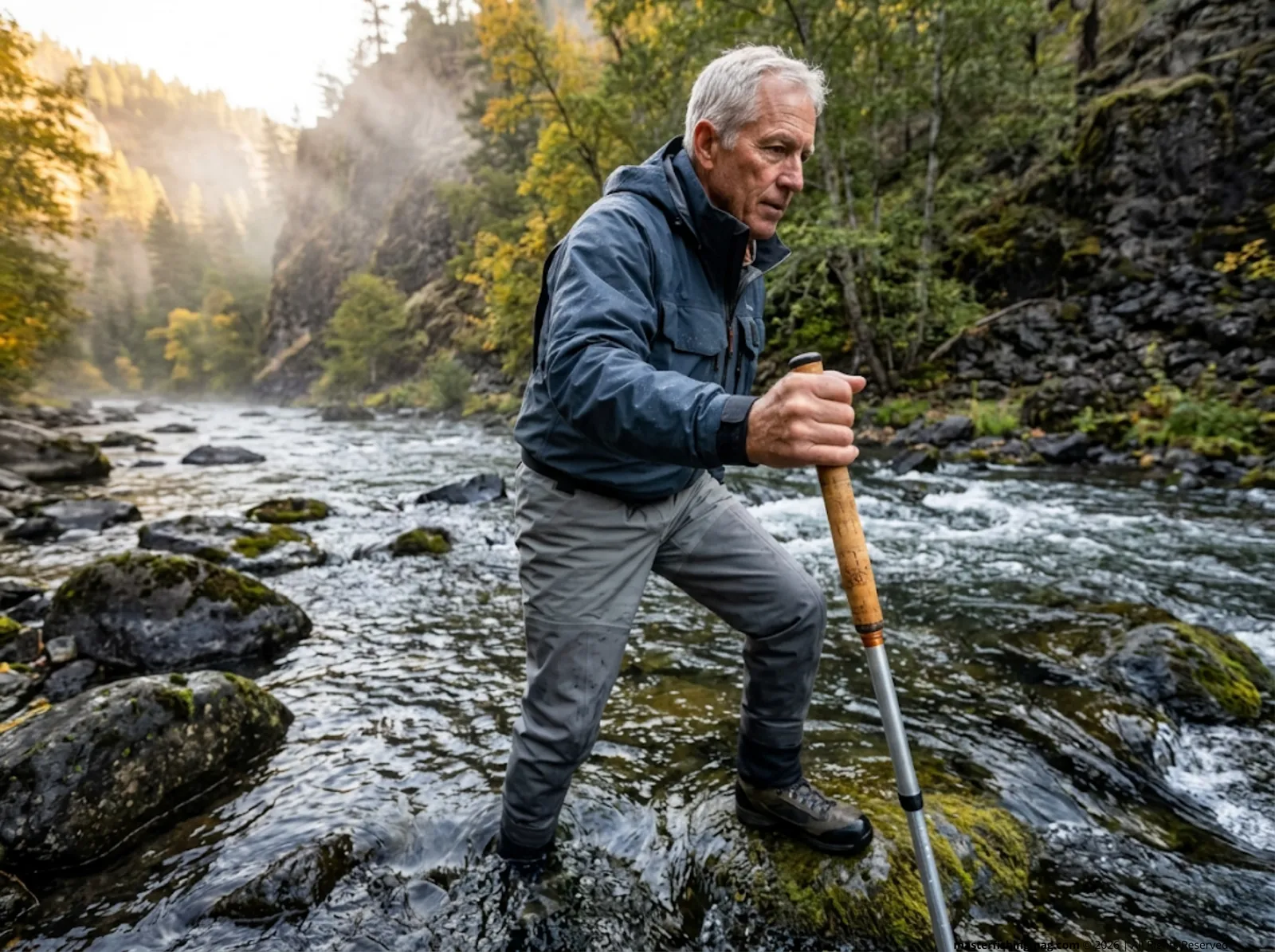
The rock shifted a half-second before my feet did. One moment I was threading a seam below a boulder in waist-deep current; the next, the staff was gone sideways and both legs were in the air. I hit the riverbed hard, face-first, and the current did the rest. I crawled out 40 yards downstream, dragging a staff that had just given me the single most expensive lesson in wading safety I’ve ever paid for. The problem wasn’t the river. The problem was the bungee cord that let the sections separate at the worst possible moment.
After years of guiding on high-gradient freestone rivers, I’ve watched the same failure repeat itself. The angler grabs the staff, trusts the mechanism, and the mechanism quits. This guide exists to stop that. We’re evaluating wading staffs the way a guide actually uses them — by structural integrity under lateral load, locking mechanism reliability, tip friction on algal biofilm, and handle ergonomics for hands that hurt in cold water.
⚡ Quick Answer: For most senior anglers on slippery, boulder-strewn rivers, the Fishpond Slippery Rock Pro is the single best purchase — its telescopic twist-lock creates a rigid, monolithic column that won’t separate when pried between rocks, the cork grip stays warm in cold water, and the oversized palming knob lets you weight the staff through your palm when grip strength fails. If you’re fishing extreme current where other staffs get swept off the bottom, the Riverstick Custom is the only rational alternative. Carbon fiber staffs — regardless of brand — are not recommended for high-gradient river wading where lateral prying forces are routine.
The Physics of the “Third Leg” — Why Seniors Actually Need a Staff
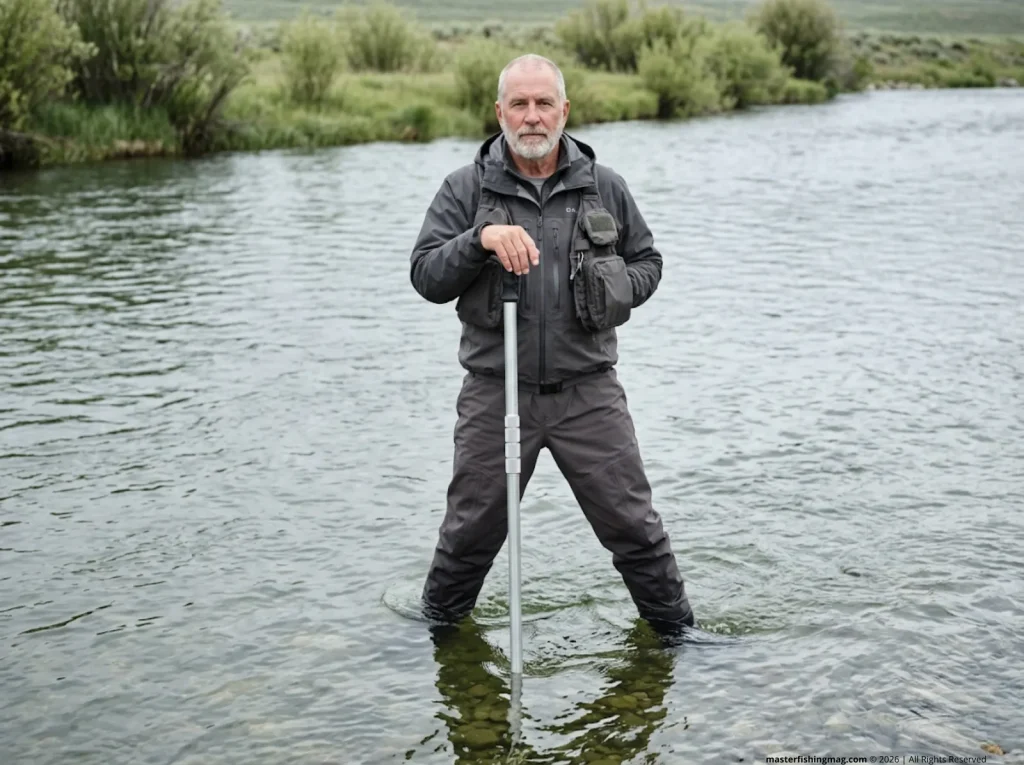
Most anglers resist the staff for years. That’s understandable. It feels like an admission. But the physics here don’t care about feelings — they tell a pretty clear story about what happens when a bipedal body enters moving water.
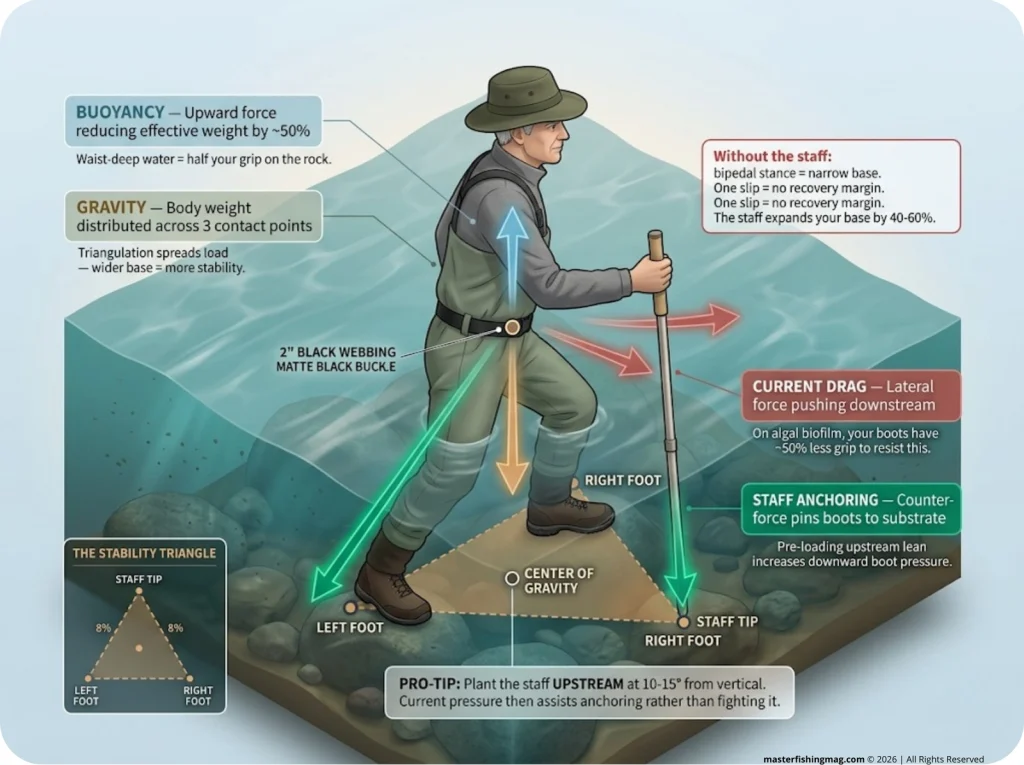
When you’re standing waist-deep in a river, your body loses roughly 50% of its effective weight to buoyancy. The water pushes back. What this means for your footing is that the grip available between your boot sole and the rock surface drops by the same factor. Half the grip, with current pushing you sideways. On a bowling ball riverbed — smooth, rounded stones that rotate freely under load — this is where things get unforgiving.
Adding a staff shifts the system from two contact points to tripedal locomotion. The third contact point expands your stability triangle and distributes your center of gravity over a larger base. The staff also lets you pre-load a lean into the current, which shifts your weight upstream and effectively pins your boots by increasing the downward pressure on the substrate. A systematic review comparing aquatic balance in older adults confirms what guides already know from experience: proprioceptive decline — the aging body’s reduced ability to sense position and self-correct — narrows the reflexive correction window to roughly 80–120ms. A slippery riverbed on wet basalt can displace your footing in under 50ms. You don’t have time to catch yourself.
One thing that surprises most people: falls in ankle-deep water cause more fractures than falls in waist-deep water. In shallow water, there’s no deceleration time before hitting the substrate. The current is slower, the water is lower, and the confidence is higher — which is exactly when the hip goes down hard. Walk upstream on the way in, downstream on the exit. Current assists your forward lean on approach; fighting it on the way out is where most falls happen.
Pro tip: Pair your staff with proper wading belt safety protocol — a staff handles what a belt cannot, and a belt handles what a staff cannot. They’re not redundant. They’re two layers of the same system.
Material Science — Why Aluminum 6061 Is the Senior Angler’s Structural Choice
The aluminum vs carbon debate in wading staffs sounds like a marketing argument. It isn’t. It’s an engineering argument, and the answer depends entirely on how your staff fails.
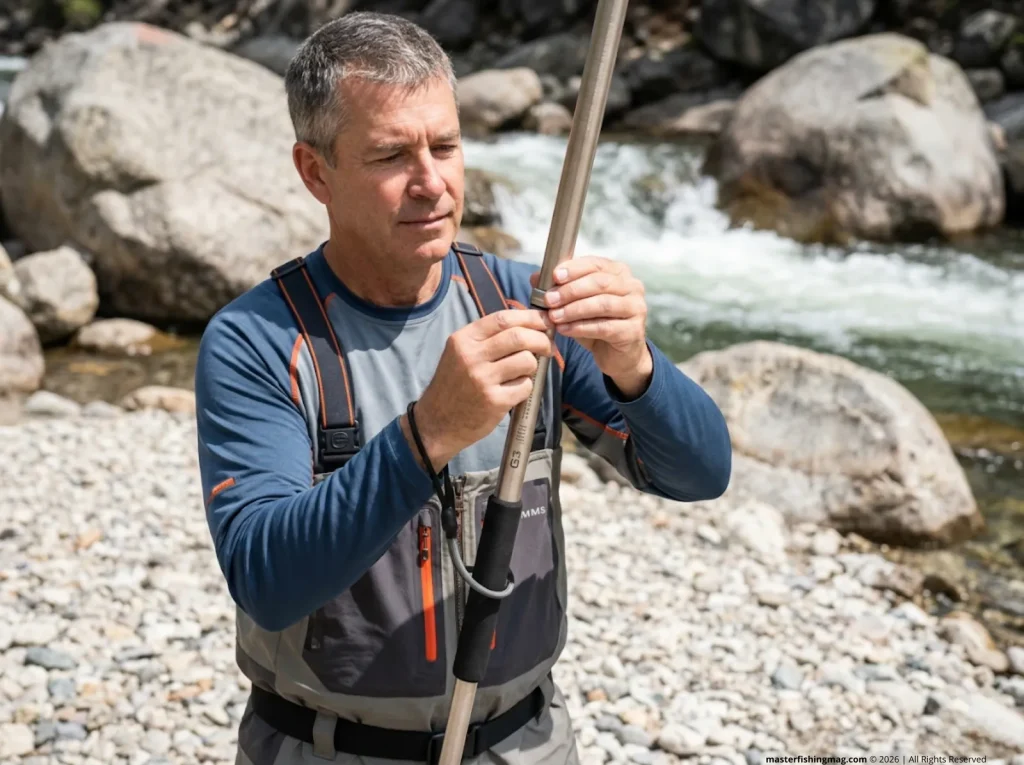
Aluminum 6061 is a ductile material. Under extreme lateral load — the kind that happens when your staff wedges between two boulders and you pull hard to free it — aluminum bends. It gives you tactile warning. You feel the flex before anything gives. That warning is the margin between a stumble and a catastrophe. Aluminum 7075 — used in the Simms G3 — is significantly stronger but shares the same key property: it gives you a signal before it yields.
Carbon fiber doesn’t work that way. Its strength is entirely dependent on fiber orientation. Under lateral shear — exactly what happens when you pry a staff from between rocks — it maintains its shape right up until it reaches its breaking point, then shatters. No bend, no warning, just failure. Multiple veteran anglers have described the same event: mid-river, staff wedged, staff snapped, suddenly nothing to hold onto. The weight difference between aluminum and carbon fiber is real, but for senior anglers who are leaning into their staff for actual load support, the predictable failure mode of aluminum is worth every gram.
There’s a failure mode in carbon staffs that reviewers almost never discuss: silent microcracking. Under repeated lateral stress cycles over multiple trips, carbon fiber develops microscopic cracks that propagate invisibly through the material. There’s no external indicator. The staff looks and feels fine. Then one day, in mid-current, it reaches its threshold and fails without warning. Aluminum, by contrast, shows deformation visibly and progressively. You see it. You deal with it. The same logic that governs tip material on the staff applies to boot sole traction on algae-covered rock — the failure mode of your contact material matters as much as its performance under normal conditions.
Pro tip: Ask any long-time guide what they switched from. Almost universally, the answer is carbon. The weight savings felt worth it until the first time it mattered.
The Tribology of Traction — Tip Science on Algal Biofilm
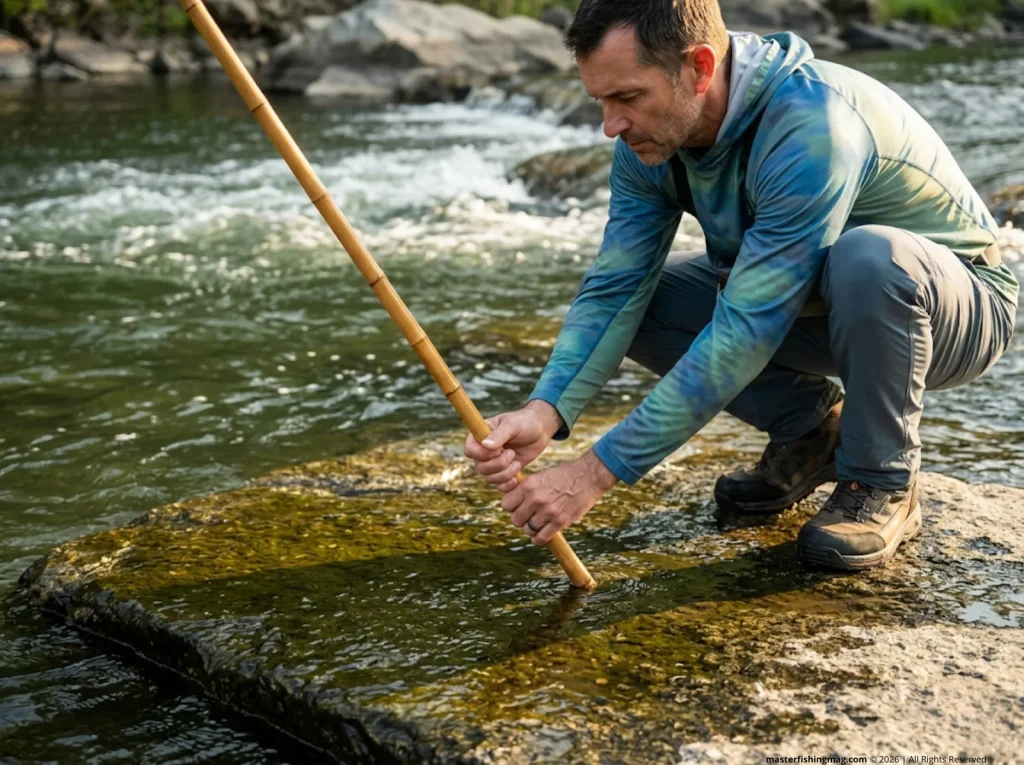
Here’s where most wading staff reviews go completely wrong: they test tip grip on clean rock. River rocks are not clean. They’re coated in periphyton biofilm — a matrix of algae and bacteria that functions as a near-frictionless lubricant. Rubber on a clean wet surface grips well. On algal biofilm, that grip collapses almost entirely. You’re not walking on rock. You’re walking on slime over rock.
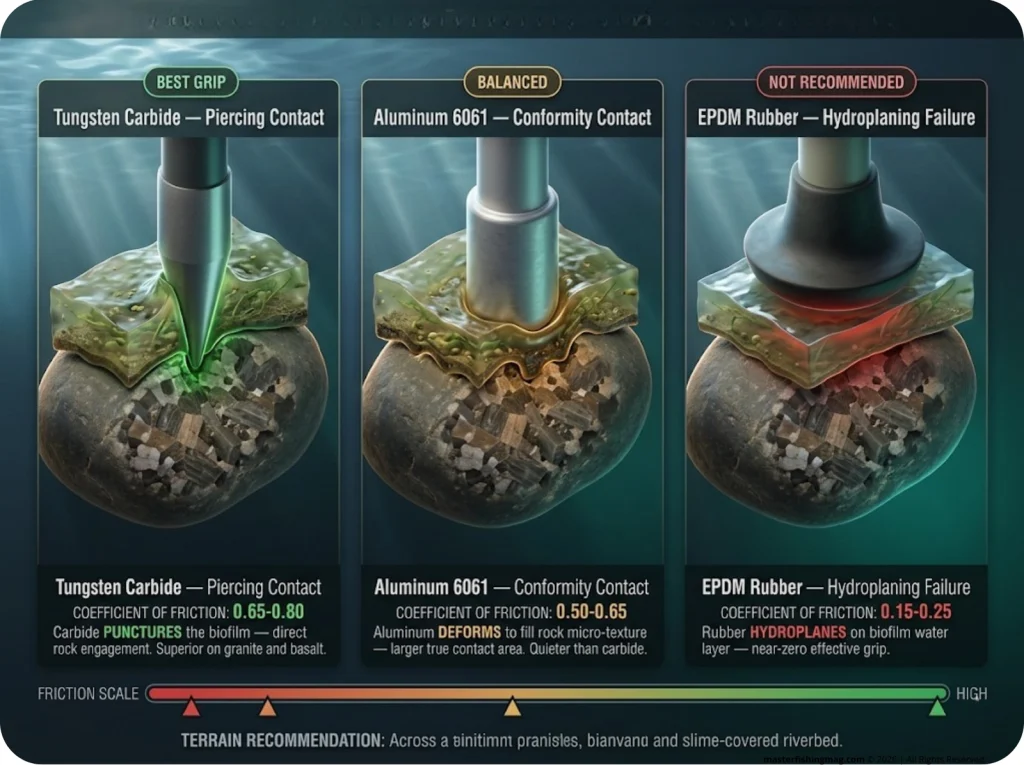
Carbide tips — tungsten carbide, one of the hardest materials in common use — solve this by puncturing the biofilm layer and gripping the rock’s micro-texture directly. Superior on hard granite or basalt. The trade-off: they’re loud. The acoustic signature of carbide on rock telegraphs your presence to fish, which matters on heavily pressured trout water. On high-gradient freestone runs where ambient current noise is high, carbide wins unconditionally. On flat tailwaters where stealth matters more than grip, reconsider.
Aluminum tips work on a different principle. Because aluminum is softer than the rock surface, it physically conforms to the rock’s micro-texture — deforming slightly to fill the surface irregularities and creating a larger true contact area. This is the same principle behind Patagonia Foot Tractor aluminum bar soles. Quieter than carbide, excellent on smooth hard rock.
Rubber tips hydroplane on algal slime. According to NIST research on frictional properties of rubber on varied surfaces, rubber’s grip collapses dramatically under conditions present on most riverbeds. Rubber is best reserved for stealth on slow, shallow tailwaters where the bottom is sandy or clean gravel.
The Riverstick’s tire valve stem tip deserves special mention. It uses EPDM rubber — an elastomer engineered for high-stress environments — in a large-diameter format that prevents the tip from wedging in rock gaps. Replaceable at any hardware store. It’s a maintenance advantage no commercial staff matches. Your staff tip choice should be made alongside your lug sole wading boot selection — they work as a unified friction system against the same riverbed.
Mechanical Architecture — Locking Mechanisms and Why Bungees Fail
The Bungee Failure Mode — What Happens When You Need It Most
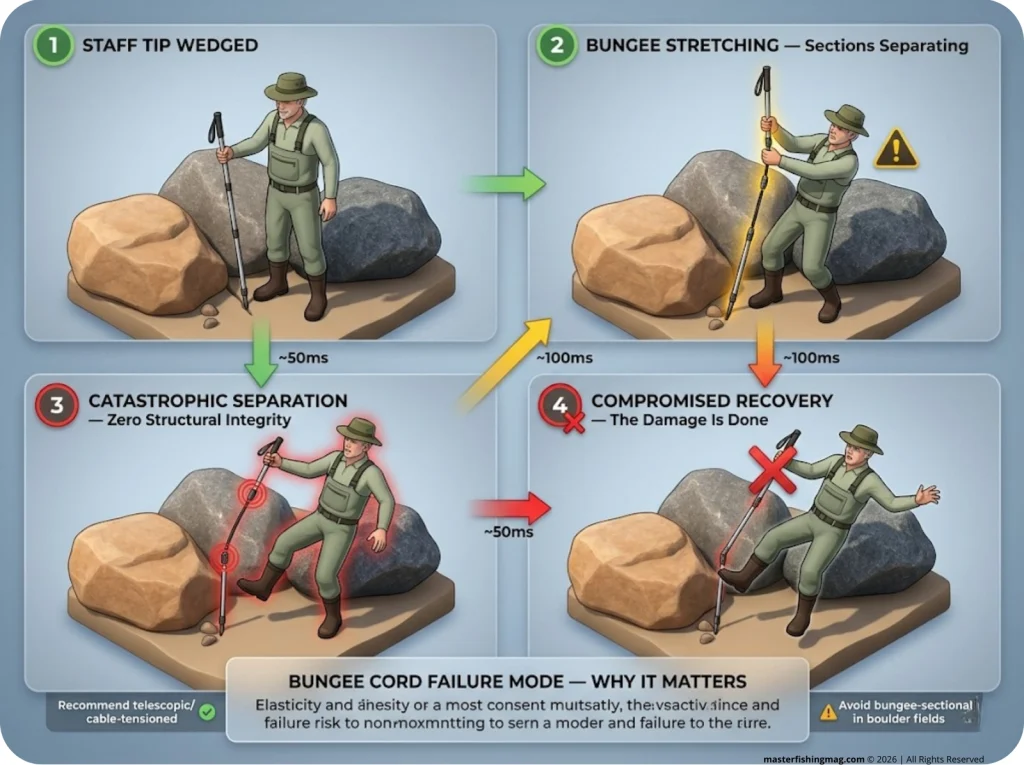
Bungee-cord sectional staffs — Simms, Orvis, Vision — use an internal elastic cord to hold sections together and enable rapid self-deployment. The same elastic property that makes them convenient is the section disconnection risk that makes them hazardous in the wrong environment.
Here’s the exact failure sequence. The tip section wedges between two rocks. You pull upward to free it. The bungee stretches, the sections temporarily separate by 3–5 centimeters, and the load transfers through the elastic cord to zero. When you reapply weight, the staff collapses precisely when you’re in the most compromised posture — mid-stumble, applying lateral force, expecting resistance. The failure isn’t dramatic. It’s just gone, exactly when you need it. Treat bungee-cord staffs as convenience tools for moderate wading. For high-gradient boulder fields where lateral stiffness and load-bearing capacity are the entire point, they are not the right tool. Selecting the right locking mechanism is one part of the picture; the broader picture includes wading safety protocols on moving water including positioning, footwear, and emergency planning.
Telescopic Twist-Lock — The Fishpond Slippery Rock Pro Standard
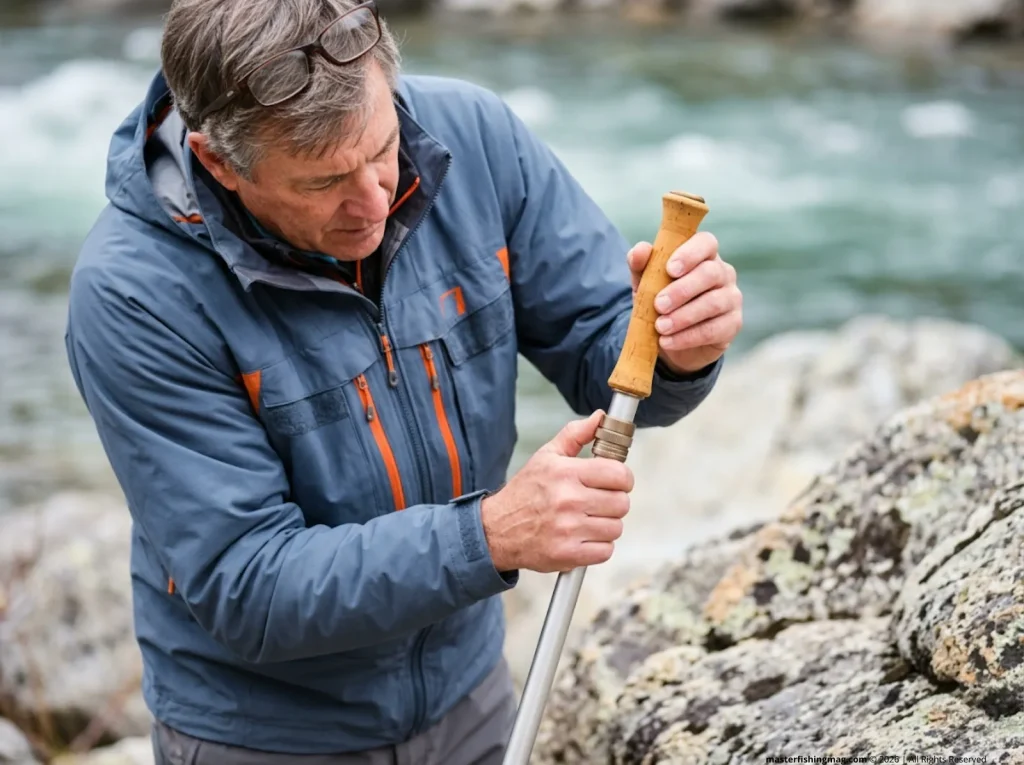
The Fishpond Slippery Rock Pro’s telescopic twist-lock mechanism creates a rigid, monolithic column under axial load — no joints to pull apart, no elasticity in the system. The telescopic lock can support full body weight without section separation, validated in field use by guides across the Northwest. When you plant it and lean, it holds.
The anti-sell: collapsed length of 29.5 inches is cumbersome for bankside bushwhacking. Standard belt holsters don’t fit it — you need a sling-style carrier, which adds a fumble step when you need to deploy quickly through vegetation. After purchase, dry-lock-test the mechanism ten times at home. Twist-lock threads can develop small burrs from the factory; a dry locking cycle removes them and ensures full engagement on trip one.
One-Piece and Cable-Tensioned — The Integrity Ceiling
Fixed-length staffs have zero mechanical failure points. The Fishpond Grass Sticks bamboo (53 inches, one-piece) and the Riverstick Custom (machined aluminum with internal cable tensioning) represent the top of the integrity range. No joints means no failure modes. Kiln-dried Colorado bamboo also floats if you drop it — a non-trivial advantage in fast current. The trade-off is portability. A 53-inch staff can’t be stowed on a belt and must be towed between steps, which becomes a line-snagging problem in heavy current. Senior anglers fishing open wade-access tailwaters report the Grass Sticks as an exceptional tool. Anglers who hike through riparian corridors to reach water almost universally choose the telescopic.
The Geriatric Interface — Handle Ergonomics and Arthritis Design
Grip Material and Thermal Conductivity in Cold Water
This section covers what almost no review mentions, and for senior anglers it matters as much as the locking mechanism.
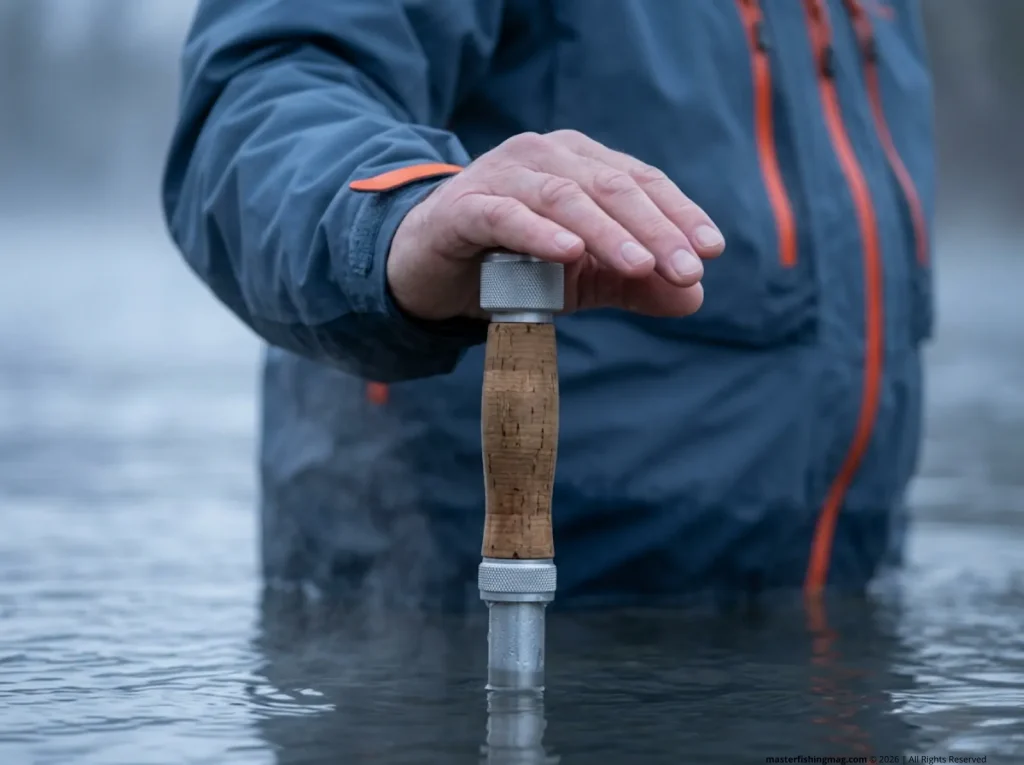
Cork grips stay warm to the touch in cold water. In flows at 50°F or below, this is meaningful: maintaining blood flow and fine motor control in arthritic fingers is a direct function of grip temperature. A rubber-handled staff sitting in 40°F water for two minutes will noticeably drop in surface temperature. For hands already compromised by Raynaud’s phenomenon or osteoarthritis, that’s not discomfort — it’s reduced grip strength and slower response time both happening at once.
EVA foam sits between cork and rubber — more durable than cork, with better longevity in frequent cold-water use. The same tackle ergonomics and grip injury prevention principles that govern rod handles apply here. Rubber handles on economy staffs conduct heat away from your palm fastest and should be avoided by senior anglers fishing in early spring or late fall windows.
The Palming Knob — Weight Bearing Without Grip Strength
The oversized palming knob on the Fishpond Slippery Rock Pro and the Riverstick allows the angler to transfer full body weight through the palm of an open hand directly down the staff’s vertical axis. This matters when grip strength drops below the clinical threshold for functional grip. Below that threshold, a standard wrap-around grip requires constant squeezing force to prevent the staff from shooting upward under load, which causes progressive cramping in arthritic joints.
Ideal handle diameter for arthritic comfort runs 1.25–1.5 inches. Thinner grips force a tighter flexion angle in the knuckle joints, which is exactly where rheumatoid arthritis concentrates pain.
Pro tip: If your current staff lacks a palming knob, a T-bar foam grip replacement from any hardware store’s plumbing section can be retrofitted onto most 3/4-inch shaft staffs for under $8. Not elegant, but it works.
Wrist Lanyard Attachment and Load Transfer
A dedicated wrist lanyard attachment lets you release the staff grip without losing it during a stumble — freeing your hand to brace against a rock face instead of clutching the staff on the way down. Lanyard length of 8–12 inches keeps the staff within recovery range without wrapping around the wrist during a full-rotation fall. Never use a lanyard that closes around the wrist; in a submersion scenario, a trapped staff acts as an anchor that holds you face-down. Belt holsters that keep the staff immediately deployable outperform sling-carry systems that require two-hand retrieval. When evaluating handle ergonomics on a full wading setup, also consider stocking-foot vs. boot-foot wader selection for guides and serious waders — ankle support and holster placement interact in ways that affect how you deploy the staff in fast water.
The Hydrodynamics of the Staff in Current — Drag, Vibration, and Staff Diameter
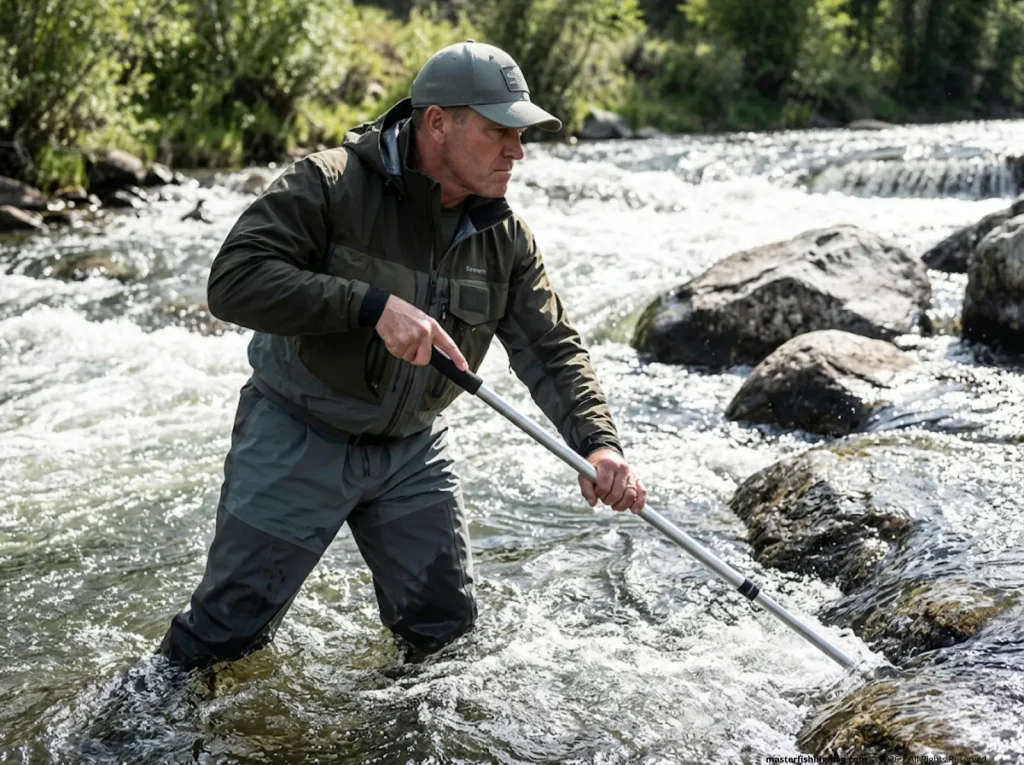
Most anglers don’t think about what happens to a staff in fast water — they just feel it. In turbulent flow, alternating vortices form on the downstream side of a cylindrical staff. When the rhythm of those vortices matches the staff’s natural resonant frequency, the staff begins to hum or shudder rhythmically in your hand.
This isn’t atmosphere. It’s metabolic cost. Suppressing that vibration requires constant forearm and hand contraction. Over a four-hour wading session on fast water, that fatigue builds. For senior anglers with reduced muscular endurance, it accumulates faster and causes grip degradation earlier in the day.
Staff diameter is the solution. A 3/4-inch staff dampens this vortex vibration more effectively than a 1/2-inch model — higher mass, different resonant behavior. The staffs with external flick-lock collars (telescopic mechanisms) present a non-uniform cross-section to the flow, which slightly increases drag but suppresses vortex vibration more effectively than smooth thin-walled carbon staffs.
At 3 mph river velocity, a 3/4-inch staff presents roughly 0.4 lbs of lateral drag — manageable. At 6 mph, drag quadruples to around 1.6 lbs. The Riverstick’s weight (1 lb 10 oz) is the engineering answer to this. It self-anchors to the riverbed under gravity, reducing the tendency of the current to sweep the tip laterally before foot placement. Ultra-light carbon staffs under 9 oz don’t have enough mass to anchor reliably in currents above 4 mph — they require active downward wrist pressure on every step, which compounds the fatigue problem.
Plant the staff upstream of your position at a slight upstream angle — about 10–15 degrees from vertical. Current pressure then assists in anchoring the tip into the substrate rather than peeling it off. Three-point contact at all times — two feet plus staff. Shuffle-step: no more than 12 inches per move. Never advance both feet while the staff is repositioning. Understanding where your staff should be planted requires understanding reading and navigating current in rivers — water pressure distribution changes across a wading lane in ways that aren’t always visible from the surface.
Pro tip: Avoid placing the staff too far downstream. This is the most common beginner mistake — it inverts the mechanical advantage and creates a fulcrum that pitches you forward rather than bracing you upright.
The Anti-Sell Review — Simms, Fishpond, Riverstick, and Grass Sticks Ranked
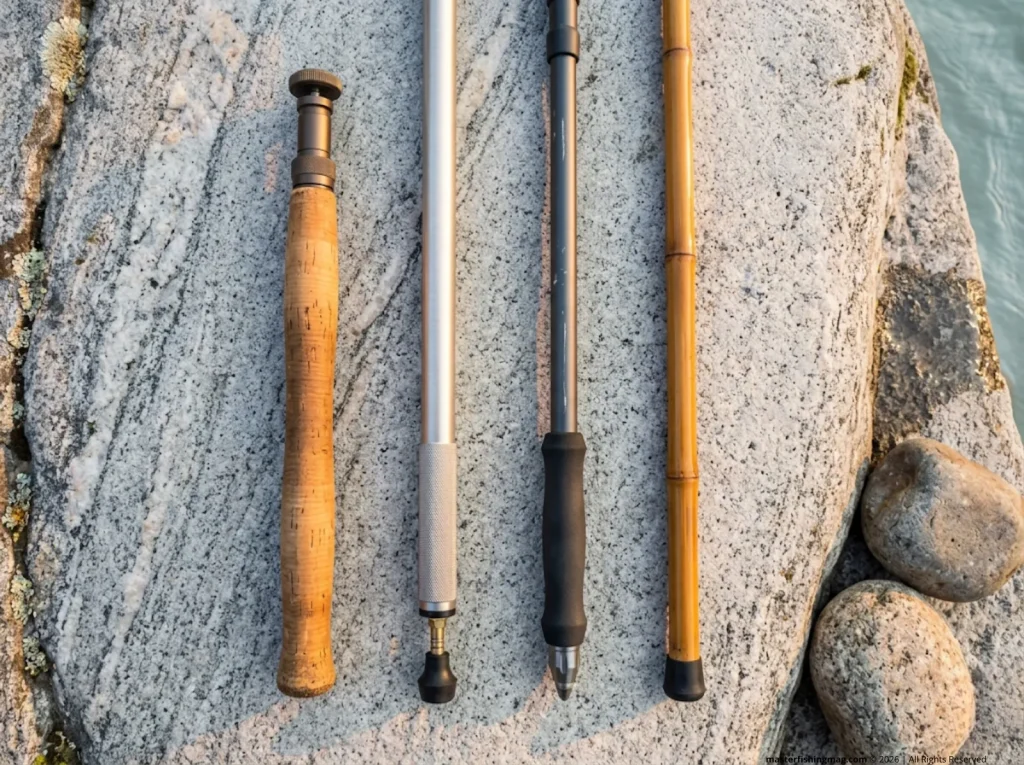
Fishpond Slippery Rock Pro — The Definitive Senior Choice
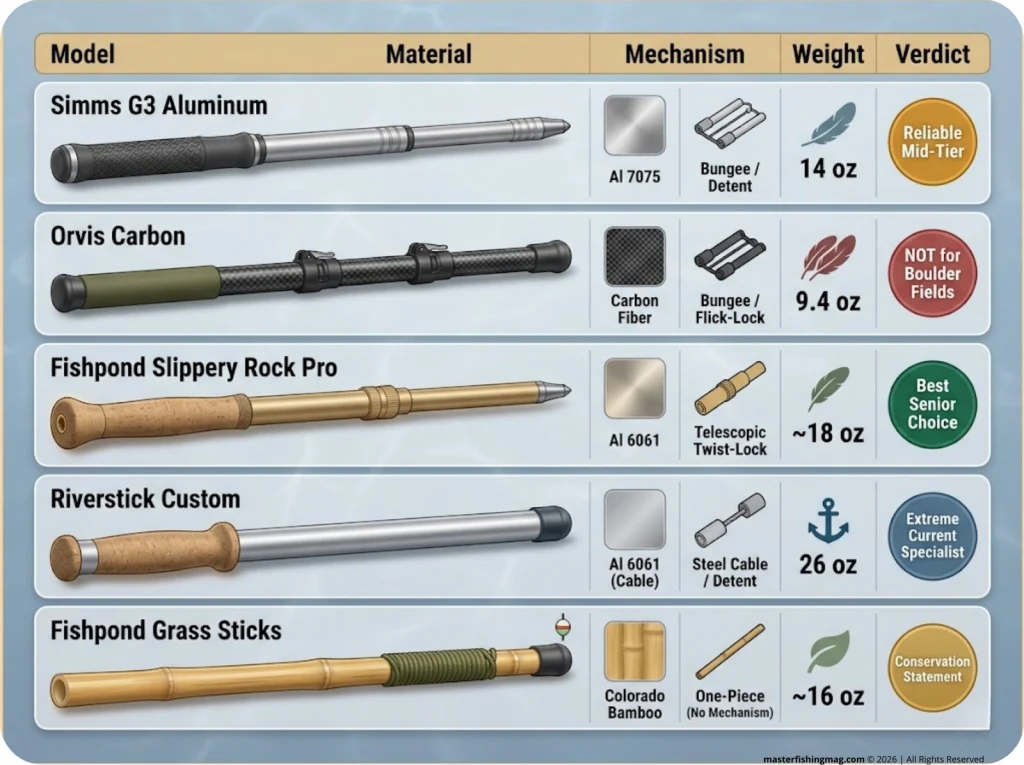
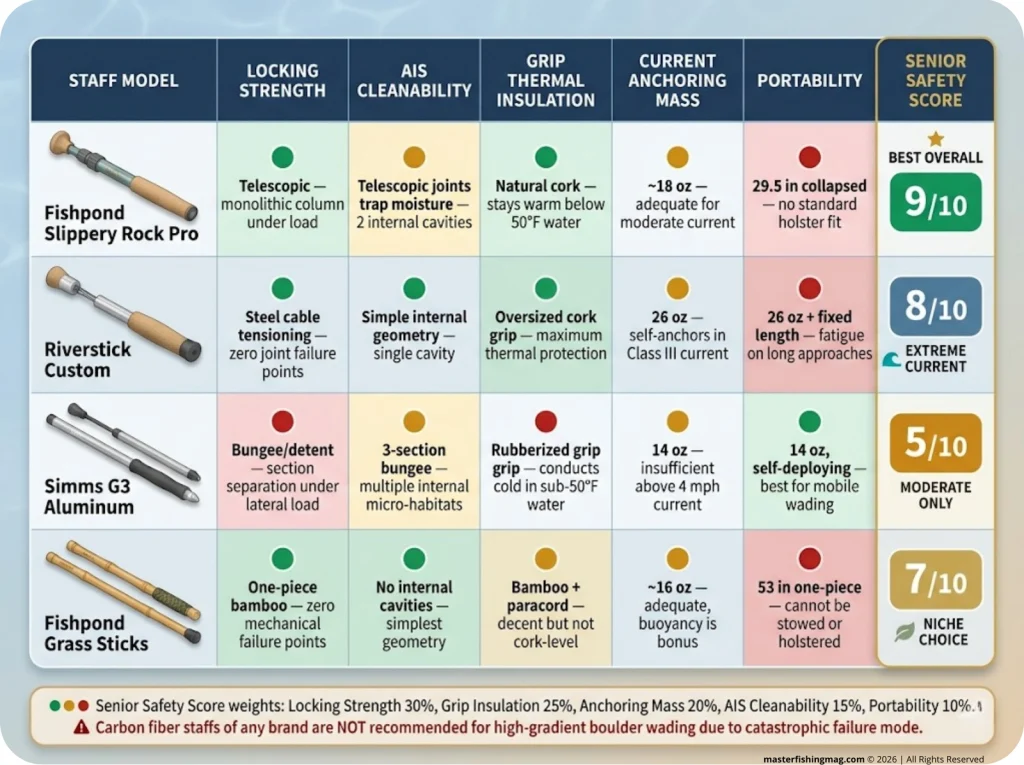
Telescopic twist-lock, Al 6061, approximately 18 oz, 29–57 inch range. The combination of a rigid telescopic column and an oversized cork grip with a palming knob makes this the only commercially available staff engineered specifically for the senior wading use case. Cork maintains grip warmth in cold water. The camera monopod mount is a genuine utility accessory, not marketing.
The anti-sell: collapsed length of 29.5 inches doesn’t fit standard belt holsters. Moving through heavy brush with this thing is a logistics exercise. For anglers who walk significant riparian distance before wading, that matters.
Verdict: Best single-purchase staff for senior fly fishers prioritizing “third leg” reliability in moderate to heavy current. Per National Park Service wading and fishing equipment guidance, appropriate staff selection is among the most consequential pieces of wading safety equipment an angler chooses.
Riverstick Custom — The Extreme Current Specialist
Handcrafted machined aluminum, steel cable tensioning, 26 oz, tire valve EPDM tip, custom-order sizing from British Columbia. The intentional weight is the primary asset — 26 oz creates anchoring inertia that no other production staff matches in high-velocity water. The tire valve tip is replaceable at a hardware store, which is a maintenance reality no commercial staff can match.
The anti-sell: weight becomes fatigue for any angler covering long approaches on foot. The hammer-loop holster intercepts fly lines if worn in a forward hip position — wear it back and to the outside.
Verdict: The only rational choice for Class III equivalent wading environments where current forces exceed the manageable margins of commercial staffs.
Simms G3 Aluminum — The Reliable Mid-Tier
7075 aluminum, bungee/detent sectional design, 14 oz, 51–56 inch range. Robust alloy with significantly less flex under load than any carbon alternative. Rapid self-deploying bungee assembly is its legitimate strength for mobile wade-and-wade anglers covering distance.
The anti-sell: the bungee cord separation failure mode documented throughout this guide applies directly to this staff. The carbide tip rounds off with extended use on basalt riverbeds, and most anglers skip the periodic replacement maintenance until it’s too late.
Verdict: Solid mid-tier option for moderate wading. Inadequate for high-gradient bowling ball riverbeds where the bungee failure mode is a genuine safety concern.
Fishpond Grass Sticks Bamboo — The Conservation Statement
Kiln-dried Colorado bamboo, one-piece 53-inch fixed length, naturally buoyant. No mechanical parts means no failure points. Bamboo’s renewable sourcing makes this the highest-integrity conservation choice among the reviewed models, and the floating property is useful in fast water — drop it and it stays on the surface long enough to recover.
The anti-sell: one-piece staffs are categorically non-portable. Managing this staff through vegetation-dense riparian corridors is genuinely difficult. It must be towed and managed separately.
Verdict: Excellent for open-water small freestone streams and walk-wade tailwaters. Impractical for trail-access or bushwhacking terrain. Consider your complete wader system selection for guides and serious waders alongside the staff — the two decisions interact, particularly around ankle support and holster compatibility.
Conservation, AIS Stewardship, and Staff Maintenance
Why the Staff Is a Higher AIS Risk Than Your Boots
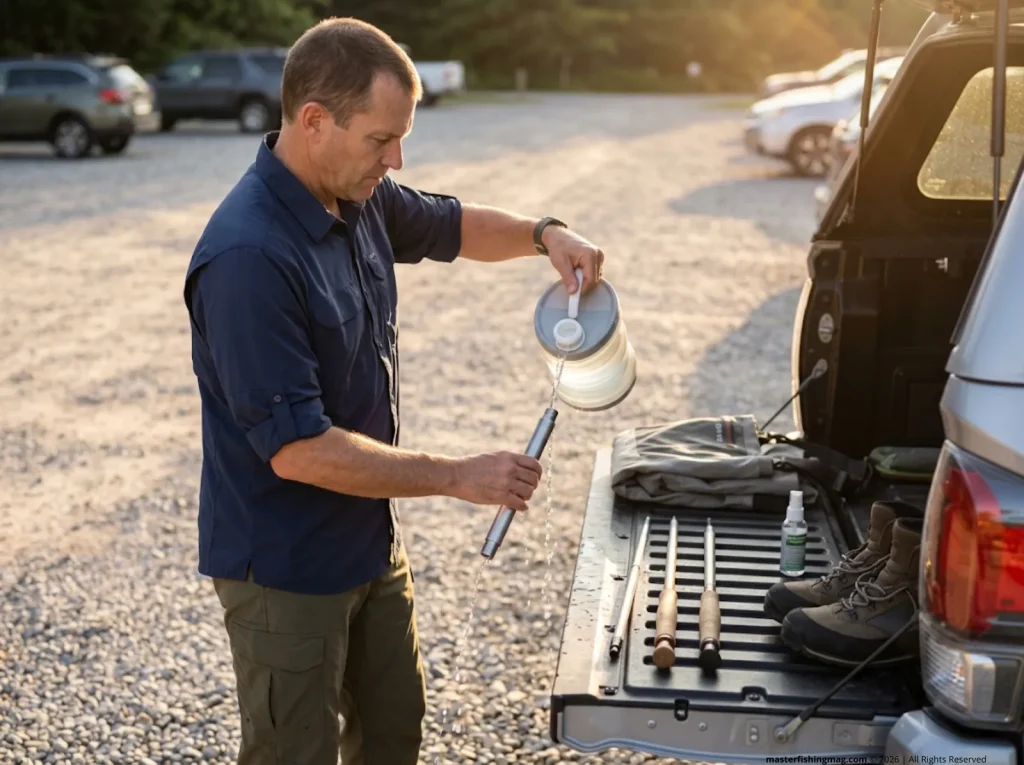
The aquatic invasive species risk from wading staffs is underestimated because most AIS protocols focus on boots. The staff is actually a higher-risk vector for several reasons. Internal bungee cords, porous EVA foam grips, and felt-nap holsters can harbor Didymo, New Zealand Mud Snails, and their egg masses in moisture-retained micro-pockets that standard boot rinsing doesn’t address. New Zealand Mud Snails can survive 24+ hours in a damp EVA grip. Didymo cells remain viable in a small amount of water trapped in a telescopic joint.
The multi-part design of sectional and telescopic staffs creates multiple micro-habitats that casual visual inspection misses entirely. Treat every trip to a new watershed as a biosecurity event. The staff requires the same quarantine protocol as your boots. The aquatic invasive species field guide for anglers covers this system in full — the staff is one gear item in a larger AIS prevention protocol.
The Three-Protocol Disinfection Sequence
The drying protocol requires 48 hours minimum in direct sunlight. UV radiation combined with desiccation eliminates most AIS organisms including Didymo and New Zealand Mud Snails. This is the most practical approach for anglers who fish one watershed per trip.
Freezing overnight at -15°C or colder works specifically for New Zealand Mud Snails. Disassemble the staff fully before freezing — ice expansion can crack internal bungee cord sheathings on sectional models.
The chemical protocol — 10% bleach solution or quaternary ammonium disinfectants with 20 minutes contact time — applies when moving between watersheds within 48 hours. Rinse thoroughly after treatment: bleach residue degrades aluminum anodizing over time. Rocky Mountain National Park fishing and gear disinfection protocols specifically require chemical treatment for gear moving between drainages.
Choose staffs with simple, accessible internal geometry for both effective AIS treatment and gear longevity. One-piece over telescopic over bungee-sectional — the simpler the internal structure, the more completely you can disinfect it.
Conclusion
Three things to take out of this:
First, locking mechanism over convenience. A bungee-cord staff saves you 15 seconds on deployment and can cost you a fractured hip. On high-gradient riverbeds where lateral prying is routine, telescopic or cable-tensioned mechanisms are the only rational option.
Second, aluminum fails predictably; carbon does not. The ductile failure mode of Al 6061 or 7075 gives you tactile warning. Carbon shatters without any. For senior anglers, warning time is the margin between a stumble and something you don’t walk off the river from.
Third, tip, grip, and mass are not accessories. Carbide or aluminum on slick rock and wet basalt — not rubber. Cork or EVA on the handle for thermal protection in cold water. Sufficient mass to anchor in current, not the lightest option available.
Before your next high-gradient wading trip, do a three-minute staff audit. Extend it to full length and apply your full body weight axially. Apply lateral force as if prying from a rock. If the sections shift, separate, or the mechanism requires excessive torque to lock, resolve that before you step into the current. A wading staff is not gear. It’s the third point of your stability triangle.
FAQ
Is a wading staff necessary, or can I just wade carefully?
Walking carefully and walking with a staff are not equivalent safety strategies. On algae-coated bowling ball substrates, the slip-to-fall sequence occurs in under 50ms — faster than the human vestibular system can initiate a corrective response. A staff is a biomechanical necessity on technical water, not a preference.
How long should a wading staff be?
General rule: a length that puts your elbow at approximately 110–120 degrees when the tip is planted on the riverbed. For most anglers between 5’8 and 6’2, that corresponds to a deployed length of 48–56 inches. Telescopic models like the Fishpond Slippery Rock Pro (29–57 inch range) are sized for each angler individually.
Are trekking poles an acceptable substitute for a wading staff?
No. Trekking poles are engineered for vertical loads on dry terrain. Their internal bungee designs, snow-basket tip systems, and lightweight sections are not built for lateral prying loads in current or the slip mechanics of algal biofilm on rock. Their tips may also leave marks on sensitive streambed ecosystems. A wading staff is purpose-engineered; a trekking pole is a compromised field substitute.
How do you use a wading staff properly in heavy current?
Plant it upstream of your body at a slight upstream angle (10–15 degrees). This allows current pressure to assist in anchoring the tip. Maintain three-point contact — staff plus two feet — at all times. Shuffle step no more than 12 inches per move. Never advance both feet while the staff is repositioning.
Does wading staff weight really matter, or is lighter always better?
For slow to moderate wading, lighter is operationally better. For high-gradient rivers with current velocity above 4 mph, staff mass directly contributes to anchoring inertia on the riverbed. The Riverstick’s 26-oz weight is an engineering decision — insufficient mass in heavy current results in the tip being swept laterally before it stabilizes, which negates the staff’s entire function.
Risk Disclaimer: Fishing, boating, and all related outdoor activities involve inherent risks that
can lead to injury. The information provided on Master Fishing Mag is for educational and informational purposes
only. While we strive for accuracy, the information, techniques, and advice on gear and safety are not a substitute
for your own best judgment, local knowledge, and adherence to official regulations. Fishing regulations, including
seasons, size limits, and species restrictions, change frequently and vary by location. Always consult the latest
official regulations from your local fish and wildlife agency before heading out. Proper handling of hooks, knives,
and other sharp equipment is essential for safety. Furthermore, be aware of local fish consumption advisories. By
using this website, you agree that you are solely responsible for your own safety and for complying with all
applicable laws. Any reliance you place on our content is strictly at your own risk. Master Fishing Mag and its
authors will not be held liable for any injury, damage, or loss sustained in connection with the use of the
information herein.
Affiliate Disclosure: We are a participant in the Amazon Services LLC Associates Program, an
affiliate advertising program designed to provide a means for us to earn advertising fees by advertising and linking
to Amazon.com. As an Amazon Associate, we earn from qualifying purchases. We also participate in other affiliate
programs and may receive a commission on products purchased through our links, at no extra cost to you. Additional
terms are found in the terms of service.