
In this article
There’s a soft spot on the third guide section of your rod, and you keep telling yourself it’s nothing. Here’s the problem: a cracked rod blank doesn’t warn you politely. It fishes fine for weeks, right up until a hookset when it doesn’t, and by then you’re holding two pieces and wondering what you missed.
The good news is that rod builders catch this kind of hidden damage with a short, repeatable sequence of checks, and none of them need a workshop. Run these six in order, easiest to most involved, and you’ll know whether your rod is safe to keep fishing or one hard set away from letting go.
Start With Your Eyes and Hands (the baseline sweep)
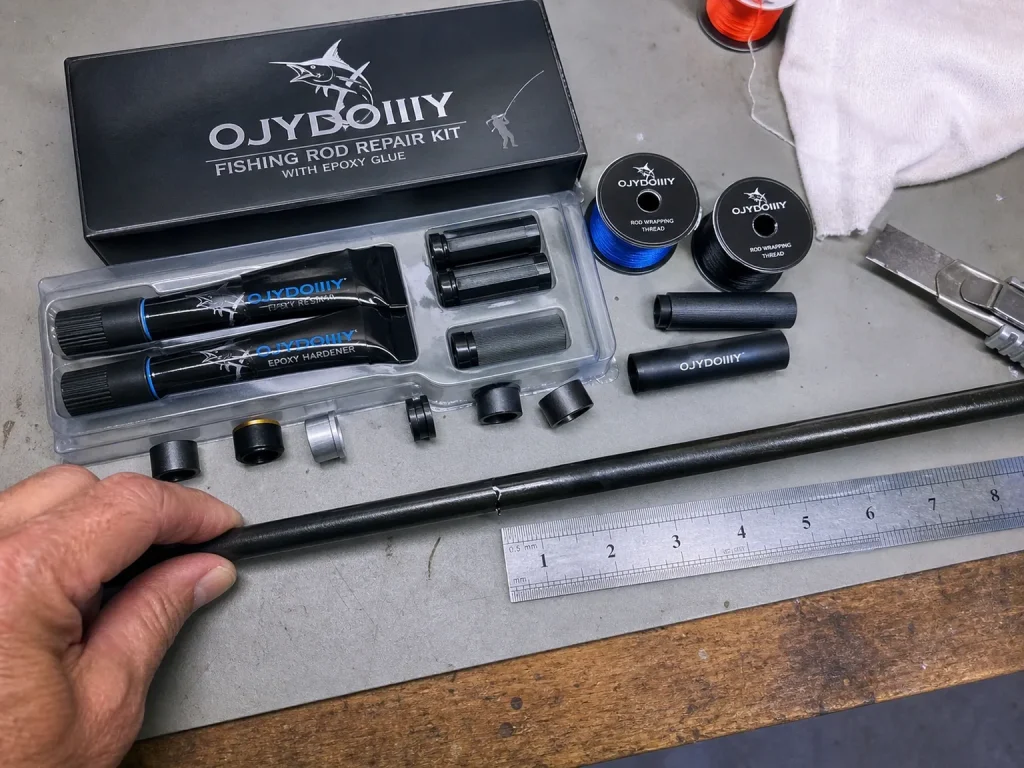
Before you reach for anything clever, run the check every angler half-does and skips the important half of. Close your eyes and draw the blank slowly through a loosely closed fist, tip to butt. Your fingertips catch a raised lip or a rough patch that your eyes slide right over, and a hairline you can snag a fingernail on is one your eyes will argue about for ten minutes. Understanding what the blank is made of helps here, so it’s worth knowing how a rod blank is built in the first place before you decide what looks wrong.
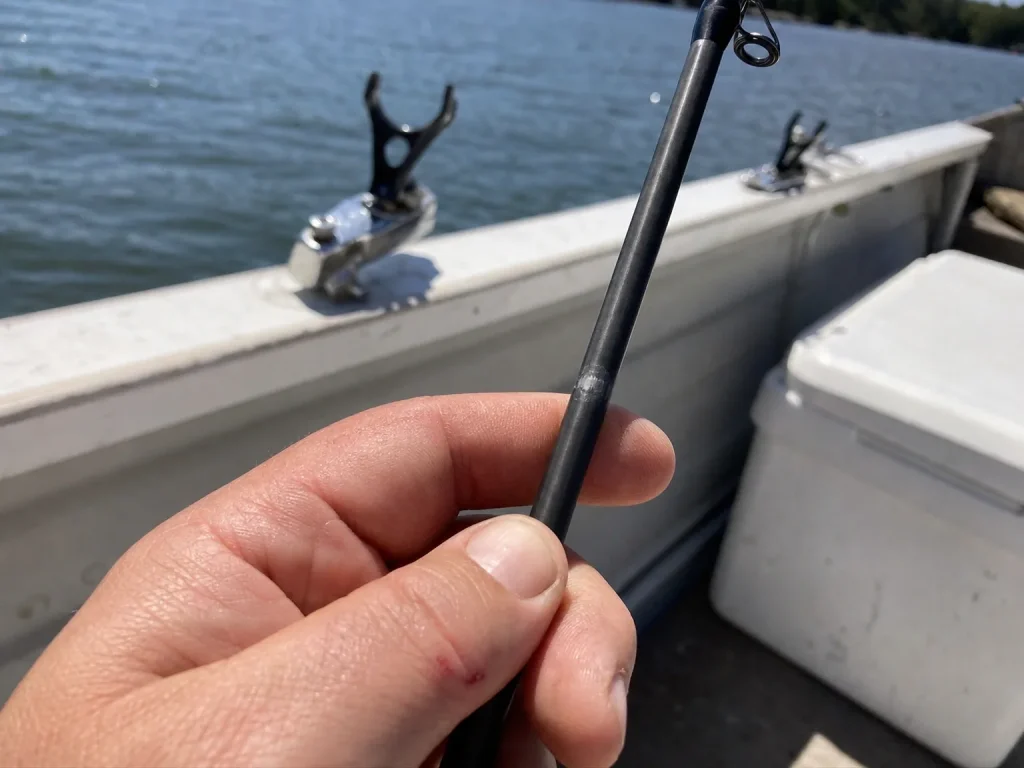
Then look, but look in raking light instead of flat overhead light. Turn the blank in your hands rather than staring at a fixed side. A crack on the underside hides completely from a rod lying in a holder, so you have to rotate the whole circumference to find it, watching for a fine spider-web crack that only shows at an angle. This is a visual inspection, and it’s the cheapest one you’ll run, but most people rush it.
Here’s where everyone goes wrong. A scuff or scratch gets written off as cosmetic, when a whitened patch or a flat spot under that scuff is fractured fiber, not surface wear. Beginners look for a full break; veterans look for the stuff that never breaks the surface. The graphite blank telegraphs trouble in small ways long before it snaps, and this first pass is about training your hands to notice.
Do the fingertip sweep before you clean the rod, not after. A film of dried salt or grime actually catches on a raised crack edge and helps you feel it. A freshly wiped blank can hide the same lip your dirty thumb would have snagged.
The Slow Bend Test (where a flat spot shows itself)
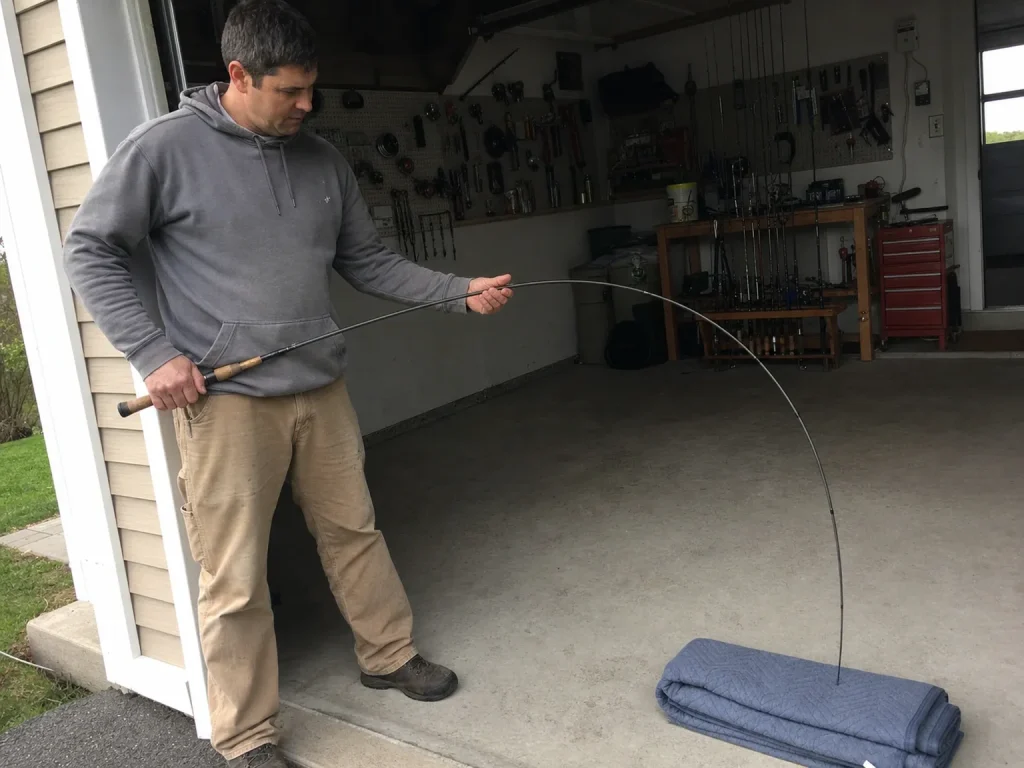
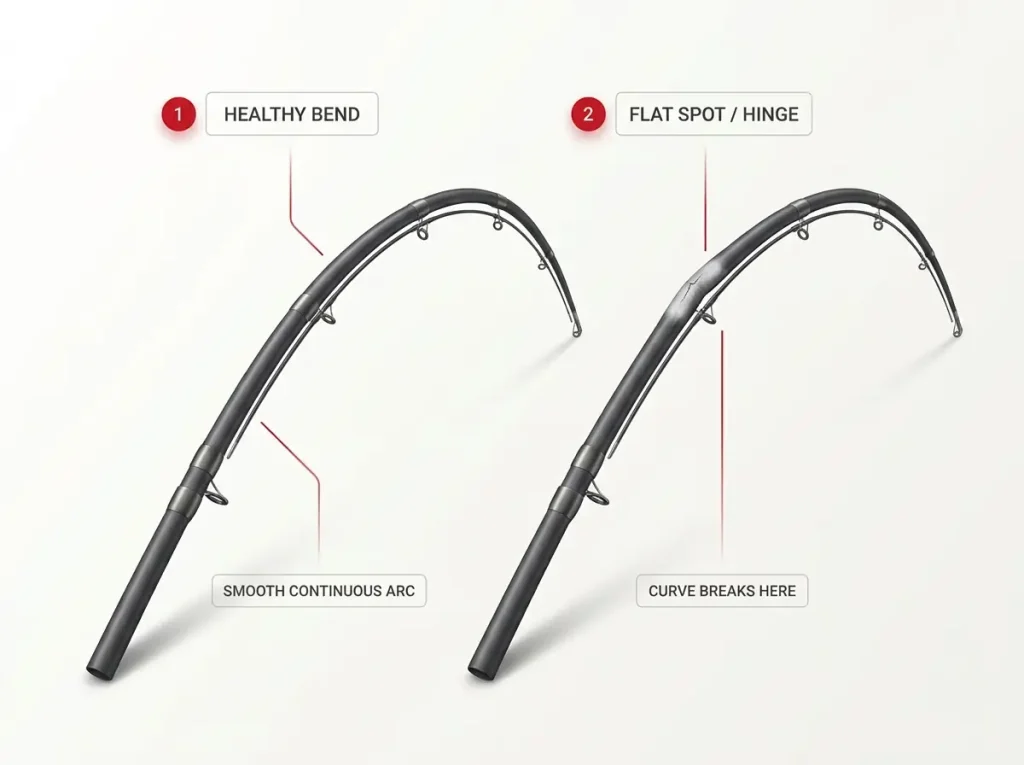
This isn’t the parking-lot rod-shop wiggle. Load the rod into a smooth, even arc against a soft weight or a helper’s hand, tip toward the floor, and watch the curve. A healthy blank bends in one continuous parabola. A compromised zone bends disproportionately, either flattening out or hinging sharply where the arc should stay smooth. That’s the spot you’re hunting for.
The flex test works because damaged hoop fibers lose stiffness locally, so the blank gives up too much bend in one place. Rod anglers call that a hot spot, a flat or soft section that flexes more than the rest of the blank. Once you’ve felt one, you never forget the way the curve breaks. It helps to know where the rod is designed to bend so you can tell a normal action from an abnormal hinge.
One warning: never bend the rod past its designed curve to “test” it. Load it into a working arc, not a panic arc. Overload the tip section near vertical and you can create the exact failure you’re trying to find, which is the same high-sticking geometry that snaps rods on the water.
The Light-Reflection Test (the check nobody teaches)
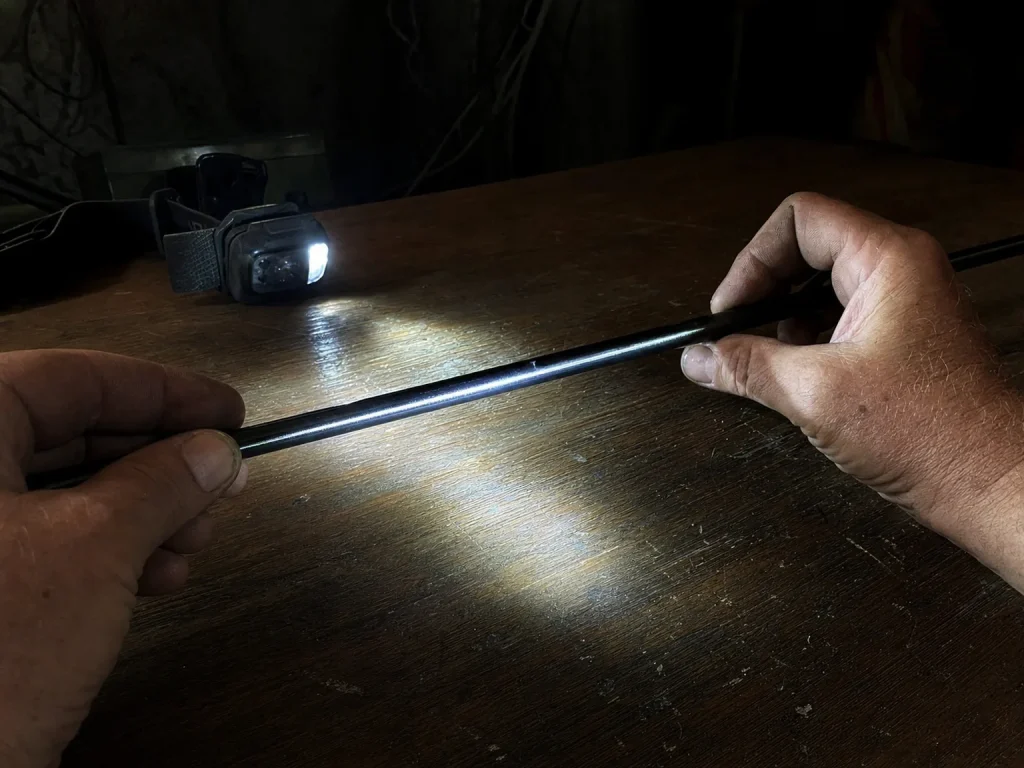
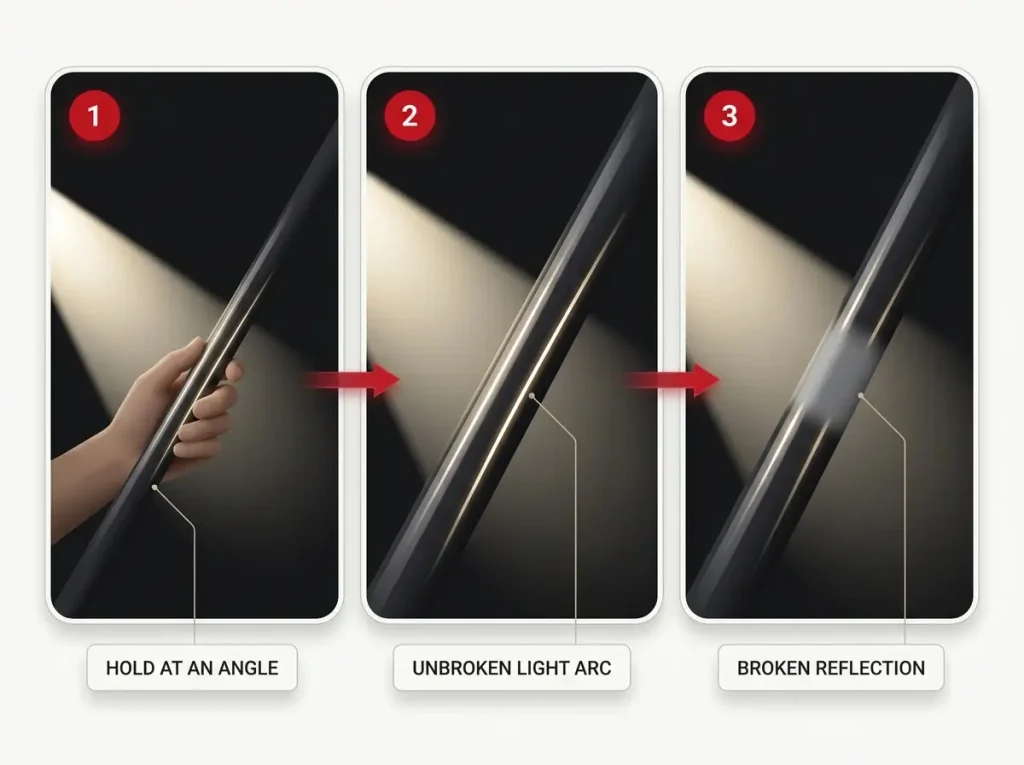
This is the one no competing guide will show you, and it’s the single most useful check in this article. Cut the room light, hold the blank at about 45 degrees to a focused beam, and rotate it slowly through a three-inch segment. Watch the reflected highlight travel along the finish as one unbroken arc. Where the finish is intact, that highlight glides smoothly. Over a flat spot or a bruised zone, the arc breaks into a matte or dull patch, and that interruption is the tell.
The reason it works is simple physics. A crack or a delamination just under the finish changes how the surface sits, so light no longer reflects in a continuous line. Your fingers can miss that flat spot and the tap can sound ambiguous, but the eye catches a broken reflection instantly once the room is dark enough. Do it in a genuinely dark space, because ambient light washes out the exact interruption you’re looking for.
A hands-free light makes this far easier, since you want both hands free to rotate the blank while you watch the arc. The Black Diamond Spot 400-R Headlamp does the job well: a dimmable, focused 400-lumen spot is ideal for the darkened-garage check, and clamping it on a bench or your forehead beats juggling a flashlight in your teeth. If you’d rather spend less, the Petzl Tikkina is a budget-friendly option that throws a clean enough beam for the same test. Either one works, and any focused light you already own will get you started.
Matte-finish blanks don’t throw a clean reflection, so the light test is weak on them. If your rod has a satin or matte coat, skip straight to the loupe check for that section. The reflection trick is built for gloss.
The Coin Tap Test (listen for the dead thud)

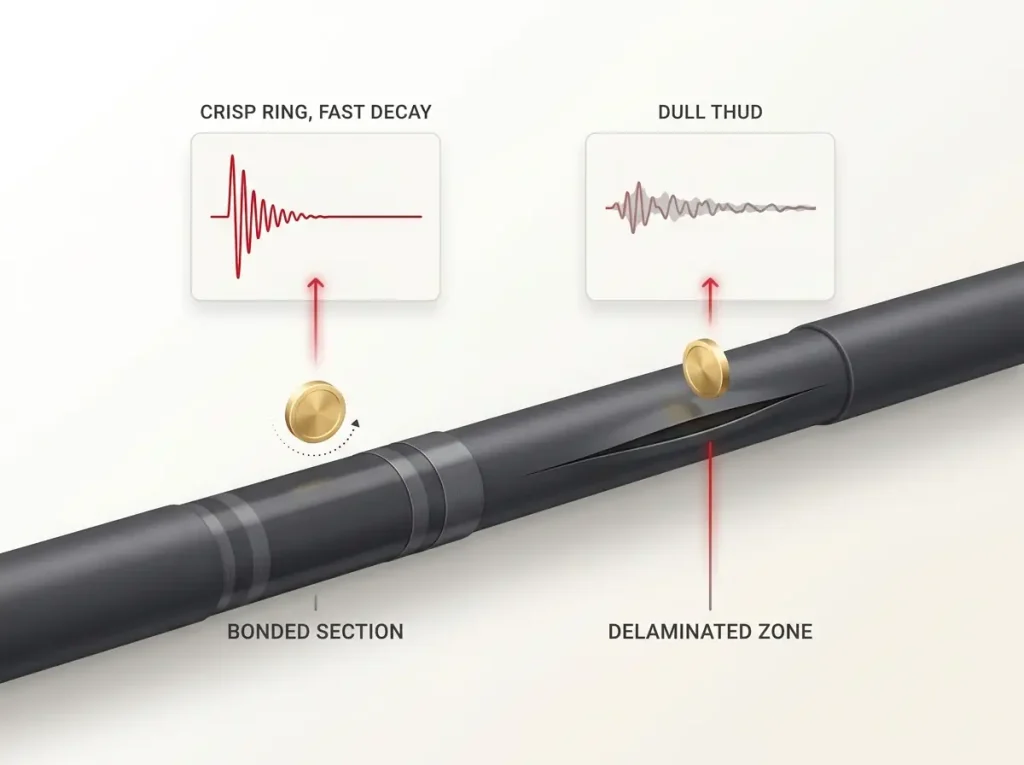
Now you use your ears. Tap along the blank every couple of inches with a coin or your fingernail, working from butt to tip. A healthy composite rings clean and high and decays fast. A delaminated zone decouples from the surrounding material and dies into a dull, dead thud. That change in sound is the whole test, and once you’ve heard the difference it’s hard to un-hear.
This isn’t angler folklore. It’s the exact acoustic tap test used to inspect composite aircraft structures, the same tap-test method the FAA requires for inspecting composite aircraft structures with a coin or a small hammer against a known-good reference area. The physics that catches a delaminated wing spar on an airliner catches a delaminated fishing rod for the price of a coin. A bonded blank and a cracked one really do sound different, because sound travels differently through material that’s still one piece versus material that’s separated.
The community name for the bad sound is the dead thud, the opposite of a clean ringing tap. Tap a known-good rod of the same material first so your ear has a control reference before you judge the suspect blank. And here’s the flat rule: if one spot sounds dead, treat the rod as compromised until the loupe or load test says otherwise. Don’t fish it on hope.
Put a Loupe on It (confirm the whitening)
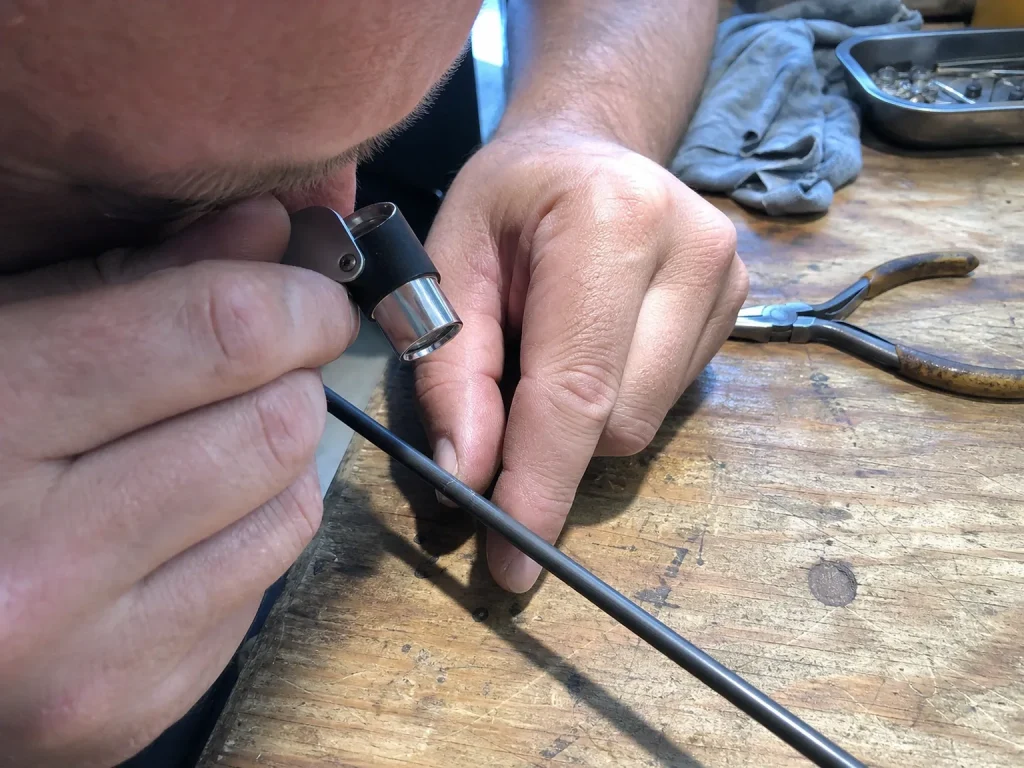
The unaided eye argues with you. A jeweler’s loupe ends the argument. At 10x to 30x magnification, you can see microcracks and fiber whitening that are invisible from arm’s length, and a whitened or opaque patch with protruding fiber ends is the clear signature of a stressed or fractured zone. This is your confirmation step, the one that settles what the flex, light, and tap tests only suggested.
A GemOro Jewelers Loupe 10x Magnifier is the tool most rod builders keep in the drawer for exactly this. It’s a plain optical Hastings triplet with no battery and no LED to die on you, it’s budget-friendly, and it holds focus steadier over a curved blank than a phone lens does. A phone macro works in a pinch, but a real loupe is easier to control on a round surface. Hold it over any spot the tap or light test already flagged.
What you’re confirming is damage, not decoration. Whitening under magnification is fractured resin and carbon fiber, the same failure the material shows when graphite fibers whiten when they fracture, and it is not a cosmetic finish flaw. Don’t talk yourself out of what you’re plainly seeing. If the fibers look white and lifted under 10x, that section is done arguing with you.
The Static Load Test (the pass/fail you can trust)
“It survived a big fish last week” proves nothing. A sound blank can dead-lift 20 to 30 pounds of static load, but once surface fibers are fractured or bruised from an impact, the blank loses tensile strength right at that spot and can fail under as little as half a pound, a catastrophic failure with no warning. The failure threshold doesn’t drop gradually as the rod ages. It collapses at the exact spot that’s hurt, which is why a rod can feel strong everywhere except the one place that matters.
A static load test turns that into a clean pass or fail. Hang a measured weight off the tip, well within the rod’s line rating, load it slowly, and watch the mid-section while you listen. A KastKing WideView Floating Waterproof Digital Fish Scale makes this easy: loop it over the blank near the tip, hang your weight, and the tare function plus the clear readout give you a repeatable number instead of a guess. It floats if it hits the water, which is a nice bonus when you’re doing this off a dock. Any reliable hanging scale works, but you want a readout you can trust.
Load to a fraction of the rod’s rated line class, not to failure. You’re diagnosing the rod, not breaking it. This is the field version of the static load testing rod builders use on a raw blank before they ever wrap a guide, scaled down to your driveway. Watch for a soft spot in the bend and listen for a creak. A blank that creaks or pops under load is a talking rod, giving you an audible early warning, and you should never ignore it.
Why Blanks Actually Fail (so you know what you’re looking at)
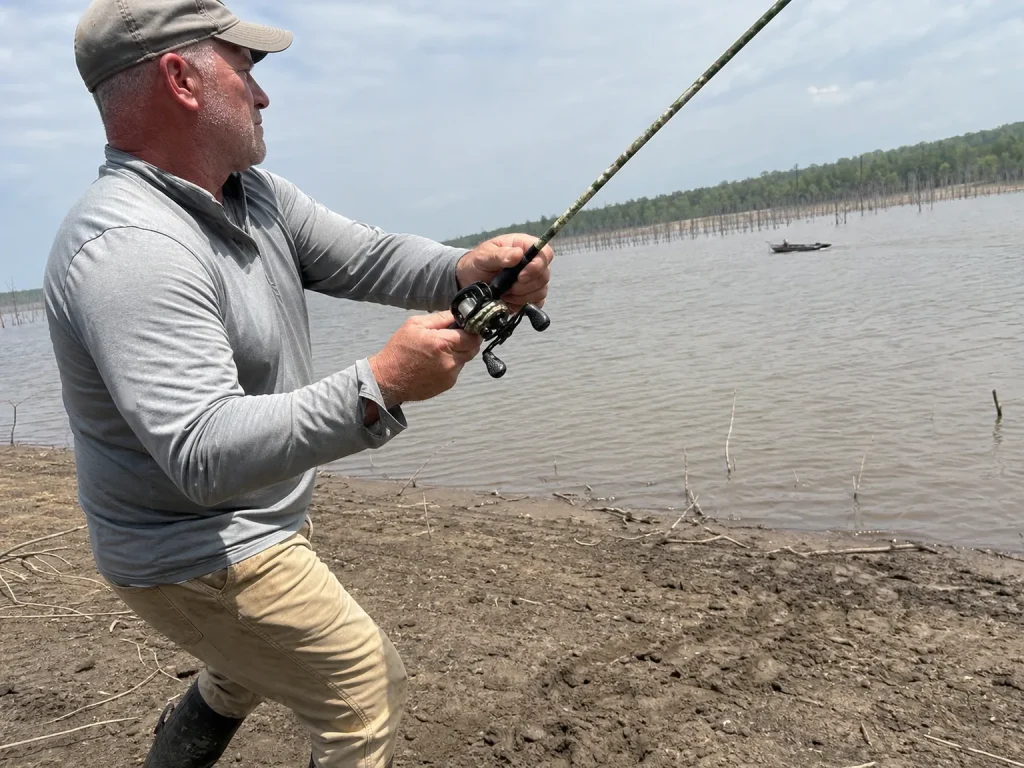
Most anglers blame the rod. The numbers blame the angler. Roughly 95 to 98 percent of blank failures trace to user misuse, meaning high-sticking, over-tightened drag, and impact, versus about 2 percent that are true manufacturing defects. Knowing the real failure modes tells you both what to look for and, honestly, what you did to get here.
A genuine factory defect shows up almost immediately. About 98 percent of defect-driven breaks happen on the first outing or under factory load-testing, not months later. So a rod that fished fine all season and only now feels off is carrying accumulated damage, not a hidden flaw from the factory. That distinction matters when you’re deciding whether to file a warranty claim, and it’s worth understanding how a warranty tech reads a break and what quietly voids coverage before you make that call.
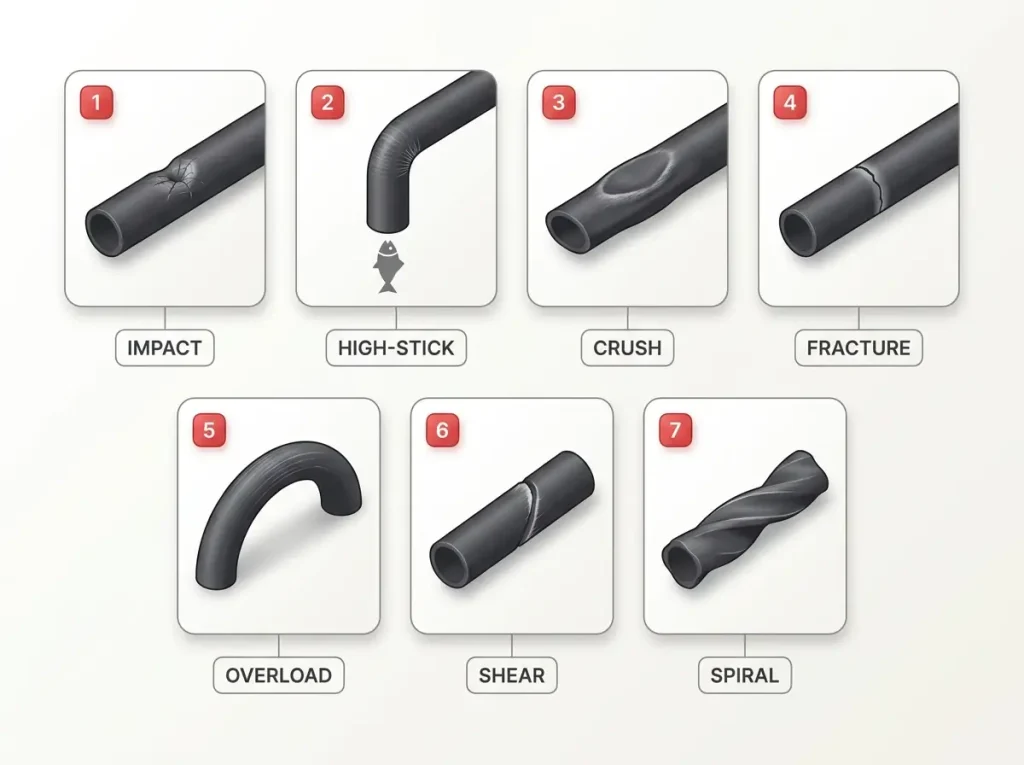
The named failure modes each leave a different signature: impact, high-stick, crush, fracture, overload, shear, and spiral, and they show up on any blank whether it’s graphite or fiberglass. Delamination is the one the tap and light tests exist to catch, because it hides under the finish, and it’s the sounding principle codified in standards for measuring delamination that makes the coin test work at all. High-sticking, loading the rod near-vertical past its bend curve by lifting a fish straight up, is the most commonly cited mechanical cause of the lot.
The tip you bang on a boat gunwale is the crack you find three trips later. Impact damage rarely breaks the same day. It seeds a bruise that opens up under the next solid hookset, so inspect any rod that took a knock, even if it looked fine when it happened.
Ferrule, Guides and Reel Seat (the wear points people skip)
Everyone obsesses over the blank and never checks the ferrule that’s actually about to let go. On a multi-piece rod, the ferrule joint is a top failure point. A loose or poorly seated ferrule high-sticks the joint under load and cracks it, so check for seating play and look for hairlines right at the collar where the sections meet. A ferrule that wiggles when seated is telling you something.
The guides deserve the same 30 seconds. Twist a cotton ball or a fanned Q-tip fiber around the inside of every guide ring and the tip-top. One snagged strand means a cracked ceramic insert, and a cracked insert shreds your line long before the blank is ever in question. Guide inserts vary in how they wear, and cracked ceramic guide inserts are one of the quieter ways a good rod ruins a good fish.
Don’t skip the reel seat and grip, either. Check the reel seat for play and the cork grip for a spun or cracked section, because a wobbling seat changes how load transfers into the blank. These are the wear points people skip while they fuss over the blank, and knowing how a ferrule joint is supposed to seat tells you fast whether yours is riding home the way it should.
Repair or Retire (and the safety reason to stop)
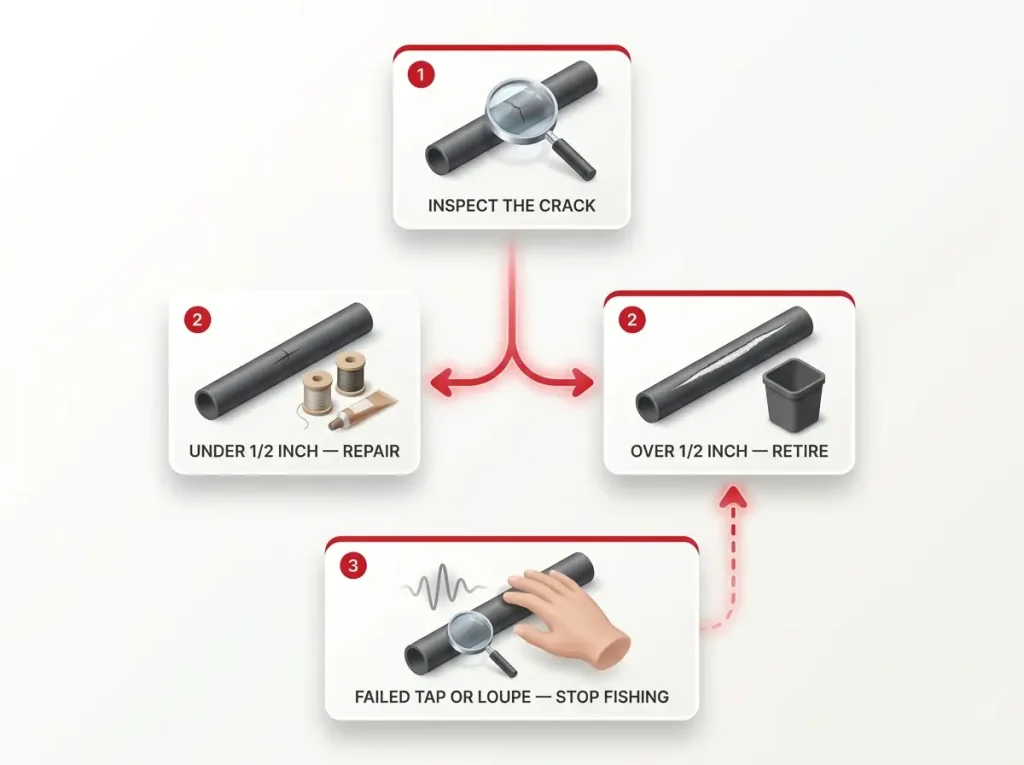
Here’s the honest dividing line most repair articles skip, and the reason it isn’t just about your wallet. A blank crack under about half an inch is often repairable with a sleeve or a wrap-and-epoxy fix. Damage extending more than half an inch up the blank generally can’t be salvaged. So measure the crack before you reach for either the epoxy or the trash can, because that half-inch mark is the whole decision.
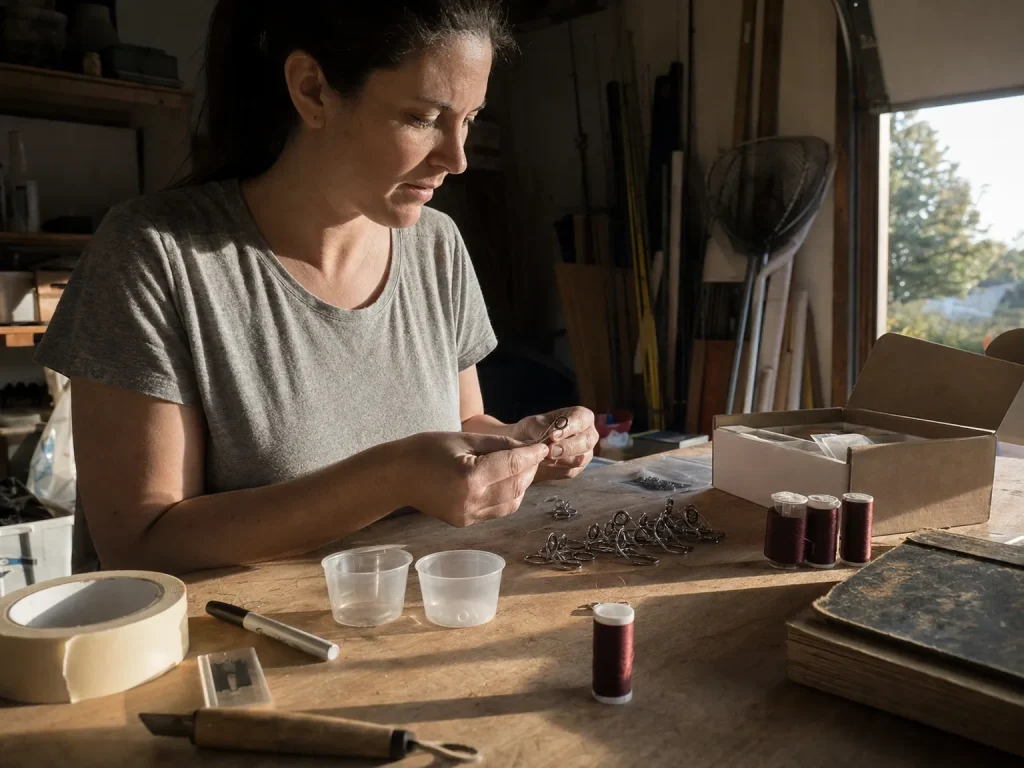
For a repairable crack, a OJYDOIIIY Fishing Rod Repair Kit with Epoxy Glue covers the parts you need: epoxy, wrapping thread, and sleeve components for a repair that restores structural integrity rather than a field bandage. If it’s a snapped tip specifically rather than a mid-blank crack, the two-minute fix for a snapped rod tip is its own quick job and worth doing right.
Now the part nobody else says out loud. When a delaminated blank finally lets go under load, it can send a broken tip or a graphite shard in a sudden whip-back toward your hand or face. That’s why “it looks fine” isn’t good enough on a blank that failed the tap or loupe test. If the damage runs more than a short section, retire the rod, full stop. A cheap rod isn’t worth a shard to the hand, and the angler who felt a faint pop under a hookset days before the blank finally went will tell you the rod had been talking the whole time.
Conclusion
Run the six checks in order and you take the guesswork out of it: eyes and hands first, then flex, light, tap, loupe, and load. Trust the dead thud and the broken light arc over “it looks fine,” because a blank that fails those tests has already told you the truth. And measure the crack before you decide, because half an inch is the line between a weekend repair and a rod that belongs in the bin.
Ten minutes in the garage beats finding out mid-fight. Before your next trip, run the sweep on your main rod, and do it again on any rod that took a knock this season.
Frequently Asked Questions
01How can you tell a cracked rod blank from a cosmetic scratch?
A scratch stays on the surface; a crack shows whitened or opaque fiber under a 10x loupe and often a dull dead thud when you tap it. If the finish goes matte and breaks the light arc when you rotate it under a beam, it is structural, not cosmetic.
02Is it safe to keep fishing with a cracked rod blank?
No. A blank with fractured fibers can hold normal load for a while and then fail suddenly under a hookset, whipping a broken tip or graphite shard back toward you. If it failed the tap or loupe test, stop fishing it.
03What causes a fishing rod blank to crack?
Around 95 to 98 percent of failures come from misuse: high-sticking, over-tightened drag, and impacts like banging the tip on a gunwale. True manufacturing defects are rare and almost always fail on the first outing. Storage heat and UV exposure add up over time too.
04Can a cracked rod blank be repaired, or does it need replacing?
A crack under about half an inch can often be fixed with a sleeve-and-epoxy repair. Damage running more than half an inch up the blank, or a delaminated zone, generally cannot be trusted, so retire it rather than risk a failure under load.
05How do you test a rod for hidden damage you cannot see?
Run the escalating checklist: a slow bend for a flat spot, a light-reflection rotation for a broken arc, a coin tap for a dead thud, a 10x loupe for fiber whitening, and a static load test with a hanging weight. Any single fail is enough to pull the rod.
Risk Disclaimer: Fishing, boating, and all related outdoor activities involve inherent risks that
can lead to injury. The information provided on Master Fishing Mag is for educational and informational purposes
only. While we strive for accuracy, the information, techniques, and advice on gear and safety are not a substitute
for your own best judgment, local knowledge, and adherence to official regulations. Fishing regulations, including
seasons, size limits, and species restrictions, change frequently and vary by location. Always consult the latest
official regulations from your local fish and wildlife agency before heading out. Proper handling of hooks, knives,
and other sharp equipment is essential for safety. Furthermore, be aware of local fish consumption advisories. By
using this website, you agree that you are solely responsible for your own safety and for complying with all
applicable laws. Any reliance you place on our content is strictly at your own risk. Master Fishing Mag and its
authors will not be held liable for any injury, damage, or loss sustained in connection with the use of the
information herein.
Affiliate Disclosure: We are a participant in the Amazon Services LLC Associates Program, an
affiliate advertising program designed to provide a means for us to earn advertising fees by advertising and linking
to Amazon.com. As an Amazon Associate, we earn from qualifying purchases. We also participate in other affiliate
programs and may receive a commission on products purchased through our links, at no extra cost to you. Additional
terms are found in the terms of service.