In this article
A premium cooler and a bargain-bin cooler can hold the same number of quarts, and by noon on a hot ramp one still has ice while the other is a bathtub of warm water. The difference almost never comes down to the badge on the lid. Ask anyone who has watched a gas-station cooler sweat out its ice by lunchtime: ice retention is won at the seal and the wall, not the brand. This guide covers what actually keeps ice, how to size a cooler for your trips, the category picks worth buying, and how to keep your catch cold once it is inside, so a fishing cooler earns its spot alongside the rest of your on-the-water gear. This is the hard-sided side of the conversation; if you want something lighter and packable, a soft-sided cooler bag is its own decision.
Here is the short version by how you fish.
| Category | Pick | Best For |
|---|---|---|
| Best Overall | YETI Tundra 65 | Multi-day boat trips, years of hard use |
| Best Budget | RTIC 45QT Wheeled | Most anglers who want roto value |
| Best Kayak | YETI Roadie 24 | Tight kayak and small-boat decks |
| Best Offshore | Pelican 45QT Elite / Coleman 100QT | Long hauls and big pelagics |
| Boat Features | Engel UC30 | Built-in rod holders on deck |
What Actually Makes a Fishing Cooler Hold Ice
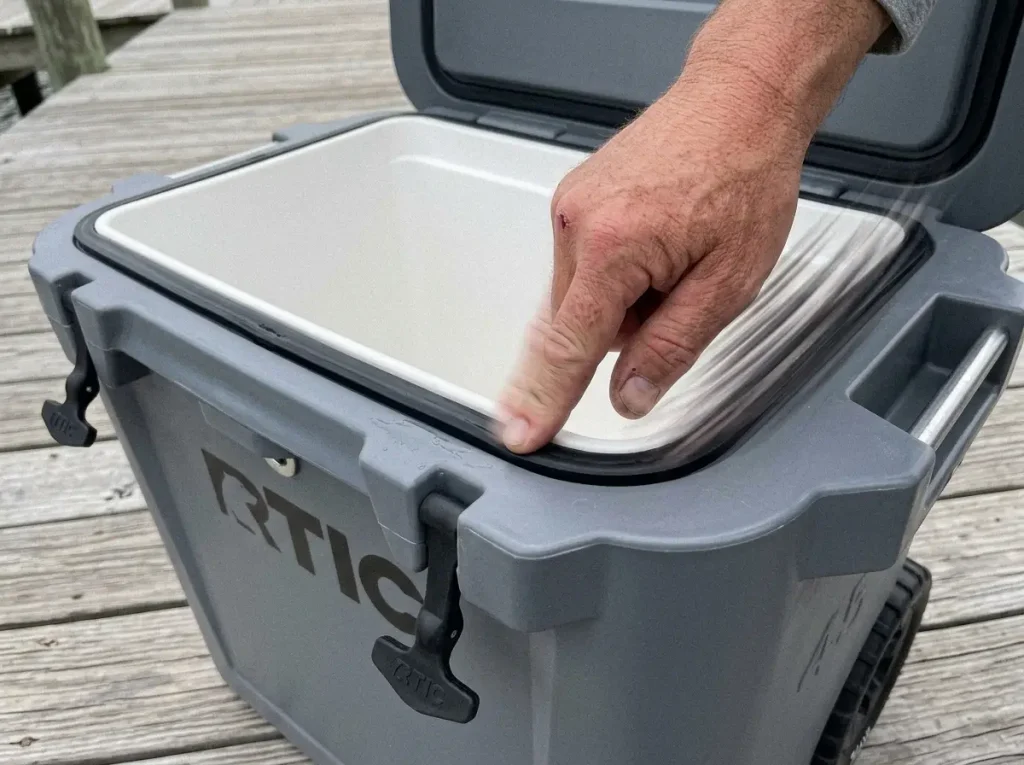
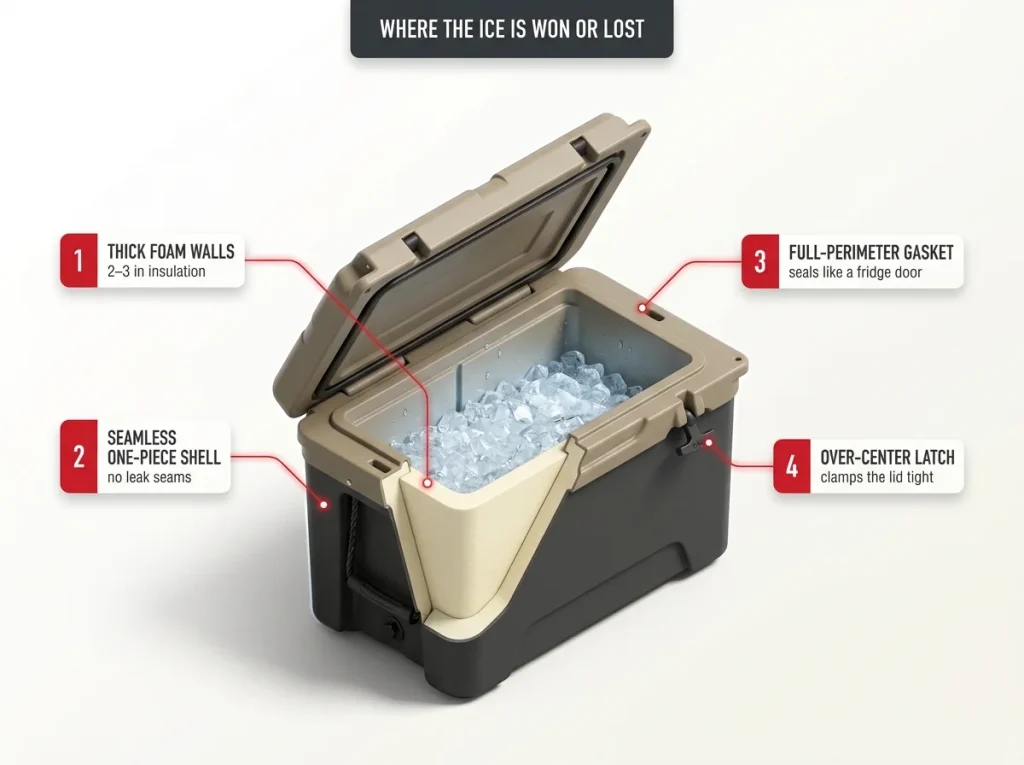
Quit staring at the quart sticker. Press the lid shut and look at where it seals, because that is where the ice is won or lost. Most anglers assume a bigger, heavier box automatically holds ice longer, and that is only half true.
The single biggest reason a premium cooler beats a cheap one is wall thickness, or more precisely insulation thickness. Rotomolded coolers pack two to three inches of closed-cell foam insulation into the walls, while budget injection-molded models often run under an inch. That is not marketing, it is two to three times the insulation standing between your ice and the sun. Rotomolded also means the shell is molded in one piece with no seams, while blow-molded and injection-molded coolers are assembled from panels, and those seam lines are exactly where cold air leaks out fastest.
Foam Walls and Why Thickness Beats Brand
Two coolers can wear different logos and hold ice within an hour of each other if their walls are built the same way. The reverse is also true: a famous badge on a thin-walled box will still lose to a no-name roto with real foam. Judge the wall, not the name.
The Gasket and Latch Where Cheap Coolers Quietly Lose
Here is the part most roundups never explain. A full-perimeter rubber gasket seal runs around the lid of a good cooler and seals it like a refrigerator door, the kind of waterproof seal that keeps warm air out. On most budget coolers that gasket is left off entirely. Even thick walls leak warm air fast if the lid does not seal all the way around, so a cooler can have great foam and still bleed ice through a bad lid.
The latch matters just as much. A loose lid, a weak gasket, or a stretched latching mechanism defeats an otherwise well-insulated shell. A cheap latch that stops clamping tight after one season slowly bleeds ice all season, and it is the same corrosion story that eats cheap fishing pliers at the pivot. When you shop, open and close the lid, feel the gasket compress, and check that the latch pulls the lid down firm.
Done right, a good rotomolded cooler holds ice five to ten days in decent conditions, and some 45-quart roto models have gone a full ten days in testing. That is a multi-day tool, not a one-afternoon box.
Pre-chill the cooler the night before with a sacrificial bag of ice, then dump it and load fresh ice at the ramp. A warm cooler spends your whole first day cooling its own plastic instead of your fish.
Why Cheap Coolers Fail (And When Cheap Is Fine)
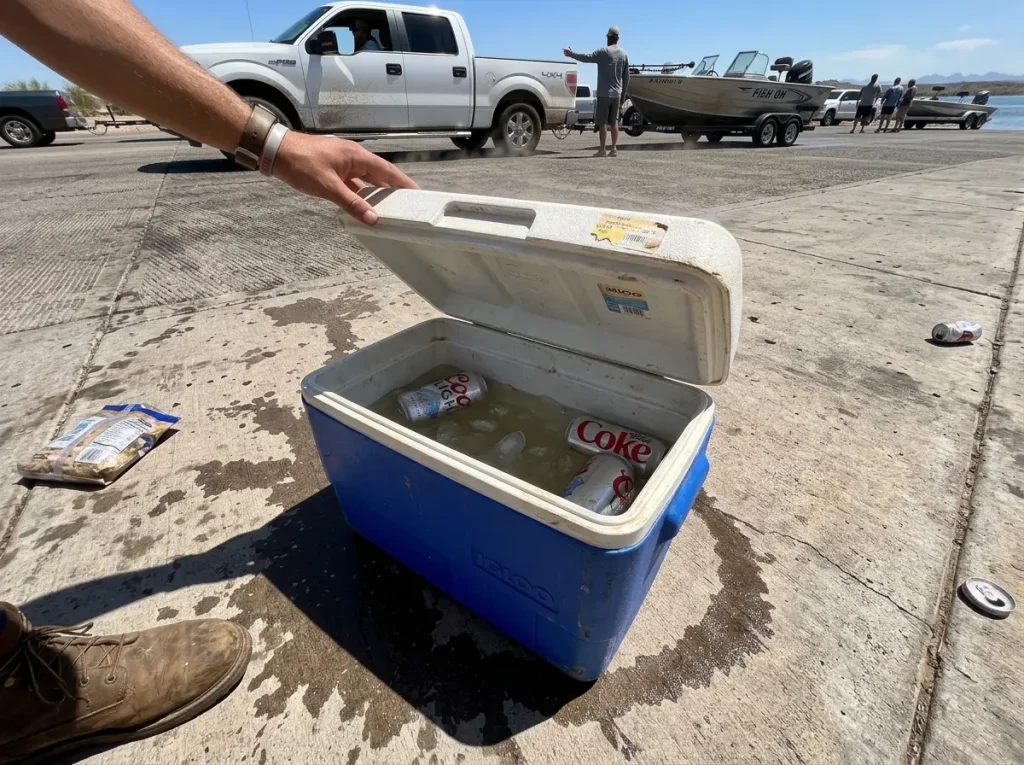
Everyone has owned the cooler that popped a warm-air gap on a hot morning with the ice gone by noon. That failure is real, but so is the opposite mistake: paying roto money for a trip that never needed it.
The numbers make the gap concrete. In field use, a midrange RTIC 20 held ice about 38 hours, while a basic budget Igloo managed around 18 hours before it melted out. That is roughly twice the hold time for a real step up in cost. Whether that trade is worth it depends entirely on your trip.
For a short bank session or an evening of panfish, a basic cooler is fine. You are icing a few fish for a couple of hours, not defending a catch against two days of summer heat. The roto premium pays off on multi-day trips, offshore runs, and brutal southern heat, where the extra hours of ice are the difference between fresh fillets and a soft mess.
There is also a humbling truth the forums repeat: a plethora of RTICs, Yetis, and Colemans all do about the same job once you control for size and seal. Brand hype matters less than the gasket and hinge details, so buy the build, not the sticker.
How to Size a Fishing Cooler for Your Trips
The mistake nearly everyone makes is buying by the quart number alone and forgetting that the box has to hold ice AND fish, not just fish. A cooler crammed full of fish with no room for ice will go soft before you reach the ramp.
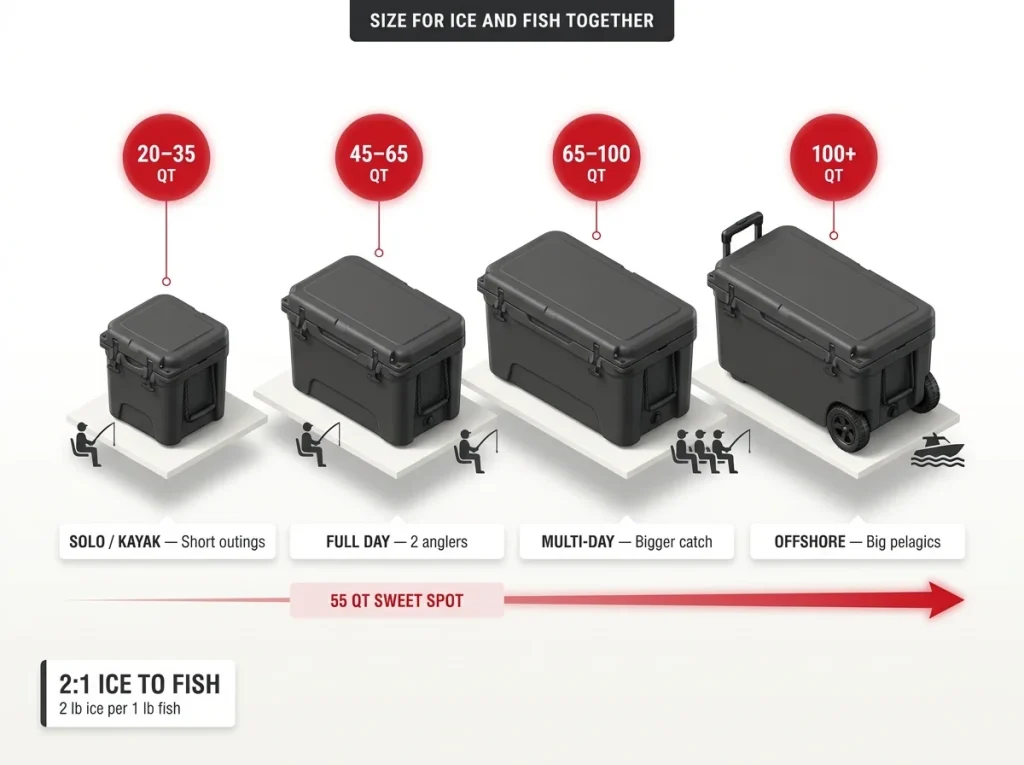
Start with the ratio. Plan on roughly two pounds of ice for every pound of fish with straight ice, then size up from there. As a rough map: 20 to 35 quarts covers solo trips, kayaks, and short outings; 45 to 65 quarts fits a day on the boat with a couple of anglers; and 100-plus quarts is offshore, multi-day, and big pelagic territory. Bigger is not free, though. A loaded 100-quart box eats deck space and becomes a two-person lift, which is why wheels start to matter once you pass about 45 quarts.
For the angler who wants one cooler to handle most of the year, the mid-capacity value slot around 55 quarts is the sweet spot.
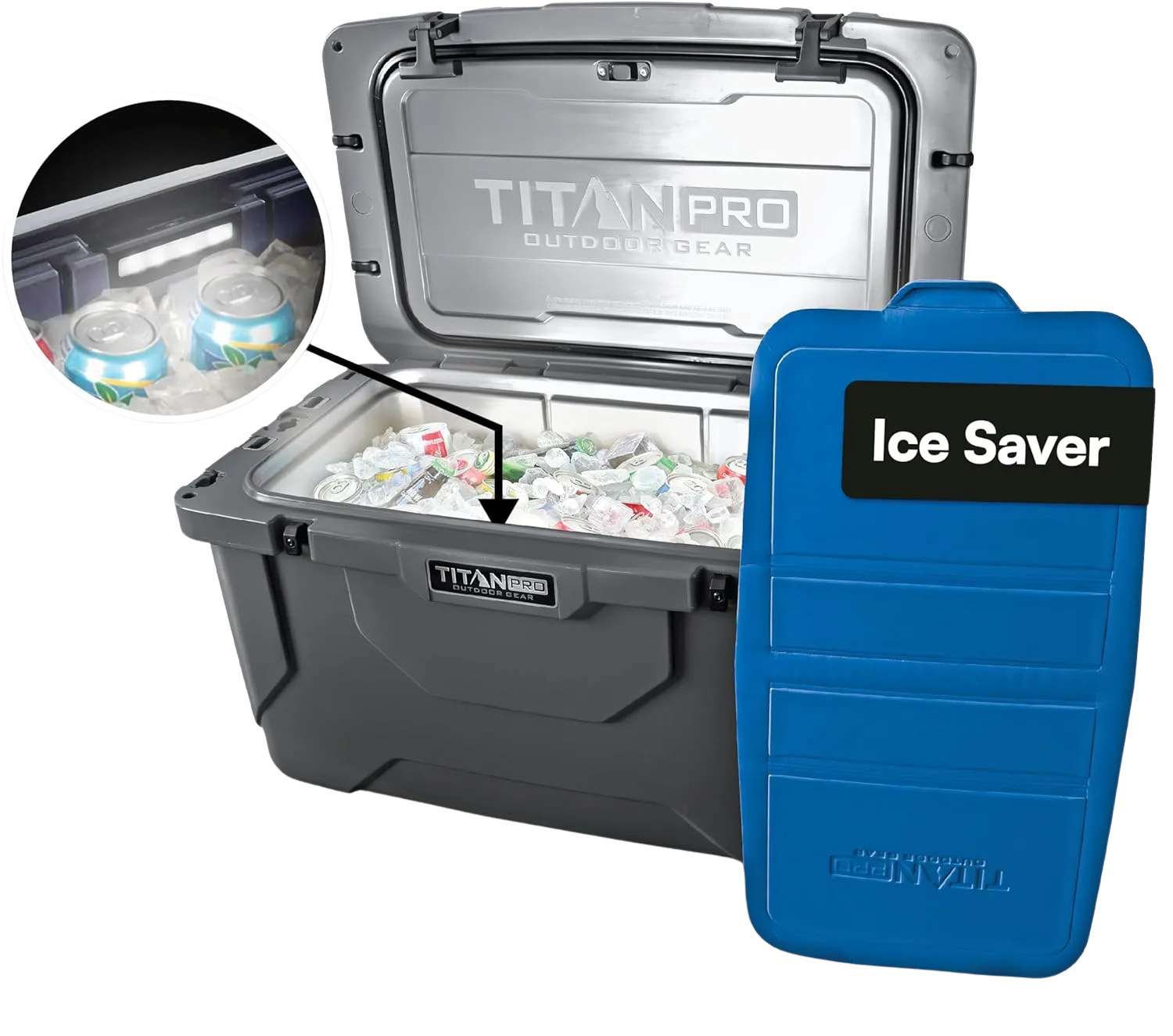
The Titan Pro 55Q lands in that middle slot without asking you to give up roto construction. If you fish a mix of solo mornings and full boat days and only want to own one cooler, this is the size that flexes both ways. Step down to 35 quarts and you will wish you had room on a good day; step up to 100 and you are hauling empty space most of the time.
Best Overall: YETI Tundra 65
The pick top competitors all lead with, and it earns the spot on gasket and latch quality rather than the logo.
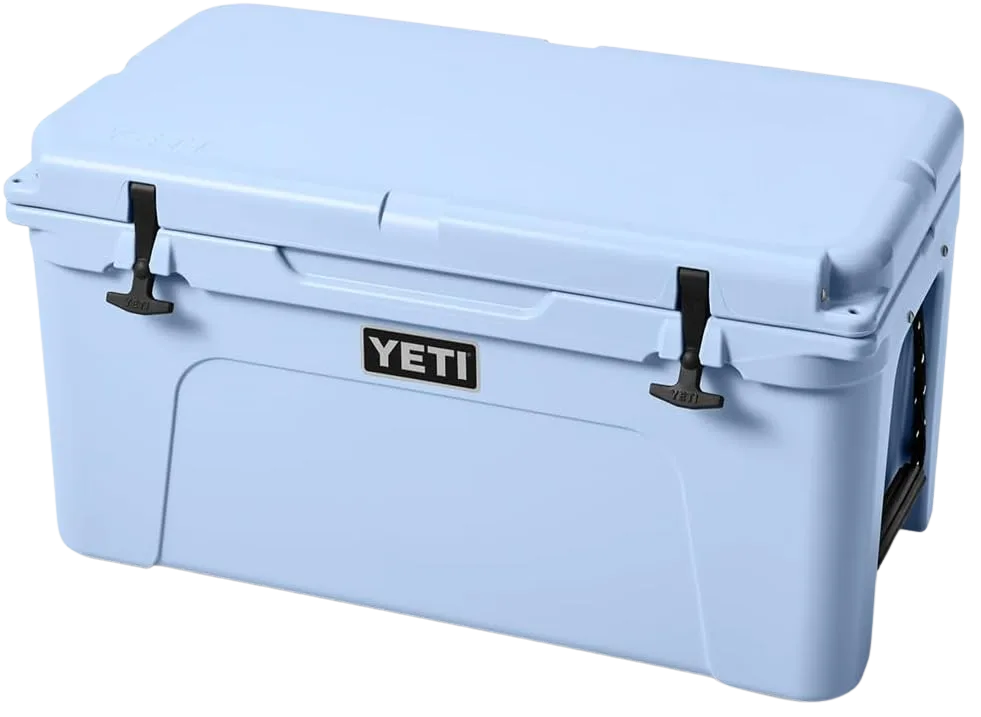
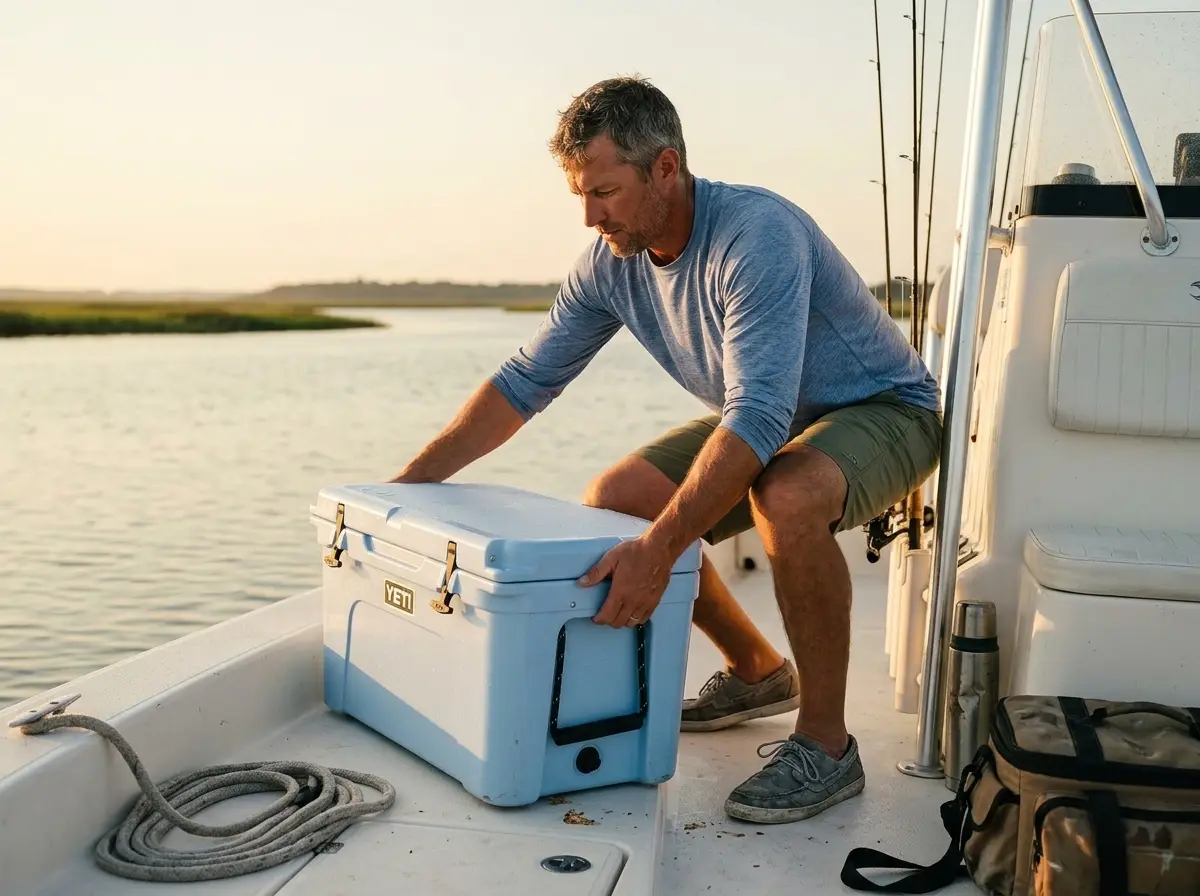
The Tundra 65 is the box to buy when you want one bomber cooler for years of boat trips and you are tired of replacing lids and latches. Its edge is not a secret insulation trick that RTIC lacks. It is the sum of a thick roto shell, a gasket that seals, and hardware, from the rope handles to the T-Rex latch, that survives seasons of abuse. Honest caveat: you are paying a premium for the name and the resale value as much as the performance, so if budget is tight, the value picks below give up very little.
Best Budget: RTIC 45QT Wheeled
The genuine value play, not a knockoff. Forum anglers keep putting RTIC’s real-world hold time in the same conversation as coolers that cost far more.
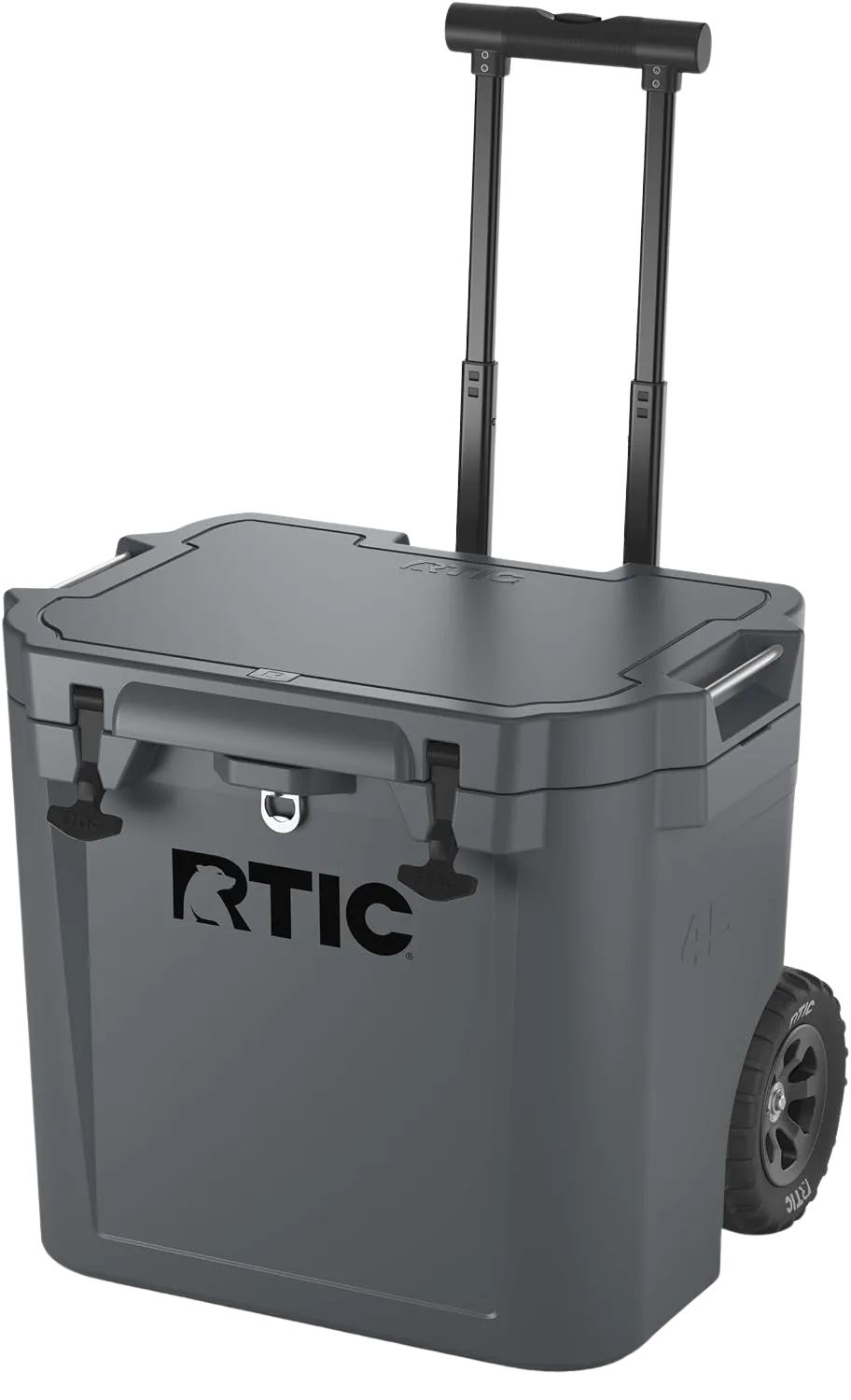
For most anglers, this is the smart-money cooler. You get the seamless roto shell and a gasket that seals, plus wheels that turn the end-of-day haul from a two-person lift into a one-hand pull. If you want to spend even less on a smaller box, a compact Igloo BMX covers short trips, but you give up hold time to get there. The RTIC is where value stops costing you performance.
Best for Kayak and Small Boat
On a kayak or small skiff you are fighting for every inch of deck. The right kayak cooler fits behind the seat or in the tankwell and still holds a day’s catch, and the best of them double as a casting seat.
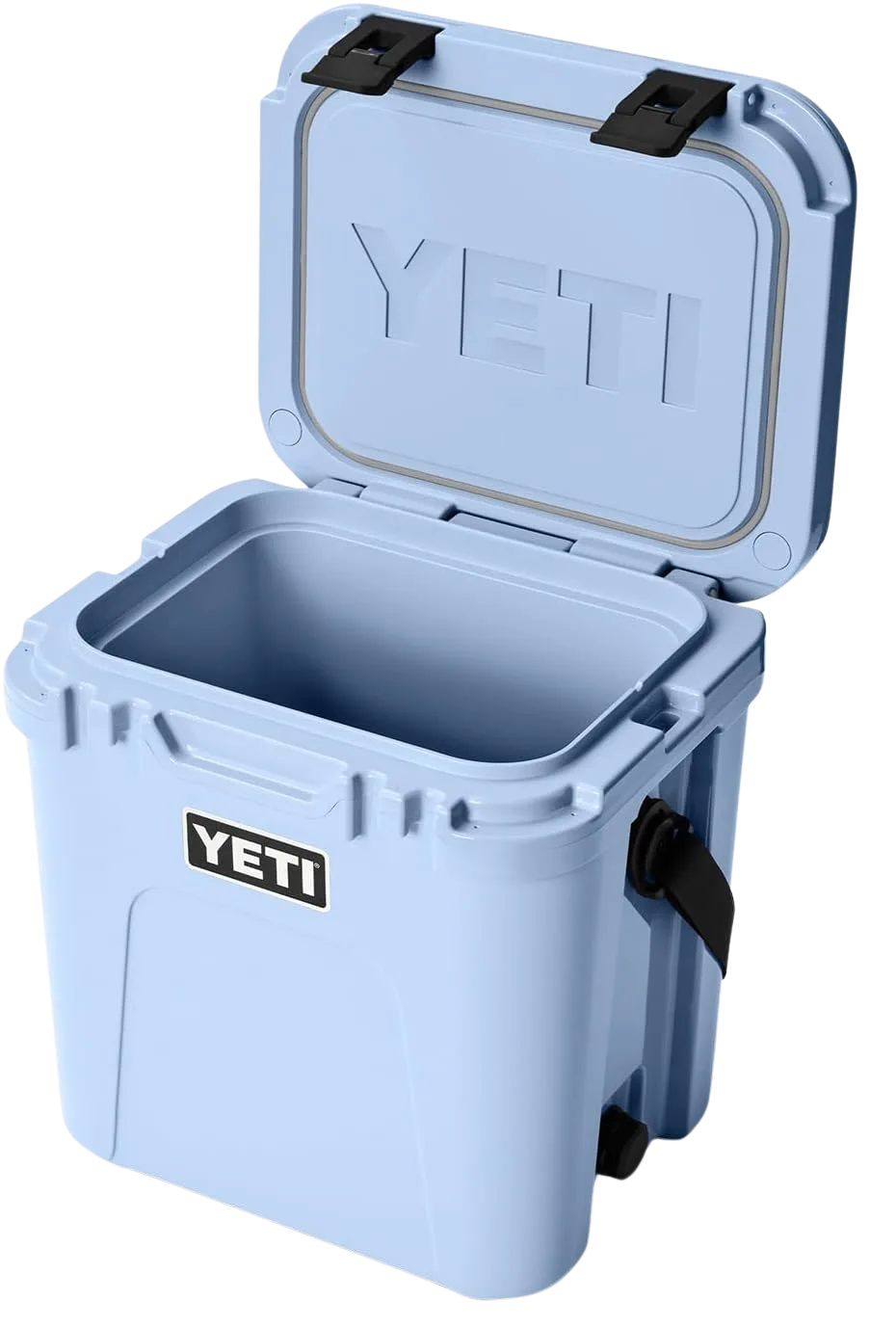
Best Compact: YETI Roadie 24
Compact Value: Engel 25 High Performance
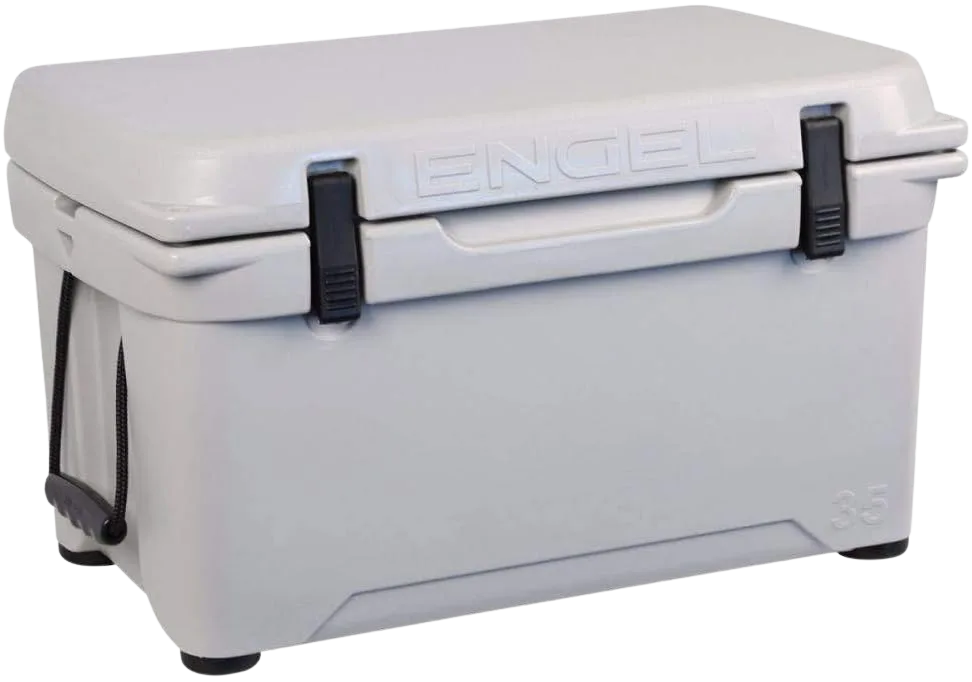
Both boxes fit the kayak brief: small footprint, real seal, and a flat lid you can sit on to cast. The Roadie 24 is the premium compact; the Engel 25 is the value compact that gives up very little. Whichever you pick, strap it down. On a kayak, securing gear is part of staying safe on the water, and a loose cooler is the first thing overboard in chop. If you plan to sit on it all day, a proper casting-seat setup still beats a bare lid for your back.
Run a cam strap through the kayak’s rear tie-down pads and over the cooler before you launch, not after you hook a fish. The moment you are fighting a good one is exactly when an unsecured box decides to slide.
Best for Offshore and Multi-Day Trips
Offshore and long weekends are where the cheap box dies and where wheels stop being a luxury. You are moving a hundred quarts of ice, fish, and drinks up a ramp at the end of a long day, and you want capacity that keeps a big catch cold overnight.
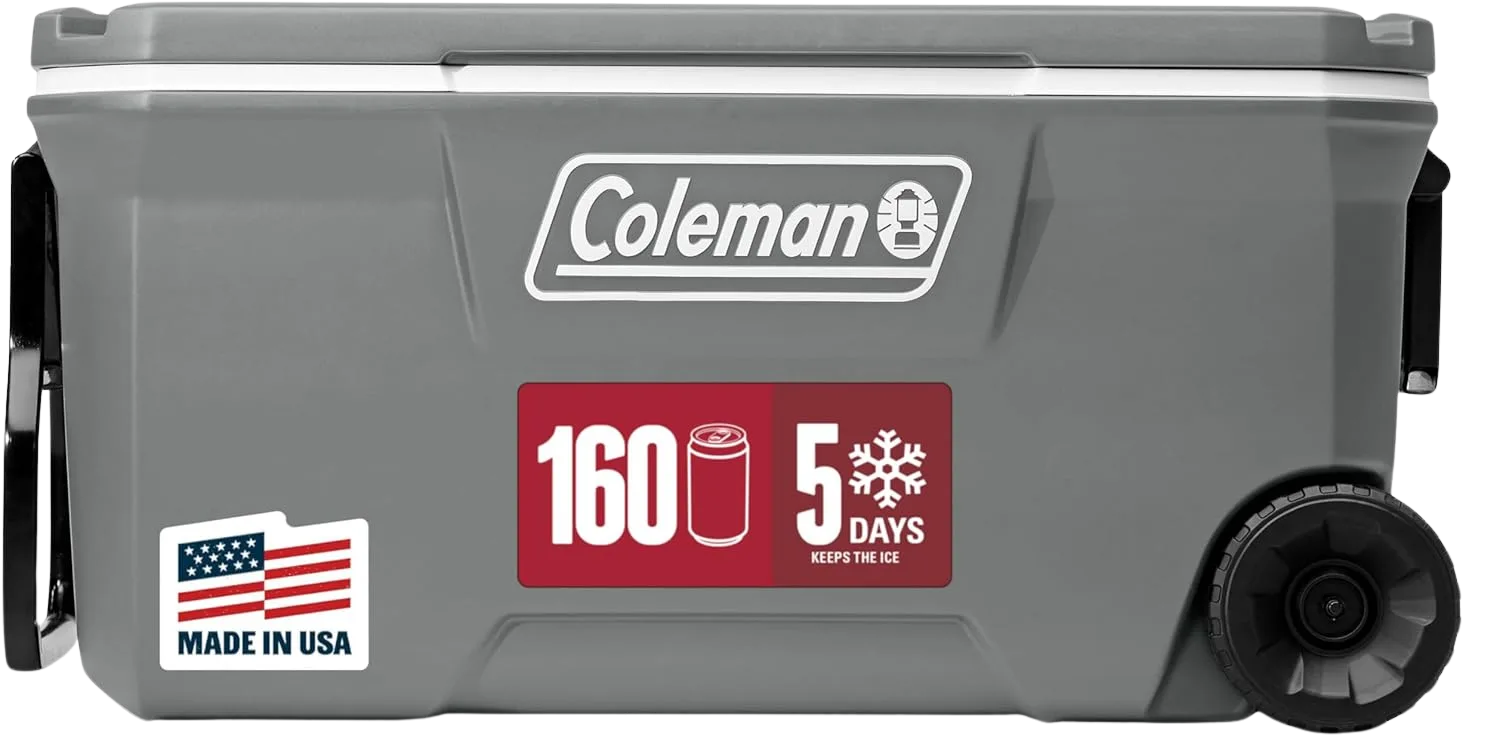
Budget Offshore: Coleman Classic 100-Quart Wheeled
Premium Wheeled: Pelican 45QT Elite
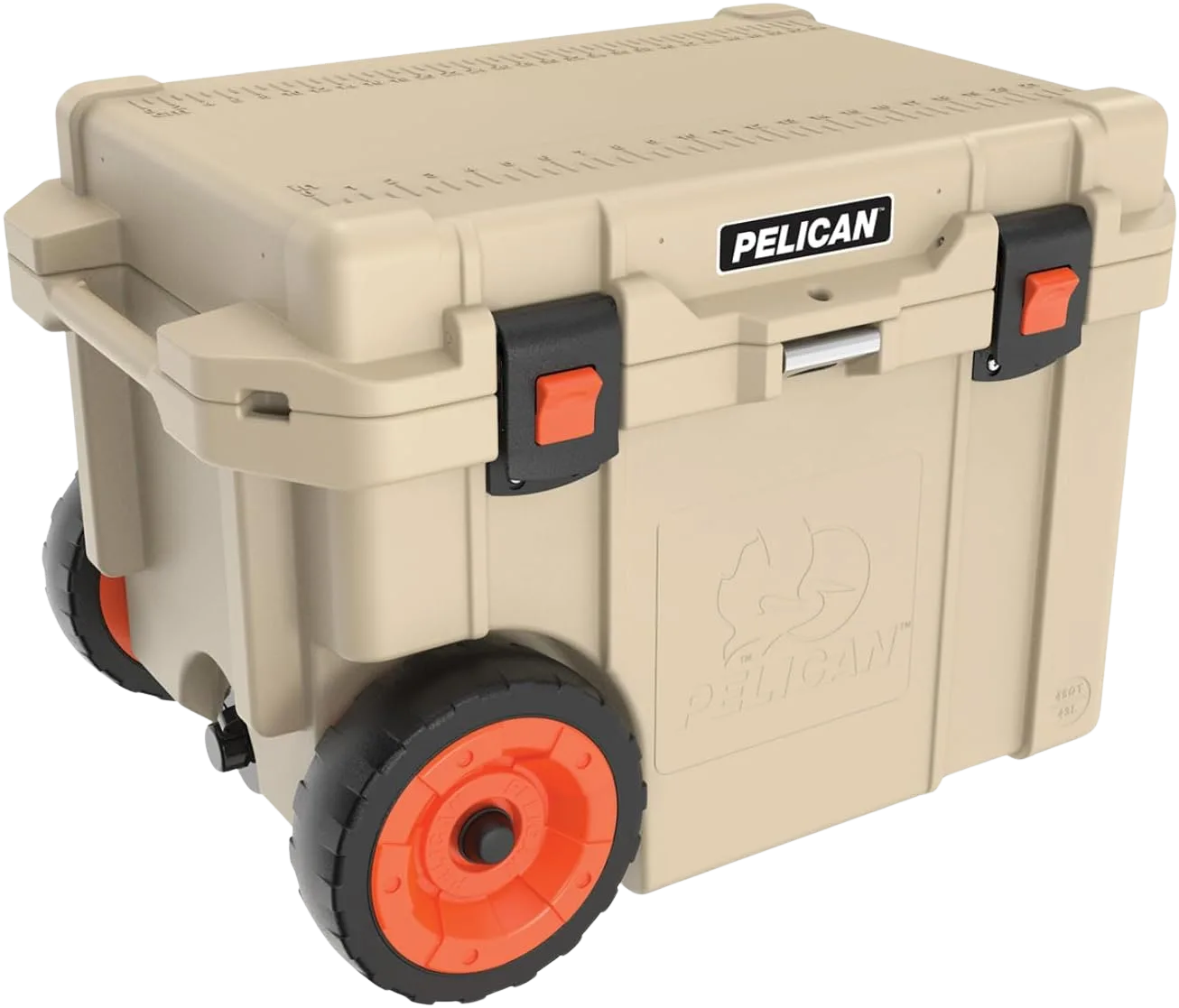
Pick by budget and how far you have to move it. The Coleman 100-quart gives you raw volume and honest ice life for the least money, which is why so many boats keep one aboard as the big-fish box. The Pelican 45QT Elite trades some capacity for premium hold time and wheels, and it is the one to buy if you want Yeti-tier retention without breaking your back at the ramp. Either way, wheels are not optional at this size. A loaded 100-quart cooler without them is a two-person job every single time, and a good telescoping handle turns the ramp haul into a one-person pull.
Boat-Specific Features Worth Paying For
A boat cooler does more than hold ice. It is a casting platform, a rod stager, and a bait station, and the features that matter are the ones you only miss when they are not there.
Built-in rod holders turn the cooler into a staging station while you re-rig, and the Engel UC30 is the pick that builds them right in. Beyond that, look for non-slip rubber feet that keep the box from sliding across a wet deck in a hard turn, molded-in tie-down points so you can lash it down, and a real drain plug or spigot you can open with a gloved hand instead of a fiddly threaded cap.
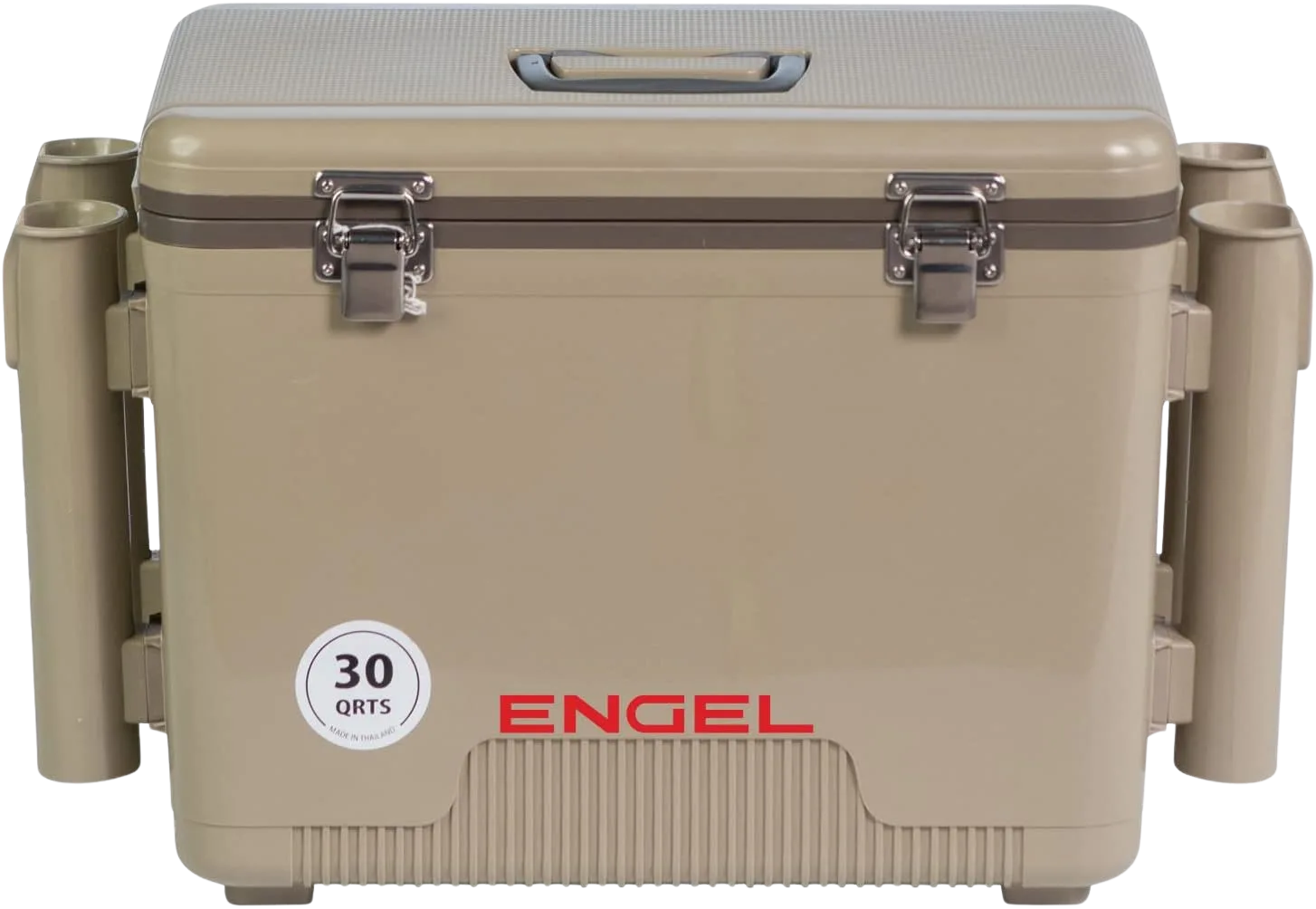
The feature that quietly matters most is the tie-down. A cooler that walks the deck in chop is a hazard, and molded-in tie-down points beat a fancy lid every time. Treat the hardware the way you would a trailer: the same salt that pits your trailer bearings works on cooler feet, hinges, and axles too, so rinse them after every salt trip.
Freshwater vs. Saltwater: What Hardware Actually Survives Salt
Here is the lesson that gets learned too late: a three-year-old cooler advertised with stainless hardware, its latch frozen shut and rusted after a season of salt spray. Stainless on the spec sheet is usually 304, and 304 rusts in salt.
If you fish salt, a true marine cooler lives or dies on this detail nobody tells you straight. 304 stainless is common and cheaper, but it is not reliably rust-proof in saltwater. True resistance takes 316 marine-grade stainless, and that has to include the screws and springs, not just the visible latch. The real failure points on a salt boat are the hinge pins, the latch pins, and the wheel axles, so rinse and dry those specifically after every trip for real corrosion resistance. The cooler shell almost always outlasts the hardware in salt use, which is the same rule behind rinsing salt off all your gear before it dries.
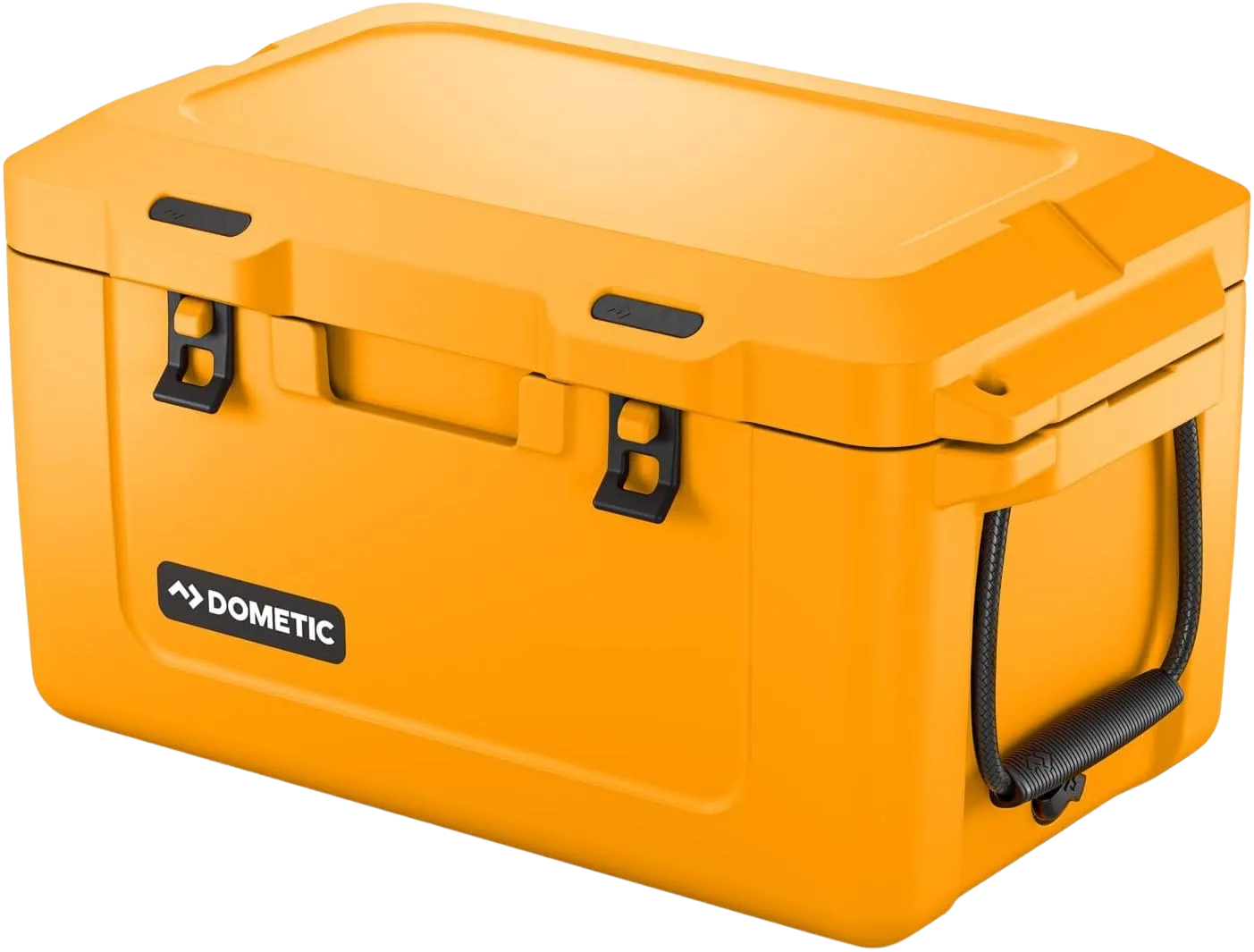
If you fish freshwater, you can reasonably skip the marine-grade premium. A bass-boat angler does not need salt armor, and paying for it is money that could go into a bigger box or better electronics. Knowing what NOT to pay for is as useful as knowing what to buy, which is exactly where the Dometic Patrol 35 fits.
Keeping Your Catch Cold Once It’s in the Cooler
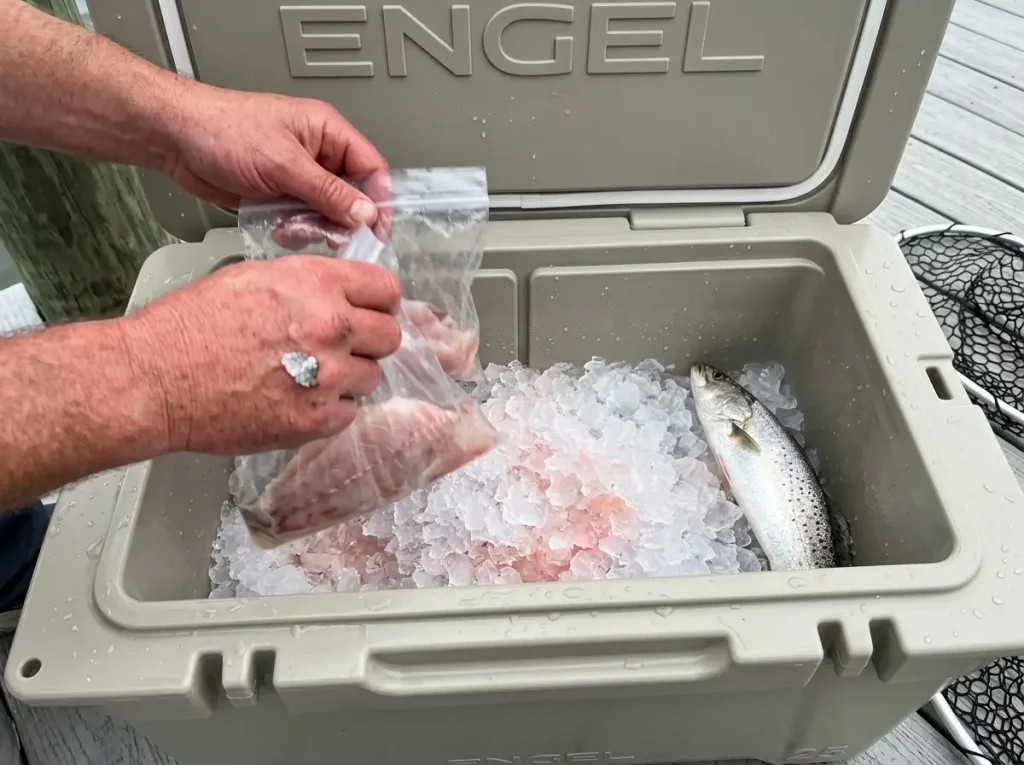
Why does the marina guy’s catch look better than yours on the cutting board? It is usually not his cooler. It is that he built a slurry and you dumped fish on top of cubes. How you pack it matters more than the badge on the lid.
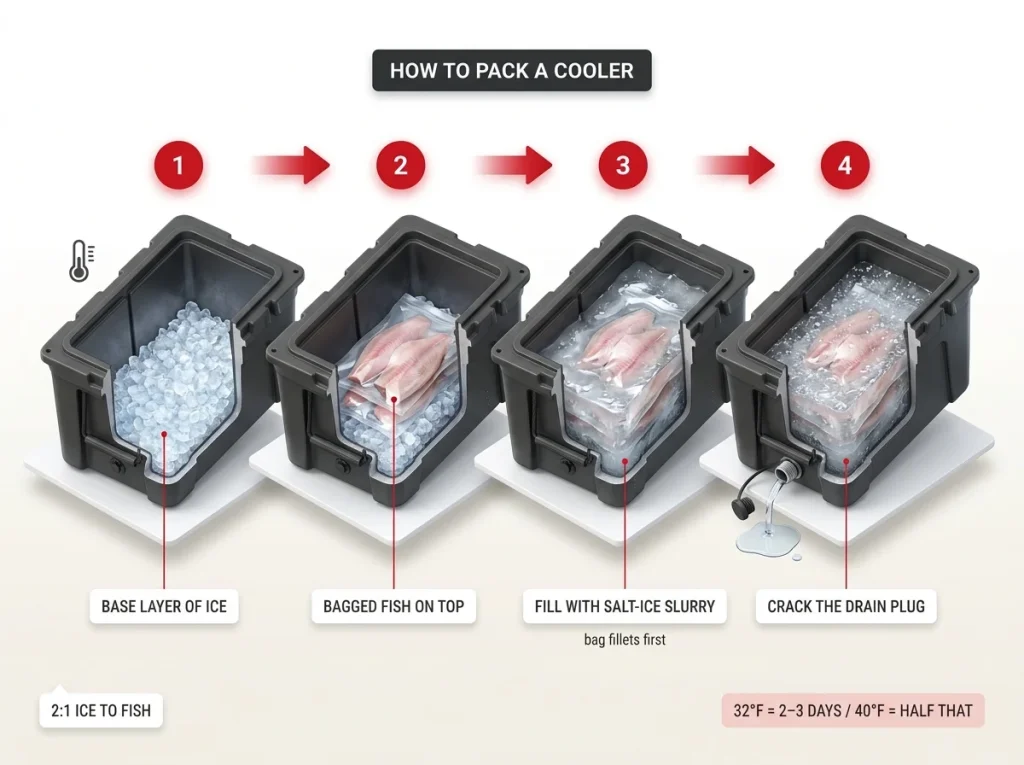
Start with the temperature target, because it is the single biggest freshness lever. Fresh-caught fish held at 32°F keeps quality for two to three days if it stays fully covered, but letting it drift up to 40°F doubles the spoilage rate and cuts shelf life in half. That eight-degree gap, not the brand, is what costs you. Michigan Sea Grant’s research on sport-caught fish quality is blunt about it: hold 32°F and everything else is detail.
The trick the marinas use is a salt-ice slurry. Mix roughly two parts ice to one part seawater to make a slush that flash-chills the fish toward 0°F almost instantly and sets the flesh firmer than it ever gets resting on cubes. Weigh the fish first if you are keeping records, since it is far easier to get an accurate weight before it goes into the slush than after. The one catch: bag your fillets before they hit the slurry, or prolonged salt-ice contact causes belly burn that degrades the meat. That same bag keeps them clean for fillet storage and helps prevent freezer burn if the catch goes into the freezer that night.
Ask the bait shop for flake ice instead of grabbing bagged cubes at the gas station. Flake gives more surface contact and does not bruise the fish, and it packs tight around a fillet the way cubes never will.
Ice type and upkeep finish the job. Flake ice beats block and cube for surface contact without bruising, as Oregon State’s onboard chilling guidelines lay out. On a long trip, drain the meltwater and renew the ice every few hours so the fish are not half-submerged in warming water. Handle the catch gently on the way in too, since a fish that is landed and handled well chills down cleaner than one that got beat up in the net.
Cheap Cooler Mods and Bear-Country Options
You do not always need the loaded premium model. A budget cooler plus a drill and a couple of straps gets you most of the way there, and for the trips that truly demand more, there is a real standard to look for.
The DIY route is straightforward. Drill your own rod holders into the lid, add aftermarket tie-down straps or a bungee tie-down to lock it to the deck, and drop in foam-block dividers to keep the catch separated from ice and drinks. For a lot of anglers, that turns a basic box into a fishing cooler for a fraction of the cost of the fully outfitted version. Match the mod to the trip and skip the ones you will not use.
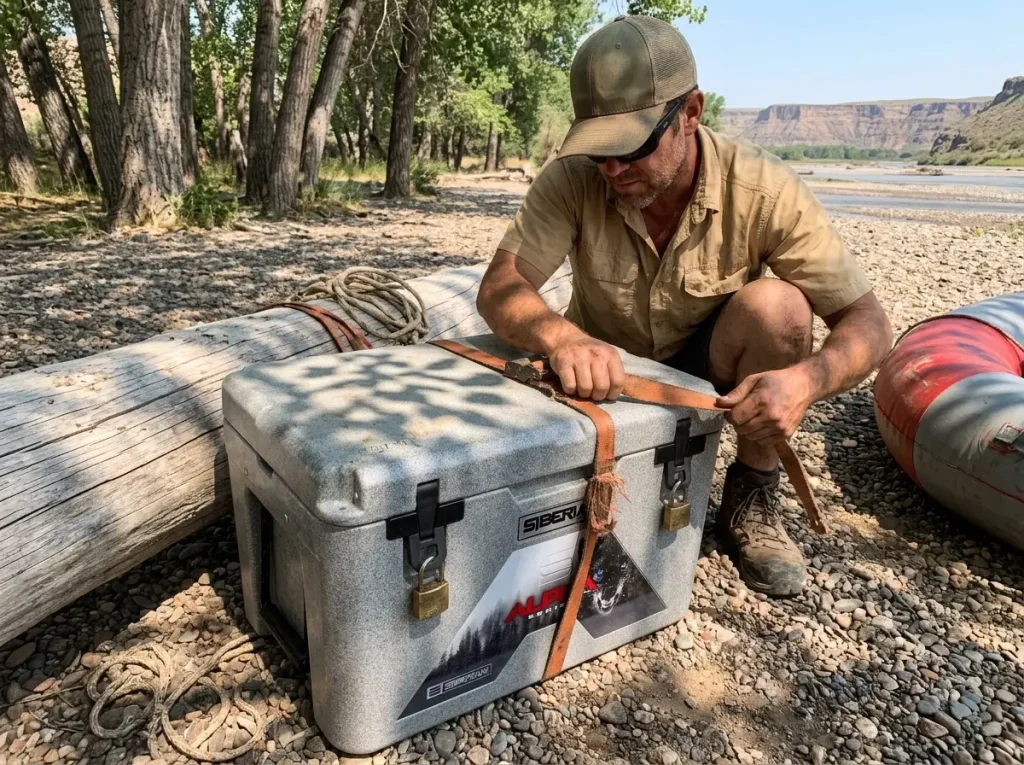
Bear country is the one place the marketing word actually means something. IGBC certification, from the Interagency Grizzly Bear Committee, means the cooler survived 60 minutes of contact with a live grizzly, or an equivalent technical test, without being breached. It is a pass-or-fail standard, not a slogan, and there is a catch most buyers miss: a short-shank padlock is required for the certification to actually apply in the field. If you float or backpack into grizzly country, look for an IGBC-certified bear-resistant cooler on the Interagency Grizzly Bear Committee’s certified products list, such as the Siberian Coolers Alpha Pro Series 45 Quart, and pack the padlock. A bass-boat angler does not need bear armor; a float-trip angler in the backcountry does.
Conclusion
Buy the seal, not the badge. Press the lid, feel the gasket compress, and check the latch, because that is where ice retention is won long before the quart number matters. Size for ice and fish together at roughly two to one, and spend up for a rotomolded box only when the trip actually earns the extra hours. Then remember that how you pack it, with a slurry, flake ice, and a hard 32°F target, beats brand every time for keeping a catch fresh.
Before your next trip, pre-chill the cooler the night before and build a slurry at the ramp. You will see the difference on the cutting board that evening.
Frequently Asked Questions
01How big of a cooler do I need for fishing?
For solo or kayak trips, 20 to 35 quarts; for a boat day with a couple of anglers, 45 to 65 quarts; for offshore or multi-day, 100-plus quarts. Remember the 2:1 rule, since you need two pounds of ice per pound of fish, so size up for ice room.
02How long do fishing coolers keep ice?
A good rotomolded cooler holds ice five to ten days in decent conditions, and some 45-quart models have gone a full ten days in testing. A basic injection-molded cooler is closer to 18 to 36 hours. Pre-chilling and keeping the lid shut matter more than the brand.
03Is a Yeti worth it for fishing?
For multi-day and offshore trips, the durability and seal quality earn the premium. But forum anglers rate RTIC and Engel close to Yeti for about a third less, so you are paying for brand and resale as much as insulation. If budget matters, the value picks lose very little.
04How do you keep fish fresh in a cooler?
Build a salt-ice slurry, roughly two parts ice to one part seawater, to flash-chill the fish, and keep it covered at 32°F. Letting it drift to 40°F doubles the spoilage rate. Bag fillets before the slurry to prevent belly burn, and renew ice on long trips.
05What is the difference between a fishing cooler and a regular cooler?
A true fishing cooler adds a full-perimeter gasket, heavier or marine-grade hardware, non-slip feet, tie-down points, and often built-in rod holders. A picnic cooler skips the seal and salt-resistant hardware, which is why it fails after a season of saltwater trips.
Risk Disclaimer: Fishing, boating, and all related outdoor activities involve inherent risks that
can lead to injury. The information provided on Master Fishing Mag is for educational and informational purposes
only. While we strive for accuracy, the information, techniques, and advice on gear and safety are not a substitute
for your own best judgment, local knowledge, and adherence to official regulations. Fishing regulations, including
seasons, size limits, and species restrictions, change frequently and vary by location. Always consult the latest
official regulations from your local fish and wildlife agency before heading out. Proper handling of hooks, knives,
and other sharp equipment is essential for safety. Furthermore, be aware of local fish consumption advisories. By
using this website, you agree that you are solely responsible for your own safety and for complying with all
applicable laws. Any reliance you place on our content is strictly at your own risk. Master Fishing Mag and its
authors will not be held liable for any injury, damage, or loss sustained in connection with the use of the
information herein.
Affiliate Disclosure: We are a participant in the Amazon Services LLC Associates Program, an
affiliate advertising program designed to provide a means for us to earn advertising fees by advertising and linking
to Amazon.com. As an Amazon Associate, we earn from qualifying purchases. We also participate in other affiliate
programs and may receive a commission on products purchased through our links, at no extra cost to you. Additional
terms are found in the terms of service.