In this article
You finally spooled braided line for the sensitivity everyone swears by, made a long cast, felt the thump of a good fish, set the hook, and reeled back nothing but a limp end. The knot let go. That moment is the quiet initiation into braid, and it happens to almost everyone who switches over, because braid solves real problems and quietly creates two new ones nobody warns you about.
The picks below cover every category that matters, from heavy-cover bass to saltwater topwater, but the part that actually saves you fish comes after the cards: the knot that holds, the spool job that ends wind knots, and an honest answer to whether you need to spend top dollar at all. Here is the short version before the deep dive.
| Best For | Braid Pick | Pound Test / Why |
|---|---|---|
| All-Around | Sufix 832 Advanced Superline | 15–30 lb · smooth 8-strand with GORE durability |
| Heavy Cover & Bass | Power Pro Spectra | 30–50 lb · 4-strand cutting power |
| Spinning & Finesse | Daiwa J-Braid Grand 8X | 10–15 lb · round, slick, fewer wind knots |
| Budget | KastKing SuperPower | 20–40 lb · casts with line twice the cost |
| Saltwater & Topwater | Sunline Xplasma Asegai | 20–50 lb · smoothest premium JDM |
The Best Braided Lines for Every Setup
There is no single best braid, only the best braid for where you fish. The seven below are the consensus winners across every category that matters, and each one earns its spot for a specific reason. Read the badge, find your water, and grab the one that fits.
Best Overall: Sufix 832 Advanced Superline Braid
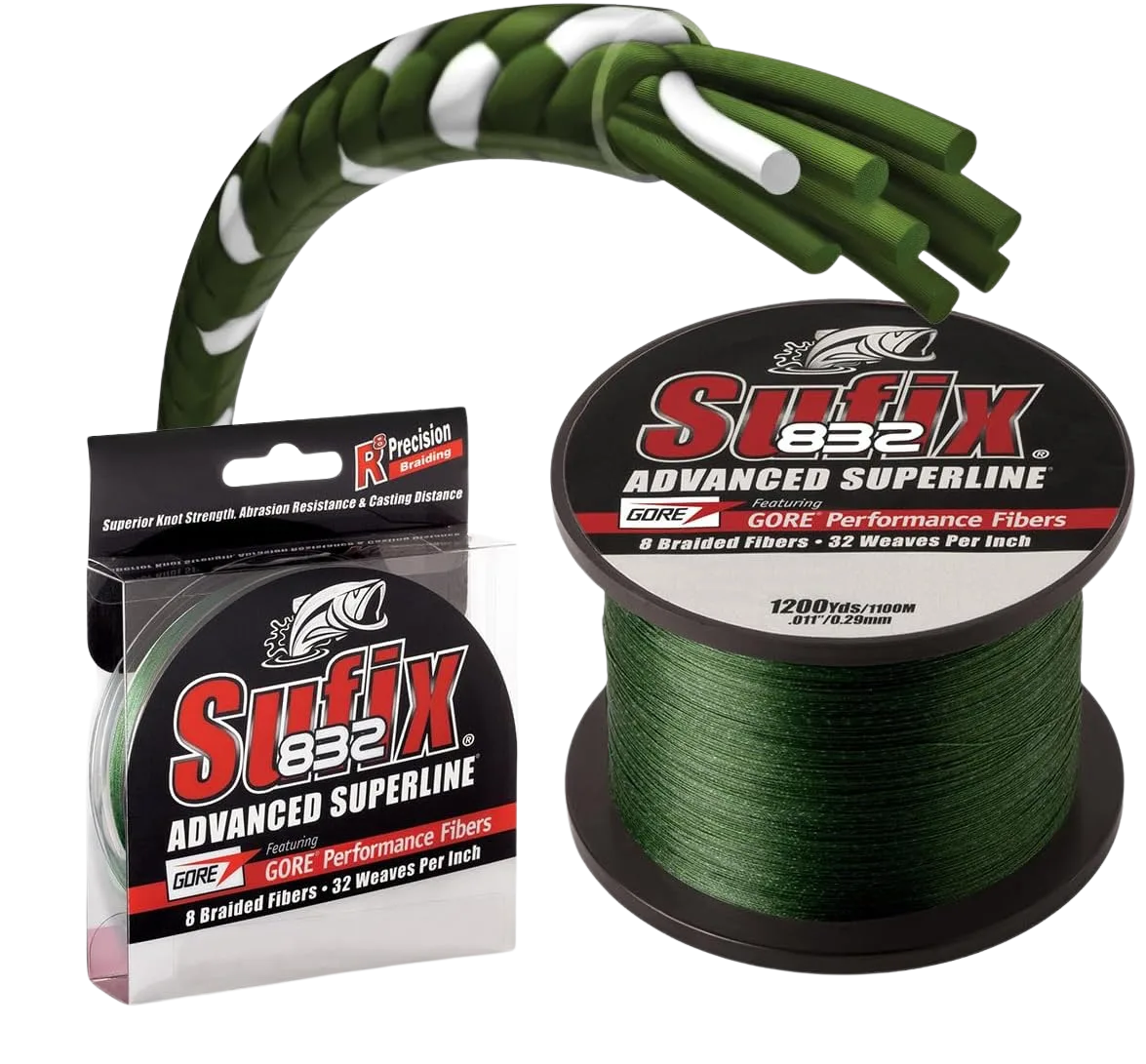
If you only want to buy one braid and stop thinking about it, buy this one. The GORE strand is the difference maker, giving the Sufix 832 the casting manners of a premium 8-strand without the fragility most slick 8-carriers bring to cover. The only reason to look elsewhere is a specialized job: pure flipping in heavy grass, or a tight finesse budget.
Best for Heavy Cover: Power Pro Spectra Braided Line
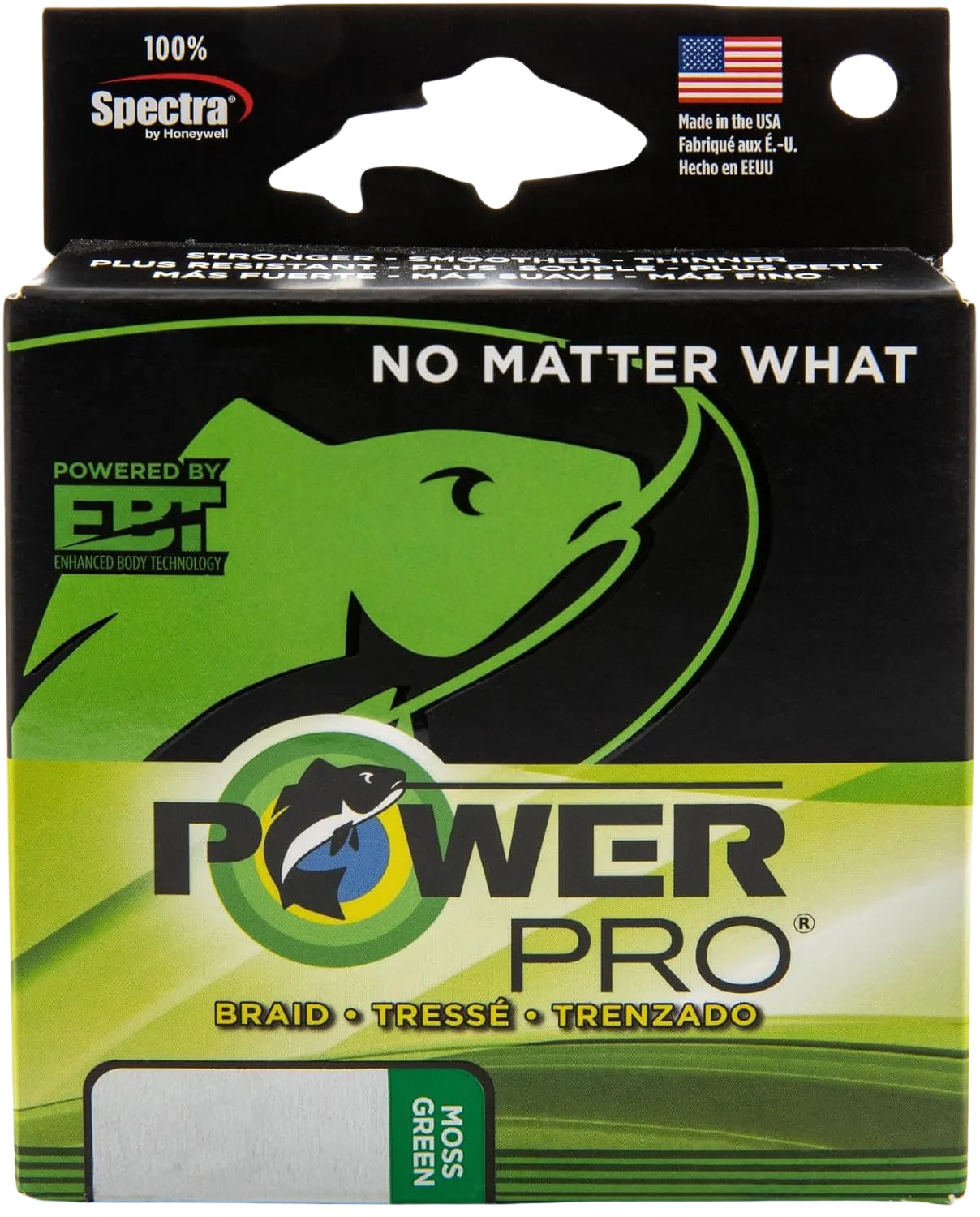
When you are dragging baits through grass mats, flipping into laydowns, or fishing rock, a 4-strand like the Power Pro Spectra actually outlasts a pricier 8-strand. The rougher weave is the point: it cuts and resists abrasion instead of polishing smooth and fraying. Spool it heavy, 30 to 50 pound, and let it do the ugly work.
Best for Spinning and Finesse: Daiwa J-Braid Grand 8X
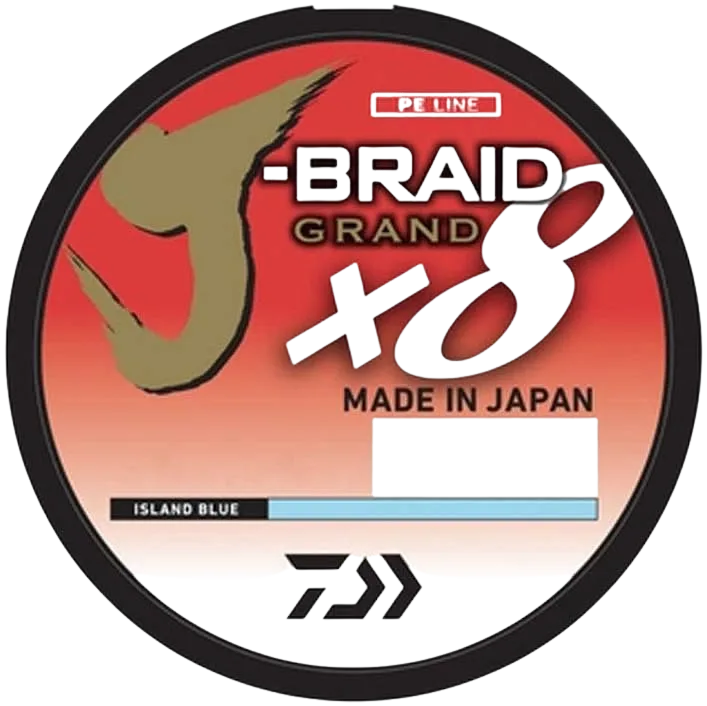
Spinning reels and braid have a love-hate relationship, and a round, slick 8-strand like the Daiwa J-Braid Grand 8X is the peace treaty. It feeds onto the spool cleanly and lays back down without the fuzzy loops that plague cheaper line. Spool it 10 to 15 pound for finesse and bait finesse setups and you will notice the difference on the first windy afternoon.
Best for Casting Distance: Seaguar Smackdown Braid
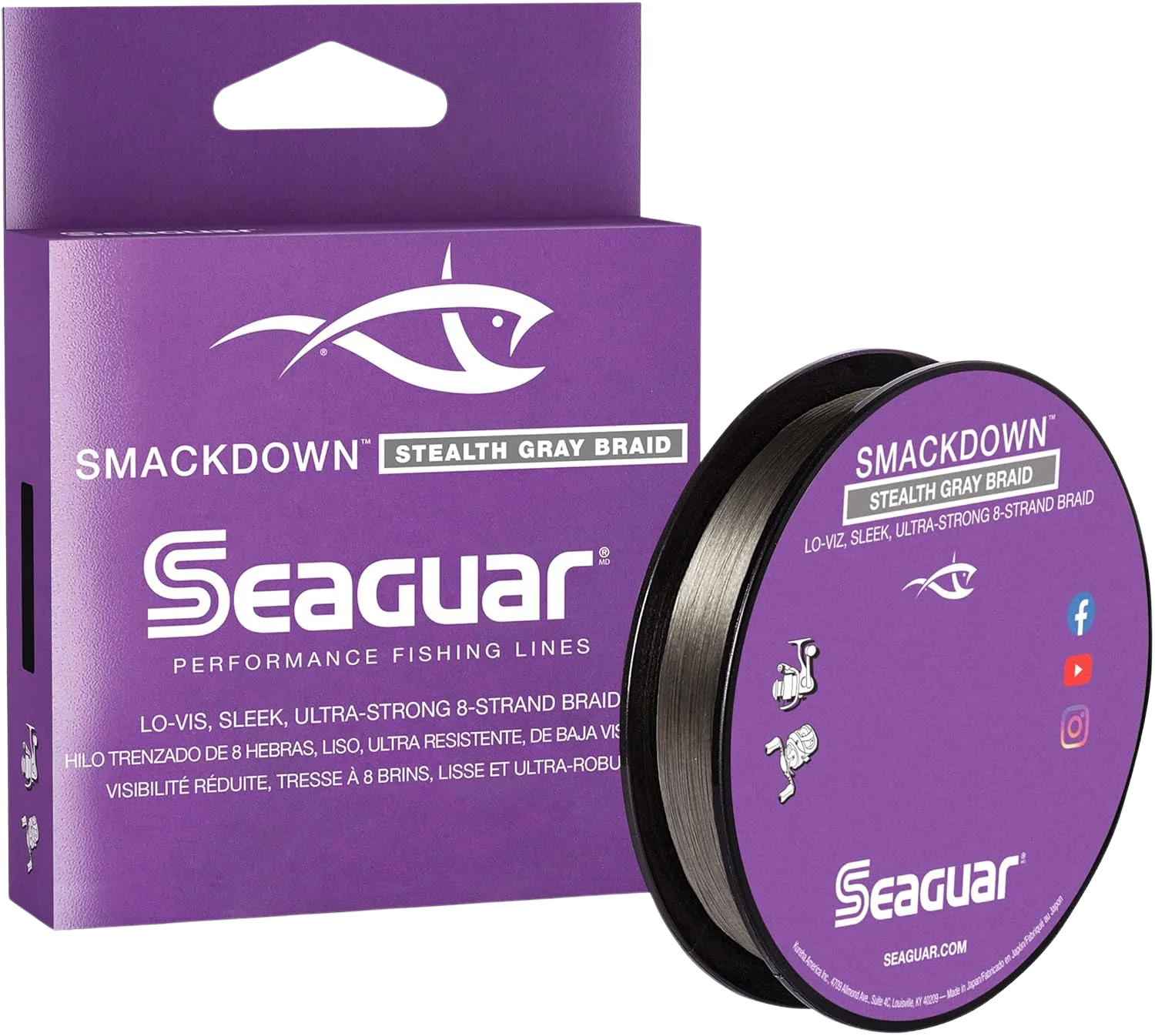
Distance comes from a thin, slick line that leaves the spool without fighting you, and the Seaguar Smackdown is built around exactly that. It is a specialist more than a do-everything spool, so pair it with open-water techniques where reach matters and you are not constantly grinding it through rock. For long casts to wary fish, few lines beat it.
Most Durable Value Pick: Spiderwire Stealth Superline Braid
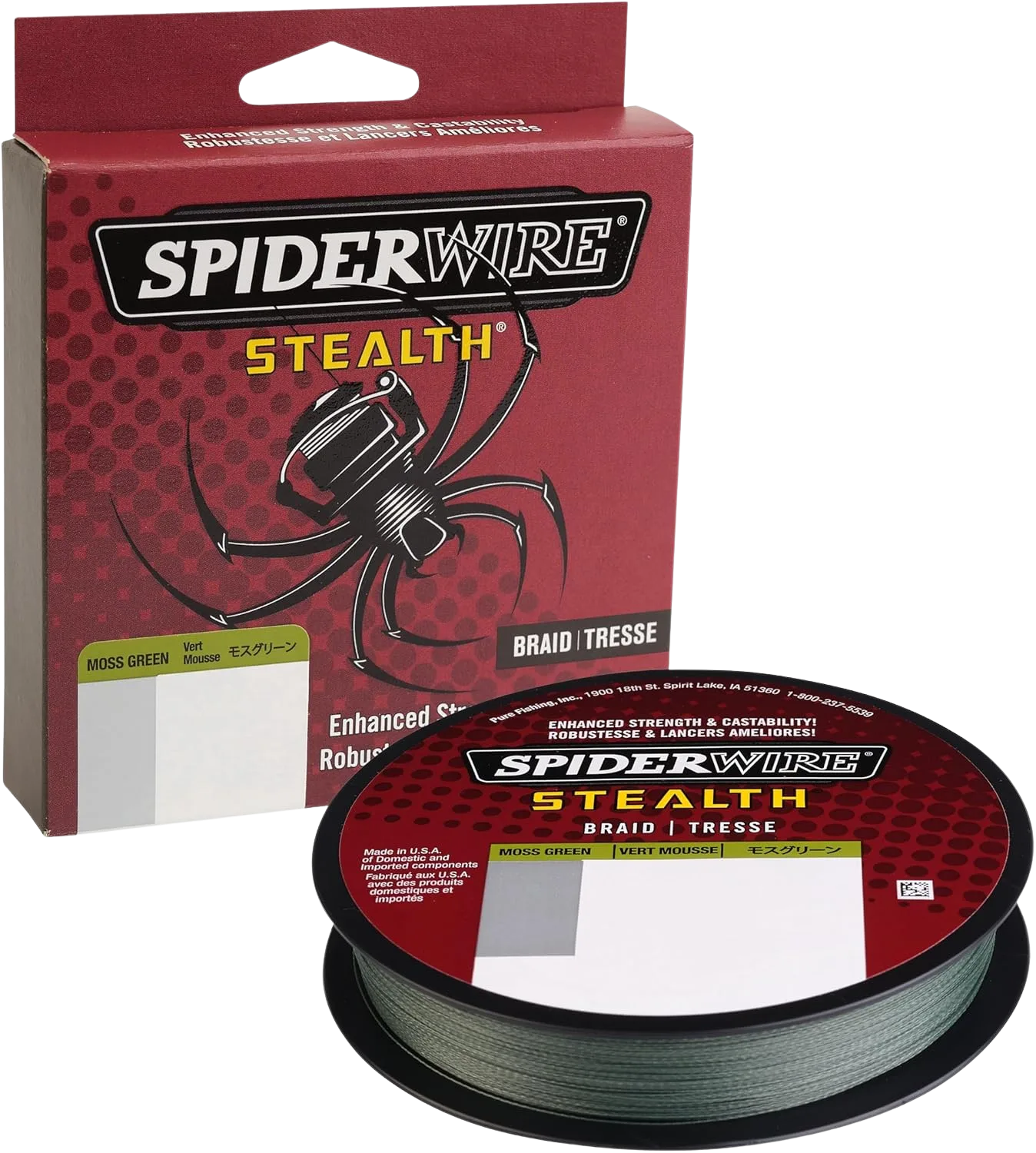
The Spiderwire Stealth is the line you buy when you want name-brand durability without paying for imported finesse braid. It comes in both 4 and 8-strand, so you can match it to cover or to open water, and the color-lock dye keeps it looking fresh longer than most lines in its range. It is the safe, sensible pick stocked on every shelf.
Best Budget: KastKing SuperPower Braid
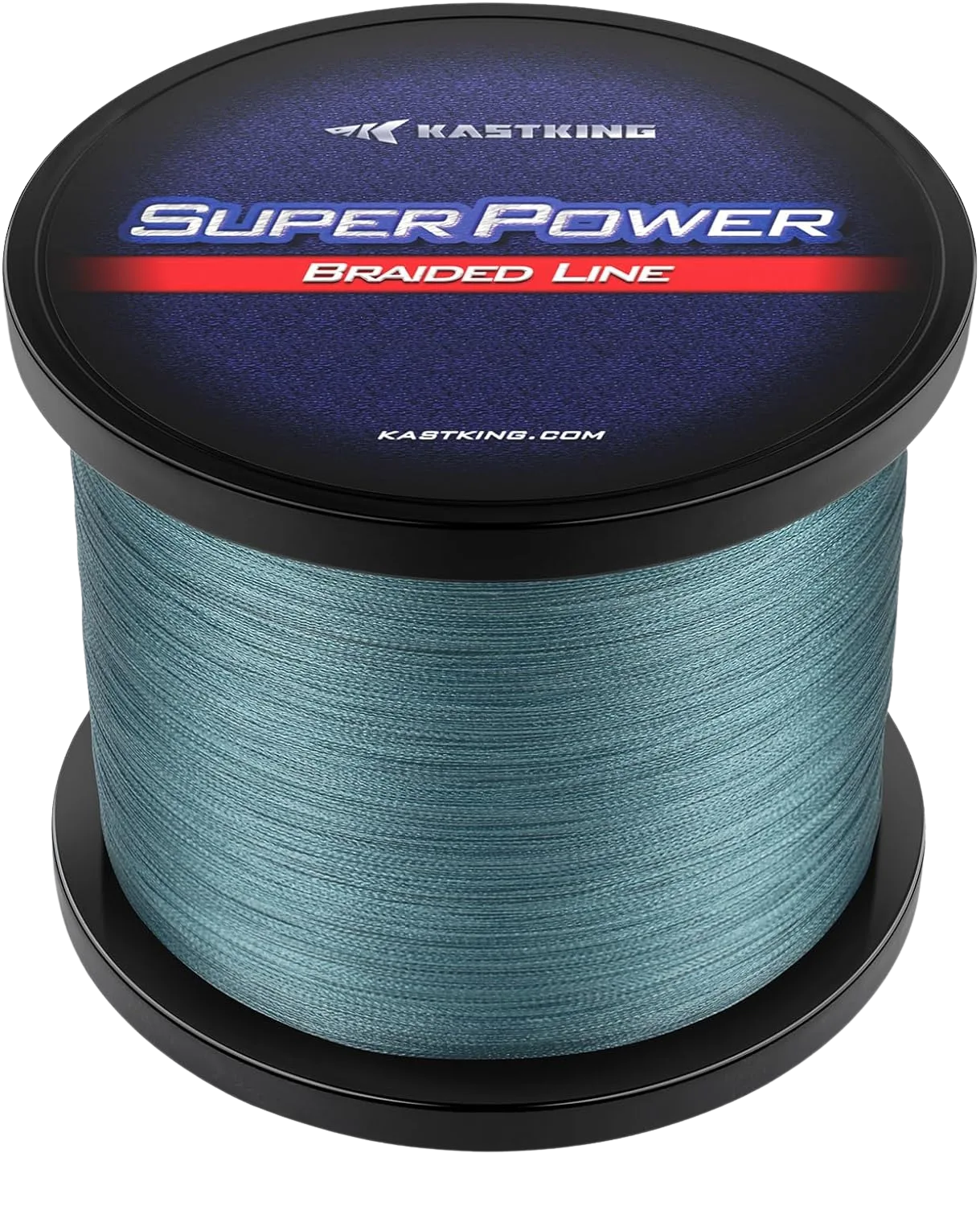
Here is the quiet part said out loud: for the water most of us fish, the KastKing SuperPower does everything a premium spool does. Anglers who put it head to head with premium line keep reporting the same thing, that it casts as far or farther with smoother retrieves. Buy the solution-dyed ColorShield version to fix the one real budget knock, color fade, and you have a line that is hard to argue against.
Best for Saltwater: Sunline Xplasma Asegai
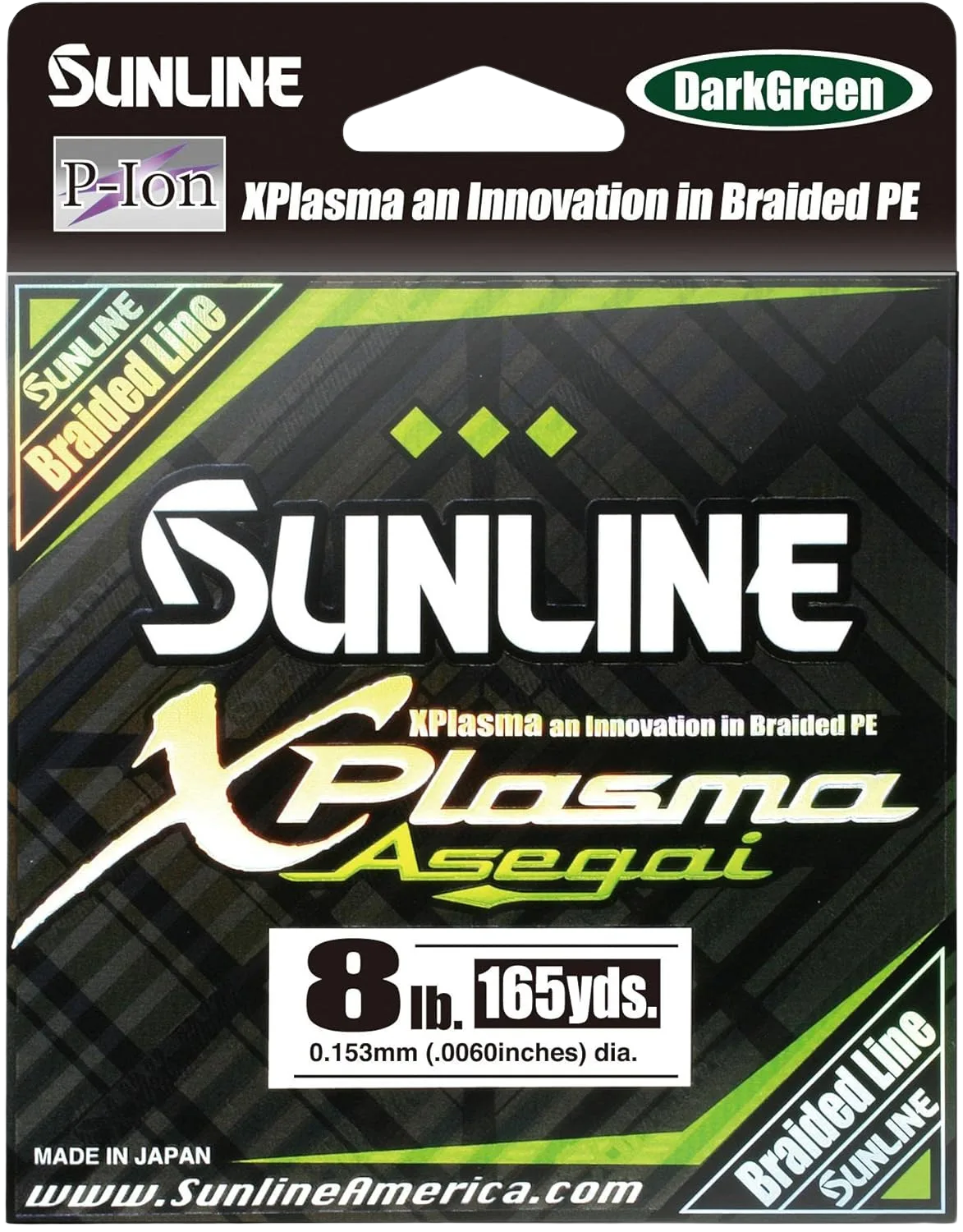
The Sunline Xplasma Asegai is what you reach for when smoothness is the whole point. Throwing topwater all day or fighting salt corrosion, the buttery JDM finish casts effortlessly and stays quiet through the guides. It sits at the top of the price range, and it is honest to say most freshwater anglers will not notice the difference, but on the salt and on clear-water finesse, this is where premium braid actually earns it.
How to Choose Braided Line Without Overthinking It
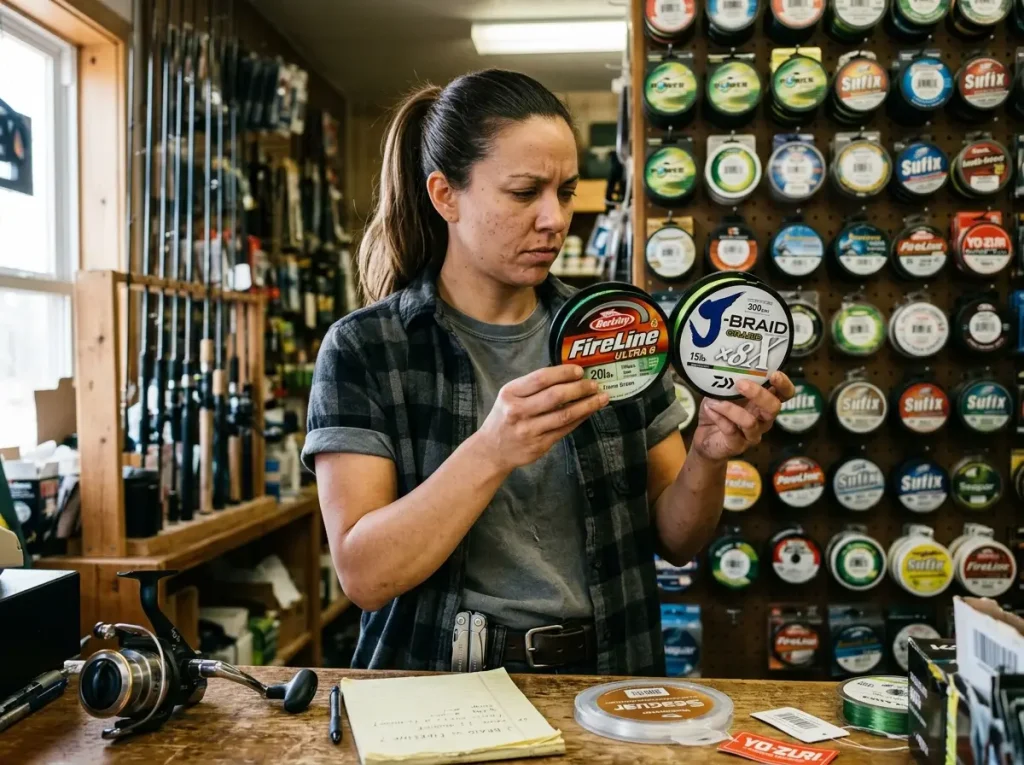
Most people buy braid by the number on the box. Veterans buy it by where they fish. Before you compare spools, it helps to step back and see how braid fits alongside the other options, and our guide to how the major line types stack up across every fishing situation lays out that full picture. Braid is one tool in the kit, and it is the right tool more often than not once you know its three real variables.
Match the Line to Where You Fish
The single best filter is cover. Grass, wood, and rock reward a tougher, lower-strand line that cuts and resists abrasion. Open water and long casts reward a smoother, higher-strand line that flies off the spool. Match the strand count to the cover, not to the bigger number, and half the buying decision is already made.
The second filter is your reel. A baitcasting reel handles slick 8-strand braid without complaint, while spinning reels are pickier and do better with a rounder, well-behaved line. Keep that in mind before you put a cheap, rough 8-strand on a spinning setup and wonder why it loops.
The Three Specs That Actually Matter
Strand count, diameter, and coating decide almost everything. Strand count sets the smoothness-versus-toughness trade. Diameter, which tracks pound test, sets how much line you fit and how far you cast.
A slick coating affects how quiet the line runs and how long the color lasts. Everything else on the label is marketing.
That is genuinely the whole framework. Pick your strand count for your cover, your pound test for your target species, and a quality coating if color and smoothness matter to you. The picks above are already sorted along exactly these lines.
Where Braid Wins and Where It Doesn’t
Braid wins on sensitivity and hooksetting power because it has almost no stretch, and it wins on capacity and casting because it is thin. You feel every tick, and you move a lot of line on a hookset. That is why it dominates in cover, on topwater, and anywhere feel matters.
Braid loses on one thing: it is visible in clear water, and it does not sink. That is what the leader is for, and it is why some situations call for mono or fluoro instead. Knowing when to switch is the mark of someone who has spent real time on the water.
Strand Count Explained (4 vs 8 vs 12)
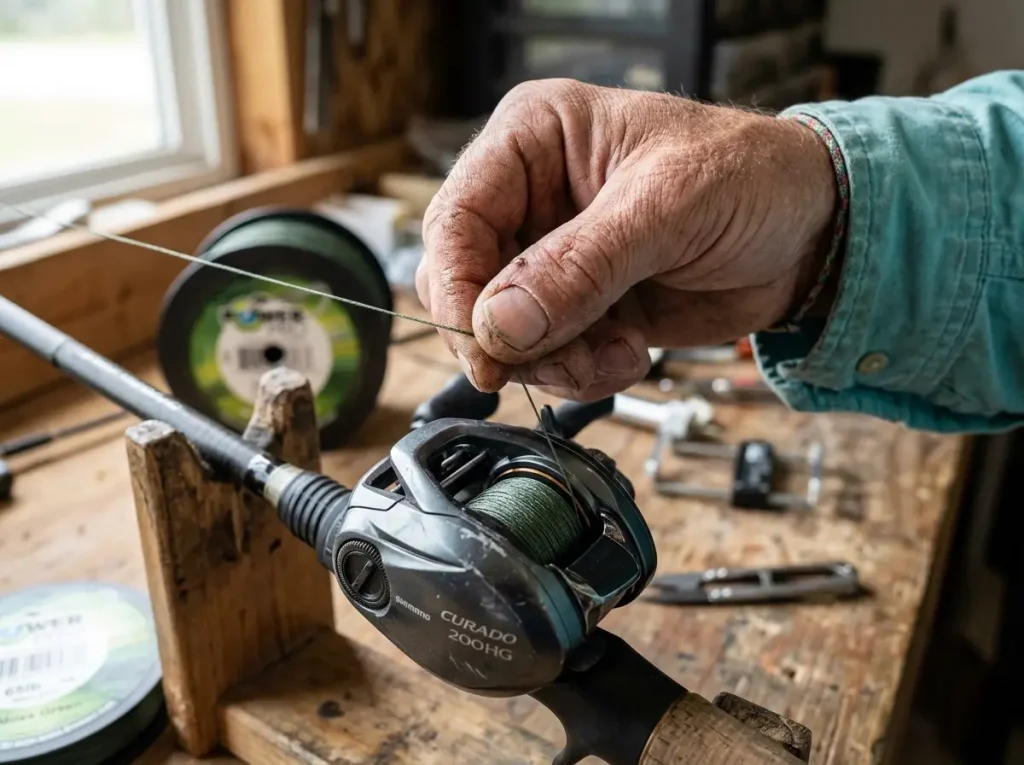
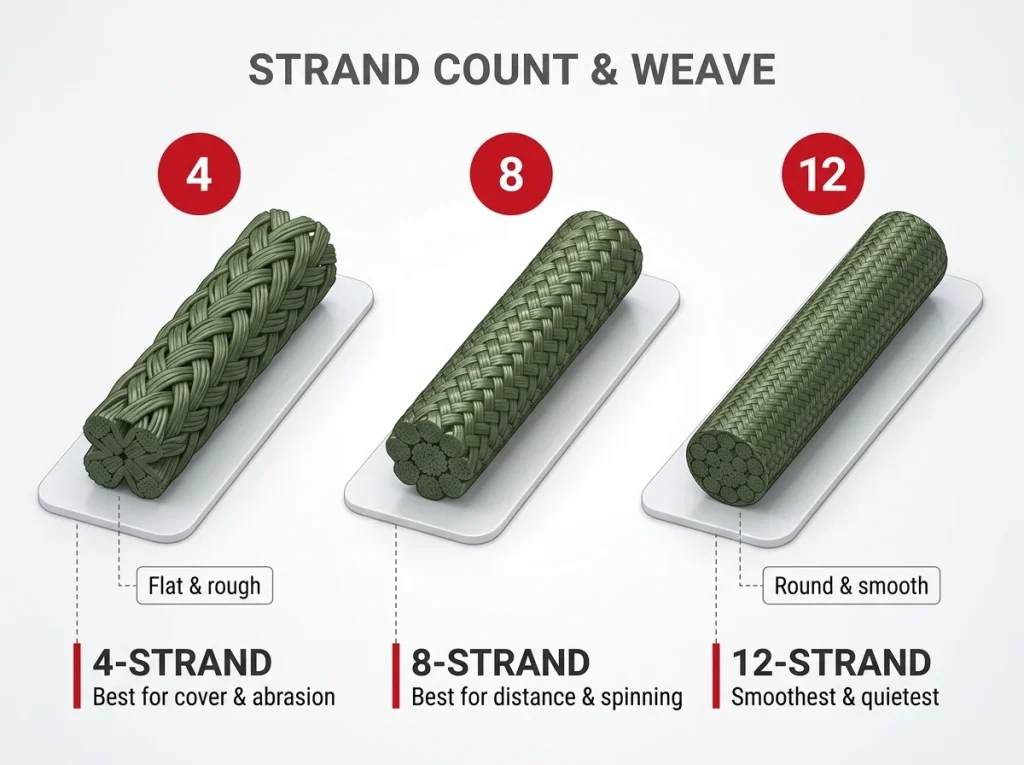
This is the spec people overthink the most, so let us make it simple. A 4-strand braid is woven from four fibers into a flatter, rougher line. An 8-strand uses eight thinner fibers woven into a rounder, smoother, quieter line.
Twelve-strand and higher push that smoothness further at a higher price. The video below shows the weave and diameter differences better than any paragraph can.
What Carrier Count Really Changes
More carriers buy you smooth casting, distance, and silence. Fewer carriers buy you cutting power and abrasion bite. That is the entire trade, and it runs in a straight line: a higher strand count gives a smoother, rounder, more compact line, while a lower strand count gives a rougher finish that grips and slices through cover. Pick by where you fish, not by the bigger number on the box.
One nice side benefit of braid in general is that it has almost no memory. Unlike stiff mono, it stays limp and supple straight off the spool, which is the opposite of the line memory that makes mono coil off the spool in cold weather. That suppleness is part of why braid casts so well.
When 4-Strand Is the Smarter Buy
There is a stubborn myth that 8-strand is simply better. It is not, it is different. For flipping and pitching into grass and thick vegetation, for dragging through wood, and for any place a line takes constant abrasion, the rougher 4-strand weave lasts longer and cuts better. The Power Pro pick above is the poster child for this.
Good braid lasts a few years on a rod before the front end gets fuzzy. When it does, do not toss the spool. Strip it off and respool it end-for-end onto a fresh rod, putting the unused back end up front. Anglers call it reversing the line, and it nearly doubles what you get out of a spool.
Abrasion, UV, and When to Respool
Braid outlasts mono by a wide margin, but it does not last forever. Braid has good UV resistance, but a hard, sunny season and constant casting still wear the coating and weaken the front end. When the color is gone and the line feels fuzzy, it is time to respool.
One thing many anglers get wrong: old braid cannot go in the standard monofilament recycling tubes. Those programs only accept single-filament nylon, so old braid can’t go in the monofilament recycling tube and needs separate disposal. Many states run monofilament recovery stations at most ramps and piers for your old mono and fluoro scraps, which keeps line out of the water where it does real harm to wildlife.
Pound Test and Diameter by Application
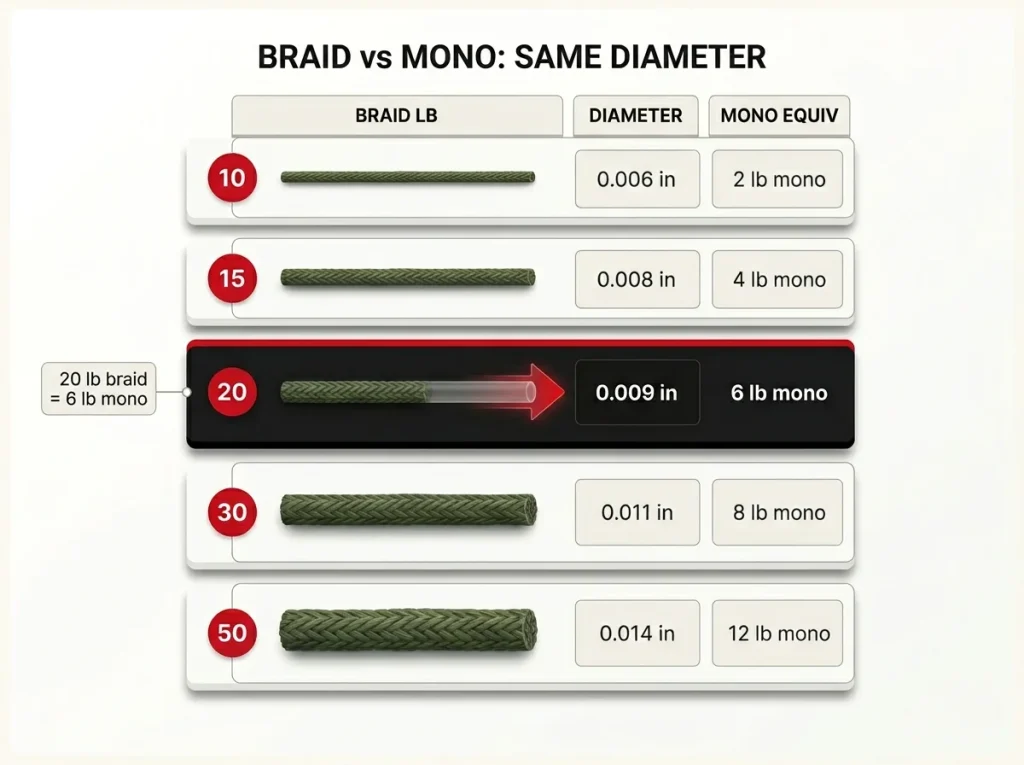
Here is where braid breaks your old instincts. On mono, a higher pound test means a noticeably thicker line. On braid, the same pound test runs dramatically thinner in line diameter, and that changes how you choose.
Why 20 lb Braid Fishes Like 6 lb Mono
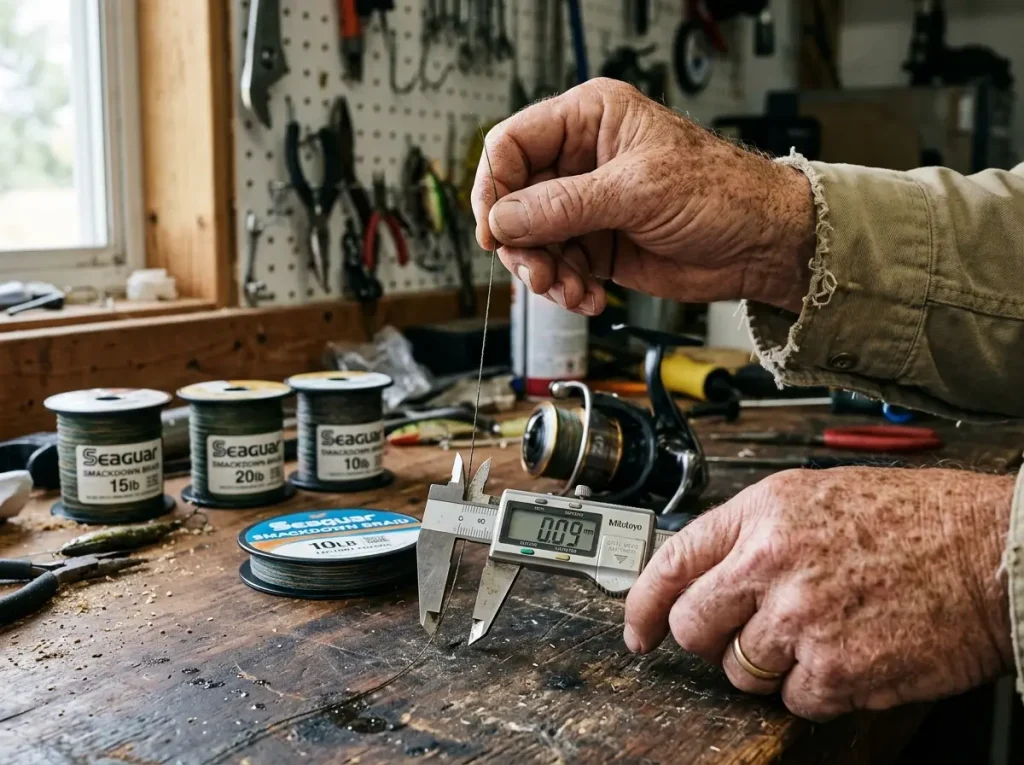
Braid is thin for its strength. Power Pro at 20 pound measures roughly 0.009 inches in diameter, which puts it in the same thickness range as 6 to 8 pound mono. That is why a 20 pound braid casts and dives like much lighter line while giving you far more line strength, very low stretch, and abrasion resistance.
The practical payoff is huge. You get more line capacity on the spool, you cast farther, and you cut through water with less drag. Just remember that the breaking strength on the label is a guideline, not a promise, the same way a 10-pound rating isn’t a 10-pound fish once knots and drag enter the picture.
Freshwater Bass, Finesse, and Heavy Cover
For all-around bass fishing on spinning gear, the consensus default is simple: spool 15 pound braid and tie on a fluoro leader. Most bass anglers live in the 10 to 20 pound range, with 15 sitting right in the sweet spot of strength and castability. Drop to 10 pound for true finesse fishing and bait finesse system (BFS) work.
When you move into heavy cover, step up hard. Flipping and pitching into grass mats or fishing around wood calls for 30 to 50 pound braid, where the cutting power and zero stretch let you wrench a fish out before it buries you. There is no finesse penalty here because the cover, not the fish, sets the line size.
Saltwater and Big-Water Setups
Saltwater fishing widens the range. Inshore work for redfish and trout often runs 15 to 30 pound, while bigger water and stronger fish push toward 50 pound and beyond. Match the line to the fish and the structure, not to habit.
The thin-diameter advantage matters even more in salt, where long casts to spooky fish and deep presentations both benefit from less line drag. A thin 8-strand like the Seaguar or Sunline pick gets you there.
Braid-to-Leader Knots Done Right
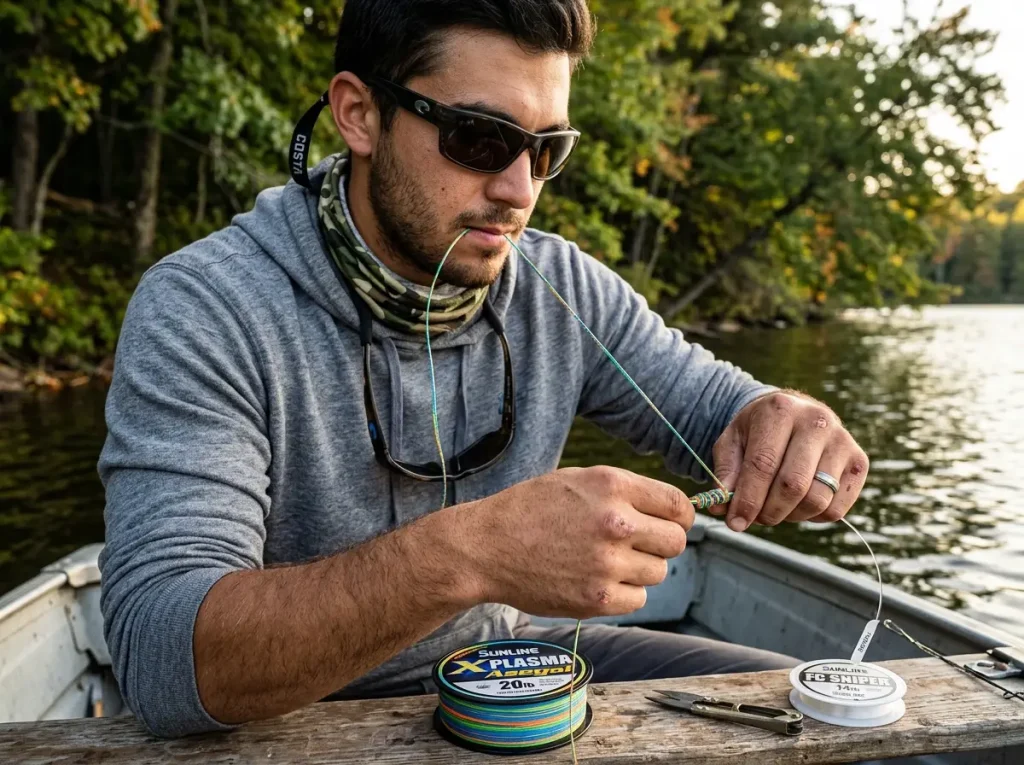
This is the section that saves you the most fish, so slow down here. The single most common braid failure is not the line, it is the knot, and it traces back to one property: braid is slick and barely stretches.
Why a Clinch Knot Slips Off Braid
A standard clinch knot works on mono because mono has stretch and grip, so the wraps bite down and hold. Braid is made of UHMWPE, the slick Spectra fiber, a polyethylene also sold as Dyneema or PE line, and it has almost no stretch for a knot to seat against. Tie a plain clinch to braid and it creeps, then peels off under the load of a hookset.
This is the moment every braid convert remembers, the first good fish lost to a knot that simply let go. The fix is not to tie harder, it is to tie a knot designed for slick line, either with more wraps or with a friction ramp that grips the leader instead of the braid.
The FG Knot vs the Palomar
For braid straight to a hook or lure, the Palomar knot is the standard. It is a doubled-line knot that holds braid well and ties fast, which is why most anglers use it for direct connections. Keep it in your back pocket for any braid-to-hook tie.
For braid to a fluorocarbon leader, the FG knot is the gold standard. It grips the leader like a finger-trap, distributing the load over a long path so it stays slim, passes through the guides cleanly, and holds under heavy tension. It is fiddlier to learn, but for braid to leader knot strength and a low profile nothing beats it, and the line-to-leader connections worth knowing cold break down the easier Double-Uni alternative if the FG feels like too much at first.
When an FG knot fails, it is almost never the knot, it is the seat. The two reasons it slips are too few wraps and not cinching it down under real tension. Lock it tight against a rod guide or your boot before you trust it, and an FG will outlast everything else on your setup.
Picking a Leader and Its Color
A fluoro leader does two jobs: it disappears better than braid in clear water, and it adds abrasion resistance at the business end. Two to three feet is plenty for most freshwater work, a bit longer for spooky or clear conditions.
Line color matters most when you fish braid straight with no leader. In clear water a low-vis moss green hides better, while hi-viz yellow helps you watch your line for subtle finesse bites. Once a leader is in play, the braid color matters far less because the fish is looking at the clear leader, not the braid.
Taming Wind Knots on Spinning Reels
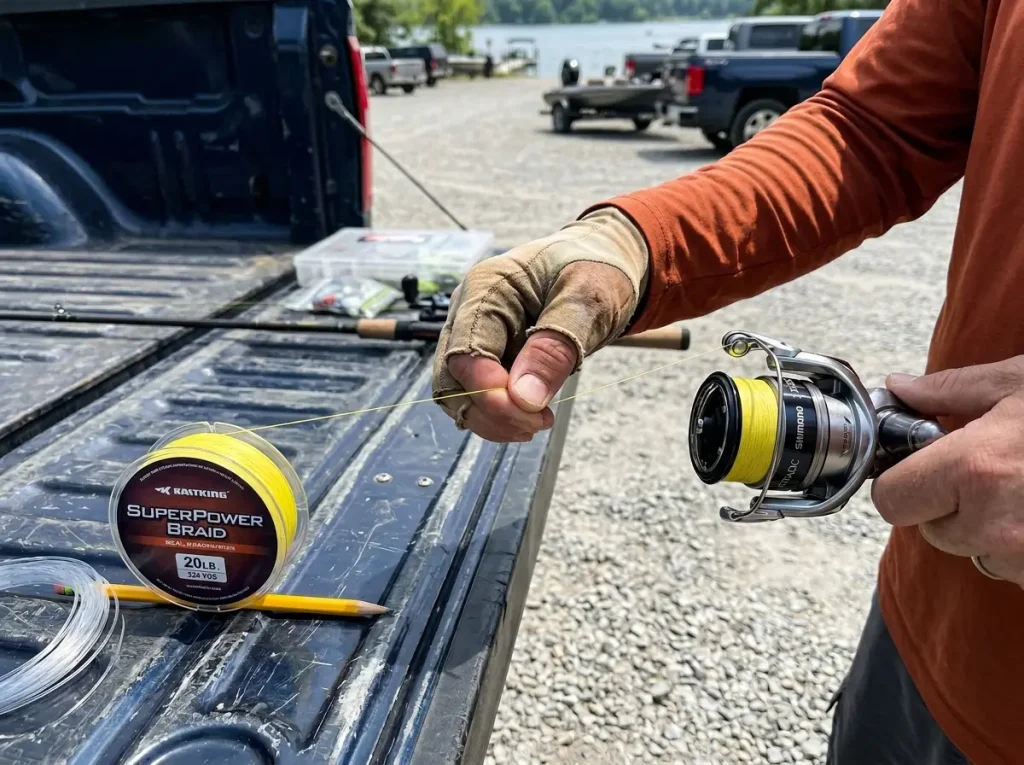
If braid-to-leader knots are the first headache, wind knots are the second, and they are the one nobody on the first page of search results actually troubleshoots. A wind knot is braid looping over itself on the cast and tangling into a mess, almost always on a spinning reel. Here is why it happens and how to stop it for good.
Why Slick 8-Strand Loops Over Itself
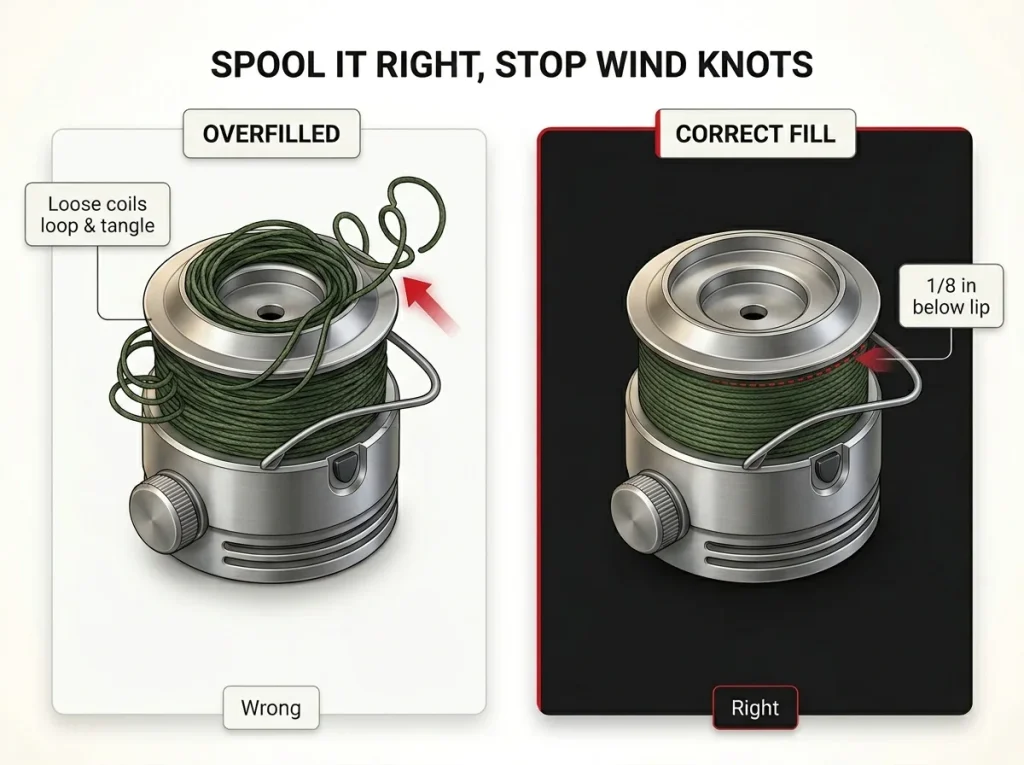
The cruel irony is that the smooth, round 8-strand you bought for distance is exactly the line most prone to wind knots. A slick, rounded line slides over itself easily, and three things set it off: an overfilled spool, slack line on the retrieve, and low tension when you first spooled it. None of those are the line’s fault, they are setup problems.
That is genuinely good news, because setup problems have setup fixes. You do not need a different line, you need a better spool job and a little awareness on the retrieve.
Spool It So It Never Happens
Fill the spool to about an eighth of an inch below the lip, no higher. An overfilled spool throws loose coils the moment tension drops. When you spool new line, keep firm pressure on it the whole time so it lays down tight, and it helps to start by dialing in your reel’s spool tension before the line ever goes on.
On the water, close the bail by hand instead of cranking it shut, and watch for slack after a cast or a skip. Slack braid is what loops, so good line management on the retrieve, a quick pinch of the line against the rod, removes the slack before it can tangle.
After a cast that backlashes or goes slack, do not just crank through it. Stop, pull a few feet of line off by hand under tension, then reel it back tight. Reeling over a slack loop is how a small tangle becomes a bird’s nest that costs you the whole front section of line.
The Mono Backing Trick
Braid is so slick it can spin on a bare spool instead of gripping it, which both wastes line and feeds wind knots. The fix is a layer of monofilament backing first. A few wraps of cheap mono give the braid something to bite, so it grips the arbor and stays put.
Backing solves a second problem too, which is cost, and that is worth its own section below.
Do You Really Need Premium Braid?
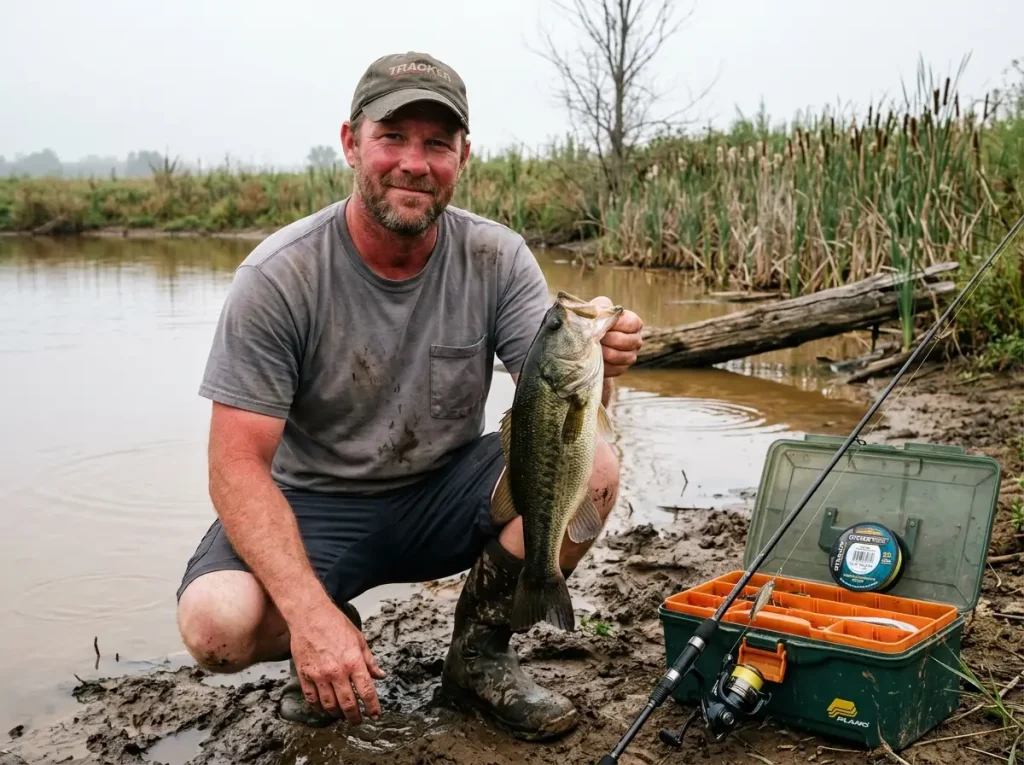
Time to say the quiet part out loud. The fishing industry would love you to believe you need a top-shelf imported spool on every reel. For most of us, most of the time, you do not, and pretending otherwise is how anglers waste real money.
Where Cheap Braid Is Genuinely Fine
For stained and freshwater bass water, budget braid is on-the-water indistinguishable from the premium stuff. The fish in a muddy pond cannot tell, and the angler often cannot either. The story that keeps coming up among anglers is the same: someone shows up with a top-dollar spool and gets quietly out-fished by a buddy running cheap line, because the line was never the variable that mattered.
Budget 4 and 8-strand braid casts well, holds up to normal fishing, and ties the same knots. If your water is anything less than gin-clear, the cheaper spool is the smart spool, full stop.
Where Premium Actually Earns Its Price
There are real cases where premium braid is worth it. Clear-water finesse, where the smoothest possible cast and the quietest retrieve matter. Saltwater, where corrosion and big fish punish weak line.
Topwater, where buttery smoothness genuinely helps your presentation. And color retention, since cheaper dye fades faster, though solution-dyed budget lines have mostly closed that gap.
So the honest rule is this: if you fish clear water, salt, or finesse, premium braid earns its keep. If you fish stained bass water, it is a luxury, not a need.
A Smart First Spool
If you are new to braid, here is the setup that gets you fishing without overspending. Start with a budget 8-strand in 15 pound, lay down a mono backing first, and tie on a two-foot fluoro leader with a Palomar or a simple Double-Uni. That is it.
This combination is forgiving, cheap, and covers the vast majority of freshwater situations. It is also the line that forgives a beginner’s mistakes, much like the line that forgives a beginner’s mistakes in our beginner’s guide. Upgrade later when you find a specific reason to, not because a label told you to.
Braid vs Mono vs Fluoro and When to Use Each
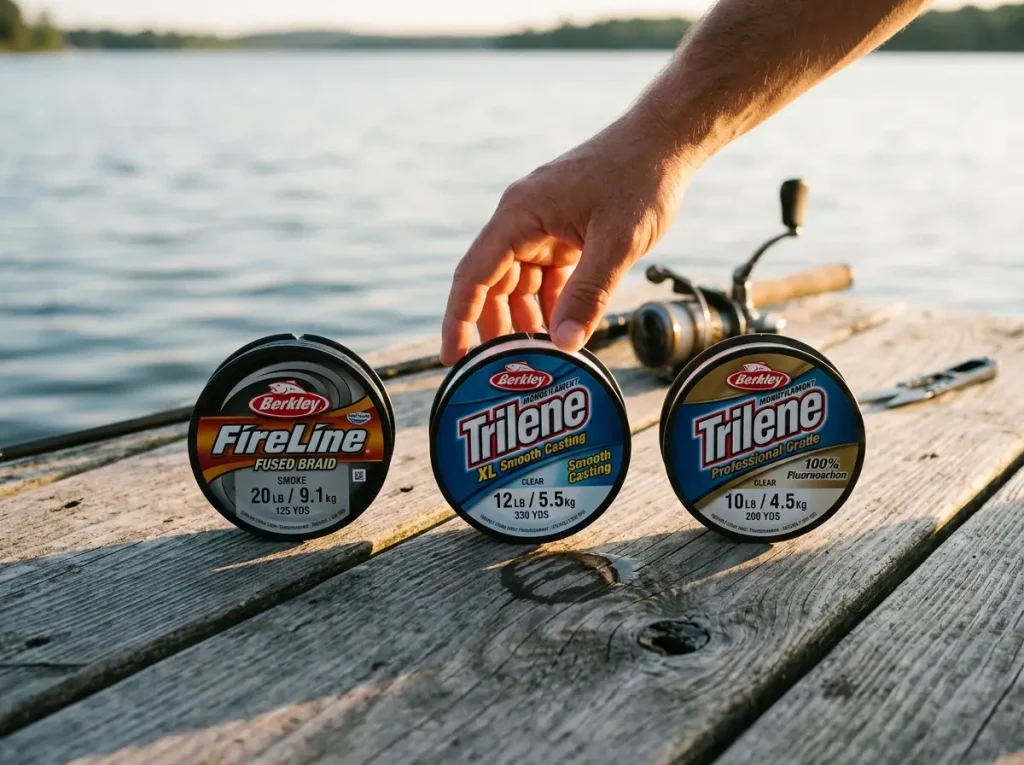
Braid is not the answer to everything, and knowing when to run something else is what separates anglers who have figured it out. A quick look at the full braid versus fluorocarbon versus monofilament breakdown goes deeper, but here is the working version.
The Three Lines in Plain Terms
Braid has no stretch, runs thin and strong, floats, and is visible. Monofilament stretches, floats, is cheap and forgiving, and casts smooth. Fluorocarbon sinks, resists abrasion, nearly disappears underwater, and runs stiffer. Each property is a tool, not a virtue.
The trick is reading the situation and reaching for the line whose properties fit. Most experienced anglers run all three across different rods rather than forcing one line to do everything.
When to Run Straight Braid
Run braid straight when feel and power win: heavy cover, topwater, frogs, and deep cranking where you want to feel every tick. Braid also makes the ideal main line under a leader, where the thin, strong, sensitive braid does the heavy lifting and the leader handles the stealth.
In short, braid is your main-line workhorse. It either does the whole job in cover, or it carries a leader that handles the part braid is bad at.
When to Add a Leader
Add a fluoro leader the moment water clarity or wary fish come into play, and any time you need extra abrasion resistance near the lure. Clear lakes, pressured fish, and finicky finesse bites all call for that invisible buffer between the visible braid and the bait.
There are also times to skip braid entirely on the main line. Treble-hooked crankbaits often fish better on mono or fluoro because the stretch keeps fish pinned, beginners benefit from mono’s forgiveness, and true ultralight setups sometimes cast better with light mono. Braid is the best line for most jobs, not every job.
Conclusion
Three things will catch you more fish than any logo on the box. First, buy braid for where you fish: lower strand count and heavier line for cover, smoother high-strand line for open water and spinning. Second, the knot and the spool job cost more fish than the brand ever will, so tie an FG to your leader and fill that spool right with backing. Third, for most freshwater you simply do not need premium line, so spend the savings on time on the water.
Pick the category that matches your water, spool it correctly, and tie one good leader knot. Do those three things and your braid will do exactly what it promised when you first switched over.
Frequently Asked Questions
01What pound test braid should I use for bass fishing?
For all-around bass on spinning gear, spool 15 lb braid with a fluorocarbon leader. Most bass fishing lives in the 10 to 20 lb range. Drop to 10 lb for finesse and step up to 30 to 50 lb for flipping heavy cover.
02Do I need a leader with braided line?
In clear water, yes, because braid is visible and can spook fish. A short fluorocarbon leader adds stealth and abrasion resistance. In stained water or heavy cover you can often fish braid straight to the lure with no leader at all.
03What is the difference between 4-strand and 8-strand braid?
A 4-strand braid is rougher and tougher, so it cuts through grass and resists abrasion in cover. An 8-strand is rounder, smoother, and quieter, so it casts farther on open water. Match the strand count to your cover, not to the bigger number.
04Why does my braided line keep getting wind knots?
Wind knots come from an overfilled spool, slack line, and low spooling tension, and slick 8-strand is the most prone. Fill to an eighth-inch below the lip, keep tension while spooling, and remove slack before you reel. Mono backing helps the braid grip.
05Can you recycle braided fishing line?
Not in standard programs. The monofilament recovery tubes at boat ramps only accept single-filament nylon, so braid needs separate disposal. Some marinas keep line-recycling bins many marinas now keep at the ramp that take more line types, so check before you toss it.
Risk Disclaimer: Fishing, boating, and all related outdoor activities involve inherent risks that
can lead to injury. The information provided on Master Fishing Mag is for educational and informational purposes
only. While we strive for accuracy, the information, techniques, and advice on gear and safety are not a substitute
for your own best judgment, local knowledge, and adherence to official regulations. Fishing regulations, including
seasons, size limits, and species restrictions, change frequently and vary by location. Always consult the latest
official regulations from your local fish and wildlife agency before heading out. Proper handling of hooks, knives,
and other sharp equipment is essential for safety. Furthermore, be aware of local fish consumption advisories. By
using this website, you agree that you are solely responsible for your own safety and for complying with all
applicable laws. Any reliance you place on our content is strictly at your own risk. Master Fishing Mag and its
authors will not be held liable for any injury, damage, or loss sustained in connection with the use of the
information herein.
Affiliate Disclosure: We are a participant in the Amazon Services LLC Associates Program, an
affiliate advertising program designed to provide a means for us to earn advertising fees by advertising and linking
to Amazon.com. As an Amazon Associate, we earn from qualifying purchases. We also participate in other affiliate
programs and may receive a commission on products purchased through our links, at no extra cost to you. Additional
terms are found in the terms of service.