
In this article
Your rod has a stiff side and a soft side. There’s a decent chance you’ve fished it for years without knowing, and an even better chance it hasn’t cost you a single fish. The rod-building crowd treats spine alignment like gospel, and for someone gluing guides onto a bare blank, the backbone of the whole rod, it is. But if you buy your rods off a rack, the honest version is a little different, and it’s worth knowing before you chase a problem you might not have.
What a Rod Spine Actually Is
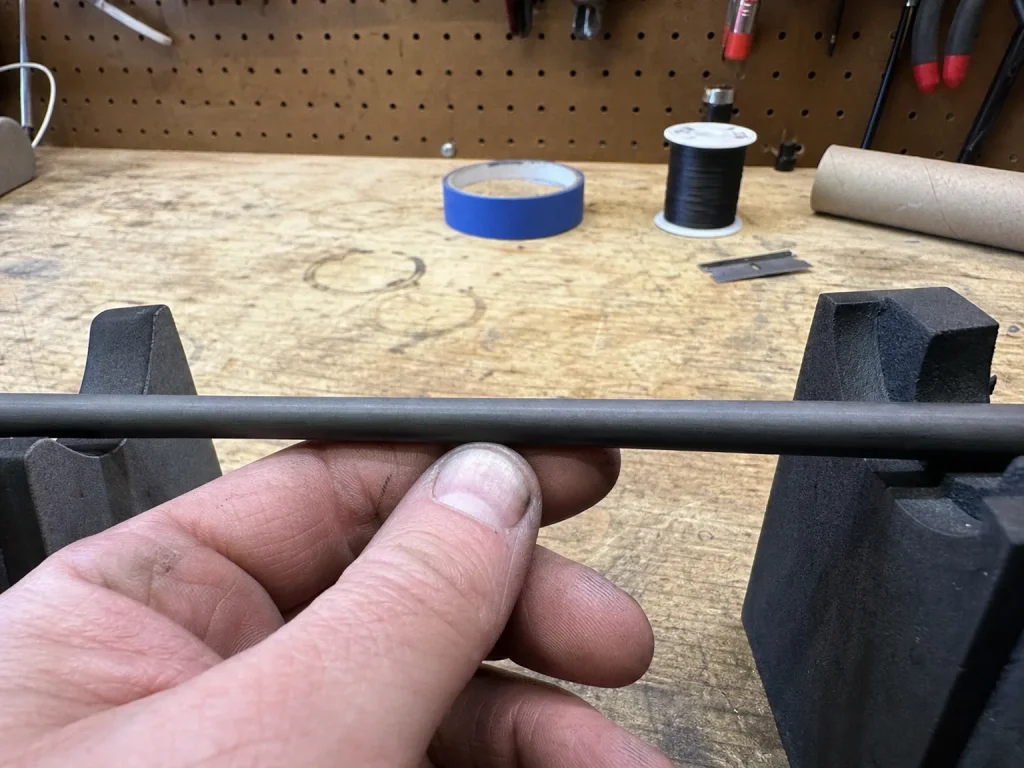
The first thing people say when they hear their rod has a stiff side is that theirs must be too nice to have one. It’s a fair guess. It’s also wrong.
Every rod blank starts as flat sheets of graphite or fiberglass rolled around a tapered steel mandrel. That sheet has to start and stop somewhere, which leaves a slight overlap running the length of the blank. That seam is the spine, the stiffest band in the wall, and it’s the natural result of how a rod gets built rather than a flaw in yours.
You can’t engineer it away, either. In composite winding, roughly a 50 percent overlap on a two-layer wind is standard, specifically to keep the wall thickness even all the way around the tube. A U.S. Patent Office filing on graphite rod construction spells it out plainly: the edges of the fiber cloth meet or slightly overlap, and the spine ends up a touch stiffer than the opposite side.
Premium blanks don’t escape this. They just have a thinner, more even overlap, so the stiff side is subtler and harder to feel. Builders who can’t feel the pop on an expensive blank sometimes decide it has no spine at all. It does. They just rolled past it too fast.
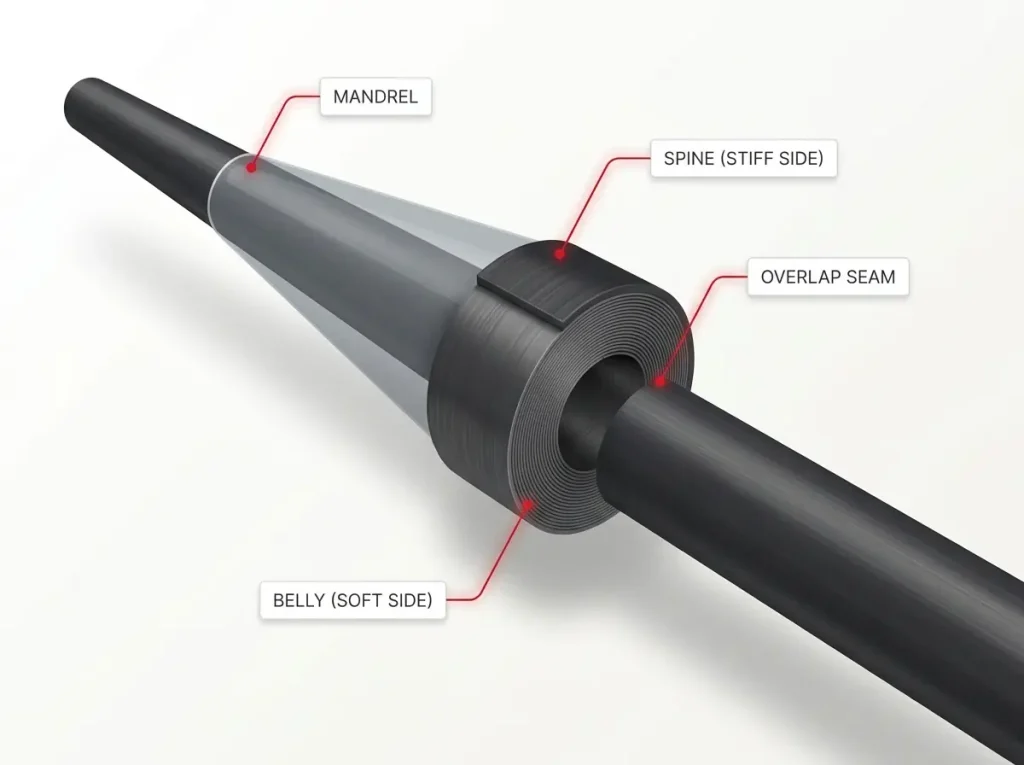
If you want the deeper story on how graphite and fiberglass actually behave under load, that’s a rabbit hole worth going down another day. For now, just know the seam is always there.
Why the Spine Changes How a Rod Performs
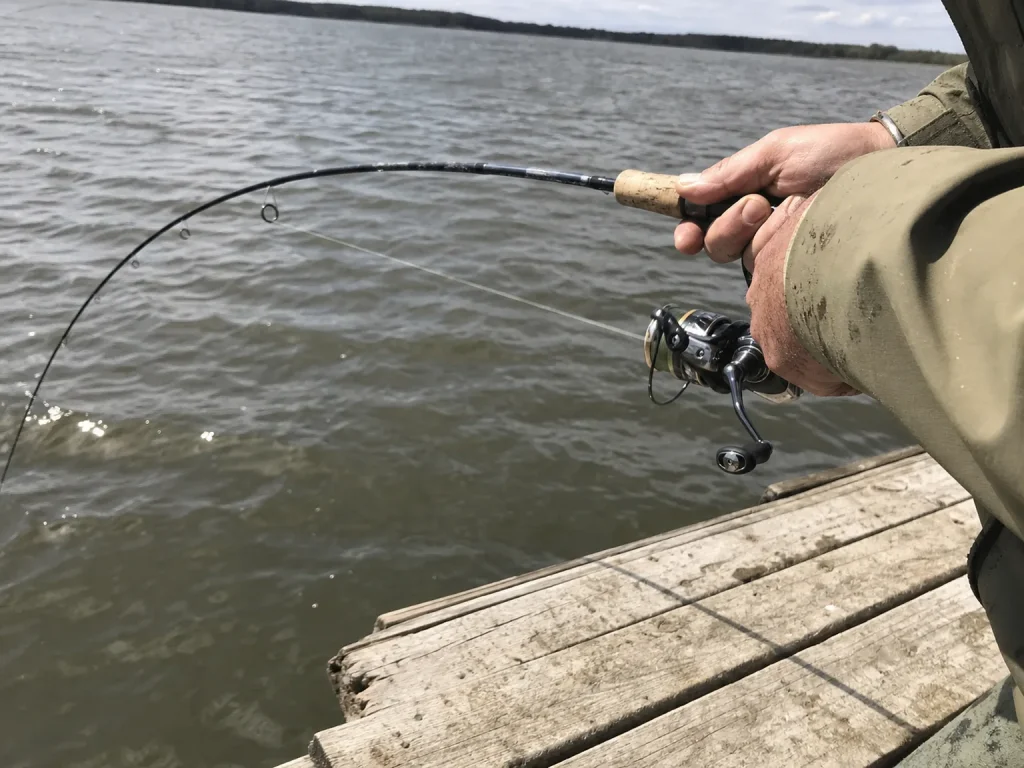
Here’s the part that matters on the water. Set the hook and feel the tip kick sideways instead of driving straight up, and you’ve felt what an ignored spine does.
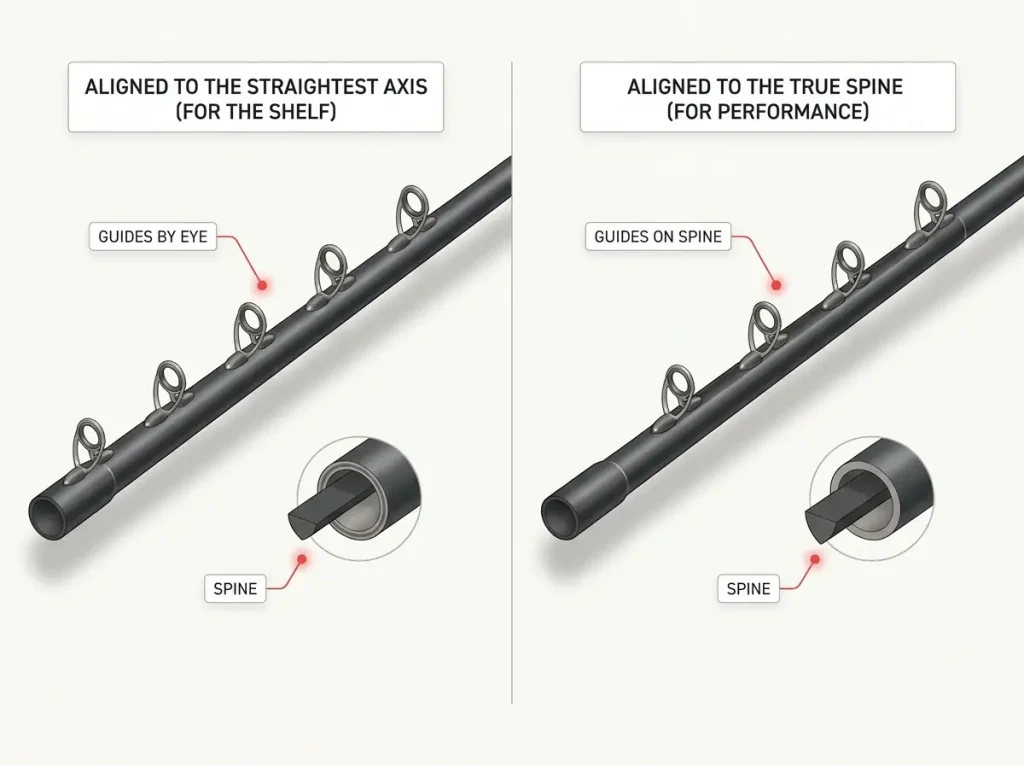
The guides are what control it. Placed on or directly opposite the spine, they keep the rod bending true. Placed at some random rotation, the blank tries to twist in your hands the moment it loads. The same patent filing puts it in one line: placing the guides along the spine or opposite it means the rod does not twist when it bends.
That twist bleeds into everything the rod is supposed to do well. Lifting power drops because the blank isn’t loading in one clean plane. Casting accuracy and casting distance suffer because the tip wanders off your target line. Over a season, a blank fighting its own bending plane just works harder than it should.
You won’t measure any of this with a gauge. You feel it as a rod that never quite loads straight, or a cast that drifts no matter how you hold it. That’s the language your rod uses to tell you the guides and the spine aren’t on speaking terms. Getting a feel for rod power and rod action, and how they decide the way a blank loads, makes those signals a lot easier to read.
Does Your Store-Bought Rod Already Account for It?
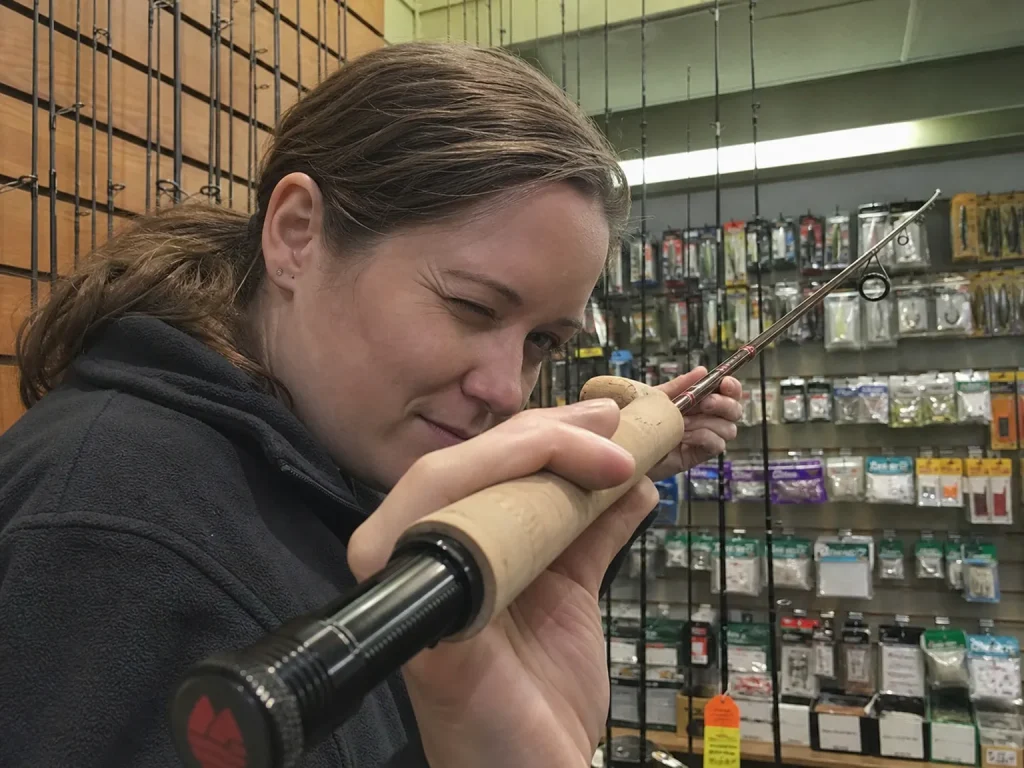
Now the question nobody writing about this actually answers. Almost every guide out there is written for the person building a rod from a bare blank. That’s not most of us. Most of us buy a finished rod off a rack and want to know one thing: did they already get this right, or did I get shortchanged?
The honest answer has two halves. On the cheap end, plenty of mass-market rods are aligned to whatever axis looks straightest on the store shelf, not the true mechanical spine. Straight-looking on the rack and spine-aligned are not the same thing, and the factory rod you grabbed from a bargain bin may well have its guides wherever the assembly line happened to lay them.
But the name brands mostly handle it. A fly-fishing forum crew once pulled apart finished rods from Orvis, TFO, Redington, Winston, and Greys, and found every one built either along the spine or deliberately opposite it. Not identically, and not using the 90-degree perpendicular method that some custom builders swear by, but accounted for on purpose. Reputable makers know about the spine and build around it.
If you buy from a known rod maker, assume the spine is handled and go fishing. Save your spine-checking energy for blem-rack blanks, no-name combos, and any rod you plan to rebuild yourself. That’s where alignment actually gets skipped.
So the verdict for a regular angler is calmer than the internet makes it sound. Bought a reputable-brand rod? It’s very likely fine. Our complete guide to buying and understanding fishing rods covers the rest of what actually deserves your attention at the counter, and reading what’s stamped on the blank matters more than most people think, which is why it helps to know how to read what’s printed on a rod before you pay.
How to Find the Spine by Hand
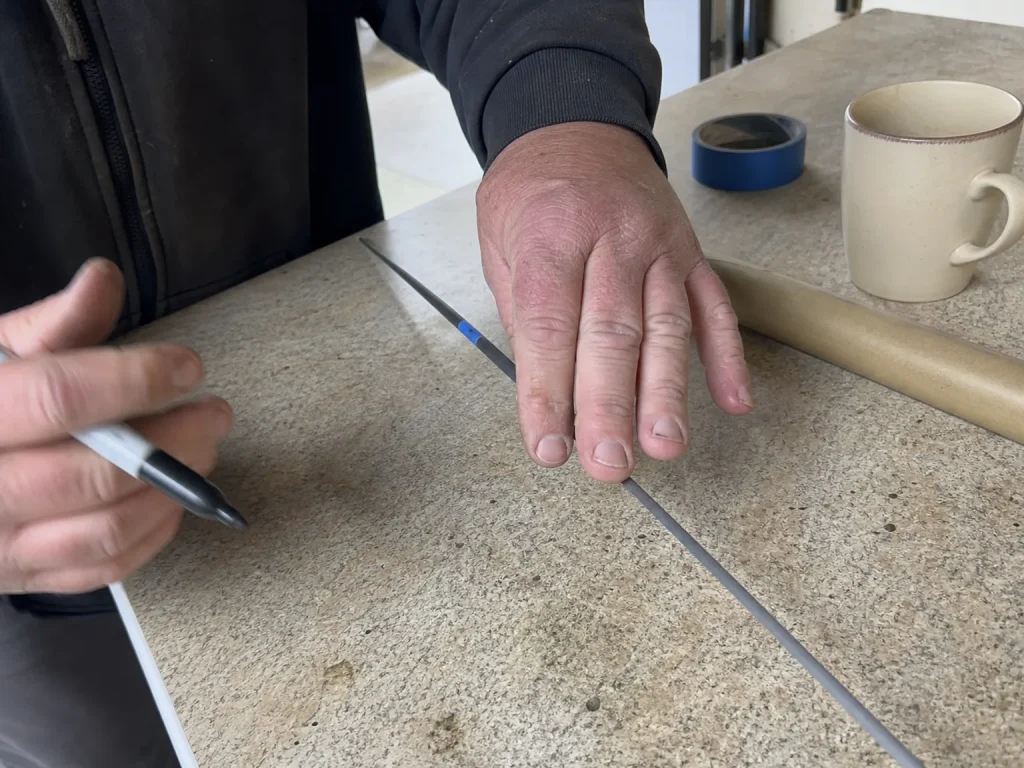
You don’t need a workshop or a single dollar of gear to find your spine. Two minutes at the kitchen table does it. This is the part the rod-building world tends to bury under jargon, so here’s the plain version.
The tape-and-roll method, step by step
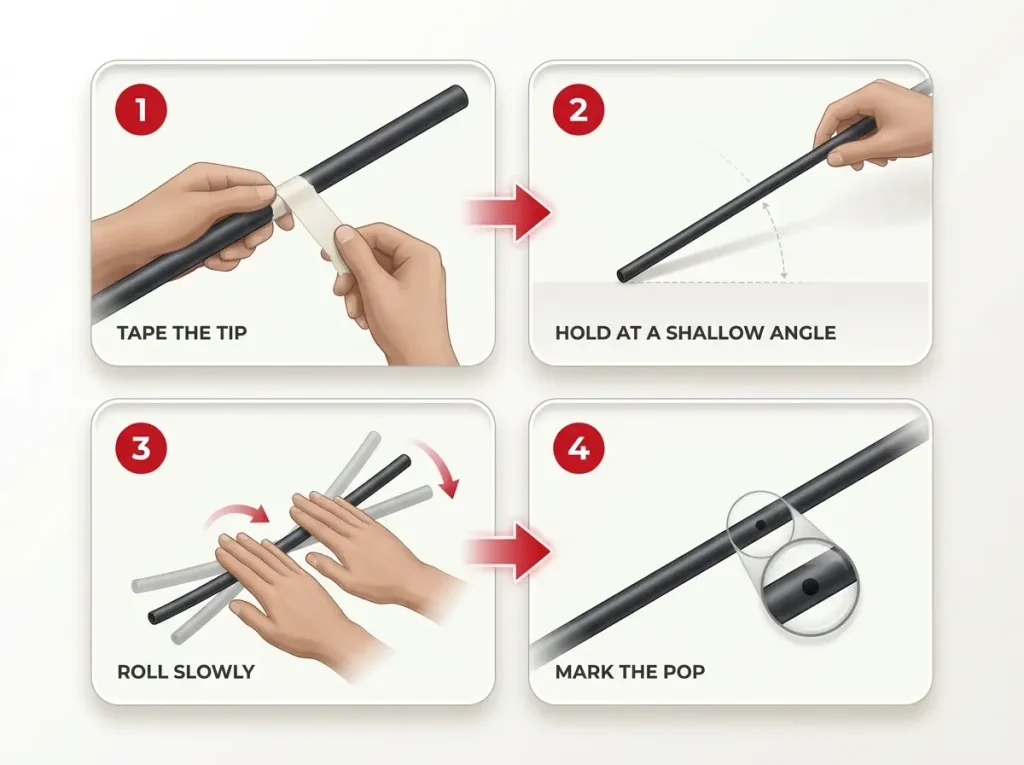
- Wrap a strip of masking tape around the blank about a third of the way down from the tip, as a visual reference point.
- Rest the tip against a hard flat surface and hold the blank at a shallow angle, around 30 degrees.
- Press your flat palm lightly on the middle of the blank and roll it slowly, letting the pressure bend it.
- Feel for the moment it “pops” into a pronounced curve that resists straightening back out.
- Mark the outside of that curve with a felt-tip. That’s your spine.
That’s the whole compression method. The only real skill is patience.
Roll it slow. Speed is the single reason people miss the pop, especially on a premium blank with a subtle overlap. And throw on eye protection while you’re loading the blank. If it slips or the tip fails under pressure, it whips, and it whips right at face height.
What the “pop” should feel like
The pop is easier to feel than to describe. One moment you’re rolling against even resistance, and the next the blank settles hard into a single plane and wants to stay there. It’s the blank telling you which way it prefers to bend.
Once you’ve felt it clearly on one rod, you won’t mistake it again. If you never feel it at all, you’re either rolling too fast or leaning on a blank with a genuinely faint spine, which is a good problem, not a missing one.
This is also the foundation of every custom build, so if you’re headed toward building a rod from a bare blank, get comfortable finding the spine first.
Which Side the Guides Go On
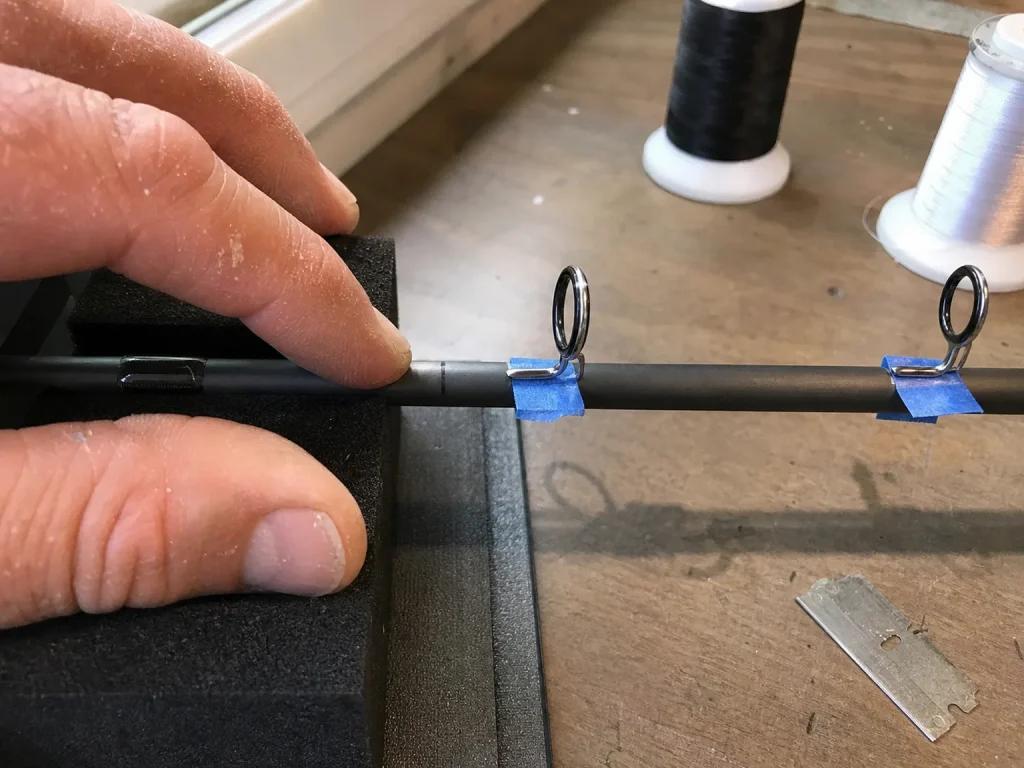
This is where guide placement gets flipped, and where a rod earns that twist we talked about earlier. The rule changes depending on the rod, which is why half the internet argues about it.
Spinning rods
On a spinning rod, the guides hang under the blank, on the inside of the curve. That means they go 180 degrees opposite the spine, on the softer belly of the rod. Put spinning guides on the spine instead and the rod will torque under load every time you lean on a fish.
Casting rods
On a casting rod, the guides ride on top, on the outside of the curve, which means directly on the spine. Same seam, opposite placement. Some builders take this further with a spiral wrap, transitioning the guides around the blank to manage the same forces, but that’s a technique for another day. The core rule is enough for now: casting guides on the spine, spinning guides opposite it.
Whichever guides you’re placing, which guide materials are actually worth it is a separate decision that outlasts the placement, so it’s worth getting right once.
Finding the Spine on Multi-Piece Rods
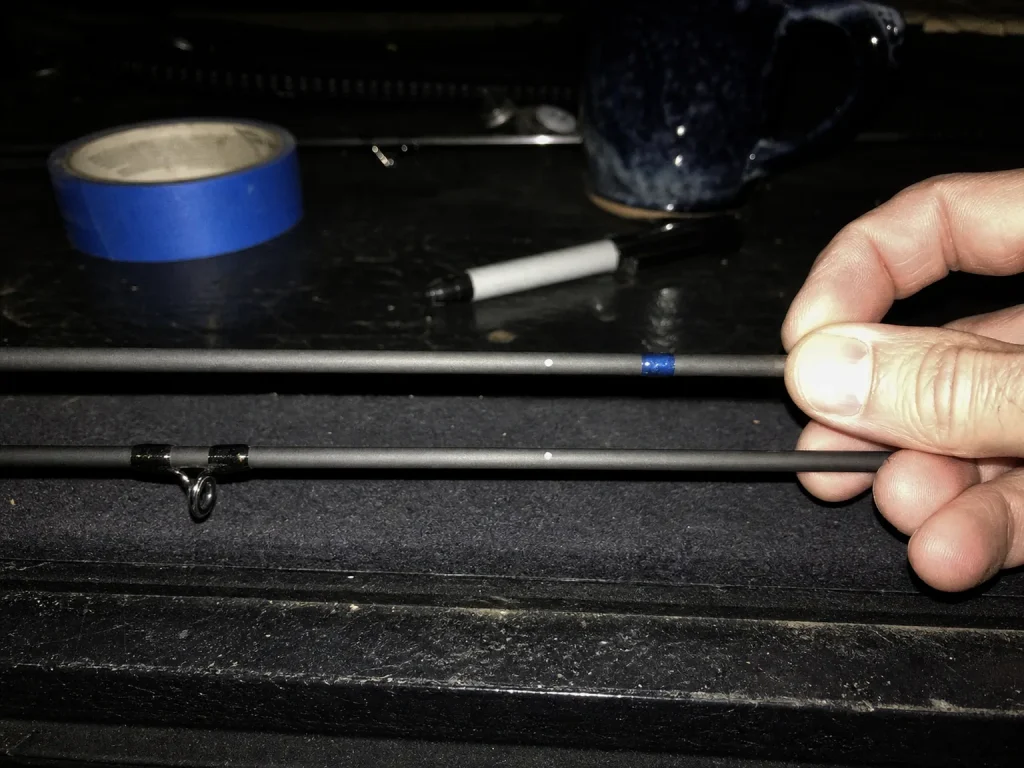
A two-piece rod that casts great on one trip and crooked on the next usually has a section quietly out of line. Here’s the fix.
Each section of a multi-piece rod has its own independent spine. You find and mark them separately, one section at a time, then assemble the rod so every section’s spine lines up in the same rotational orientation. Skip that and you can end up with one section on-spine and the other 90 degrees off, so the rod loads unevenly right through the ferrule.
For a rod owner rather than a builder, the tell is simple. If a two-piece feels different depending on how you seat the ferrule, mismatched sections are a likely reason. It’s the same reason the real trade-offs between one-piece and two-piece rods come down to more than just travel convenience.
Is a Mechanical Spine Finder Worth Buying?
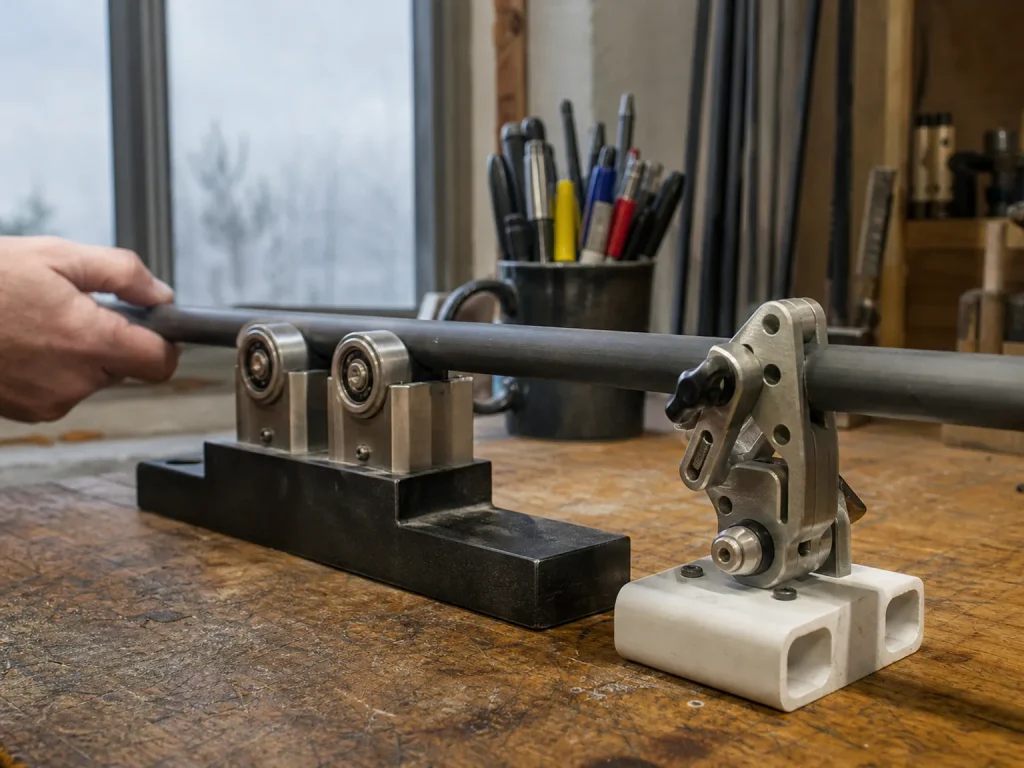
Now the question the tool sellers won’t answer straight. There’s a device for this, and whether you need it is a much shorter conversation than they’d like.
What the tool actually does
A mechanical spine finder cradles the blank in twin precision ball bearings set about 10 to 12 inches apart, with an articulating head that holds one end. The bearings let the blank rotate almost friction-free, so it settles to its spine on its own. The point is to remove your hand and the tabletop from the reading, because that friction is exactly what can hide a subtle spine on a premium, thin-overlap blank. The CRB Spine Finder and Deflection System is the one that shows up most for this, and it’s about the only dedicated tool of its kind still easy to find, though stock tends to run thin.
The honest tape-vs-tool verdict
The straight version: the free tape method is perfectly adequate for the vast majority of anglers and DIY repair folks. The tool only starts earning its keep once you’re building more than two or three rods, or you’ve genuinely struggled to feel the pop by hand on subtle blanks.
If you’re checking or repairing one rod this year, skip it and use a strip of tape. If you’ve caught the rod-building bug and you’re doing this every month, it’s a reasonable, mid-range buy that saves fumbling. That’s the whole decision.
Don’t buy the tool to check a rod you already own and fish. If a finished rod casts straight and loads clean, it doesn’t matter which side the spine is on: it’s already working. The tool is for people building the next rod, not second-guessing the last one.
Does Spine Even Matter Once a Fish Is Pulling Drag?
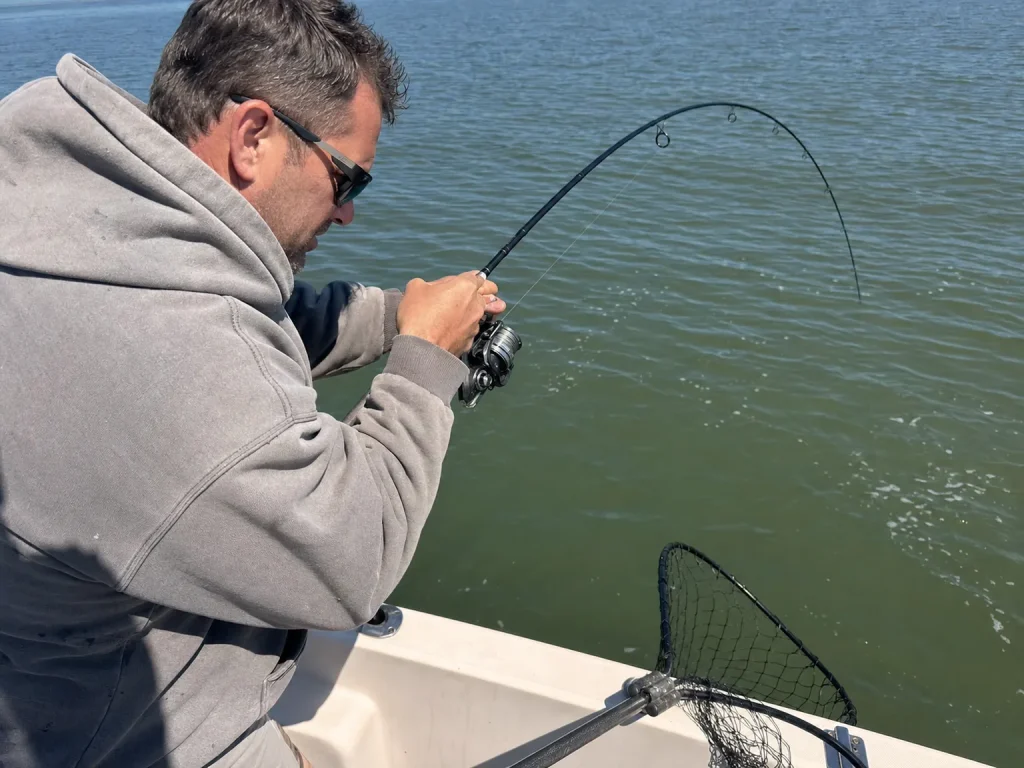
You’ve read the whole method. Here’s the part that should have been at the top of every other article and never is: does any of this change anything when a fish is actually bending the rod?
The honest verdict by rod type
Mostly, it matters for casting rods. An off-spine casting rod can visibly torque under a real bend, and you’ll feel it kick. On spinning and fly rods, the effect is close to eliminated once the rod is fully loaded.
Plenty of experienced anglers flatly call spine-chasing much ado about nothing for anything but a casting rod. Even the custom fly builders concede it: under full load, a well-built rod’s spine effect is negligible, because a bent rod bends where the fish tells it to.
So if you fish a reputable-brand spinning rod that casts straight and feels fine in your hands, spine alignment is almost certainly not the thing between you and more fish. Don’t let the rod-building corner of the internet sell you a problem you don’t have.
How to tell your rod is off-spine without a bench
You don’t need tape or a tool to notice trouble. The on-spine rod behaves; the off-spine one leaves clues while you fish it.
- The rod twists in your hand on a hard hookset instead of driving straight up.
- The guides seem to have “wandered” slightly out of a straight line over a season of hard use.
- The rod casts a touch crooked no matter how you hold it or how clean your stroke is.
Any one of those is worth a two-minute tape check at home, if only to rule the spine out. A blank fighting its own bending plane and one hiding a hairline stress fracture can feel unsettlingly similar in the hand, so it pays to know which one you’re actually dealing with.
Where the spine genuinely earns your attention is narrow and honest: casting-rod builders, blank repairs, and anyone squeezing out every last yard of casting distance and accuracy. Everyone else can find it once, out of curiosity, and get back to fishing.
Conclusion
Every blank has a spine, the expensive ones included. Two minutes with a strip of tape tells you exactly where it lives. And for a store-bought spinning rod from a maker you trust, it almost never costs you a fish, because it matters most to the folks building casting rods from bare blanks.
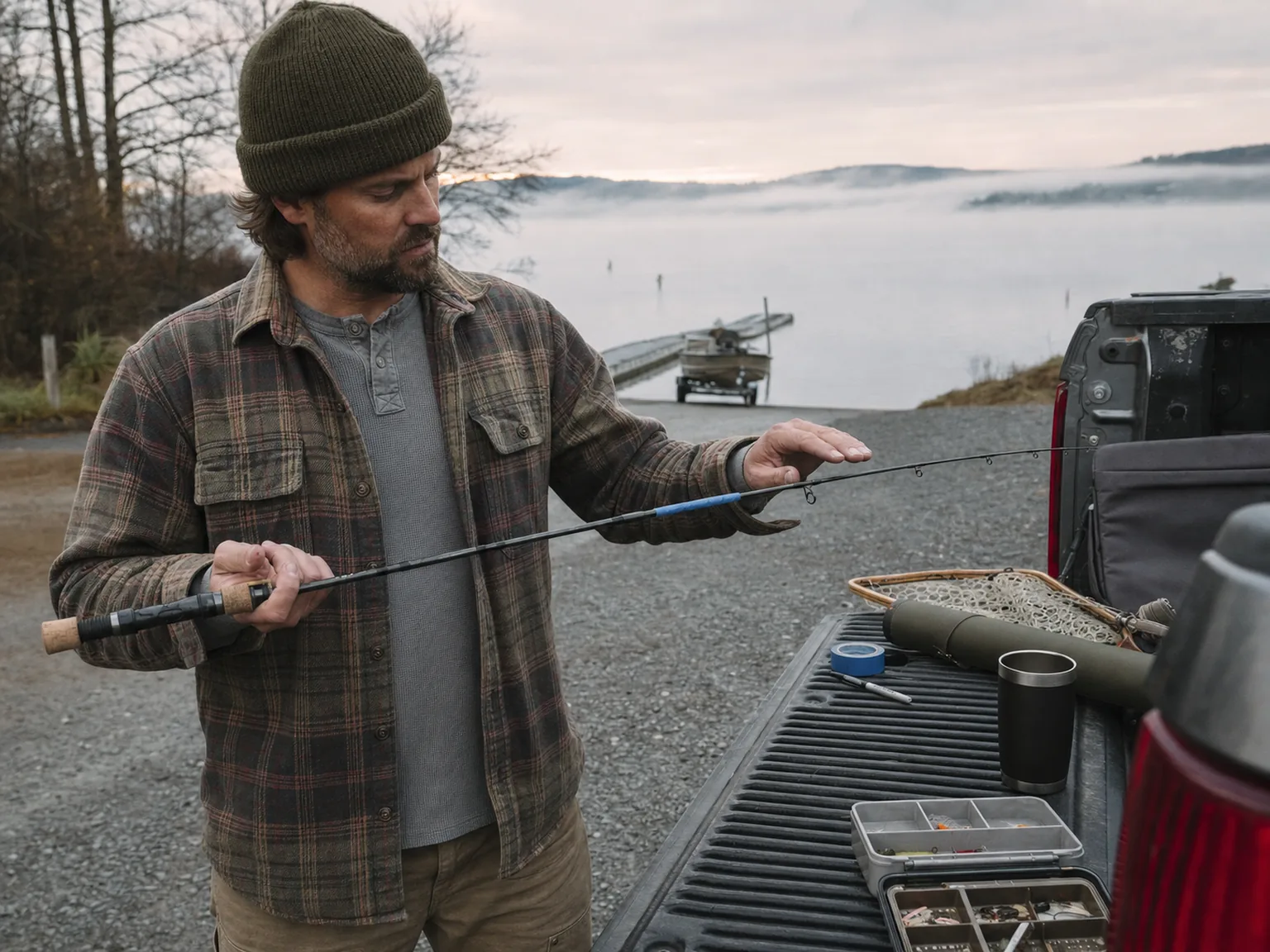
Next time you’re re-tying at the truck, roll your rod tip along the tailgate and find your spine once. Feel the pop, mark it, and decide for yourself whether it changes a thing about how your rod loads. Odds are you’ll go right back to fishing, which is exactly the point.
Frequently Asked Questions
01Does every fishing rod have a spine?
Yes. Every wrapped-composite blank has a spine, because the material overlap that creates it is unavoidable in manufacturing. Premium rods just have a subtler, harder-to-feel spine, never zero.
02Do fishing rod guides go on the spine or opposite it?
It depends on the rod. Casting-rod guides go on the spine, on the outside of the curve. Spinning-rod guides go opposite the spine, on the inside. Reversing this makes the rod twist under load.
03Do I need to find the spine on a rod I bought finished?
Usually no. Reputable brands already build with the spine accounted for, so a finished rod from a known maker is very likely set up right. It mainly matters if you build or repair a rod yourself.
04Does the spine actually matter when you are fighting a fish?
Mostly for casting rods, much less for spinning and fly rods, where the effect nearly disappears under a real load. If your spinning rod casts straight and feels fine, spine alignment is almost certainly not costing you fish.
05Can you find the spine without any special tools?
Yes. Tape a spot near the tip, hold the blank at about 30 degrees, and roll it under light pressure until it pops into its natural curve. The outside of that curve is the spine. A mechanical tool only helps if you do this often.
Risk Disclaimer: Fishing, boating, and all related outdoor activities involve inherent risks that
can lead to injury. The information provided on Master Fishing Mag is for educational and informational purposes
only. While we strive for accuracy, the information, techniques, and advice on gear and safety are not a substitute
for your own best judgment, local knowledge, and adherence to official regulations. Fishing regulations, including
seasons, size limits, and species restrictions, change frequently and vary by location. Always consult the latest
official regulations from your local fish and wildlife agency before heading out. Proper handling of hooks, knives,
and other sharp equipment is essential for safety. Furthermore, be aware of local fish consumption advisories. By
using this website, you agree that you are solely responsible for your own safety and for complying with all
applicable laws. Any reliance you place on our content is strictly at your own risk. Master Fishing Mag and its
authors will not be held liable for any injury, damage, or loss sustained in connection with the use of the
information herein.
Affiliate Disclosure: We are a participant in the Amazon Services LLC Associates Program, an
affiliate advertising program designed to provide a means for us to earn advertising fees by advertising and linking
to Amazon.com. As an Amazon Associate, we earn from qualifying purchases. We also participate in other affiliate
programs and may receive a commission on products purchased through our links, at no extra cost to you. Additional
terms are found in the terms of service.