
In this article
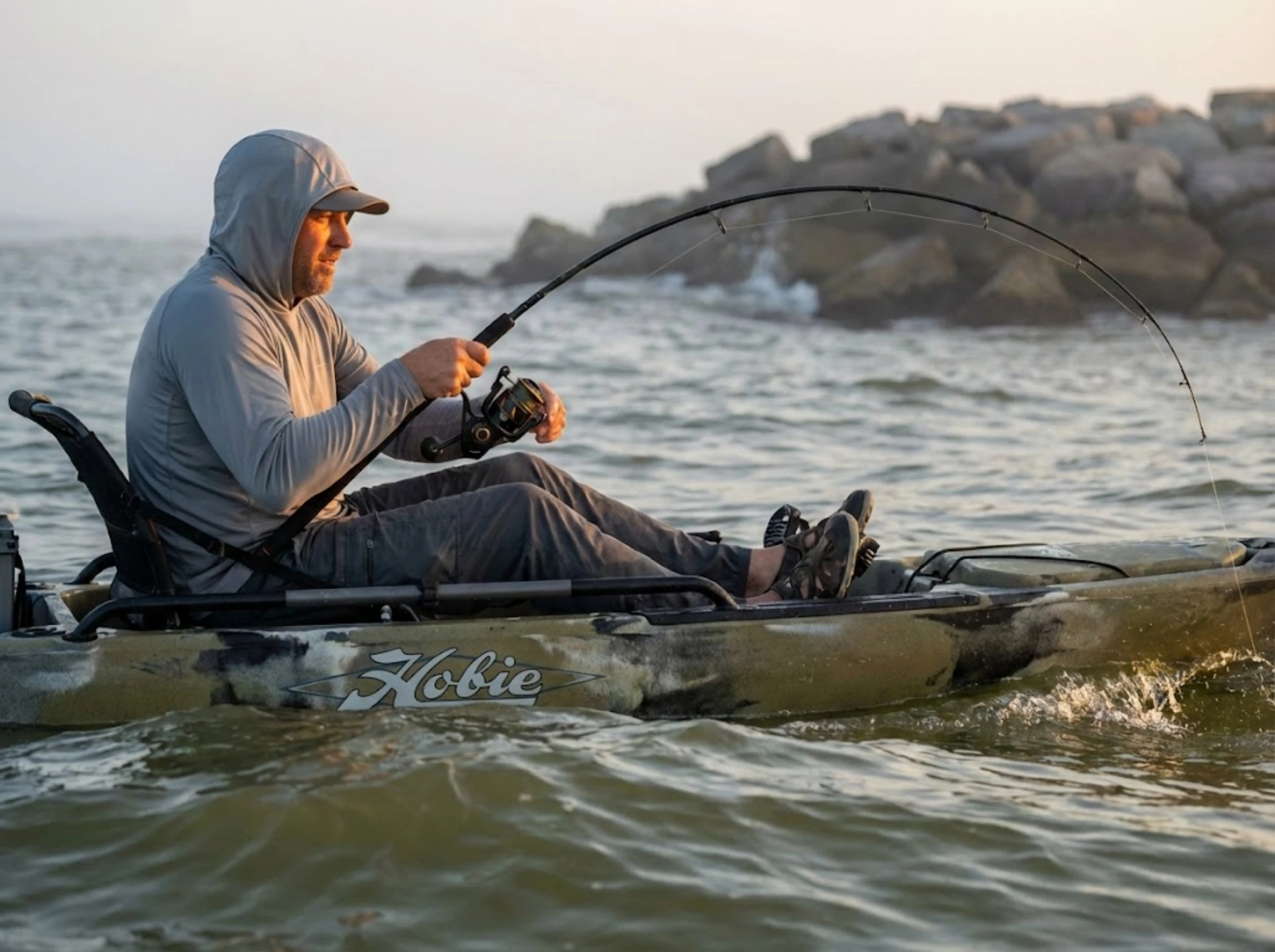
The drag screamed as the 36-inch red drum pulled my kayak sideways through the murky water of San Luis Pass—a “Texas sleigh ride” I hadn’t planned for at 6 AM on an incoming tide. Three hundred feet later, fighting both fish and current, I understood why locals call this pass “The Pass of Death.” But that bull red, bronze and glittering in the September sun, made every white-knuckled moment worth it.
After two decades chasing these fish from Sabine to South Padre, I’ve learned that success with bull redfish isn’t about luck—it’s about being in the right place at the right time with the right approach. This guide breaks down 15 proven kayak fishing spots along the 367-mile Texas coast where bulls congregate from August through November during their annual spawning migration.
⚡ Quick Answer: The best kayak fishing spots for bull reds on the Texas coast are the major Gulf passes where mature redfish (>28 inches) congregate during the fall run. Top spots include Port O’Connor’s Little Jetties, San Luis Pass, Sabine Pass, and Packery Channel. Target strong incoming tides during new and full moon phases from August through November for best results.
Understanding the Bull Red Migration: Why Location Matters
Before you paddle out, you need to understand what drives these fish and where they’ll be. Bulls aren’t the same fish you sight-cast in the shallows—they’re mature spawners following ancient migration patterns, and knowing this pattern is what separates a great day from an empty cooler.
The Fall Run Phenology
Every August through November, red drum exceeding 28 inches migrate from the bays to Gulf passes to spawn. This isn’t random—it correlates with the autumnal equinox and stormy fall weather patterns that signal their biological clock.
The key variable is tide. “The primary key to this incredible fishing is strong incoming tides, which peak in strength during new and full moon phases,” says Capt. Jim Reed, a Port O’Connor guide who’s put hundreds of kayakers on bulls. Plan your trips around that lunar calendar—it’s as predictable as clockwork.
And don’t underestimate these fish. The Texas record bull red tipped the scales at 59.5 pounds. Your gear needs to handle serious stress loads when a fish that size decides to tow your kayak toward the Gulf.
Pro tip: Track solunar theory and fish activity patterns and plan your launch for two hours before peak incoming tide on new or full moon days. That’s your highest-probability window.
Slot Reds vs. Bull Reds: Different Fish, Different Tactics
The slot red (20-28 inches) you sight-cast on the flats is a completely different animal from a bull. Slots hide in skinny water, tailing on seagrass flats and marsh edges. Bulls patrol deep channels, passes, and the edges where shallow flats drop into the Intracoastal Waterway.
The tactical difference matters: you’re not tiptoeing through lagoon shallows with a fly rod. You’re anchoring in heavy current, soaking cut mullet or crab, and holding on when something connects. The reward? Fish you can’t legally keep (bulls must be released unless you have an “Oversized Tag”), but an experience you won’t forget.
The Upper Coast: Turbid Water Bull Red Territory
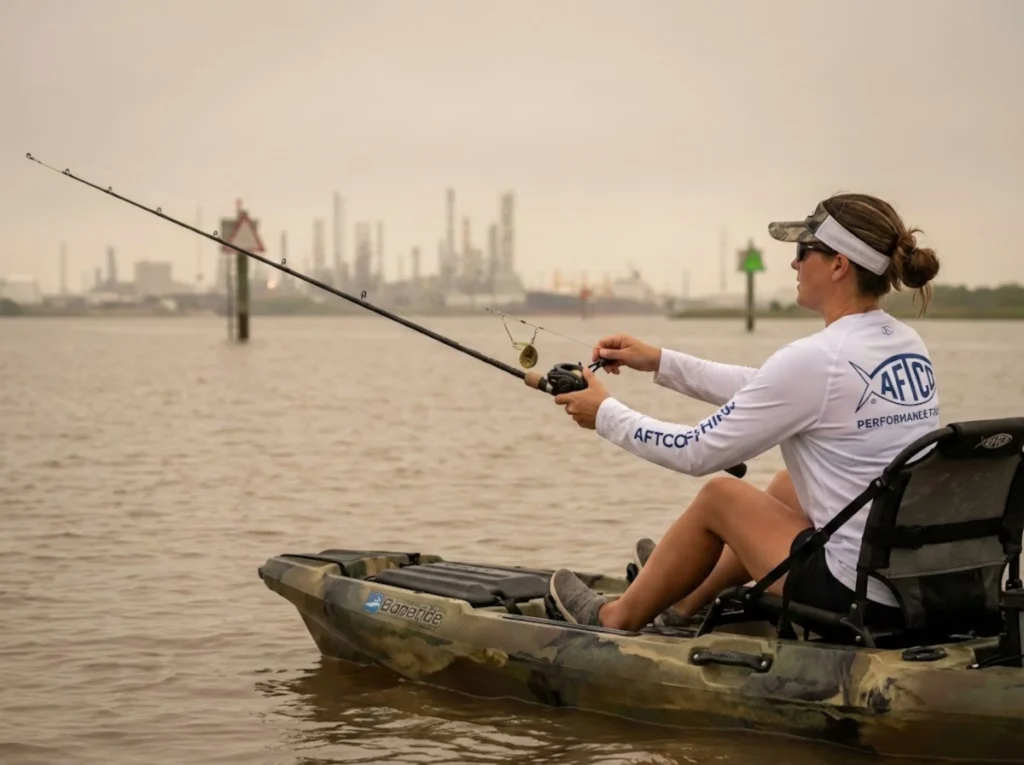
The upper coast from Sabine Pass to Galveston Bay presents a unique challenge: turbid water that makes sight fishing impossible. But that chocolate-milk murk is actually an advantage—it concentrates baitfish and creates ambush points where bulls stack up.
Sabine Pass & Keith Lake Cut
Launch at Junior’s Landing (Keith Lake boat ramp), three miles north of Sabine Pass on Highway 87. This puts you at the entrance to a marsh system where the Keith Lake Cut acts as a hydraulic funnel, forcing shrimp and menhaden through a narrow corridor that bulls use as an ambush point.
The water is consistently stained—no point looking for tailing fish here. Instead, rely on vibration and scent. Rattling corks and scent attractants for inactive fish are your primary tools. Cut mullet or blue crab releases a scent plume that pulls bulls from structure you can’t see.
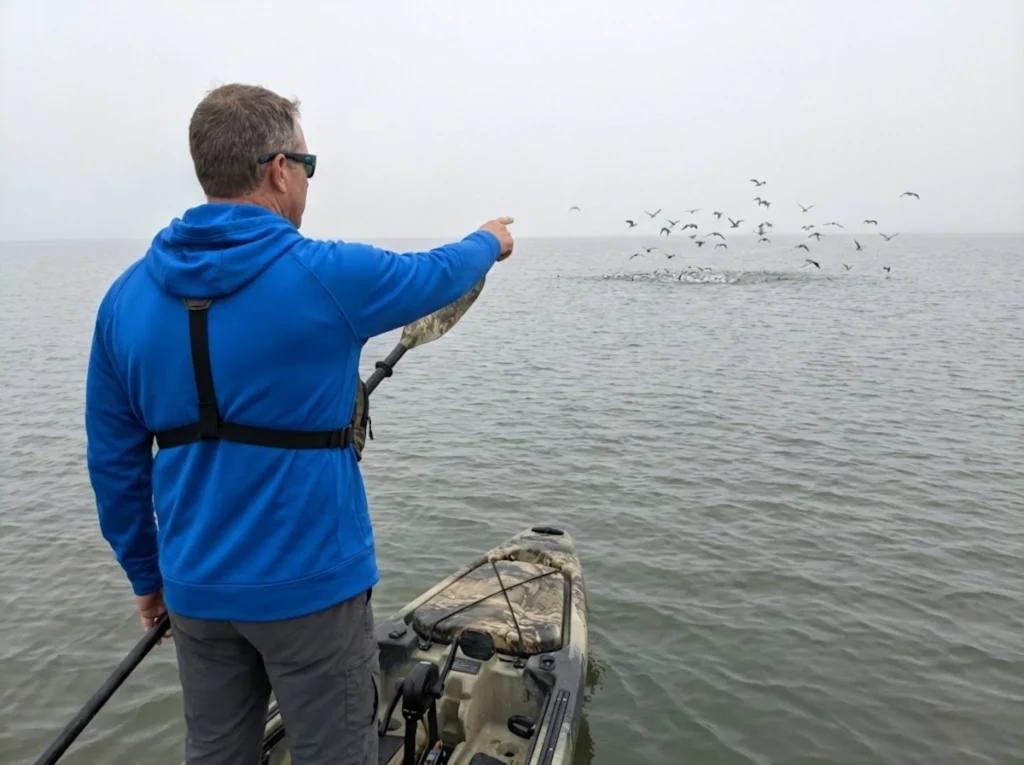
Watch for birds. From August through October, bulls school under diving pelicans and gulls in the open waters of Sabine Lake. When you see bird activity, paddle hard—those fish won’t stay put.
Pro tip: This is a working ship channel. Industrial traffic creates massive wakes that can swamp a kayak. Keep distance from the channel center and always face approaching vessels.
San Luis Pass: The “Pass of Death”
I’m not going to sugarcoat this: San Luis Pass has killed people. “Rip tides—people die there regularly” isn’t forum hyperbole; it’s documented fact. The natural, un-jettied pass creates dynamic shifting sandbars and currents that even experienced kayakers underestimate.
But it’s also a superhighway for bull redfish entering West Bay to spawn. If you’re going to fish it, launch from San Luis Pass County Park on the Brazoria side for a paved ramp and proper parking. The primary tactic is anchoring in the “gut” on the bay side of the bridge, soaking large cut baits on the bottom.
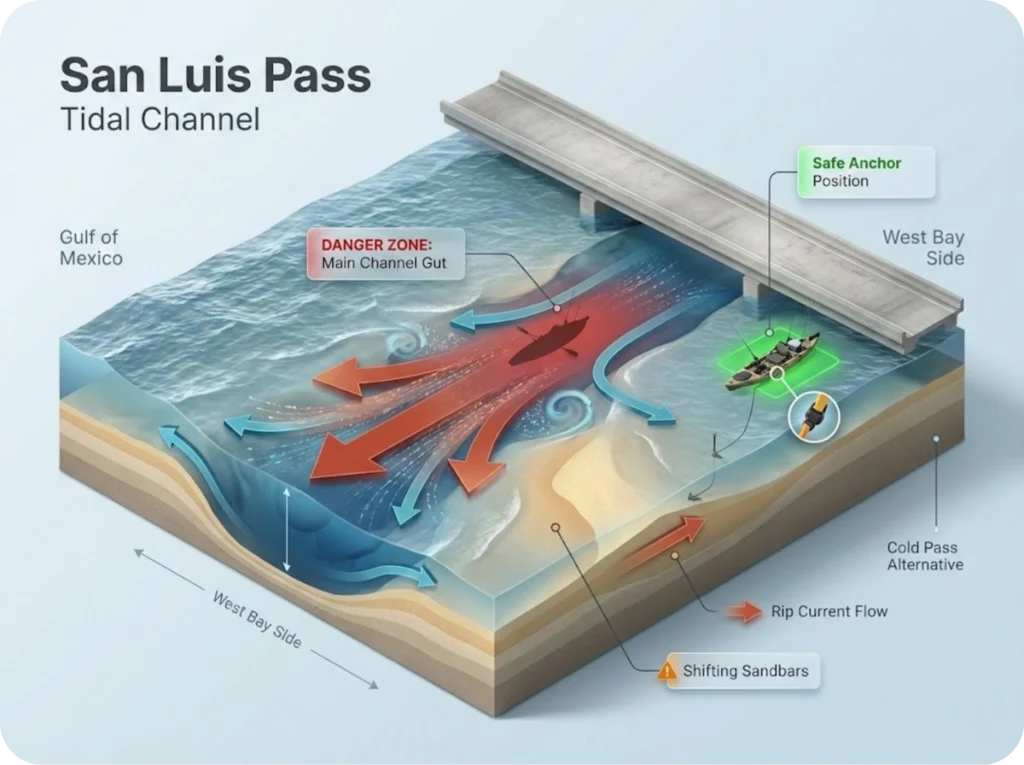
Non-negotiable safety gear: A quick-release anchor system, PFD worn (not stowed), and a filed float plan with someone onshore. Understanding deep-water kayak re-entry techniques is critical if you flip. Never fish this pass alone.
The adjacent Cold Pass offers a safer alternative—you get access to the productive pass flow without the extreme exposure of the main channel. For most kayakers, that’s the smarter play.
Christmas Bay & Galveston Island State Park
When San Luis is too rough or you need a calmer alternative, Christmas Bay delivers. This Coastal Preserve boasts the healthiest seagrass beds on the upper coast and exceptional water clarity—a rare thing this far north.
The deep cuts connecting to Cold Pass and Churchill Bayou act as highways for bulls entering from San Luis. Target those cuts, not the open flats. Watch your hull on the oyster reefs—they hold fish but slice through plastic hulls and unprotected feet.
Galveston Island State Park offers managed infrastructure with paved parking and saltwater flats ecosystems that provide lee shores when prevailing southeast winds hammer the open Gulf. Entry fee is $5 per adult, and the security beats any roadside launch.
The Mid-Coast: Port O’Connor & The Crown Jewels
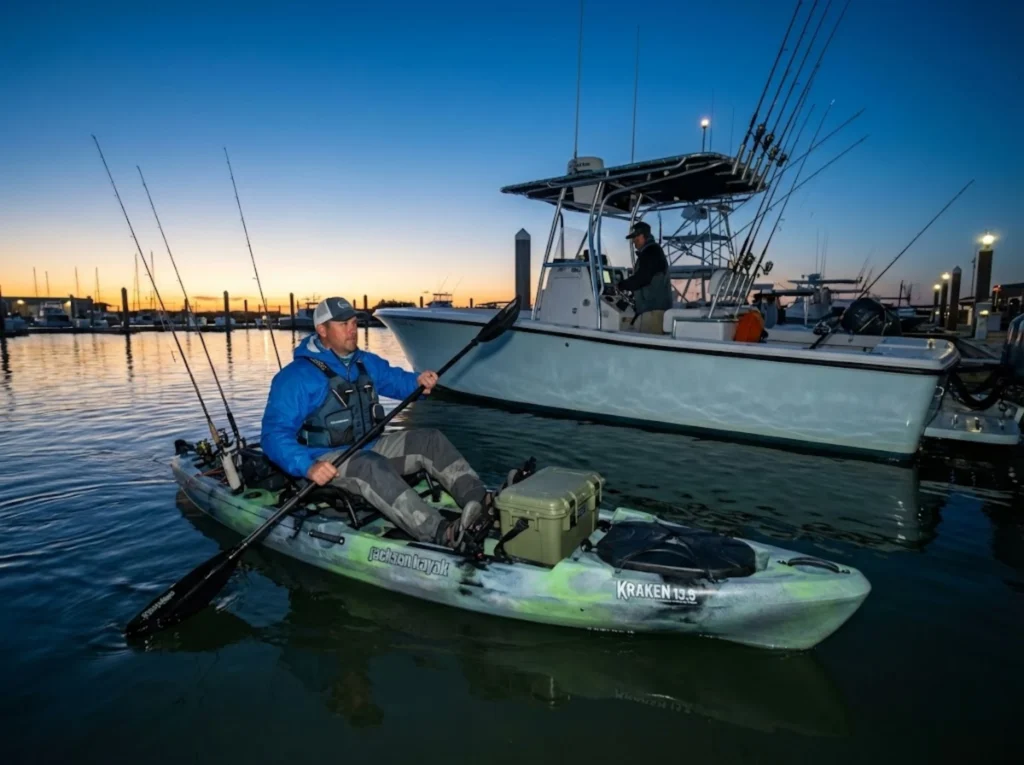
This stretch from East Matagorda through Aransas Pass holds the premier destinations for serious kayak anglers—and the infrastructure to support full-day trips.
Surfside Jetty County Park
The massive granite breakwaters protecting Freeport Harbor create a nutrient plume where the Brazos River meets the Gulf. This intersection is irresistible to Bull Reds. The depth drops rapidly to 30+ feet—requiring heavier tackle than bay fishing.
Surfside is described as a “surefire” location for bulls during the fall run (September through November). Launch from the county park for paved parking and a short paddle to the jetty structure. Hazard note: Major port traffic generates displacement wakes that can capsize a kayak. Maintain distance from the channel center.
Port O’Connor: The Little Jetties
If I could only fish one spot for bulls, it would be Port O’Connor. The “Little Jetties” at the intersection of the Intracoastal Waterway and Matagorda Bay create a current seam where bait sweeps into deep water. Bulls stack here, especially on strong incoming tides during new and full moons.
Launch from The Fishing Center (private marina with ramp and supplies) or the public right-of-way at Washington Street. But here’s the real advantage for weekend warriors: shuttle services. Capt. Jim Reed offers “mothership” transport that drops kayakers at remote spots like Matagorda Island—places you couldn’t reach on your own.
That shuttle solves the biggest problem in Texas kayak fishing: battling headwinds. A six-mile paddle against 15 mph southeast wind isn’t fishing—it’s suffering. Understanding boat control in heavy wind helps, but the shuttle lets you fish, not paddle.
Pro tip: Book the shuttle service and save your energy for actual fishing. Your arms will thank you.
Lighthouse Lakes: The Mangrove Maze
Near Aransas Pass, this was Texas’s first designated Paddling Trail. The black mangrove forest provides unique structure, and the deeper channels like Lydia Ann serve as patrol routes for bulls moving between the bays and Gulf.
Multiple launches exist along Highway 361—Cutters Loop Access and Crabman Marina are the most popular. But pay attention: the area is a genuine maze. GPS-referenced pilings (Marker 1 through Marker 60) keep you oriented, but carry a photomap and handheld GPS as backup.
Critical hazard: reaching the trails from the park put-in requires crossing the Aransas Channel perpendicular to shrimp boat traffic. Commercial vessels have right-of-way. Cross early morning before traffic intensifies.
Brown & Root Flats
For pure accessibility, you can’t beat Brown & Root. Park along the right-of-way on Highway 361 and launch directly into vast seagrass flats with excellent water clarity. Drive-up fishing doesn’t get easier.
The bull red tactic here is specific: paddle the edge where the flats drop into the ICW channel. Bulls cruise that drop-off, intercepting bait that moves between shallow flats and deep water. Watch for “prop scars“—trenches cut by boat propellers across the grass. Fish use these as travel lanes.
Sight fishing techniques for shallow water work here when clarity cooperates. Look for “nervous water“—surface disturbances that contradict wind direction, indicating fish moving below.
The Lower Coast: Gin-Clear Laguna Madre & Beyond
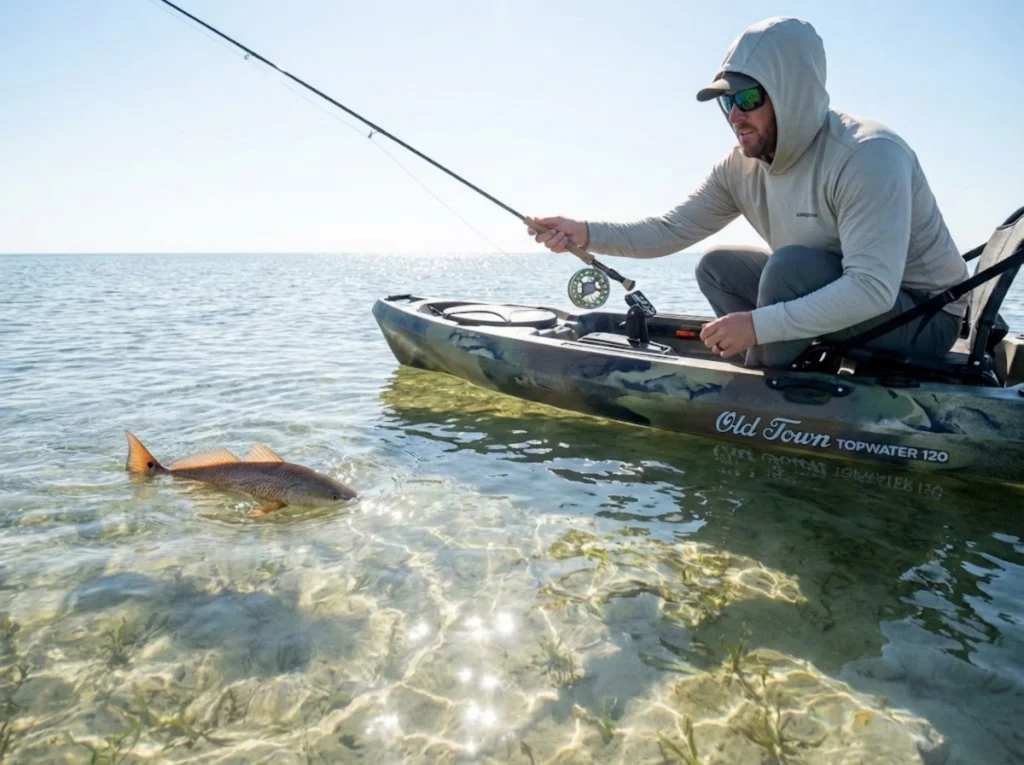
South of Corpus Christi, the coast transforms. Hypersaline lagoons mean crystal-clear water and a visual fishing style impossible in the turbid upper coast.
Bird Island Basin & Packery Channel
Bird Island Basin launches you into the Upper Laguna Madre—a hypersaline lagoon where vast seagrass meadows stretch to the horizon. Bulls patrol the deeper edges of spoil islands along the ICW. That drop-off is your target zone.
One critical attribute: wind. This is the windsurfing capital of Texas for a reason. Plan to launch at dawn and be off the water by mid-morning when sustained 20-knot winds make paddling miserable. Use kayak fish finders for locating drop-offs to identify the structure edge efficiently.
Packery Channel is a man-made, jetted pass funneling bulls between the Gulf and Laguna Madre. Prime fall run territory with high-density encounters—but the tidal flow can turn your kayak into a treadmill if you’re underpowered.
Federal entrance fee for Bird Island Basin: $15-$25 (distinct from state park passes).
Baffin Bay: The Serpulid Rock Paradise
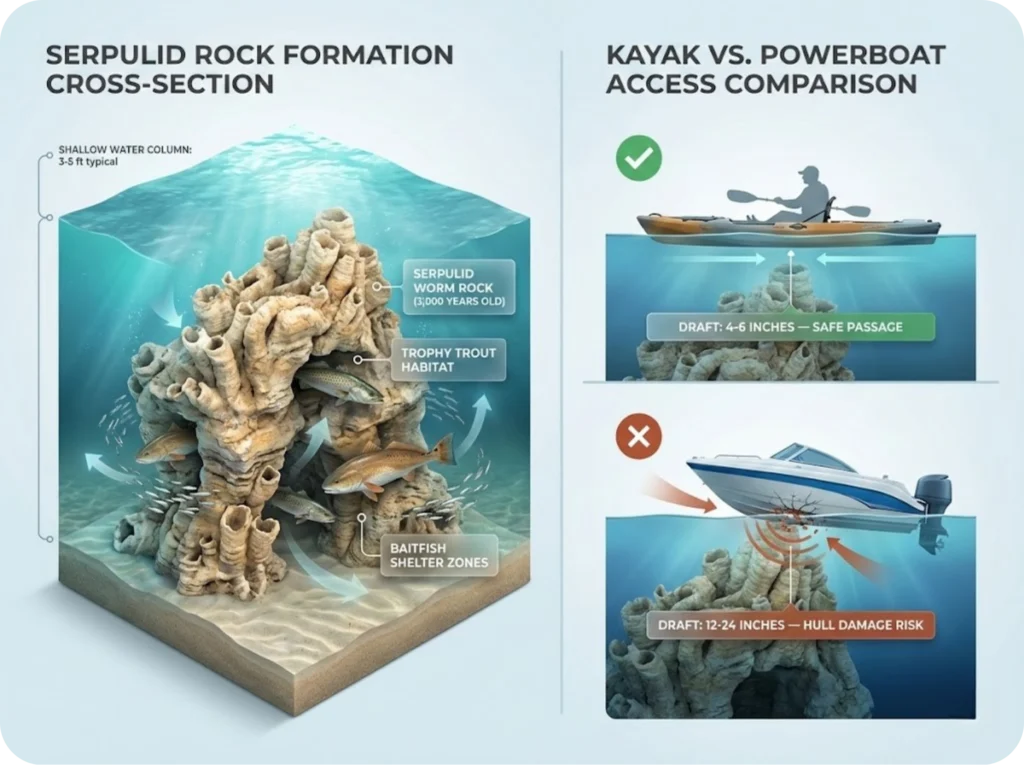
This is legendary water. Baffin Bay has no direct pass to the Gulf, creating a hypersaline ecosystem where fish grow massive. The defining feature is “serpulid worm rocks“—fossilized reefs created by tube worms 3,000 years ago. They’re the only hard structure in the bay, and trophy fish congregate around them.
“Structures built 3,000 years ago by serpulid rock worms create a unique ecosystem harboring bait and providing shelter for big trout and reds,” explains Capt. Filip Spencer, who specializes in this water.
Here’s the kayak advantage: powerboats destroy their hulls on these rocks (locals call the area “The Badlands”). You glide over hazards that would wreck a fiberglass boat. Launch from Kaufer-Hubert Memorial Park—free public ramp and pier access.
The isolation is real. Cell service is spotty to nonexistent. Self-rescue capability is non-negotiable. Bring a VHF radio or satellite messenger.
South Padre Island: The Old Causeway
At the southern tip of Texas, the Lower Laguna Madre features “gin-clear” water that allows visual fishing impossible anywhere else on this list. The ruins of the original Queen Isabella Causeway create a massive underwater artificial reef—pilings that attract bulls, snook, and tarpon.
This is the only spot where you might hook all three species in a single session. The tropical climate produces species diversity unique on the Texas coast. Launch from the causeway base or Isla Blanca Park.
Gear, Safety & The Texas Kayak Fishing Reality
All the spot knowledge in the world won’t help if you’re underpowered, underequipped, or overconfident.
Essential Kayak Setup for Pass Fishing
Pedal-drive kayaks (Hobie Mirage, Native Watercraft) aren’t optional for pass fishing—they’re essential. Hands-free propulsion lets you maintain position in current while fighting fish and navigate against tidal flow. A mod-ready fishing kayak platform gives you the foundation to build your setup.
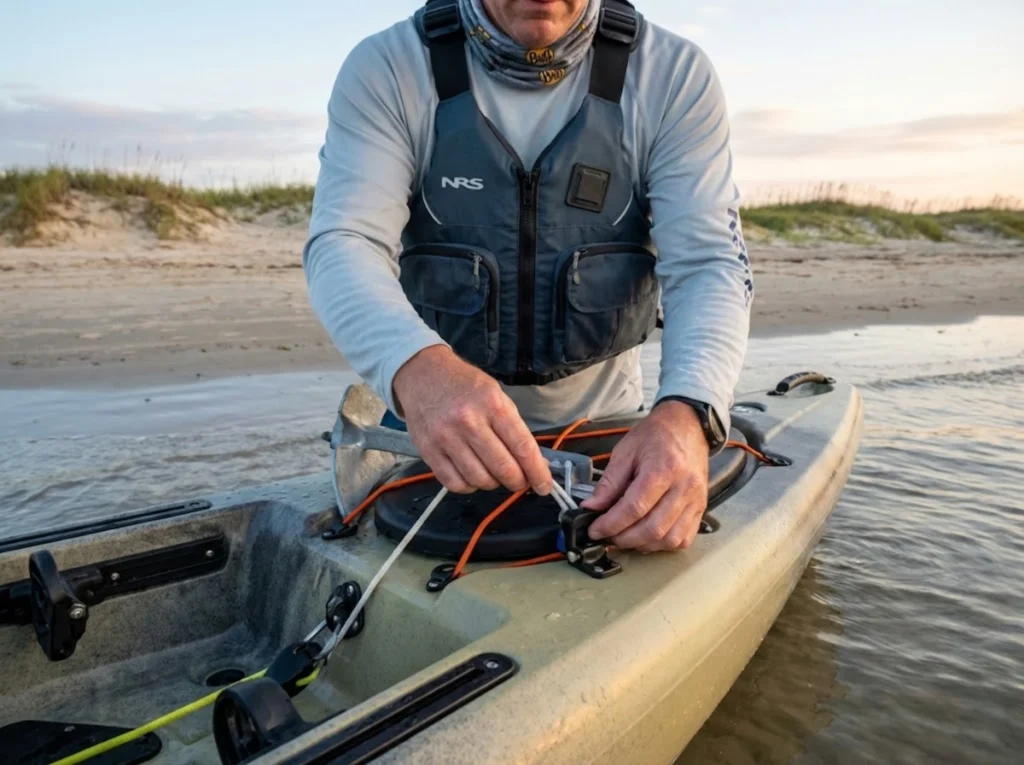
Rig for sleigh rides. When a 40-pound bull decides to tow you, you need rod holders positioned to manage the fight and a quick-release anchor system to dump your hook instantly if you’re being pulled into danger.
“When dealing with inactive fish, a slower presentation bumping along the bottom can trigger bites,” advises Prof. Salt, a veteran kayak fishing educator. Match your tactics to conditions—aggressive fish hit topwater lures and gold spoons; lockjaw fish need slow bottom presentations with scent.
Safety Protocols for High-Energy Waters
This shouldn’t need saying, but forum threads prove otherwise: PFD worn, not stowed. A vest sitting on your deck won’t save you when you flip in the gut at San Luis.
For remote spots like Baffin or the Matagorda back-lakes, cell coverage doesn’t exist. Carry a VHF radio or satellite messenger (Garmin InReach) as communication redundancy. File a float plan with someone who will call for help if you don’t check in. Review complete fishing safety protocols before tackling any pass environment.
The community wisdom is blunt: “Dude went in the pass in a kayak—they found his body two weeks later. I’d never play in the Pass.” That’s not fear-mongering. It’s respect for conditions that kill.
Conclusion
The 367 miles of Texas Gulf Coast offer more bull red opportunities than any kayaker can explore in a lifetime. But success comes down to three factors: timing your trip to the fall moon phases that trigger aggressive feeding, choosing spots with current dynamics that match your skill level, and showing up with gear that can survive the Texas sleigh ride when a 40-pounder decides to tow you toward the Gulf.
Start with managed environments like Galveston Island State Park or Mustang Island to dial in your setup. Graduate to the high-reward passes like Port O’Connor when you’re ready for the real test. The bulls are waiting—they make the same migration every fall.
Now you know where to intercept them.
FAQ
Do I need a fishing license to kayak fish in Texas?
Yes. Once your kayak leaves shore, you need a valid Texas fishing license with a saltwater stamp. The only exemption is fishing from shore or pier within certain state parks—kayak fishing always requires a license.
What’s the best kayak for Texas coast bull red fishing?
A pedal-drive kayak (Hobie, Native Watercraft) provides significant advantage in pass currents. Minimum 12-foot length for stability; sit-on-top design for safety.
Can you keep bull reds in Texas?
Generally no. Red drum over 28 inches must be released unless you possess an Oversized Red Drum Tag from TPWD. The slot limit (20-28 inches) allows harvest of 3 fish daily.
When is the best time to catch bull reds on the Texas coast?
Peak Bull Red Run occurs August through November, with best fishing during strong incoming tides around new and full moon phases. Launch before sunrise for optimal bite windows.
How dangerous is kayak fishing in Texas passes?
Extremely dangerous if unprepared. San Luis Pass has multiple annual fatalities. Success requires: PFD worn at all times, quick-release anchor, VHF radio, filed float plan, and preferably a paddling partner.
Risk Disclaimer: Fishing, boating, and all related outdoor activities involve inherent risks that
can lead to injury. The information provided on Master Fishing Mag is for educational and informational purposes
only. While we strive for accuracy, the information, techniques, and advice on gear and safety are not a substitute
for your own best judgment, local knowledge, and adherence to official regulations. Fishing regulations, including
seasons, size limits, and species restrictions, change frequently and vary by location. Always consult the latest
official regulations from your local fish and wildlife agency before heading out. Proper handling of hooks, knives,
and other sharp equipment is essential for safety. Furthermore, be aware of local fish consumption advisories. By
using this website, you agree that you are solely responsible for your own safety and for complying with all
applicable laws. Any reliance you place on our content is strictly at your own risk. Master Fishing Mag and its
authors will not be held liable for any injury, damage, or loss sustained in connection with the use of the
information herein.
Affiliate Disclosure: We are a participant in the Amazon Services LLC Associates Program, an
affiliate advertising program designed to provide a means for us to earn advertising fees by advertising and linking
to Amazon.com. As an Amazon Associate, we earn from qualifying purchases. We also participate in other affiliate
programs and may receive a commission on products purchased through our links, at no extra cost to you. Additional
terms are found in the terms of service.